



By Ezba Walayat Khan
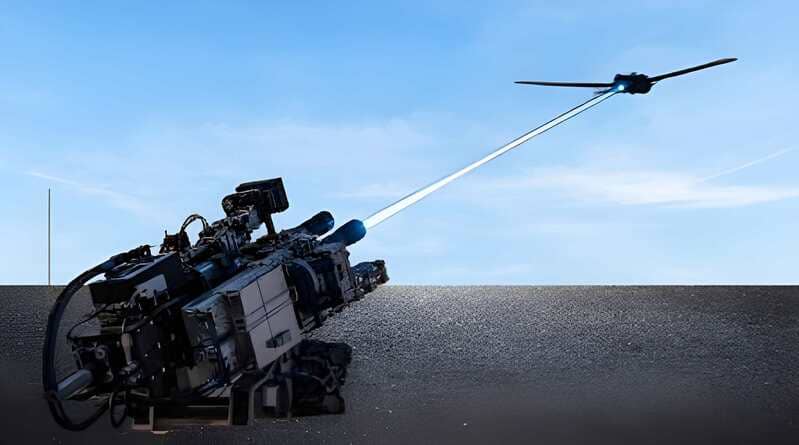
Every military breakthrough arrives with promises of transforming warfare. Today, that promise is being attached to beams of light. Israel’s reported ambition to develop a space-based laser weapon system has renewed attention on directed-energy weapons (DEWs) in warfare.

Building on Rafael Advanced Defence Systems’ Iron Beam, Israeli Defence Minister Israel Katz argues such technology could strengthen Israel’s deterrence, even against “enemies with large resources.” The appeal is clear: unlike conventional interceptors costing hundreds of thousands or millions, lasers promise much cheaper engagements.
The recent evolution of drone warfare has increased interest in directed-energy systems. Conflicts in the Middle East and Ukraine have shown how inexpensive drones impose enormous costs on advanced air defences. The cost imbalance is increasingly becoming a strategic challenge. A low-cost drone costing tens of thousands of dollars can force defenders to employ interceptors worth millions. This reality has encouraged militaries to search for cheaper alternatives, with lasers emerging as one potential solution.
Recent operational experience further highlights this gap. The US has invested in directed-energy programmes, deploying systems such as HELIOS (a 60-kilowatt laser aboard the USS Preble) and the Optical Dazzling Interdictor Navy (ODIN). Reportedly, these counter-drone technologies were deployed against Iranian drones during Operation Epic Fury. But these systems have not yet been used much in operations and are not mature for high-intensity conflict. Their reliance on sustained dwell time limits engagement against drone swarms; ODIN does not physically destroy threats; it only disrupts optical sensors. These limits indicate that DEWs are still in their infancy. Furthermore, in 2024, the US used four 50-kilowatt lasers to defend bases in Iraq, and it was found that they were not as effective as expected and were cumbersome to use.
Nevertheless, cost is not the primary factor to decide the strategic value of a weapon. High-energy lasers (HELs) concentrate a high-energy beam on sensitive areas of the target and destroy sensors or structural components. Unlike in cinematic portrayals, HELs are not destroyed instantly; they are tracked and continuously powered, with the beam maintained for several seconds. This can be effective against slow drones, but is much more difficult against fast or multiple threats.
Their effectiveness is further complicated by environmental conditions. Dust, humidity, smoke, fog and cloud cover in the atmosphere can weaken or distort laser beams, which can impact the reliability of laser beams in various operational environments. The weapon that works well in a controlled test can have a very different performance in the field.
The challenge becomes even greater when considering space-based laser weapons. Deploying a laser in orbit requires solving major engineering problems: power, thermal management, targeting and reliability in a harsh space environment. Unlike ground-based systems, a space-based laser is a high-value asset vulnerable to anti-satellite weapons, cyber and electronic warfare (EW). Rather than conferring superiority, such capabilities could further intensify competition in space.
There is also an industrial challenge. Producing advanced lasers at scale requires specialised materials and manufacturing. High-performance lasers depend on critical components like advanced optics, semiconductors and materials such as ytterbium and gallium. Many supply chains are concentrated in China, creating vulnerabilities for countries seeking to expand directed-energy capabilities. The challenge is not only developing technology but also building the industrial base to sustain it.
Nonetheless, dismissing laser weapons would be short-sighted. Technologies used in the military tend to develop slowly, and early restrictions do not stop the development of new technologies. Although space-based lasers may be a long way off, today’s investments may yield improved ground-based and airborne platforms.
These developments warrant attention in the South Asian context. India’s expanding defence cooperation with Israel, particularly in missile defence, unmanned systems, electronic warfare (EW) and advanced sensors, could shape future approaches towards the adoption of emerging military technologies in the region. Therefore, Pakistan’s response must be driven by its own threat assessment and operational priorities. The country must keep on building up existing capabilities in integrated air defence, EW, cyber resilience, counter-space awareness and indigenous defence innovation, while also advancing research into directed-energy technologies. Technological development must be synchronised with operational requirements to maintain Pakistan’s deterrence posture in a contested security environment.
The future battle would not be won with just one revolutionary weapon. The use of technology, doctrine, industrial capability and adaptation are all becoming integral to military success. Lasers could be significant in the future for air defence, particularly against drones and low-cost threats. They will not, however, replace the need for conventional systems in the near future.
Military competition may be entering the laser age; however, ambition must be separated from demonstrated capability. The true test of any military technology is its performance in war, not announcements or demonstrations. Until DEWs prove their effectiveness in contested environments, claims of a laser revolution must be viewed with caution.
Ezba Walayat Khan – Research Assistant at the Centre for Aerospace and Security Studies (CASS), Lahore, Pakistan.
(The views expressed in this article belong to the author and do not necessarily reflect the views of World Geostrategic Insights).