



Myanmar, a Southeast Asian nation of around 55 million people, faces a complex set of political, economic, and security challenges. Alongside efforts to resolve internal conflicts and revive its economy – particularly through tourism – the country is also seeking to improve its ties with regional and global partners.

Since the military took power in Naypyidaw, Myanmar’s capital, in 2021, the nation’s relations with the Association of Southeast Asian Nations (ASEAN) have become increasingly strained. During the same period, the European Union imposed three rounds of targeted sanctions on the country, including asset freezes, travel bans, and restrictions on financing entities linked to those in power.
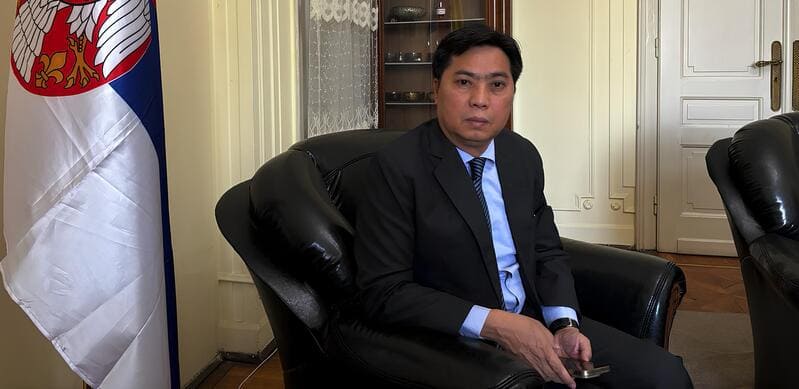
Myanmar’s officials and diplomats have rarely spoken with Western media outlets in recent years. Nevertheless, in an exclusive interview with World Geostrategic Insights, U Than Htwe, Ambassador of the Republic of the Union of Myanmar to Serbia, discussed his country’s foreign policy priorities, relations with ASEAN and the European Union, the ongoing peace process, and prospects for closer cooperation with Serbia.
Having previously served as Director-General of the Political Department at Myanmar’s Ministry of Foreign Affairs, U Than Htwe brings extensive diplomatic experience and insight into his country’s foreign policy. In his view, economic sanctions have generally been employed as a political instrument intended to weaken governments and encourage political change.
“In practice, such measures often deepen existing crises and place the greatest burden on ordinary citizens rather than political leaders. When the daily welfare of more than 50 million people is taken into consideration, prolonged sanctions risk extending hardship rather than addressing the underlying challenges,” Than Htwe said, arguing that Myanmar maintains that weakening state institutions does not necessarily contribute to peace or stability.
As he stressed, the situation in the Southeast Asian state should be examined with empathy, while humanitarian concerns – frequently highlighted by the international community – should be approached alongside careful consideration of the broader effects of economic restrictions on the civilian population.
“No nation is without imperfections, and policy decisions should ultimately be guided by what best serves the long-term interests and welfare of the entire population. Constructive engagement therefore requires balanced analysis based on conditions on the ground rather than predetermined assumptions or ideological positions,” the ambassador pointed out, adding that the EU’s political support for opposition movements and armed groups in Myanmar may intensify domestic instability and complicate efforts toward national reconciliation.
Although not an EU member, Serbia, an EU candidate country, aligned itself with the bloc’s sanctions policy toward Myanmar in April 2022. In spite of that, Myanmar’s ambassador to Belgrade says that the Southeast Asian nation continues to regard Serbia as a country with which it shares “a special and unique friendship built on trust and mutual understanding.” He also appears to acknowledge the position in which Belgrade finds itself.
“Intensifying geopolitical competition among major powers has created increasing pressure on smaller and developing countries, particularly those pursuing an independent, balanced, and non-aligned foreign policy. In this complex environment, Myanmar believes every nation must safeguard its national interests while maintaining constructive diplomatic relations with all partners to the greatest extent possible,” Than Htwe stressed, noting that Myanmar’s immediate objective is to restore normal relations and progressively strengthen cooperation with Serbia wherever opportunities exist.
However, Naypyidaw’s concerns appear to focus less on the EU’s and Serbia’s positions toward the country and more on ASEAN’s approach to developments in Myanmar. Talking about ASEAN’s Five-Point Consensus – a 2021 peace plan adopted by the Southeast Asian organization to address the crisis in Myanmar – Than Htwe said that the document “it was at odds” with what was actually agreed during the Jakarta Leaders’ Meeting in April 2021.
“Myanmar stated at the time that any implementation would be carried out in accordance with its national interests and domestic circumstances. Naypyidaw therefore refers to its position as the Five-Point Statement rather than the Five-Point Consensus and has sought to implement relevant aspects consistent with the country’s evolving political landscape,” the ambassador said, referring to Myanmar’s elections held in December 2025 and January 2026, which were not formally recognized by ASEAN.
Despite the tensions between Myanmar and ASEAN, and the bloc’s decision to bar Myanmar’s military leaders from high-level meetings and summits, the ASEAN flag continues to fly in the courtyard of the Myanmar Embassy in Belgrade. Then Htwe explains that his country remains committed to ASEAN and the principles enshrined in the ASEAN Charter, emphasizing that measures that restrict a member state’s participation or representation “should be carefully considered within the framework of these principles.”
“Myanmar hopes that ASEAN will continue to serve as an impartial platform for constructive dialogue while respecting the sovereign equality of all member states and supporting practical solutions that contribute to lasting peace and regional stability. I believe Myanmar will return to normalcy within ASEAN,” he stressed.
While Myanmar’s military leaders have been excluded from ASEAN’s high-level meetings, non-political representatives continue to represent the country in certain ASEAN activities. In January, at the ASEAN Tourism Forum held in Cebu, the Philippines, Myanmar’s senior tourism representatives took part in the event, reflecting the importance of neighboring and ASEAN countries as major sources of international visitors to Myanmar.
“Revitalizing Myanmar’s tourism sector is an important national objective. The recovery of tourism contributes not only to economic development but also to greater people-to-people understanding and international friendship,” Than Htwe pointed out, noting that Myanmar possesses exceptional tourism resources that reflect its rich history, cultural diversity, and natural beauty.
But for tourists to visit the country, safety remains a key consideration. According to the senior diplomat, the authorities are working to ensure that visitors can travel with confidence and enjoy Myanmar’s cultural and natural attractions.
While promoting tourism and international engagement, the Southeast Asian nation also continues to emphasize the importance of resolving internal conflicts and achieving lasting peace. Than Htwe said that any genuine effort to assist the country should begin with a clear understanding of realities on the ground.
“Friendly nations wishing to support Myanmar’s peace process are encouraged to develop a thorough understanding of the country’s ethnic complexity and contribute in ways that facilitate constructive dialogue and long-term stability. Lasting peace cannot be achieved through purely political interpretations detached from local conditions. Instead, it requires a pragmatic approach that takes into account Myanmar’s historical, ethnic, and security complexities,” he emphasized, adding that Naypyidaw considers strengthening the rule of law and effective state institutions to be fundamental prerequisites for sustainable peace, national development, and prosperity.
In his view, policies that weaken government institutions while simultaneously strengthening armed groups may risk prolonging instability and making national reconciliation more difficult.
“The deep entrenchment of armed groups driven by commercial interests, rather than ethnic resistance alone, presents one of the greatest challenges to peace negotiations. Although some organizations are motivated by political principles and ethnic identity, others are primarily driven by economic gain rather than collective political objectives,” Than Htwe said, emphasizing that the government remains committed to dialogue.
For Myanmar, the path ahead is likely to be tied to its ability to address internal challenges, restore broader international engagement, and strengthen cooperation with regional and global partners. The coming period will be crucial in shaping the country’s future and its relations with the wider international community.
Author: Nikola Mikovic – Journalist, researcher and analyst based in Serbia.