



By Waqas Abdullah
It is hardly a diplomatic coup when a Saudi ambassador meets with Argentina’s Secretary of Energy. No treaty was signed, no joint communiqué issued, and no high-profile press conference staged beyond a routine photograph of two officials framed by national flags in a wood-paneled office in Buenos Aires.
Yet, to dismiss this interaction as mere bureaucratic housekeeping would be an analytical error. Within the context of Saudi Arabia’s broader grand strategy, this modest meeting provides a valuable prism through which to observe an understated structural shift in contemporary geoeconomics: the Gulf’s systematic engagement with Latin America. This is a strategic relationship built on incremental developments rather than spectacular announcements.
The engagement between Riyadh and Buenos Aires is not a recent phenomenon. The institutional groundwork was laid at least as early as November 2022, when Argentina’s then-foreign minister met in Riyadh with Saudi officials to draft a framework for bilateral cooperation. Since then, multiple Saudi investment delegations—frequently led by Minister of Investment Khalid Al-Falih—have traveled to Buenos Aires to explore opportunities across the agricultural, fertilizer, renewable energy, and technology sectors. In turn, Argentina has actively courted Gulf capital through its Large Investment Incentive Regime (Régimen de Incentivo para Grandes Inversiones, or RIGI). By guaranteeing fiscal stability for 30 years and streamlining regulatory approvals, RIGI is explicitly engineered to attract the type of long-term, patient capital that Gulf sovereign wealth funds possess.
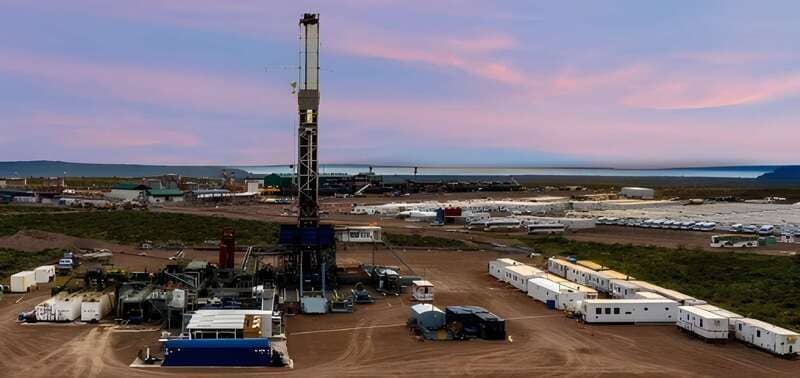
At the core of this burgeoning partnership lies energy infrastructure tied to Vaca Muerta, the Argentine Patagonian shale formation that ranks among the world’s largest deposits of unconventional oil and gas. The Néstor Kirchner Gas Pipeline, critical for transporting Vaca Muerta’s output to major domestic population centers, has featured prominently in Saudi-Argentine bilateral talks. Viewed from this perspective, the meeting between Ambassador Hatem Al-Ghamdi and Secretary María Carmen Tettamanti is simply a routine operational calibration of a mechanism that has been functioning for several years.
Riyadh’s strategic calculus is driven by three overlapping imperatives:
1 – Strategic Energy Diversification: Diverging from conventional Western analyses, Saudi Arabia’s Vision 2030 frames the Kingdom not merely as an exporter, but as a global energy investor across diversified production ecosystems. Vaca Muerta represents precisely the type of asset Riyadh covets: a shale play with demonstrable export potential caught in a capital-intensive, infrastructure-building phase. Early strategic placement allows Riyadh to secure long-term structural leverage over how these resources enter international markets.
2 – Food Security: For over a decade, Gulf policymakers have operated under the acute awareness that domestic geographic and arid realities preclude agricultural self-sufficiency. Recognizing Latin American agriculture as vital to its long-term sovereign stability, the Gulf has become a primary consumer of Argentine grain and animal protein. Historically, as seen in the Gulf’s relations with Brazil, energy cooperation serves as the initial diplomatic catalyst, lowering transactional barriers for subsequent, deeper agricultural investments.
3 – Sovereign Portfolio Realignment: Regionally, Gulf sovereign wealth funds have historically remained underweight in Latin America compared to their allocations in Asia, Europe, and North America. The current regulatory environment under President Javier Milei offers an optimal window for portfolio rebalancing. Buenos Aires now features a highly accommodative investment framework, an acute need for foreign direct investment following prolonged macroeconomic turbulence, and a government willing to engage Gulf capital pragmatically, unburdened by ideological preconceptions.
The Broader Strategic Indicator
This bilateral pattern matters less for its immediate financial volume than for what it signals to external state actors. Saudi Arabia is systematically institutionalizing its economic diplomacy in Buenos Aires, establishing its reputation as a patient, long-term capital partner rather than a transactional resource buyer. This strategy unfolds as alternative sources of Western capital face institutional frictions; the European Union’s progress on the Mercosur agreement remains protracted, while the United States increasingly concentrates on its immediate hemispheric priorities.
A structural void has emerged for alternative capital deployment. Awash with liquidity and intent on diversifying away from legacy jurisdictions, Gulf states are structurally well-positioned to occupy this space. Crucially, they do so not through high-risk, headline-grabbing mega-deals, but through targeted, long-term micro-investments.
A Note of Caution
Nevertheless, the short-term trajectory of this relationship must not be overestimated. Argentina’s chronic currency volatility, historical precedents of debt restructuring, and cyclical shifts in governance present persistent systemic risks for any long-term foreign investor, including state-backed sovereign funds. Legal guarantees of 30-year stability under frameworks like RIGI are ultimately bound by Argentina’s institutional capacity—and political will—to honor them across successive electoral cycles. Historically, Buenos Aires has struggled to maintain such commitments. Reassuringly for Riyadh, Saudi engagement has manifested in measured, incremental tranches rather than massive upfront capital exposure, indicating that the Kingdom is acutely aware of these sovereign risks and is actively pursuing a strategy of risk mitigation.
Conclusion
The meeting between Al-Ghamdi and Tettamanti generated minimal media coverage, by design. Its analytical value lies precisely in its mundane, low-profile execution: it represents the quintessence of patient economic statecraft, where strategic ground is gained through incremental institutional maneuvers rather than sudden diplomatic breakthroughs. Within the evolving matrix of Gulf-Latin American relations, such interactions warrant closer scholarly scrutiny than they typically receive. They constitute vital links in a broader strategic chain: Saudi Arabia’s systematic diversification of its economic dependencies across global resource nodes, ensuring that no single geopolitical axis can dictate the economic fate of the Kingdom.
Author: Waqas Abdullah – Geopolitical analyst specializing in Middle Eastern and Indo-Pacific politics. A Türkiye Bursları Scholar, he is pursuing a Master’s in International Relations at Selçuk University in Konya, Türkiye. His research focuses on climate refugees, human security, and regional cooperation.
(The views expressed in this article belong only to the author and do not necessarily reflect the views of World Geostrategic Insights).
Image Source: YPF (Drilling infrastructure in Vaca Muerta, Argentina).