



By Marco Mizzau
Kazakhstan is usually described through what lies beneath its territory: uranium, critical minerals, rare earths, oil and gas. But in the emerging geopolitical economy, its most valuable asset may not be underground. It may be its geography — and its ability to connect competing economic systems.

For three decades, Central Asia was largely interpreted as a space between Russia and China: rich in commodities, strategically relevant, but peripheral to the main circuits of global capital and technology. That interpretation is becoming obsolete. As the global economy fragments, geography is returning to the pricing of risk, capital, and industrial capacity. Countries able to connect resources, infrastructure, and multiple markets acquire a strategic value greater than the sum of the commodities they produce. Kazakhstan is one of them.
Its position between China, Russia, the Caspian Sea, and Europe gives Astana something increasingly scarce: optionality. The strategic opportunity is therefore not simply to export more Kazakh resources to Europe. It is to transform the Kazakhstan–Caspian–Caucasus–Türkiye–Europe axis into a bidirectional industrial and financial corridor across Eurasia.
This distinction is fundamental. Europe needs critical materials, uranium, resilient supply chains, and greater access to Central Asia. Kazakhstan needs diversified markets, investment, technology, processing capacity, and infrastructure. These are not competing interests; they are complementary assets.
The Europe–Kazakhstan relationship should therefore move beyond the traditional supplier-buyer model. In one direction, uranium, metals, and critical raw materials can move toward European industrial systems. In the other, capital, machinery, engineering, technology, and processing capabilities can move toward Kazakhstan. The corridor would no longer be simply a trade route. It would become an economic platform.
Geological wealth creates potential power, but much of the value of critical materials is generated after extraction: through processing, metallurgy, energy, logistics, and industrial applications. Kazakhstan’s long-term interest is therefore to retain a greater share of the value chain, while Europe’s is to diversify not only extraction but dependency itself.
China demonstrates why. Beijing’s advantage in critical minerals extends far beyond geology. It has integrated processing, refining, manufacturing, infrastructure, and capital into an industrial system. Europe cannot replicate that architecture quickly, but it can offer Kazakhstan technology, engineering, institutional capital, industrial demand, and access to one of the world’s largest markets. The European proposition should therefore not be geopolitical alignment. It should be strategic diversification.
Astana does not need to choose between China, Russia, and Europe. Its bargaining power grows with the number of economically credible routes, investors, and markets available to it. Kazakhstan remains deeply connected to the Russian economic and infrastructural space; developing the Trans-Caspian route does not require dismantling those ties, but adding another credible connection. This is the deeper meaning of the Middle Corridor.
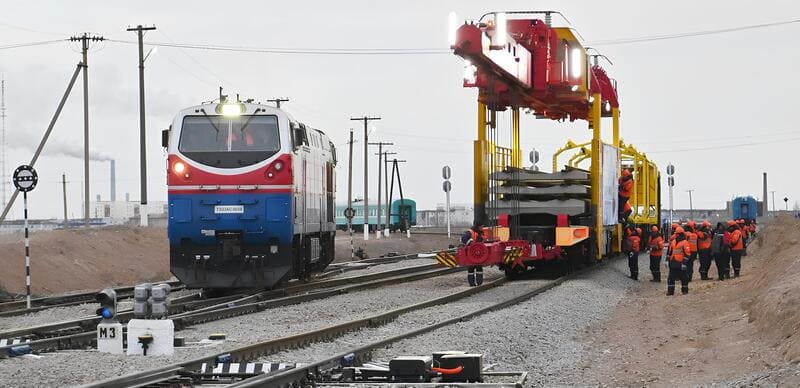
The Trans-Caspian International Transport Route connecting Kazakhstan across the Caspian Sea with Azerbaijan, Georgia, Türkiye, and European markets matters beyond freight volumes. Its strategic value lies in the optionality created by railways, ports, terminals, and cross-border infrastructure. In the old model of globalization, redundancy was a cost. In the emerging geopolitical economy, redundancy is an asset.
A corridor becomes strategic when its flows are large enough to attract capital. Critical minerals and uranium can provide anchor flows; European capital can finance logistics, energy, and processing; industrial companies can provide machinery, automation, and engineering. This is how a transport route becomes an industrial system — and how geopolitics becomes investable.
For private equity and infrastructure capital, value may therefore lie less in direct mine ownership than in the bottlenecks surrounding it: power, processing, Caspian terminals, specialized logistics, industrial equipment, and automation. The winners of the new Eurasian economy may not be those controlling the largest deposits, but those controlling the infrastructure connecting them to multiple markets.
Europe, however, faces its familiar constraint: execution. China already combines geographic proximity, capital, infrastructure, and decision speed across Central Asia. Europe possesses a large industrial market, technology, engineering capabilities, and institutional capital, but has historically struggled to convert these assets into a coordinated geopolitical presence.
Individual European nations can align their specific domestic strengths with Kazakhstan’s diversification goals. As an example, for Italy, the opportunity is industrial rather than geographical. Its capabilities in machinery, engineering, power systems, automation, metallurgy, and specialized infrastructure are closely aligned with the intermediate layer Kazakhstan needs to develop. Italian companies and capital can therefore participate in Kazakhstan’s industrial development without claiming Italy as the geographical terminal of the Middle Corridor.
The fragmentation of Eurasia is not ending interdependence. It is changing its architecture. The previous model concentrated supply chains around efficiency. The emerging model assigns a premium to diversification, redundancy, and control. Geography is returning because energy, minerals, infrastructure, and transport corridors have returned to the center of economic power.
Kazakhstan is unusually positioned within this transition. It has resources, geography, and relationships with all the major systems surrounding it. Europe has capital, technology, and industrial demand. Between them already exists the physical outline of a corridor, but its industrial and financial architecture remains incomplete.
The objective should therefore be more ambitious than increasing freight volumes across the Caspian Sea. It should be to build a Europe–Kazakhstan economic corridor in which transport supports critical materials, critical materials support processing, processing attracts industrial capital, and industrial capital strengthens the corridor itself.
Geological abundance creates potential power; connectivity converts it into strategic power.
Kazakhstan’s opportunity is therefore larger than becoming a major supplier of critical materials. It can become an industrial bridge between economic systems that increasingly need one another while increasingly seeking protection from excessive dependence. Europe’s opportunity is not to pull Kazakhstan away from Eurasia, but to become another indispensable part of its connectivity.
This is the strategic proposition at the center of the new Eurasia: Kazakhstan does not need to choose between East and West. It needs to become increasingly difficult for either to bypass.
The strategic asset is not the mine. It is the corridor. And the real power of the corridor lies in the alternatives it creates.
Author: Marco Mizzau – Strategic analyst focused on geopolitical economy, artificial intelligence and global power dynamics. He has held senior executive roles in international companies and serves as Chairman of Blacktrace. His work examines how technological systems, energy infrastructure and capital flows reshape the competitive position of states across the United States, China, Russia, Israel, and Europe. He advises U.S. investment funds on private equity strategy and capital allocation across energy, infrastructure and industrial systems.
(The opinions expressed in this article belong only to the author and do not necessarily reflect the views of World Geostrategic Insights).
Image: Official Information Source of the Prime Minister of the Republic of Kazakhstan