



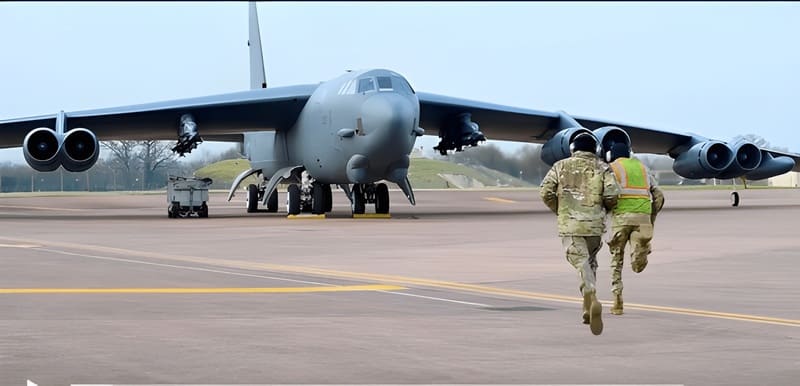
In this interview with World Geostrategic Insights, Lowell H. Schwartz examines the complexities of contemporary U.S. nuclear relationships with Russia and China. As traditional arms control regimes decline and Beijing’s strategic capabilities expand, Dr. Schwartz analyzes the structural challenges of establishing a stable trilateral deterrence framework. He also addresses the systemic impact of “nuclear hedging” by middle powers, assesses how domestic hyper-partisanship compromises U.S. extended deterrence commitments, and advocates for a balanced grand strategy that synthesizes realism and idealism to navigate modern great power competition.
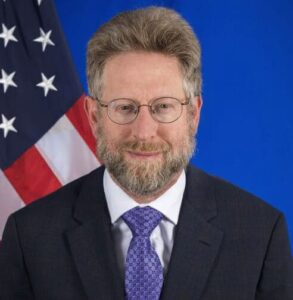
Dr. Lowell H. Schwartz is a leading expert in geopolitical risk, nuclear nonproliferation, and international security, with extensive leadership experience across both the executive and legislative branches of the U.S. government.
He previously served as Deputy Assistant Secretary of State for Nonproliferation Policy, directing U.S. diplomatic engagement on nuclear affairs and multilateral security with the IAEA. Prior to his role at the State Department, he spent eleven years as a Senior Professional Staff Member on the U.S. Senate Foreign Relations Committee, where he managed portfolios on arms control, strategic deterrence, and global security.
Dr. Schwartz was also a Senior Political Scientist at the RAND Corporation for over a decade, where he co-authored numerous defense policy monographs and wrote the foundational book “Political Warfare Against the Kremlin“ (2009). Currently, he is the President of LH Schwartz Consulting.
Q1 – Dr. Schwartz, in your recent contributions to the Orbis Journal of World Affairs, you addressed the evolving parameters of U.S. nuclear relationships with both Moscow and Beijing. Given the asymmetric nature of these two peer adversaries, what are the primary structural obstacles to establishing a stable, trilateral deterrence framework, and how should the U.S. redefine “strategic stability” in this multipolar environment?
A1 – There are two central difficulties with establishing a stable deterrence framework between Russia and the United States, and China and the United States. The first one is the dual nuclear threats posed by Russia and China, which means that the nuclear relationship the United States has with one adversary will impact US nuclear relations with the other. It is very difficult to create a nuclear force and posture that both deters and is stabilizing in one relationship which meets the same criteria in the other.
During the Cold War and in its aftermath, China’s nuclear arsenal was small enough that it could be subsumed into U.S. nuclear planning for the Soviet Union and then Russia. The growth of China’s force and the increasing tension between China and the United States mean, at least from the U.S. side, nuclear strategy and forces now must account for China and Russia. Of course, any growth in U.S. nuclear forces will probably result in a Russian response.
Second, the geopolitical goals of Russia and China sharply clash with those of the United States. China is seeking to unify with Taiwan, and in the Indo-Pacific it wants to be the dominant power at the expense of Japan and South Korea. The United States, on the other hand, wants to restrain China’s power and the potential for military aggression. Russia has become a revisionist power that is seeking to overturn, through military aggression in Ukraine, a European security order it views as hostile to its interests and values. The United States, in coordination with its European allies, is resisting Russia’s efforts. Achieving stability at the nuclear level may not be possible at a moment of deep geopolitical tension.
The term strategic stability is a tricky one, meaning different things to people. The core nuclear piece for the United States remains the most critical: an absence of incentives to use nuclear weapons first (crisis stability) and the absence of incentives to build up a nuclear force (arms race stability). The United States wants to avoid any use of nuclear weapons and to prevent a three-way arms race if possible. China and especially Russia often use the term differently, encompassing broader political and strategic issues, including hostility toward the regime and other core interests. The best course would be a definition of strategic stability that includes non-nuclear technologies that directly impact the nuclear balance (homeland missile defenses, for example) but excludes other issues that will overly complicate any attempt to stabilize the most critical nuclear element.
Q2 – With the systemic unraveling of legacy arms control frameworks—such as the expiration of New START and the suspension of critical compliance mechanisms—do you envision a viable path forward for institutionalized risk reduction? Alternatively, are we entering an era where strategic stability must be maintained solely through unilateral deterrence and posture optimization?
A2 – It is too early to completely give up on institutionalized risk reduction. The era of legally binding arms control treaties leading to deep nuclear reductions is over, but measures to constrain competition and efforts to avoid accidental or unauthorized nuclear war are possible. For example, President Putin has offered to adhere to limitations on Russia’s strategic nuclear forces as long as the United States does the same. The Trump administration, for understandable reasons, has not agreed to Putin’s proposal, but it is possible to find some kind of political arrangement that provides a degree of transparency and limitations on both side’s forces. With China, some steps to avoid a nuclear crisis, along with diplomatic exchanges to better understand the rationale behind its nuclear strategy, are possible. We are in a particularly bad geopolitical moment, but then might not be a permanent feature of the global landscape.
Q3 – During your tenure as Deputy Assistant Secretary for Nonproliferation Policy, you managed complex multilateral nuclear and Security affairs. How can the United States and the IAEA effectively counter the growing normalization of “nuclear hedging” among middle powers without precipitating a total collapse of the Nuclear Non-Proliferation Treaty (NPT) regime?
A3 – The IAEA is the healthiest international organization within the United Nations system. It has dedicated and competent staff with a vast array of technical ability and expertise. While great power competition is impacting the IAEA, unlike most other international organizations, it still has buy-in from Russia, China, Europe, and the United States for its core mission of ensuring nuclear material and facilities are only used for peaceful purposes. The starting point to containing nuclear hedging is a robust non-proliferation regime, which is the current situation.
Nuclear hedging is occurring, but to a lesser degree than is often postulated. The most prominent state to try this strategy was Iran. Instead of deterring attacks, nuclear hedging put a target on its back. U.S. and Israeli military strikes in 2025 demonstrated both U.S. counter-proliferation capabilities and the will to use them. It is a clear example of what the great international relations scholar Joseph Nye called the “Valley of Vulnerability” — the dangerous period between when a government decides it wants nuclear weapons and when it has a secure second strike. During this period, other powers have a strong incentive to destroy the incipient building blocks of a country’s emerging nuclear program.
A combination of international monitoring and inspections, the legal obligations of the NPT treaty, economic leverage against U.S. partners and allies, and counter-proliferation military capabilities are likely to keep nuclear hedger from moving toward full-blown nuclear weapons programs. For U.S. allies and partners, confidence in extended deterrence guarantees and, more broadly, U.S. backing for their security will also reduce the desirability of nuclear hedging.
Q4 – In your recent analyses regarding the National Defense Authorization Act (NDAA), you highlighted a critical friction point: Congress often appropriates capital without fully accounting for the real-world technical and industrial bottlenecks in the nuclear supply chain. How acute is the atrophy of the U.S. nuclear weapons production infrastructure, and what policy levers can bridge the gap between legislative intent and actual defense-industrial throughput?
A4 – At the end of the Cold War, the United States had an enormous nuclear stockpile. There was also a great deal of uncertainty about the relevance of nuclear weapons, which led to a long period of neglect. The United States could live off its Cold War efforts both in terms of human capital and in terms of the facilities that it had built for over twenty years. During the Obama years, it became apparent nuclear weapons weren’t going away, and the United States began a sustained modernization effort of both its warheads and the vehicles that deliver them.
As these efforts began, the material and human bottlenecks involved in the process manifested themselves, leading to delays and cost overruns. However, things have improved, and the United States is now upgrading, modernizing, and developing at least five warhead types. This is being pushed by a viewpoint in strategic circles that China and Russia have developed nuclear doctrines and capabilities for regional nuclear use, and the United States is looking for ways to respond. The situation is getting better, but it is difficult to run at full speed when you have allowed your legs to atrophy.
The problem is Congress is pushing for more, and the nuclear enterprise is already straining under its current program of record. More money might help, but it is hard to accelerate further when there are near-and medium near constrains in terms of the number of nuclear manufacturing facilities available and the number of highly trained scientists and engineers who can be devoted to the effort.
Q5 – Drawing upon your rare vantage point of having served both as a Senior Professional Staff Member on the Senate Foreign Relations Committee and within the State Department’s Executive Branch, how do you evaluate the current state of inter-branch synchronization? How has hyper-partisanship impacted the continuity of U.S. extended deterrence commitments abroad?
A5 – The executive branch in the United States is the dominant actor when it comes to foreign and national security policy. The legislative branch provides funding and oversight, but it has only a limited ability to steer U.S. global efforts. The Trump administration is particularly unilateral in its desire to conduct foreign policy without congressional interference, but most administrations see Congress as more of an impediment to steer around than a helpful partner.
The Iran war is a good example of how Trump deals with Congress. Unlike, other major conflicts in the Middle East (the Persian Gulf War in 1990-1991, the Afghanistan and Iraq wars) the Trump administration did not ask for an Authorization for Use of Military Force (AUMF) from Congress nor did it explain in any detail to the American people why the United States and Israel began the conflict. Eventually, the Trump administration got around to asking for additional funding for the war, but Congress has resisted even this small step so far. However, because the Republican party is in control of both the House and the Senate, there has been limited pushback or oversight of the war effort. This will change if the Democrats take over one or both of the legislative chambers.
The way hyper-partisanship impacts U.S. extended deterrence commitments are the wild swings in national security strategy from Obama to Trump, Trump to Biden, and Biden back to Trump again. The widely differing approaches various administrations have taken to global affairs have rightfully caused U.S. allies and partners to wonder whether the promises one administration has made will be upheld by the next one. This has been very jarring for countries whose security from attack, even from nuclear attacks, depends upon the United States. We are seeing a lot of hedging, even from Canada, with states seeking alternative arrangements just in case in a crisis they cannot count on the United States.
Q6 – You recently co-authored a brief for the Carnegie Endowment for International Peace examining proposals to strengthen the Office of the Under Secretary for International Security and Arms Control (T). Why is a bureaucratic reorganization of the State Department vital for navigating great power competition, and how can the “T” Bureau better integrate diplomatic nonproliferation objectives with hard political-military realities?
A6 – Within the State Department, the T Bureau views have often been neglected compared to the powerhouses of the State Department the regional bureaus for example, EUR (Bureau of European and Eurasian Affairs), EAP (Bureau of East Asian and Pacific Affairs) and NEA (Bureau of Near Eastern Affairs). In terms of policy, this has resulted in the State Department prioritizing bilateral relations over global efforts, for example, on non-proliferation. The moves by the Trump administration to centralize resources and power within the International Security and Arms Control should provide the Bureau with a stronger voice inside the State Department.
If U.S. foreign policy returned to a greater focus on competition with China and Russia, then the T bureau would be well placed to take a broader strategic view of the conflict. It would also be a stronger player against the Pentagon, with the ability to push harder for diplomatic approaches versus military options on critical international security issues.
Q7 – Your foundational work “Political Warfare Against the Kremlin” analyzed early Cold War information operations. In an era dominated by decentralized digital ecosystems, artificial intelligence, and asymmetric cyber operations, how must the West adapt its concept of “political warfare” to counter contemporary Russian and Chinese cognitive influence strategies without undermining democratic liberal values?
A7 – The first question to ask is whether all political elements in the West (as they were mostly during the Cold War) are committed to political warfare against their great power adversaries. The answer to this question is clearly no. Populist parties who are now running foreign policy in the United States and elsewhere have little to no interest in ideological competition with China, Russia, or anyone else because they are not wed to the position that Western society is based upon a set of ideals which all people should aspire to. They have expressed no interest in the theory of soft power — that through persuasion and attraction the West can achieve its objectives. Nor that authoritarian regimes can be weakened through the provision of information to their citizens that is being censored, or that China or Russia’s global position can be curtailed by highlighting its brutal suppression of their own people and their corrupt practices abroad.
The ideological conflict populists are concerned about is different; one mostly inside their own societies but which has an international element. The battle, in their view, is to protect Judeo-Christian civilization against secular elites in their own society who are aligned with global elites elsewhere. Another danger for populists is the dilution of Western society, which they believe is occurring as vast numbers of migrants from civilizations who do not share Judeo-Christian values are allowed into European and North American states. Certain but not all populist elements see Russia as an ally in their battle against the imposition of secular liberal values. So, before getting into tactical questions about the best ways to counter authoritarian states’ strategies to undermine Western society, a conversation has to take place within Western governments about what exactly they are trying to protect.
The Biden administration was on the right track when it linked its national security strategy of countering China and Russia’s global influence with the ideological battle between democracy versus autocracy. Biden optimistically stated that democracy would prove itself more capable than autocracy in meeting global challenges, including mastering new technologies, addressing the climate crisis, and sustaining economic growth. The problem is, it isn’t clear the American people or other Western publics are convinced Biden is right.
Q8 – In your recent reflections on your Substack, A New Sense of Freedom, you argued that an effective foreign policy must balance realism with a necessary degree of idealism. How can Washington prevent its grand strategy from falling into the trap of either over-idealistic detachment from geopolitical realities or a purely transactional realism that alienates core allies?
A8 – Balancing the pursuit of justice and democracy with the needs of security and national interests is an enduring problem in U.S. grand strategy. Henry Kissinger famously practiced Realpolitik and said America “has no permanent friends or enemies, only interests,” but even Kissinger said an effective strategy must reflect both the permanent values and the strategic interests of the nation. The question the United States is facing is how to strike this balance in a new era of increased warfare and violence in a more complex global environment with multiple international actors possessing enough power to influence events.
Unlike the post-Cold War period, the United States faces powerful adversaries with the military, economic, and political clout to challenge and resist the United States. These adversaries have a differing vision for how international affairs should be conducted, which run counter to U.S. interests and values. The most sensible thing the United States can do is to rally nations that are sympathetic to the ideals America was founded on (democracy and freedom) against authoritarian countries. It makes no sense in the long term to exploit the countries that agree with you and traditionally have been your allies for short-term gains. From these core alliances, the United States should build outward, forging a constructive relationship with countries which might not be traditional partners and allies but share some of the United States’ interests.
On challenges involving the global commons, the United States needs to be clear-eyed that cooperation with powerful authoritarian states will be limited and transactional at best. If there ever was buy-in from China and Russia for an international order based upon a set of agreed rules (which I doubt), it is gone now. The United States can say it believes some values are universal and indicate a willingness to support in non-violent ways the rights of citizens in countries who are denied them, while at the same time indicating it will not seek to impose governments on states which are non-democratic.
Q9 – You have recently written about the changing sociopolitical fabric within the United States, tracking the realignment of political brands away from traditional strongholds. To what extent does this accelerating domestic political realignment limit Washington’s capacity to articulate a coherent, long-term grand strategy toward critical theaters like the Indo-Pacific and Eastern Europe?
A9 – The deep divisions between and within U.S. political parties are undermining efforts to form a coherent long-term strategy toward critical theaters around the world. The first problem, as mentioned in a previous answer, is that the United States’ approach to global affairs in the 21st century has wildly oscillated. It has ranged from the robust unilateralism and militarism of George W. Bush to the liberal internationalism of Obama and Biden to various forms of America First nationalism of Donald Trump. The United States lacks a steading bipartisan consensus on the proper objectives for U.S. national security policy and the underlying values of the country. This means every new administration brings a different grand strategy to the table when it enters office.
Second, the deep political divisions within the country are weakening the national security bureaucracy that helps formulate and carry out U.S. policy. Career civil servants and military officers are buffeted by political winds and are seen as disloyal if they served under the previous administration. This is driving talented people out of the government and making it more difficult to recruit individuals into government service. This is causing mass instability within national security organizations, making it much harder to think through, much less carry out, long-term strategy.
Third, within the American electorate, there is a serious debate about how much attention and the level of resources the United States should commit to global affairs. The American people are far more focused on domestic issues, but this doesn’t mean they lack an understanding of how events far from U.S. shores impact their lives. There is a deep split between a portion of the population who are weary of U.S. conflicts and believe the costs of international involvement far outweigh the benefits and another group fearful that rising international threats are not being addressed. Depending upon where you stand the United States is not doing enough to work with and protect U.S. partners and allies in the Indo-Pacific and Eastern Europe (for example Ukraine) or the United States is overextended abroad and is being dragged into security obligations regional powers should take care of themselves.
We will have to see whether the presidential candidates in 2028 can bridge this divide and forge a consensus that is supported at least partially by the other side of the political spectrum.
Dr. Lowell H. Schwartz – Expert in geopolitical risk, nuclear nonproliferation, and international security. President of LH Schwartz Consulting.
Image Source: U.S. Department of War.