



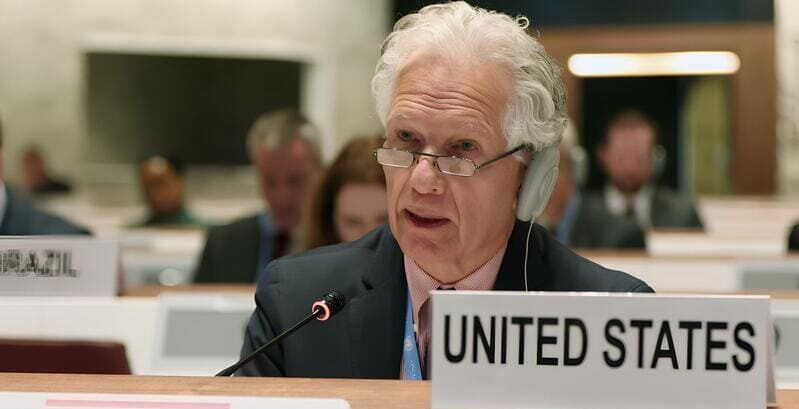
In an era defined by the collapse of foundational bilateral treaties and escalating great-power competition, the traditional machinery of global security is facing unprecedented challenges. As America’s unipolar moment gives way to a complex multipolar world, emerging dual-use technologies like artificial intelligence, cyber warfare, and the militarization of outer space are fundamentally reshaping strategic deterrence.
In his interview with World Geostrategic Insights, Ambassador Bruce Turner, former U.S. Permanent Representative to the Conference on Disarmament, provides a pragmatic, realistic assessment of contemporary diplomacy. He focuses especially on why the future of deterrence requires behavioral ‘rules of the road’ rather than sweeping prohibitions on dual-use tech; why a lasting post-conflict European security architecture following the war in Ukraine will likely be built incrementally, line by line, predicated on ceasefire stability; and why deep cultural expertise and personal relationships remain irreplaceable in a multipolar world.
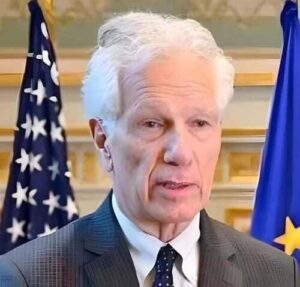
Ambassador Bruce Turner is a distinguished American diplomat with decades of high-level experience in international security, arms control, and European affairs. A member of the Senior Foreign Service, he most recently served as the U.S. Permanent Representative to the Conference on Disarmament (CD) in Geneva, and before that as a Deputy Assistant Secretary and Senior Bureau Official in the U.S. State Department’s Bureau of Arms Control, Verification and Compliance.
Throughout his extensive career within the U.S. Department of State, Ambassador Turner has held several pivotal roles, including Coordinator for U.S. participation in the Korean Economic Peninsula Development Organization (KEDO), Director of the Office of European Security and Political Affairs, and Director of the Office of Recruitment, Examination, and Employment. His deep expertise in European geopolitics is backed by critical field assignments, notably serving as the U.S. Consul General in St. Petersburg, Political Counselor in Paris, and with the U.S. missions to NATO and the OSCE. Before joining the U.S. foreign service, Ambassador Turner spent several years in Germany and Austria, and completed a Ph.D. in German language and literature at the University of Virginia — a foundation that heavily shaped his analytical and empathetic approach to international negotiation.
Q1 – During your tenure as the U.S. Permanent Representative to the Conference on Disarmament (CD), the global security architecture faced unprecedented headwinds. In an era marked by the suspension of key bilateral treaties and heightened major-power competition, how do you assess the contemporary relevance and institutional capacity of the CD? Is the consensus-based model still a viable mechanism for preventative
diplomacy?
A1: At present, the primary value of the CD is that it brings together all the countries known or presumed to possess nuclear weapons: the five permanent members of the UN Security Council (N5), India, Pakistan, North Korea, and Israel – the latter four of which do not participate in the Nuclear Nonproliferation Treaty. It also includes countries that once were, or may potentially be, interested in acquiring nuclear weapons, such as Iran. The CD is the only arms control forum where this occurs. It permits exchanges between countries’ representatives even at times when exchanges between capitals are lacking.
Unfortunately, for over twenty years geostrategic tensions have prevented the CD from reaching consensus on meaningful universal arms control regimes. That is not likely to change soon, and to think otherwise would be to expect too much. But discussions are still useful insofar as they allow countries to engage with one another on the important issue of weapons of mass destruction, even if the discussions have yet to lead to an agreement to begin actual negotiations. And we should not give up hope that they can catalyze or lay the groundwork for negotiations in more specific formats.
The CD plays an important role in gaining more understanding as to why countries adopt the positions they do, or at least the reasons they adduce for holding a particular position. As a complement, the UN First Committee discussions every fall offer a separate measure of the ‘political temperature’ on various aspects of arms control in the absence of actual negotiations. First Committee resolutions may not be legally binding, but their vote tallies can be important indicators of international sentiment.
While neither the CD nor the First Committee can prevent countries from taking certain actions, or developing certain weapons, they have usefully brought needed international attention to such issues as Lethal Autonomous Weapons Systems (LAWS), direct-ascent anti-satellite testing, cybersecurity, and the militarization of space.
More recently, they played a role in responding to Russia’s suspected interest in placing a nuclear weapon in orbit, which is prohibited by the 1967 Treaty on Outer Space. It is unclear at this time, following the 2024 UN General Assembly vote on reaffirming and modestly reinforcing the treaty that only Russia and three others opposed, whether Russia still intends to proceed with this deeply destabilizing action.
Q2 – Modern arms control is no longer confined to conventional or thermonuclear stockpiles; it increasingly intersects with artificial intelligence, cyber warfare, and the weaponization of outer space. From your perspective, what are the primary diplomatic hurdles in establishing verifiable, binding frameworks for these dual-use technologies, particularly when attribution remains technically complex?
A2 – It is true that modern arms control has become complex and complicated in ways that no one anticipated and that make achieving verifiable, binding frameworks ever more difficult. New technologies are not only dual-use in the sense of civilian and military, but they occupy a space between civilian and military, and hybrid actions fall in a ‘gray’ area that is neither war nor peace. Some countries are cynically exploiting this ambiguity, while others still ponder how best to respond. The rules of the game have changed dramatically. This is especially so in cases where one technology interacts with another, and timely attribution becomes increasingly problematic.
The new problems associated with new technologies will require new solutions. “Traditional’ arms control, whether conventional or strategic, relied largely on the ability to identify and physically count tangible objects through on-site inspections and overhead imagery, whereas in the new technological domains we are dealing with ‘capacities’ that are by their very nature much more difficult to define and quantify.
Sweeping prohibition of new technologies is not a viable way forward. Nor can we assume that most countries are going to be willing to share all the secrets of their technological capabilities with others, given the role that ambiguity plays in deterrence, and not only nuclear deterrence. This is why, in space for example, a number of countries, including the United States, have promoted a policy of focusing on rules of the road and specific destabilizing behaviors rather than the objects themselves, with the aim of monitoring what others are actually doing in practice.
As with cars, any satellite can be used as a weapon, and verifying what is under the hood presumes a degree of intrusiveness most countries likely would find unacceptable. Under these conditions, it is more practical to approach new technologies the way we handle air or marine traffic; the challenge is to anticipate, manage, and mitigate potential threats in an ever-changing environment, as opposed to an approach focused solely on quantities and on-site verification.
Q3 – Having served as the Consul General in St. Petersburg and across multiple postings touching upon European security, you have witnessed the profound shift in Washington-Moscow relations firsthand. Reflecting on your time within the Bureau of Arms Control, Verification, and Compliance, do you foresee any realistic, incremental pathways toward restoring verification protocols or risk-reduction measures with the
Russian Federation in the medium term?
A3 – Russia took its first tentative steps down its current path of confrontation with the West following the historic decisions of the OSCE Istanbul summit meeting on the adapted CFE treaty and Russia’s accompanying political commitments with respect to Georgia and Moldova. Russia’s subsequent failure to honor those commitments spoiled the chances in the West for ratification of the adapted treaty, which in turn led to Russia’s suspension of its participation in the CFE treaty in 2007. Russia’s military actions in Georgia in 2008, then in Ukraine and Crimea in 2014 (during my tenure in St. Petersburg), destroyed most of what arms control cooperation still remained. The demise of the INF treaty followed in 2019 as the result of a U.S. determination that Russia was in material violation of its essential terms. The OSCE’s attempt to re-start conventional arms control discussions that same year through its Structured Dialogue faltered repeatedly over Russia’s history of non-fulfillment of its commitments and occupation of Crimea.
That left only New START, which was extended for five years in 2021, at a moment when the U.S. and Russia had already ceased on-site inspections because of COVID, followed by Russia’s suspension of data exchanges and any inspections in the wake of its invasion of Ukraine. Russia also was already, and still is to this day, actively developing “novel” nuclear weapons systems — such as nuclear-powered, nuclear-tipped cruise missiles or “torpedoes” — that had not been anticipated by New START, not to mention Russia’s large arsenal of “tactical” or theater nuclear weapons that were not included in New START from the beginning. China’s build-up of its own nuclear arsenal represents an additional and crucial complicating factor.
I would not want to rule out entirely the possibility of future agreements with verification measures, perhaps initially in connection with an eventual ceasefire agreement in Ukraine, although I tend to believe any agreement will be limited and based more on intentional commitments to exercise restraint along the line of contact. In the best scenario, measures might include certain restrictions on the use of drones and stationing of ballistic missiles.
With respect to strategic arms control, I am more hopeful for risk-reduction measures, if not numerical restrictions, or at least not soon, because I continue to believe that the United States, Russia, and China have a joint, special responsibility to contribute to global stability. The challenge here is that China so far has not been prepared even to acknowledge that it is building out its nuclear program, while the United States must contemplate the potential of confronting two nuclear adversaries simultaneously. At a minimum, however, regular discussions need to begin.
Q4 – As the war in Ukraine continues to reshape the geopolitical landscape, the conflict has increasingly tested red lines regarding Western military assistance and Russian nuclear rhetoric. Given your extensive background in European security and your time as Consul General in St. Petersburg, what realistic diplomatic or strategic off-ramps do you foresee for this conflict? Furthermore, how can a future European security architecture be reconstructed to ensure long-term stability, and what role, if any, can traditional arms control and risk-reduction mechanisms play in a post-conflict environment?
A4 – While it is difficult to foresee when and how Russia’s invasion of Ukraine will eventually end, the war has already inflicted severe damage on Russia’s military prestige and future global role, even as its disruptive power remains. Despite Russia’s repeated threats to use nuclear weapons and rhetorical brinkmanship, I think it unlikely that it would resort to employing nuclear weapons.
The global taboo against their use has remained intact since World War II, and I find it hard to imagine that President Putin would want to be the one to break that taboo, especially given that the war is being fought almost exclusively on Ukrainian territory, irrespective of Russia’s “annexations” of certain regions and Ukraine’s relative success in attacking the Russian heartland with its drones. Russia does not face an existential threat.
Some argue that it is not possible to achieve a lasting ceasefire and a reduction in tensions between Russia and Ukraine, as well as between Russia and the West, unless any settlement on Ukraine is accompanied by a comprehensive set of arrangements on the future of European security in the broadest sense and by a new understanding between NATO and Russia, a goal Russia has pushed for many years as a means of ensuring it can continue to exert political influence in Europe. However, Russia’s long history of non-fulfillment of its commitments casts serious doubt on its credibility as a negotiating partner anytime soon.
I think it is much more likely that the ceasefire will be limited in the initial stages, and that negotiating more ambitious arrangements, perhaps step by step, will have as their precondition the stability of the ceasefire line.
Q5 – The conflict in Ukraine has normalized a level of overt nuclear signaling and rhetorical brinkmanship not witnessed since the height of the Cold War. With Russia’s formal revisions to its nuclear doctrine and the suspension of compliance with strategic arms reduction frameworks, the threshold for nuclear use appears increasingly ambiguous. In your estimation, how fundamentally has this war altered the global taboo
against the use of nuclear weapons? Given the degradation of bilateral military-to-military communication channels, what immediate, pragmatic steps must Washington and Moscow take to mitigate the risk of a catastrophic miscalculation or inadvertent escalation?
A5 – As I noted above, I do not believe Russia actually intends to use nuclear weapons, but there is always the risk of misunderstandings and faulty communications that can lead inadvertently to escalation. The reality is that the declaratory red lines on both sides have shifted periodically, given the fluidity of the situation and the evolution of new military tactics.
For the moment, Russia appears to believe that preserving maximum ambiguity as to its intentions remains in its interest. We’re seeing the rhetorical version of its “escalate to de-escalate doctrine,” whereby Russia accepts the risk of declaring it is always prepared to “go one step” farther if necessary. This tactic has had some success in reducing Western support for Ukraine.
That said, one would think Russia would be open to discussions of strategic risk reduction measures, in a negotiation separate from Ukraine, but perhaps not until after the Ukraine conflict ends. We also need to discuss the effects of AI on command and control. Ideally, any measures would be discussed among the P5, but I suspect separate bilateral talks with Russia and China would be necessary as well.
Q6 – Given your past involvement with North Korean affairs as Coordinator for U.S. participation in the Korean Economic Peninsula Development Organization (KEDO), how do you view the current efficacy of the non-proliferation paradigm in the Indo-Pacific? In light of deepening strategic partnerships between Pyongyang and Moscow, what diplomatic levers remain available to the United States and its allies to deter further regional proliferation?
A6 – The situation in northeast Asia is of growing concern, now that North Korea has declared it wishes to be recognized as a nuclear power and has abandoned (at least rhetorically) its goal of unifying the Korean Peninsula. It seems pretty clear that Russia is providing North Korea with certain advanced technologies and/or capabilities in return for North Korea’s more tangible contributions to Russia’s war effort in the way of workers and soldiers.
China cannot be indifferent to the situation, given its own proximity to North Korea and historical ties, but in particular because of the potential effects of North Korea’s nuclear sword-rattling on Japan and South Korea. China’s own nuclear build-up is also a significant factor, as is its increasingly aggressive stance toward Taiwan. For the moment, Japan and South Korea appear adequately reassured by the U.S. nuclear umbrella, but it is not a given that this will always remain so. Popular sentiment to take national action is growing in both countries, especially in South Korea.
Q7 – Before embarking on your distinguished career in the Senior Foreign Service, you taught German literature. How did your academic background in the humanities, German philology, and European cultural history shape your analytical framework as an international negotiator? Do you find that modern diplomatic training places sufficient emphasis on deep cultural and linguistic immersion?
A7 – I do believe my training in German literature and European cultural history played an enormous role in my successes as an international negotiator. Learning a foreign language teaches discipline and patience, which are essential to diplomacy. I learned how to see things from a different perspective, to put myself into the mind of my counterparts, and to ‘read between the lines,’ as it were, with respect to their negotiating positions and intentions.
Vis-à-vis my interlocutors, in particular Europeans and our NATO Allies, I think they appreciated my having studied their languages and literatures, which probably facilitated gaining their trust and negotiating mutually satisfactory outcomes. Going back to the CD, I am reminded that so many of the ‘talking points’ used are designed more to obscure than elucidate, requiring that one listens to them carefully for hints at what lies hidden behind them.
I do not believe modern diplomatic training places sufficient emphasis on languages in the interest of world availability and the myth of interchangeability, as if individuals did not make a difference and states were completely impersonal actors. There is also fear of “client-itis,” the belief that too much familiarity with a particular country can cause diplomats to defend the interests of the host country to the detriment of their own.
In the United States, and perhaps elsewhere, a traditional mistrust of “elites” and “expertise” also plays a role, sometimes resulting in an exaggerated emphasis on “fairness” and offering everyone an equal chance with respect to assignments. As America’s “unipolar” moment gives way to a “multipolar” world in which the United States will have less leverage and fewer resources, we will need diplomats with deeper knowledge of, and experience in, specific languages and countries.
Q8 – In your recent writings and reflections, you often bridge historical continuity with current political developments. What foundational, timeless principles of diplomacy do you believe are most frequently overlooked by contemporary policymakers attempting to navigate rapid, crisis-driven geopolitical shifts?
A8 – Personal relationships are the heart-blood of diplomacy, whether involving the president, foreign minister, ambassador, or reporting officer. These relationships take time to build and maintain, and require that diplomats respect, listen to, and fully understand their interlocutors. The problem in today’s harried world is that no one has time, or takes the time — it’s easier to rely on AI and social media with immediate, pre-digested analyses. Unfortunately, science shows that first impressions often cannot be overcome through more considered, but subsequent, analysis.
If you want to be able to pick up the phone and call a foreign counterpart in a moment of crisis, then you need to have already developed the kind of relationships and habits of communication that will allow you to do so in a moment of crisis. This is the real job of diplomacy. The real give-and-take occurs in such moments, as it does toward the end of a negotiation, where the question is less what one side ‘desires’ ideally but what it realistically ‘needs’ in order to be reasonably satisfied.
Ambassador (Retired) Bruce Turner – Former U.S. Permanent Representative to the Conference on Disarmament.
Image Source: U.S. Mission to International Organizations in Geneva (U.S. Ambassador Bruce Turner’s Remarks to the Conference on Disarmament at the Opening of the 2024 Session).