



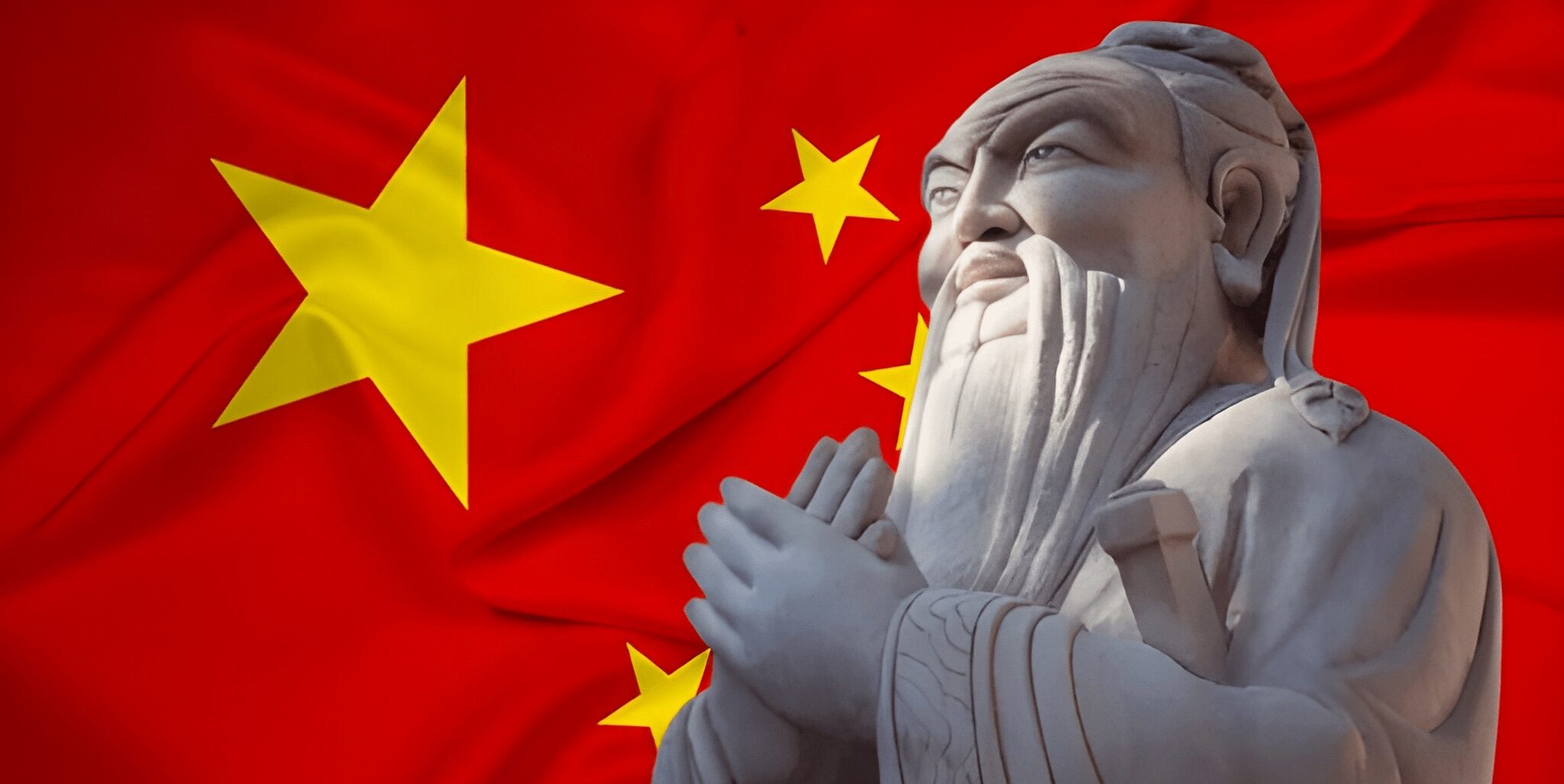
One of modern China’s foundational national narratives states that during the nineteenth and early twentieth centuries (specifically between 1839 and 1949), China lost control over large portions of its territory at the hands of foreigners.

Moreover, those foreign powers exploited the Chinese people by forcing them to accept unequal terms of trade that were more favorable to those foreign powers. A particularly painful part of this history is the memory of an opioid crisis China faced during this period.
For example, during the nineteenth century, the British thought China was getting too rich from the former’s purchasing of so much of the latter’s tea, and trading not much with it that the latter wanted in return. Opium, however, was at this time an important trade commodity, especially through Britain’s East India Company. It had already monopolized production in China, and the British imperial elites saw an opportunity to expand distribution into the country. Thus, while the East India Company had been exporting opium to China since the eighteenth century, even after the Chinese banned its import in 1799, the British continued to “trade through independent traders in the hope of protecting their commercial interests.” It was under Queen Victoria, however, that the British began to massively increase the export of opium to China not long after she assumed the throne. Consequently, much of the Chinese population became hooked on the substance very quickly.
This was good news for the British as the trade imbalance rapidly improved as the Chinese became addicted to the drug. When the Chinese tried to stop the opium trade, the British declared war on China, launched the First Opium War, killed thousands of Chinese citizens in the process, and once it was over made the Chinese hand over Hong Kong along with opening more ports for the importation of more opium. This has since become known in China as the “Century of National Humiliation.”
The Century of Humiliation, since the Chinese Communist Party won the Chinese civil war and took control of the country in 1949, has provided historical lessons that have informed the CCP’s governance, in both domestic and foreign policy. The lesson is that when China is weak, political, cultural, and economic exploitation and ruin will become its fate. If China is to achieve equality among nations and develop in its own way as it sees fit, then it must be powerful—politically, economically, and culturally.
Seen through a strategic lens, then, the humiliation narrative has—in many ways—functioned as a form of civilizational trauma turned doctrine. In essence, this understanding of China’s history is the source of the state’s legitimacy for action. It has provided the ideological fuel behind what could be termed China’s “Century of National Re-Civilization.”
China’s economic, military, and geopolitical rise has been covered and theorized countless times by now. Some point to the fact that China is ran by engineers as opposed to lawyers, as in America, which explains its ability to view politics from a logical perspective that is conducive to action, innovative design, and decisionism. Others focus on international relations theory to determine whether China is a status quo power that seeks to work within the so-called rules-based order, or whether it is a revisionist power that seeks to overturn the world order to a state which is more favorable for its ability to assert power.
These theories only go so far in explaining the nature of modern Chinese political, and geopolitical, practice. This means that China’s five thousand years’ old civilization, with all its distinctive features, must be preserved, perpetuated, and protected by the state against all enemies into the future.
A fundamental aspect of China’s revival of its civilization, or re-civilization, to once again never become weak and to ensure its place as a distinct group with a distinct destiny in world history is to embark upon what is known as the “Chinese Path,” which Xi Jinping declared was necessary to realize the “Chinese dream.” The Chinese learned that after the collapse of the Soviet Union in 1991, and with their eschewing of the Washington Consensus, there is “no single model of development suitable for all countries.” In turn, China can draw inspiration from others, but never copy them.
To understand modern China, we need to understand the metanarrative of its politics. That metanarrative, to which David Dusenbury and Philip Pilkington recently alluded, is defined by what the Chinese refer to as the “revival of civilization” as “a conscious task that will shape its politics and culture in the coming decades.”
Thus, if re-civilization is China’s “what,” the Chinese Path is “how.” Broadly speaking, the Chinese Path is understood as China’s break with the western view that modernization equates to capitalism or westernization and/or to the institutional arrangements which the CCP deems fit for China’s political development. This piece will suggest that path is best understood as possessing a duality of purpose: spiritual and political.
With regards to the former, the promotion of Confucianism in China is to advance the Chinese preferred way of life and culture. Dusenbury and Pilkington point out that Confucianism “endorses the sort of rule by intellectuals that is effectively the system under the current Communist Party bureaucracy.”
Confucianism is a philosophy about how human beings create order through moral self-cultivation and proper relationships. The CCP instrumentalizes Confucianism as an adjunct of Chinese policy through its valorization of the harmony (hé) and benevolence (rén) ideals. Confucianism has thus contributed to shaping how China’s policy is communicated and understood by the Chinese through its ethics which guide cooperative projects, such as the Belt and Road Initiative. The philosophy is a reference “in shaping China’s pursuit of order and stability.” It is also taught as mandatory in the school curriculum in the People’s Republic. The question that must be asked is: what purpose does this official promotion of this ancient philosophy, with quasi-religious characteristics, play in the revival of Chinese civilization?
In short, it promotes an overarching philosophical framework that structures social, economic, and political behavior. Without mass belief in discipline and in something towards which the mortals of a civilization can strive, history shows the civilization will decay.
The second main component of China’s path to re-civilization pertains to the political leadership of the CCP. According to the Chinese path, direction can only be provided by a political leadership that is absolutely sovereign whereby civic, economic, and constitutional institutions are subordinated to the sovereign; in China’s case, the CCP. For example, in China, the big financial institutions are subordinated to state power—the CCP. In the west, by contrast, while the state has a monopoly on the use of violence (for now), political decisions—including making war—have for a very long time been very much influenced by big financial institutions.
China has, conversely, subdued the influence of capital. This has been possible, despite the massive capitalist accumulation of the past few decades, due to what is known by certain Chinese legal scholars as the absolute constitution from which all other political and institutional arrangements descend. Namely, the CCP. China technically has a dual-constitution system where there is the Party Constitution of the Chinese Communist Party (CCP) and the State Constitution of the People’s Republic of China (PRC). The latter is referred to as the “written Constitution” and this “assigns duties to different organs and institutions of the country. On the other hand, the Party Constitution, largely referred to as the ‘unwritten’ Constitution, is more important as the Party holds absolute power and authority.” It is for this reason that the Chinese legal scholar, Chen Duanhong, referred to the CCP as China’s “absolute constitution” and the “primary fundamental law.”
What this means is that the Party is the core of the Chinese government and provides the basis for China’s institutions. To escape normative constitutionalism which, in the eyes of certain elements of the Chinese elite, has contributed in the west to a hollowing out of political institutions which are sclerotic and susceptible to corruption, the CCP has created a situation—as one scholar put it—whereby “intra-Party rules and regulations have become the driving force behind constitutionalism with Chinese characteristics.”
All constitutional narratives, from the United States to the Federal Republic of Germany to the People’s Republic of China, are context-driven and shaped by the historical processes that address the particular historical experiences of the respective nation-states. Each of these countries codified constitutions which were perceived to be the necessary political, institutional, and legal redresses of past historical traumas. In the west, though, particularly since the end of the Second World War, liberal constitutionalism has been the only legitimate form of constitution, according to the post-war paradigm under which we all still live. This type of constitutionalism “hinges on a written constitution that includes an enumeration of individual rights, the existence of rights-based judicial review, a heightened threshold for constitutional amendment, a commitment to periodic democratic elections, and a commitment to the rule of law.” The fundamental purpose of these arrangements is to ensure the administrative and adjudicative functions of the state operate independently from potentially powerful factions or leaders—as well as check and potentially limit them.
Just as many within the vaguely defined, and increasingly popular, “post-liberal” movement in the west are beginning to imply, the Chinese (and other civilization-states, particularly Russia) see liberal constitutionalism as unable to adequately grapple with the core features of political life, as well as limiting the state’s ability to decide and act for the public good. According to the framework of absolute constitutionalism, the liberal approach has failed and does not lead to a path to reviving civilization in any meaningful way because it attempts to replace political decisions with neutral rules, subordinate them to shifting norms, legal discourse, and parliamentary debate which renders the state incapable of effectively handling existential crises.
However, because of the absolute constitution, meaning the existential political status of the state, the written constitution in China is not used to constrain the Party as the Party’s leadership is an existential law. Therefore, state decisions are always legitimate because the state—the CCP—is legitimacy. It is for this reason that Mittelstaedt said that the CCP “has transcended politics to become synonymous with China.”
Author: Bailey Schwab, PhD – Foreign policy researcher specialising in U.S. strategy, presidential doctrines, and the evolution of Western statecraft from the late Cold War to the present. He is currently a Visiting Fellow at the Hungarian Institute of International Affairs, Budapest.
(The opinions expressed in this article belong only to the author and do not necessarily reflect the views of World Geostrategic Insights).