



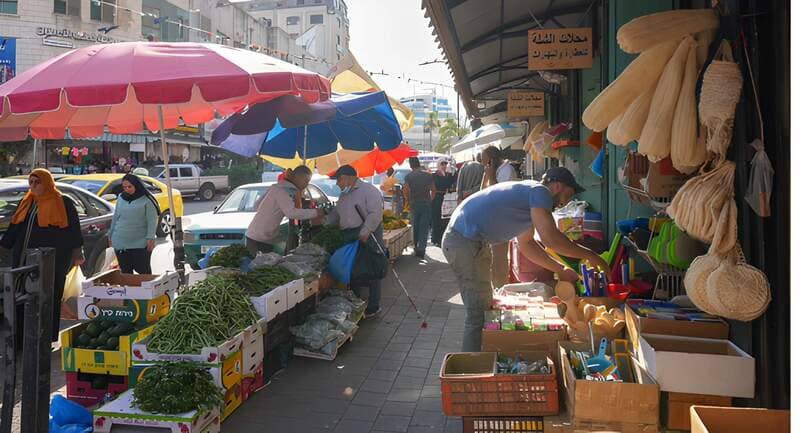
In international geopolitical discourse, regional dynamics are frequently interpreted through the official rhetoric of political factions. Instead, in his interview with World Geostrategic Insights, Dr. Nabil Kukali utilizes recent polling data from the Palestinian Center for Public Opinion (PCPO) to examine the empirical realities of popular sentiment in the West Bank and Gaza.
- Domestic economic survival,
- Public preferences for non-military, political and diplomatic approaches,
- And a pronounced strategic neutrality toward broader regional power struggles,
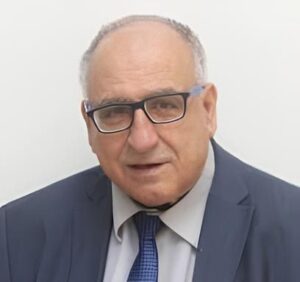
Dr. Nabil Kukali is the founder and president of the Palestinian Center for Public Opinion (PCPO), an independent research institution established in February 1994 and based in Beit Sahour. With over three decades of professional experience in quantitative and qualitative survey methodologies, market research, and socio-economic analysis, Dr. Kukali has led numerous large-scale research and fieldwork projects across the West Bank, East Jerusalem, the Gaza Strip, the Arab community in Israel, Lebanon, Egypt, and other countries throughout the Middle East and North Africa (MENA) region. His academic and interdisciplinary background spans roles as an associate professor, journalist, and researcher specialized in monitoring public sentiment, institutional credibility, and conflict resolution dynamics in the Middle East.
Q1 – Dr. Kukali, much of the international geopolitical discourse on Palestine relies on statements from political leadership. Based on the latest data from the Palestinian Center for Public Opinion (PCPO), what are the most significant divergences between the official rhetoric of political factions and the actual, day-to-day priorities of the Palestinian public in the West Bank and Gaza?
A1 – I would be cautious about describing this simply as a gap between “the factions” and “the public,” because our surveys measure public attitudes; they do not always ask respondents to compare their priorities directly with the positions of every political faction.
What our recent data do show very clearly, however, is that ordinary Palestinians are preoccupied with very concrete questions: economic survival, employment, purchasing power, personal security, freedom of movement, institutional credibility, and whether they can imagine a viable future for themselves and their families.
In a PCPO survey conducted between June 24 and July 5, 2026, 92.6% said purchasing power had weakened, 90.7% believed poverty and unemployment had increased, and 84.7% said the economic situation had affected their households to at least a moderate degree. At the same time, 74% viewed the private sector as essential to economic stability.
But Palestinians are not thinking only about survival. In our July 2026 research, 80.6% said that lasting peace requires security, dignity, and freedom for Palestinians and Israelis, while 77.7% identified lack of trust as a major or moderate obstacle to peace.
So I would describe the public mood as both practical and political. Palestinians continue to care deeply about national rights and political outcomes, but they also ask very immediate questions: Can I work? Can I support my family? Can my children build a future here? Can I move freely? And will the institutions that govern me genuinely represent and protect me?
Political rhetoric matters, but for ordinary people its credibility is increasingly tested against everyday life.
Q2 – Your research has consistently highlighted that a vast majority of Palestinians view the lack of mutual trust as the primary barrier to conflict resolution. From an empirical standpoint, how has the trauma of recent military escalations reshaped the public’s perception of a viable co-existence, and what ground-up mechanisms do Palestinians believe are necessary to rebuild this trust?
A2 – The first distinction I would make is methodological. Our data can describe attitudes in the post-war environment, but a cross-sectional survey cannot prove that military trauma alone caused every change in public opinion.
What we can say with confidence is that distrust is very high, but the idea of coexistence has not disappeared.
In our survey conducted between July 5 and July 18, 2026, 77.7% said that lack of trust is a major or moderate obstacle to peace. Yet 68.9% said coexistence could be possible if it were based on justice and equal rights, while 80.6% said lasting peace requires security, dignity, and freedom for Palestinians and Israelis.
To understand these findings properly, I believe public opinion needs to be examined at several levels. We should ask: What outcome do people want? Do they believe it is achievable? Whom do they trust to implement it? What conditions would make it fair and sustainable? And what means do they consider acceptable or effective in reaching it?
These dimensions do not necessarily move together.
A person may want peace but believe that it is currently impossible. Someone may support coexistence but distrust the other side or the mediators. And a person may prefer a non-military approach because he or she believes it is more politically effective, without that answer necessarily establishing an absolute moral position on every possible use of force.
This distinction is particularly important when interpreting another PCPO finding. When Palestinians were asked about the most effective way to gain international support for Palestinian rights, 57.6% chose a combination of political and diplomatic action and peaceful popular resistance, 22.0% chose political and diplomatic action alone, and 13.3% chose peaceful popular resistance alone. Together, 92.9% selected one of these non-military approaches, compared with 3.2% who selected military action.
A further 78.6% agreed that achieving Palestinian political and diplomatic gains requires greater emphasis on peaceful rather than military means.
These are important findings, but they should not be made to say more than they actually measure. They demonstrate a very strong preference for non-military approaches in the context in which the questions were asked. They do not, by themselves, prove that every respondent has adopted an unconditional moral rejection of force. Effectiveness, political cost, and moral judgment are related, but they are not identical measures.
The same caution applies to civilian protection. In another question, 74.8% said that targeting civilians by any party reduces international support for peace and regional stability to a great or some extent. That finding measures the perceived political and diplomatic consequences of targeting civilians; by itself, it does not establish an unconditional moral principle.
For me, the deeper moral test is consistency: does the judgment remain the same when the identity of the perpetrator or the victim changes?
If civilian life has value, that value should not depend on nationality. An Israeli civilian does not become a legitimate target simply because he or she is Israeli, just as a Palestinian civilian does not become less entitled to protection because he or she is Palestinian.
That does not erase differences in occupation, power, control, political context, or legal responsibility. Equality in the value of civilian life is not the same as equality of political responsibility.
This brings us back to trust. People should not simply be asked to trust first and negotiate later. Trust can be built through repeated and verifiable experiences: the protection of civilians, respect for agreements, accountability, and equal application of the rule of law, economic and political rights, and evidence that commitments will survive changes of government.
I would therefore view trust not only as a prerequisite for peace, but also as a possible outcome of credible political behavior.
Q3 – Recent polling data indicates a strong consensus —above 75%— among the Palestinian population in favor of remaining neutral amid broader regional conflicts involving Iran, Israel, and the United States. How do you interpret this pronounced shift toward non-alignment? Does it signal a growing disillusionment with regional proxy dynamics?
A3 – Here the empirical evidence is quite clear.
In PCPO Poll No. 220, conducted through CATI using Random Digit Dialing between March 7 and March 11, 2026, among 309 respondents in the West Bank, including East Jerusalem, and the Gaza Strip, 78.3% said that if the regional war continued, they would not lean toward any side. By comparison, 19.4% expressed sympathy toward Iran, 1.3% leaned toward Israel and the United States, and 1% were unsure.
The broader pattern is equally important. Some 56.6% said all parties shared responsibility for the escalation, while 35.9% saw the conflict primarily as an international struggle for influence. In addition, 77% believed the war would worsen Palestinian economic and political conditions, while 57.9% expected it to negatively affect the future of the Palestinian cause.
I would therefore describe this less as ideological neutrality and more as strategic caution and political distancing from competing regional axes.
Palestinians have repeatedly experienced regional conflicts that imposed costs on them without necessarily advancing their own political position.
But I would be careful with the phrase “disillusionment with proxy dynamics.” It is a plausible interpretation, but our survey did not ask that exact question. What the data establish is a strong preference not to be drawn into competing regional alignments.
In other words, many Palestinians appear to be asking a practical question: What will this regional confrontation actually mean for us and for the Palestinian cause?
Q4 – There appears to be a sentiment among Palestinians that Arab governments prioritize their own strategic and economic alignments over the Palestinian cause. How is this perceived “abandonment” influencing domestic political attitudes and the public’s view of regional diplomatic frameworks?
A4 – I would be careful with the word “abandonment.” Unless that perception is measured directly in a survey question, I would not present it as an established PCPO finding.
What our data do show is considerable concern that broader regional competition may marginalize rather than advance the Palestinian issue.
In our regional-war survey, 57.9% believed the conflict would negatively affect the future of the Palestinian cause, while 77% expected deterioration in Palestinian economic and political conditions. A majority also viewed the confrontation as involving several competing actors and interests rather than a single responsible party.
My interpretation is that this may encourage a more pragmatic and skeptical approach to regional alliances.
Palestinians may increasingly judge diplomatic initiatives not only by what governments say about Palestine, but by what those initiatives actually produce.
Do they protect Palestinian rights? Do they reduce violence? Do they improve freedom of movement? Do they strengthen Palestinian institutions and economic viability? Do they preserve the possibility of political self-determination?
That is different from saying that Palestinians have turned against Arab governments.
The narrower conclusion supported by the evidence is that public opinion appears increasingly reluctant to assume that regional alignment automatically translates into political benefit for Palestinians.
Q5 – With the Palestinian Authority initiating electoral reforms, what does PCPO’s data suggest regarding the population’s readiness and enthusiasm for these elections? Are we looking at a highly polarized electorate or a fragmentation toward independent, non-aligned factions?
A5 – Here I would distinguish among institutional readiness, public support for holding elections, and actual voting behavior.
Institutionally, the electoral process is active. The Palestinian Central Elections Commission is proceeding with preparations for legislative elections scheduled for November 28, 2026. Under the current legal framework, the Legislative Council has 132 seats, women must constitute at least 33% of candidates on electoral lists, the electoral threshold is 1%, and the minimum age for candidacy is 23. The nomination period runs through October 13. Elections Palestine.
From a public-opinion perspective, however, we also have an important direct indicator. PCPO’s latest poll found that 79.4% of Palestinians want the elections to go ahead.
That is a significant finding because it indicates strong public support for the electoral process itself. But it does not automatically tell us how enthusiastic voters are about every aspect of the process, whether they have already chosen among factions, or whether they are decisively moving toward independent lists.
We should therefore distinguish clearly between support for holding an election and the choices voters make within that election.
A citizen may strongly support elections because he or she wants renewed political legitimacy, institutional accountability, or an end to political stagnation, while still remaining undecided about whom to vote for. Likewise, support for elections alone cannot tell us whether people will vote primarily on factional identity, for independent candidates, or according to criteria such as competence, integrity, and performance.
The process is also facing genuine political and operational obstacles. On October 7, The Jerusalem Post reported that Israel had allegedly blocked the Palestinian Central Elections Commission from entering East Jerusalem and Gaza, according to a Palestinian Authority official. CEC spokesperson Farid Taamallah confirmed the reported obstruction to AFP while saying the elections could still proceed. The same report noted the European Union’s readiness to deploy an election observation mission. Jerusalem Post
In my comments to The Jerusalem Post, I said that another postponement would certainly generate frustration, especially given the high level of public support for holding the elections. But I also stressed that frustration would not necessarily mean that the public would automatically blame the Palestinian leadership for a delay. Jerusalem Post.
The crucial question would be: Whom do Palestinians hold responsible for the obstruction?
If the public believes that President Mahmoud Abbas and the Palestinian leadership remain committed to holding inclusive elections across the West Bank, East Jerusalem, and Gaza, and that the principal obstacle comes from Israeli restrictions, the political cost to the Palestinian leadership could be limited. That was also the point I made to The Jerusalem Post. Jerusalem Post.
On the other hand, if Palestinians conclude that a delay resulted from an internal Palestinian decision or from a lack of political will, frustration could be directed toward the leadership itself.
This illustrates an important principle in public-opinion analysis: people react not only to what happens, but also to why they believe it happened and who they consider responsible.
Some Palestinians may also view a refusal to hold national elections without East Jerusalem or Gaza as a defense of a basic principle: that Palestinian national elections should include all Palestinian territories rather than become a partial process that excludes part of the Palestinian population. This point was also reflected in my comments to The Jerusalem Post. Jerusalem Post.
As for the nature of electoral competition itself, I do not want to make claims that our data have not yet directly measured. We cannot say scientifically at this stage that the electorate is highly polarized or that there has been a decisive shift toward independent lists.
What we can say is that the elections will test several forces at the same time: traditional factional loyalty, dissatisfaction with institutional performance, demands for competence, integrity and accountability, and the appeal of independent or non-traditional candidates.
So I would not reduce the Palestinian electorate in advance to “Fatah versus Hamas” or “factions versus independents.”
The deeper questions are not only whether Palestinians want elections—for which we already have a strong indicator—but also: If the elections are obstructed, whom will the public hold responsible? And if they proceed, what criteria will voters actually use to choose among candidates and lists?
Q6 – The international community frequently debates the future leadership of the Palestinian Authority. Historically, figures currently in detention, like Marwan Barghouti, have maintained significant polling leads. What do your recent surveys reveal about the public’s preferred leadership archetypes, and how does the electorate balance the desire for reformist figures against traditional factional loyalties?
A6 – I would make an important distinction here between historical popularity, current candidate preference, and preferred qualities of leadership.
The recent PCPO surveys we are discussing were not designed as a presidential horse race, so I would not use them to claim that one named individual currently leads another.
Nor would I take an older poll and present it as though it measured today’s electorate. Candidate lists change, political circumstances change, and question wording matters.
What is more useful analytically is to ask what kind of leadership Palestinians increasingly expect.
Issues such as credibility, integrity, institutional reform, accountability, independence of judgment, the capacity to deliver results, and the ability to work across political divisions have become central to the Palestinian political debate.
Traditional factional loyalties remain important, but they coexist with frustration over institutional performance, political division, and the absence of regular national elections.
So Palestinians may not only be asking, “Who should lead?” They may also be asking, “What kind of leadership do we need?”
But I want to be precise: that is an analytical reading of the political environment, not a current PCPO ranking of leadership characteristics or presidential candidates.
Fresh polling is required before converting that interpretation into a numerical claim.
Q7 – The United States has increasingly utilized targeted sanctions and visa denials against Palestinian and PLO officials. In your analysis, do these external measures genuinely impact public opinion regarding the current leadership’s legitimacy, or do they inadvertently foster political cohesion against perceived foreign intervention?
A7 – I would first separate the external policy itself from its effect on Palestinian public opinion.
There are current U.S. visa restrictions affecting individuals traveling on documents issued or endorsed by the Palestinian Authority, alongside other U.S. visa-restriction mechanisms. But our recent PCPO surveys have not directly measured whether such measures increase or decrease the legitimacy of Palestinian political leaders. Travel.state.gov.
So I would not present either effect as an empirical public-opinion finding.
Politically, both mechanisms are possible.
External pressure might weaken confidence in a leadership if citizens interpret it as evidence of diplomatic failure or political isolation. But it could also produce the opposite reaction if people perceive the measure as outside interference or political pressure imposed on Palestinians.
Which of these reactions dominates cannot be determined by assumption. It requires a properly designed survey question.
My broader view is that the long-term legitimacy of Palestinian leadership is determined primarily at home.
Representation, accountability, elections, institutional credibility, public participation, performance, and the capacity to protect public interests are ultimately more important to political legitimacy than whether a foreign government approves or disapproves of a particular Palestinian official.
This is another example of why we must distinguish between an external political action and the public reaction to it. They are not the same variable.
Q8 – You have argued that the Palestinian private sector is the “last economic lifeline” amid the fiscal paralysis of the Palestinian Authority and the withholding of clearance revenues. How critical is economic sovereignty to the average Palestinian, and does the public now view economic resilience as a more reliable form of governance than traditional public institutions?
A8 – I would first clarify that describing the private sector as a “last economic lifeline” is my analytical characterization; it is not wording that respondents themselves were asked to endorse.
But the underlying findings are striking.
In our June 24–July 5, 2026 survey of 503 Palestinians in the West Bank, including East Jerusalem, and the Gaza Strip, 92.6% said purchasing power had weakened, 90.7% said poverty and unemployment had increased, and 84.7% reported at least a moderate impact of the economic crisis on their households.
At the same time, 74% viewed the private sector as essential, 72% believed it could help reduce unemployment and poverty, and 71% saw it as the fastest mechanism for moving the economy again.
For an ordinary Palestinian, economic sovereignty is not an abstract macroeconomic concept.
It means whether a worker receives a salary, whether a business can obtain liquidity, whether goods can move, whether a family can plan beyond the next month, and whether a young person can imagine building a future at home.
But I would not interpret these findings as evidence that Palestinians want the private sector to replace public institutions.
A resilient private sector cannot substitute for accountable government, predictable fiscal arrangements, functioning institutions, or political stability.
The more defensible conclusion is that economic resilience and institutional governance need each other.
Without productive economic capacity, political institutions become increasingly fragile. Without credible institutions and predictable rules, the private sector cannot provide a sustainable substitute for governance.
Q9 – Your commentary often bridges the gap between economic survival and regional security, notably concerning the re-entry of Palestinian laborers into the Israeli market. How does the Palestinian public navigate the tension between economic dependency on Israel and the overarching aspiration for political self-determination?
A9 – This is one of the most human dimensions of the conflict.
A Palestinian worker may depend on employment in Israel because that income is necessary to support a family. That economic decision should not automatically be interpreted as a political preference for dependency.
People often make choices within the economic opportunities available to them, not necessarily within the economic system they would choose for themselves.
A person can need a salary today and still aspire to greater political and economic self-determination tomorrow. These positions are not contradictory.
Our April 2026 migration research helps illustrate the pressure behind this dilemma. Some 35% said they were seriously or somewhat considering emigration, and economic factors were the largest category of reasons cited, at 40%.
This does not necessarily mean that people want to abandon their homeland.
It may mean that they are asking whether they can build a viable life within it.
That distinction is essential.
Allowing Palestinian workers access to the Israeli labor market can provide important short-term relief to families. But employment permits cannot substitute for building a productive Palestinian economy capable of generating opportunities of its own.
A sustainable economic relationship should expand people’s choices rather than make one society permanently dependent on decisions made by the other.
The deeper question, therefore, is not simply whether Palestinians can work, but whether they can stay, plan, and build a future with dignity.
Q10 – Conducting rigorous opinion polling in highly volatile environments like the West Bank and Gaza presents immense logistical and ethical challenges. Could you share how PCPO maintains methodological integrity under these conditions, and how you mitigate the fear factor to ensure respondents provide authentic, uncensored feedback?
A10 – This question goes to the heart of our work.
PCPO has been conducting public-opinion research since 1994, and our basic principle is that difficult conditions are not a justification for lowering methodological standards. If anything, they make those standards more important.
Depending on the project and field conditions, we use CATI, face-to-face CAPI or TAPI, and other appropriate modes of data collection. We pilot questionnaires before full fieldwork, use probability-based selection procedures where appropriate, including Random Digit Dialing and the last-birthday method, make repeated contact attempts rather than immediately replacing difficult-to-reach respondents, and conduct back-checks on completed interviews.
We also monitor interview duration, interviewer performance, and supervisor reviews and, where appropriate and safe, use geographic information as an additional quality-control tool.
But methodological procedures alone cannot completely eliminate fear.
Our responsibility is to reduce it as much as possible through confidentiality, neutral question wording, properly trained interviewers, voluntary participation, and privacy during the interview, and clear assurances that respondents may refuse any question or terminate the interview.
There is another principle that I consider equally important: an opinion poll does not read people’s minds.
It records what respondents are willing to tell us under the conditions in which the interview takes place.
In a conflict environment, social desirability, fear, and self-censorship can never simply be assumed to be zero. The professional response is not to pretend these influences do not exist. It is to design the research carefully, monitor quality, disclose limitations honestly, and avoid interpreting a percentage with greater certainty than the methodology permits.
For me, methodological integrity means more than producing a number accurately. It also means being honest about what that number measures, what it does not measure, and how far we can responsibly interpret it.
Dr. Nabil Kukali – Founder and President, Palestinian Center for Public Opinion (PCPO) Public Opinion Researcher and Political Analyst.
Image Source: World Bank.