



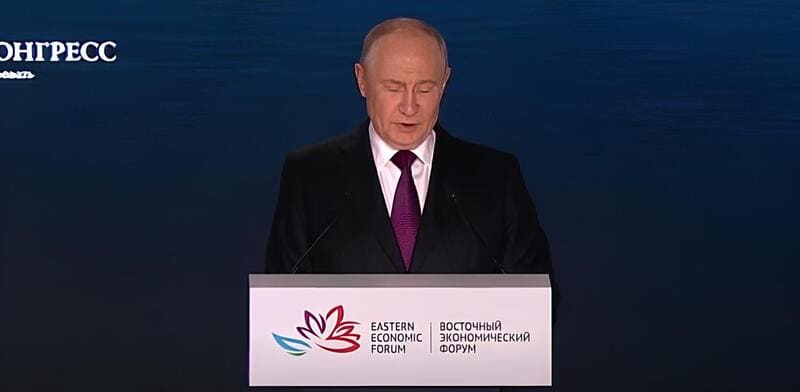
The 11th Eastern Economic Forum (EEF 2026), held in Vladivostok from September 1 to 4, 2026, marked a critical milestone in Moscow’s long-term pivot to Asia. Under the banner “The Far East: Development for the Benefit of People,” the forum solidified the Russian Far East as a strategic economic gateway, emphasizing deeper integration with ASEAN nations and a comprehensive 10-year development strategy extending through 2036.
However, this structural shift comes with profound macroeconomic challenges. As Moscow accelerates its de-dollarization, the Russian financial system must navigate high domestic interest rates, localized economic overheating, liquidity fragmentation, and a systemic reliance on the Chinese yuan.

To break down these complexities, WGI interviewed Tatiana Pokrovskaia, an international business development expert with over 20 years of experience driving market expansion across Asia, Africa, the CIS, and the Middle East. Based in St. Petersburg, Pokrovskaia provides an insider’s look into the delicate balance between state CapEx and private domestic capital, the real efficacy of Far Eastern fiscal incentives, and the institutional frameworks managing Russia’s shifting trade architecture.
Q1 – President Putin’s newly unveiled 10-year development strategy through 2036 outlines a “new investment cycle” for the Russian Far East. From a macroeconomic perspective, what is the projected equilibrium between state-led capital expenditure (CapEx) and private domestic investment required to sustain this long-term growth trajectory?
A1 – At the 11th Eastern Economic Forum (EEF 2026), President Vladimir Putin clearly defined the macroeconomic balance between public and private investment: the key, dominant role in the new investment cycle leading up to 2036 is assigned to private domestic and foreign capital, while the state assumes the role of creating the necessary conditions and infrastructure foundation.
Within the framework of the macroeconomic model for the Far East’s development, this balance is structured according to the following principles:
– In line with the region’s announced strategic development, federal or regional budget deficits or fiscal constraints must not act as a limiting factor. The role of state capital expenditure (CapEx) is shifting from the direct financing of commercial projects to the creation of favorable conditions for their development.
– Currently, state investment focuses primarily on overcoming infrastructure bottlenecks (such as the Northern Sea Route, the Eastern Operating Domain, and the energy sector—including small modular reactors) as well as on urban development and investments in healthcare, education, and digitalization. This balance is also achieved through co-financing mechanisms—such as the implementation of long-term offset contracts supported by VEB.RF (which provide investor guarantees and reduce private CapEx risks) and the development of Advanced Special Economic Zones (ASEZs) and Free Ports.
– A balance with Russian monetary policy is also crucial, particularly regarding inflation control; state incentives and preferential regimes are used to selectively offset the high cost of borrowed capital without causing the economy to overheat.
Q2 – The Far Eastern Federal District relies heavily on preferential regulatory regimes, such as Advanced Special Economic Zones and the Free Port of Vladivostok. Given the current macroeconomic environment of elevated domestic interest rates in Russia, how effective can these fiscal incentives be in reducing the cost of capital and attracting high-value manufacturing?
A2 – Amid a tight monetary policy—where the market cost of borrowed capital in Russia is extremely high—the traditional fiscal incentives associated with Advanced Development Territories (ADTs ) and the Free Port of Vladivostok (FPV) are undergoing a significant transformation. The effectiveness of these measures in lowering capital costs and attracting high-tech manufacturing depends on the extent to which fiscal benefits are integrated with subsidy and project finance mechanisms.
As announced at the 2026 Eastern Economic Forum (EEF), the Russian Far East is transitioning to a unified system of incentives that ties benefits to the type of economic activity rather than geography. This approach employs tools such as reduced social security contribution rates, zero-rated key taxes during the initial phase, and compensation via subsidies and concessional financing through VEB.RF.
Of course, there are challenges and risks that must be addressed in partnership with the state. As I mentioned earlier, fiscal incentives often prove insufficient to attract high-tech sectors—as opposed to the raw material or logistics industries that have traditionally dominated the FPV and ADTs—due to the region’s specific macro-structural characteristics. In this context, the optimal solution lies in long-term offset contracts backed by state guarantees—such as securing firm government orders for product sales, and so forth.
Q3 – How does the massive structural funding earmarked for the Far East impact Russia’s broader federal budget architecture and sovereign debt sustainability, particularly when balanced against competing macroeconomic priorities?
A3 – Large-scale targeted funding for the Russian Far East under the new investment cycle extending to 2036 exerts a moderately strained yet strictly controlled influence on the federal budget architecture and the structure of the Russian Federation’s public debt.
Amidst tight budget constraints and competing priorities of significant scale—such as social obligations, the defense industry, and technological sovereignty—Russia’s Ministry of Finance is shifting its focus from direct budgetary funding toward off-budget leverage and contingent liabilities.
I would not go so far as to say that funding for the Far East is allocated on a “residual” basis; rather, it is deeply integrated into the framework of state programs and national projects and is strictly linked to expected macroeconomic returns.
From the perspective of debt sustainability, expenditures on the Far East do not pose critical risks at the federal level, though they do alter the structure of the debt market. Russia’s total public debt remains at a level that is extremely low by G20 standards (approximately 15–17% of GDP). Spending on the Far East is not, in itself, capable of destabilizing federal debt levels, as the Ministry of Finance strictly maintains the budget deficit within a safe range of 1–1.5% of GDP. The bulk of the debt burden associated with long-term projects is being shifted away from direct public debt and onto the balance sheets of state corporations and development institutions through the issuance of infrastructure bonds. The key factor ensuring the model’s sustainability is the move away from “direct treasury funding” in favor of state co-financing and long-term government guarantees.
Q4 – The shift toward local currencies in bilateral trade with Asian partners has accelerated. How are current institutional frameworks—such as alternative clearing mechanisms and non-SWIFT financial messaging—mitigating the transaction costs and liquidity risks inherent in non-convertible or partially convertible currencies?
A4 – Moving away from SWIFT to national platforms—such as Russia’s SPFS (System for Transfer of Financial Messages) and China’s CIPS (Cross-Border Interbank Payment System)—entails both significant advantages and risks.
One positive aspect is a reduction in transaction costs; specifically, the elimination of intermediaries (such as US correspondent banks) enables direct bank-to-bank settlements. By using these alternative messaging systems, financial institutions in friendly nations avoid the burdensome and protracted sanctions screening procedures imposed by Western regulators, thereby accelerating transaction processing. Both SPFS and CIPS support the ISO 20022 international financial messaging standard, which automates payment processing.
Nevertheless, this process necessitates robust liquidity and convertibility risk management systems. The use of partially convertible currencies (where capital flows are state-restricted, as in China) or non-convertible currencies creates issues regarding structural trade imbalances—for instance, when Russian exports to a country significantly exceed imports, resulting in an accumulation of illiquid local currency.
However, these challenges are being addressed through central bank agreements that stabilize interbank rates and ensure working capital availability, as well as through regional hubs (such as the well-developed offshore yuan infrastructure in Hong Kong and Singapore, and the emerging infrastructure in Vladivostok within the framework of the International Advanced Special Economic Zone). Advanced institutional mechanisms—including those being developed within the BRICS framework—are introducing multilateral netting systems. Despite the technological efficiency of SPFS and CIPS, institutional mechanisms cannot yet fully mitigate macroeconomic risks, such as the threat of secondary sanctions and exchange rate volatility.
Q5 – The ongoing structural transformation of Russia’s foreign trade introduces unique challenges for monetary and exchange rate stability. How can the Central Bank of Russia effectively manage ruble volatility and imported inflation while navigating the structural shifts resulting from de-dollarization and the systemic reliance on the Chinese yuan as a primary reserve and trade asset?
A5 – The structural transformation of Russia’s foreign trade has fundamentally altered the currency market landscape. With the withdrawal of Western currencies and the shift to the yuan as the primary trade and reserve asset, the Bank of Russia (CBR) has encountered the phenomena of liquidity fragmentation and asymmetric currency flows. Due to strict sanctions restricting traditional exchange-traded instruments, the regulator is compelled to overhaul its entire system for managing volatility and inflation.
The CBR’s macroeconomic toolkit for adapting to “yuanization” and curbing price pressures comprises several key areas. The first is managing ruble volatility within the yuan-denominated sphere; the CBR employs currency swap operations—selling yuan for rubles and subsequently repurchasing them—to smooth out sharp exchange rate fluctuations. The CBR calculates official exchange rates based on over-the-counter (OTC) market data, where the yuan has become the primary benchmark for exchange-traded pricing.
A second crucial aspect of this adaptation is curbing imported inflation. Reliance on imports from China and other Asian nations renders domestic prices in Russia highly sensitive to the yuan exchange rate and logistics costs. A high key interest rate remains the only universal response to pro-inflationary risks (including the ruble’s depreciation against the yuan). A tight monetary policy cools domestic demand for imports from both households and businesses, thereby reducing the need to purchase foreign currency and stabilizing the exchange rate.
In addition to the first two areas, diversification and the minimization of “yuan trap” risks must be noted. Concentrating all trade and reserve operations in a single currency (the yuan) creates a specific risk: dependence on the regulatory decisions of the People’s Bank of China and the PRC’s domestic monetary policy. Consequently, gold held domestically remains the primary neutral asset for the Central Bank of Russia. The regulator supports the development of infrastructure for trading and settlements in the currencies of friendly nations (such as UAE dirhams, Indian rupees, and Kazakhstani tenge). This enables risk diversification and prevents the yuan from establishing an absolute monopoly on the Russian market. The development of the digital ruble for cross-border settlements is also a significant factor.
Q6 – Large-scale infrastructure investments in the Far East run the risk of generating regional economic overheating. What monetary policy adjustments or macroprudential tools are necessary to sterilize these localized inflationary pressures without stifling regional GDP growth?
A6 – Indeed, when large-scale public and private investments pour into a region with a limited supply of goods and services, the result is not an immediate rise in physical output but rather a disproportionate increase in costs (primarily the wage bill) and a localized spike in inflation. To counteract this pressure, the Bank of Russia and the government’s economic team cannot simply adjust interest rates for a single region; instead, they employ a nuanced combination of targeted macroprudential measures, fiscal policy coordination, and regulatory incentives.
– Macroprudential tools to cool unproductive demand: To ensure investments flow exclusively into the real sector (megaproject CapEx) rather than fueling consumer demand, the Central Bank of Russia employs targeted regulatory filters, raising macroprudential add-ons for consumer loans to prevent an influx of “excess” liquidity into the region’s consumer market, and restructuring the preferential Far East mortgage program by tightening parameters to prevent real estate bubbles.
– Coordination of monetary policy with structural and fiscal policies: Mitigating local overheating in the Russian Far East (RFE) without harming regional GDP relies on budgetary and regulatory mechanisms: prioritizing infrastructure construction—such as logistics hubs, power generation, and railways—before commercial production begins. Amidst a high national key rate, investment growth in the RFE is safeguarded through targeted channels, such as subsidized loans via VEB.RF’s Project Finance Factory.
– Factor mobility as an anti-inflationary buffer: The primary driver of local cost-push inflation in the RFE is a labor shortage, which compels investors to aggressively raise wages (resulting in nominal growth without a commensurate rise in labor productivity). Regulatory measures in this context focus on subsidizing the influx of labor from other regions and incentivizing automation and robotics projects to suppress the regional wage-price spiral.
Q7 – Chinese Vice Premier Ding Xuexiang emphasized the deep alignment between China’s Northeast Revitalization and Russia’s Far East development. What are the macroeconomic implications—specifically regarding trade balance elasticity and capital account vulnerability—of this deepening asymmetric economic interdependence with China?
A7 – A macroeconomic consequence of this regional integration is the entrenchment of the yuan as an anchor asset for Russia’s balance of payments. While this ensures stable resource sales and a technology influx for the Russian Far East, it simultaneously deprives the Russian currency market of autonomy, tethering the stability of the capital account to China’s own regulatory constraints and macroeconomic health.
Undoubtedly, the deepening integration between the Russian Far East and Northeast China alters the price and structural elasticity of Russian exports and imports, creating new macroeconomic risks. However, Russia’s economic policy—under its strategy extending to 2036—includes measures to prevent this asymmetry from escalating into a critical vulnerability. Key among these is the creation of special zones in Vladivostok offering protected legal and financial frameworks for joint ventures with China, where settlements operate independently of standard banking compliance protocols. Other measures include managing the value-added component of exports (shifting the focus away from raw material shipments) and diversifying currency pairs.
Q8 – Engagement with ASEAN economies (e.g., Indonesia and Myanmar) and Mongolia was prominent at EEF 2026. Beyond the traditional export of primary commodities and hydrocarbons, which sectors possess the comparative advantage necessary to foster meaningful diversification in Russia’s external accounts?
A8 – To achieve significant diversification in the structure of Russia’s foreign economic ties with ASEAN nations (such as Indonesia, Vietnam, and Myanmar) and Mongolia, the Russian Far East is reorienting its export potential toward high-value-added sectors. The strategy extending to 2036 highlights industries where Russia possesses unique technological and macro-structural comparative advantages.
Shipbuilding and high-tech mechanical engineering stand as key pillars of the Russian economy. The development of industrial clusters in Primorsky Krai and Khabarovsk Krai—most notably the Zvezda Shipbuilding Complex and the Amur Shipbuilding Plant—enables the supply of finished civil and specialized vessels to partners. Consequently, Russia offers ASEAN countries (such as Indonesia and Myanmar) a comparative advantage in the production of civil vessels, fishing fleets, hovercraft, and high-speed passenger catamarans—the latter being particularly relevant for inter-island transport in an archipelagic state like Indonesia. Meanwhile, Mongolia requires heavy power generation equipment, railway modernization, and heavy-duty machinery for the mining industry.
Beyond crude oil and coal exports, Russia provides integrated technological solutions for power generation—offerings that are critical for Asia’s growing, energy-starved economies. The state corporation Rosatom is actively promoting Small Modular Reactor (SMR) projects—including floating power units successfully tested in the Arctic—and Nuclear Science and Technology Centers across ASEAN markets and Mongolia. For Myanmar and Indonesia, this represents a strategic pathway to diversify their energy mix in alignment with climate agendas. Also noteworthy are Russia’s capabilities in the modernization and turnkey construction of hydroelectric power plant cascades, geothermal power stations, and grid infrastructure. In the realm of high-tech agro-industrial complexes and the food industry, the Russian Far East possesses immense potential for eco-friendly agricultural production tailored to the specific demands of Asian markets. Key areas include the deep processing of soybeans and grains, mariculture and finished fish products, and meat products destined for Mongolia and Southeast Asia.
The Russian IT sector offers ASEAN nations sovereign alternatives to Western and Chinese digital ecosystems. Establishing a major international research and educational hub at Far Eastern Federal University (FEFU) enables the monetization of human capital by fostering “humanitarian exports” in the form of educational and medical services.
At the 2026 Eastern Economic Forum (EEF), the diversification of foreign economic ties is being framed not merely as a shift in raw material buyers, but as the export of Russian technological platforms—spanning nuclear, digital, and engineering sectors. This strategy allows Russia to move away from a singular reliance on Chinese demand and to build a more resilient, balanced balance-of-payments structure with nations of the Global South.
Q9 – From a quantitative and analytical standpoint, conducting macroeconomic research on the Russian economy has become increasingly complex due to changes in data disclosure policies and structural shifts in statistical reporting. How do you assess the reliability, methodological transparency, and potential biases of current regional indicators—such as Gross Regional Product (GRP), localized inflation metrics, and foreign direct investment (FDI) tracking—when modeling the long-term economic trajectories discussed at the forum?
A9 – Restrictions on the disclosure of data by the Federal Customs Service (FCS), the Bank of Russia (regarding the detailed structure of FDI and the balance of payments by country), and Rosstat (specific industrial production categories) are compelling researchers to shift from direct analysis to methods involving indirect estimation and data cross-verification.
A primary distorting factor is the calculation of regional deflators (price indices) amidst profound structural transformation. Massive, capital-intensive projects—such as gas-chemical complexes, LNG facilities, and shipbuilding—are underway in the Russian Far East, involving equipment procurement through non-market and often confidential contracts. In such instances, calculations can be based on energy consumption or the physical volume of rail freight loadings. Official consumer inflation figures in the Far Eastern Federal District often fail to reflect the actual costs incurred by local businesses and households; here, local wage growth can serve as a useful indicator.
Traditional econometric analysis based solely on Rosstat data series is proving inadequate for generating reliable long-term development forecasts for the Russian Far East through 2036. Analysts are increasingly turning to models based on general macroeconomic balances (CGE models), verifying official figures against mirror trade statistics from Asian partners, operational corporate reports from major regional players (such as Russian Railways, RusHydro, SIBUR, and Rosneft), and high-frequency physical indicators (such as cargo volumes and electricity generation)
Q10 – Aligning with the forum’s theme, “Development for the Benefit of People,” the region faces long-standing demographic headwinds and labor shortages. From a labor economics standpoint, how severely do these human capital constraints suppress the region’s potential output and Total Factor Productivity (TFP) over the medium to long term?
A10 – From the perspective of labor economics and neoclassical growth models (such as the Solow–Swan model), human capital acts as a critical constraint determining the long-term development trajectory of the Russian Far East. The current demographic situation in the Far Eastern Federal District—characterized by a protracted trend of depopulation, natural population decline, and an aging workforce, all against the backdrop of a record-low unemployment rate of 2.2%—has created a severe labor shortage in the region. As I noted earlier, the state recognizes this issue and is devising incentives to attract labor from other regions, while also prioritizing the automation and robotization of production processes.
In the medium term, the demographic deficit will remain a major drag on the growth of the Far East’s potential Gross Regional Product (GRP), driving up costs and limiting project scalability. However, in the long term (approaching 2036), this same deficit could serve as a powerful catalyst for a qualitative leap in total factor productivity, compelling the regional economy to shift toward high levels of automation and lean manufacturing.
Tatiana Pokrovskaia – International business development expert.