



Part 7 of a series entitled Global Ideology and Human Value by Sunny Lee, Founder and President at CGPS (Center for Global Peace and Security), and Director at IKUPD (Institute for Korea-U.S. Political Development), Washington DC.

Cosmopolitanism represents a compelling theoretical framework for the future development of global society. By defining the ‘citizen of the world’ as a member of a universal community, this ideology advocates for shared global prosperity and equal opportunities. Within this transnational paradigm, cosmopolitanism encompasses moral, political, and cultural dimensions, promoting universal ethical standards, establishing supranational governance structures, and fostering platforms for intercultural dialogue. Consequently, this model offers a structured path toward enhancing human welfare and cooperation on a global scale.
Furthermore, proponents of cosmopolitanism argue that global challenges such as climate change, economic inequality, and human rights violations can be effectively addressed through collective action rooted in the principles of universal humanity and global citizenship. From this perspective, the operationalization of cosmopolitan ideals depends on collective consensus toward equality and collaborative multilateral solutions.
Historically, a significant turning point for modern cosmopolitan thought occurred during World War II. The atrocities of the Holocaust and widespread massacres prompted a global re-examination of human dignity and universal values. This shift facilitated the integration of “crimes against humanity” into international law, establishing normative frameworks that transcend national, cultural, and societal boundaries.
In contemporary philosophy, Kwame Anthony Appiah explores these dynamics in his seminal work, Cosmopolitanism: Ethics in a World of Strangers. Appiah posits a model where individuals from diverse socio-economic and geographical backgrounds can engage in relations of mutual respect, balancing local allegiances with global ethical responsibilities. This framework is increasingly relevant on a planetary scale, where ecological threats like global warming challenge collective existence. Supranational institutions—including the United Nations (UN), the World Trade Organization (WTO), and the International Criminal Court (ICC)—alongside transnational non-governmental organizations (NGOs), function as key arenas where these global and demographic values are negotiated.
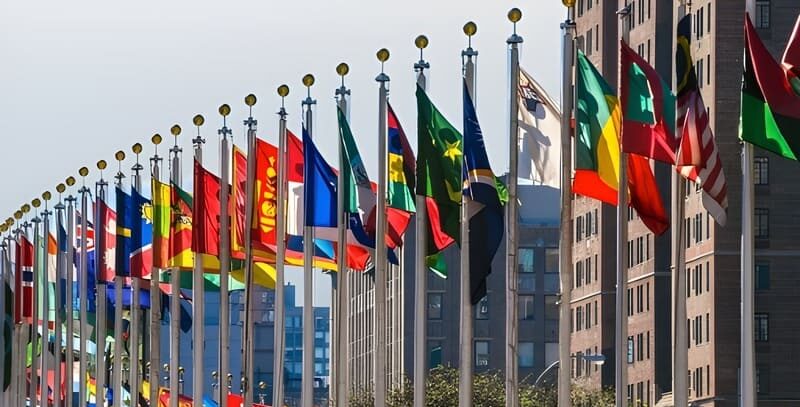
Consequently, cosmopolitan principles provide a significant conceptual framework for advancing diversity, equity, and inclusion (DEI) in an interconnected world. By advocating for universal ethical standards and intercultural dialogue, this paradigm offers a structured approach to fostering social cohesion. For instance, while subject to geopolitical constraints, institutions like the UN institutionalize cosmopolitan cooperation by convening international representatives to address transnational crises, promote human rights, and manage resource distribution initiatives, illustrating both the potential and the complexities of global governance.
Ideological Transformation and Prospective Adventure
As a prominent political and philosophical ideology, cosmopolitanism is rooted in the premise that all human beings belong to a single global community and possess equal rights, regardless of nationality, race, religion, or other demographic factors. With origins in ancient Greek and Stoic philosophy, the concept was later expanded by Immanuel Kant, who sought an empirical and geographical foundation for cosmopolitan rights based on the spherical nature of the earth. In the late 20th century, accelerated by globalization and technological progress, contemporary cosmopolitanism evolved around three core tenets: individualism, universality, and generality. Today, it is increasingly analyzed as a socio-cultural and political framework shaped by transnational forces.
The Stanford Encyclopedia of Philosophy categorizes cosmopolitanism into four interrelated dimensions—moral, cultural, political, and economic—reflecting the primary structures of social organization. This typology addresses open borders, supranational authority, and individual rights as foundational elements of global justice, positioning individualism and globalism as simultaneous cornerstones of the cosmopolitan system.
First, moral cosmopolitanism constitutes the dominant normative framework, asserting the equal moral status of every individual. This perspective posits that human identity takes precedence over collective identities such as nationality, ethnicity, religion, or gender. Proponents argue that moral equality derives from a shared human nature within a single moral community, a principle that subsequently informs political, cultural, and economic models of global citizenship.
Second, cultural cosmopolitanism examines the interplay between moral equality and cultural diversity, navigating the tension between hybridity and the preservation of distinct cultural identities. In the context of transnational migration, this paradigm explores how individuals assimilate, retain their heritage, or co-constitute new hybrid cultures. While critics argue that universalist commitments can undermine traditional cultures, theoretical frameworks often attempt to reconcile particularistic cultural attachments with universal ethical standards.
Third, political cosmopolitanism advocates for global governance structures capable of matching international economic and environmental developments. This dimension focuses on establishing transnational legal institutions, supranational procedures, and mechanisms for humanitarian assistance. Central to this framework is the 1948 Universal Declaration of Human Rights, alongside the institutionalization of international criminal law regarding genocide, war crimes, and crimes against humanity. Furthermore, debates surrounding transnational migration and humanitarian intervention continue to shape the enforcement of cosmopolitan law.
Fourth, economic cosmopolitanism encompasses diverse perspectives on global markets. One approach advocates for a market-oriented model based on free trade and minimal political intervention, suggesting that commercial interdependence can mitigate international conflict. Conversely, another significant strain focuses on distributive justice, addressing the equitable reallocation of wealth and natural resources. Consequently, economic cosmopolitanism interacts critically with both liberal paradigms—which often prioritize negative rights and market solutions—and socialist frameworks that emphasize positive rights and structural redistribution.
Global Solidarity for the Next Generation
Cosmopolitanism posits the existence of a global community wherein individuals bear a shared responsibility for global well-being and intergenerational justice. Proponents argue that the international community has increasingly operationalized global solidarity to address systemic crises. For instance, the Paris Agreement, under the UNFCCC framework, serves as a significant multilateral mechanism for climate change mitigation, adaptation, and climate finance. Similarly, responses to global health crises, such as the collective efforts in vaccine distribution during the COVID-19 pandemic, alongside international humanitarian aid in conflict and disaster zones, are frequently cited as evidence of practical cosmopolitan engagement.
The translation of cosmopolitan ideals into practice carries substantial implications for contemporary global structures, particularly through the concept of global citizenship, which emphasizes duties that transcend national borders. These practical applications can be categorized into four primary domains:
First, in global governance and international relations, cosmopolitan theory advocates for enhanced multilateral cooperation through international organizations such as the United Nations (UN) and the International Criminal Court (ICC). This perspective underscores the role of international law, humanitarian intervention, and global justice frameworks in managing transnational challenges, including climate change, human rights violations, and public health emergencies.
Second, within economic and digital spheres, global citizenship influences policy paradigms by promoting fair trade, ethical business practices, and sustainable economic models that prioritize long-term global welfare over immediate national interests. Concurrently, digital globalization and borderless communication channels, including online networks, facilitate cross-border dialogues, thereby expanding the spaces for transnational civil interaction.
Third, in education and cultural exchange, cosmopolitan initiatives foster intercultural understanding and global citizenship among future generations. This framework emphasizes a reciprocal moral obligation toward humanity that operates independently of national, ethnic, or religious affiliations. Consequently, it encourages stakeholders to assess the global impact of local actions, particularly regarding poverty alleviation, environmental sustainability, and the development of inclusive immigration policies.
Fourth, corporate social responsibility and ethical consumerism increasingly reflect cosmopolitan principles within the market environment. This is evident when consumer choices prioritize fair trade and ecological sustainability, prompting transnational corporations to incorporate ethical standards into their operations. Furthermore, global civil society movements focused on social justice and human rights serve to institutionalize transnational solidarity beyond traditional state-centric boundaries.
The Function and Role of World-Integration Government
The conceptual linkage between a unified world government and cosmopolitan citizenship represents the ultimate normative model within global integration theory. Politically contrasted with nationalism, this institutional paradigm posits a global authority capable of mitigating interstate conflict and fostering structural peace.
To function effectively, a comprehensive global government would require an administrative apparatus encompassing distinct executive, legislative, and judicial branches. Within contemporary international relations, the United Nations (UN) is frequently analyzed as a foundational blueprint for such governance, supported by judicial bodies like the International Court of Justice (ICJ) and the International Criminal Court (ICC). This multilateral architecture is augmented by economic institutions, including the World Trade Organization (WTO) to regulate international commerce and the International Monetary Fund (IMF) to manage macroeconomic stability.
Proponents argue that a centralized global authority could streamline global governance across political, economic, and social domains. Strategically, a unified political structure aims to reduce geopolitical friction by eliminating the structural anarchy inherent in a system of independent sovereign states. Economically, integration seeks to facilitate standardized trade agreements, environmental regulations, and resource distribution models. Such a unified approach is intended to enhance the efficacy of responses to transnational challenges, including climate change, human rights violations, and public health crises, while shifting the role of multinational corporations toward global public compliance.
While contemporary global politics remains characterized by a resurgence of nationalism, protectionism, and geopolitical fragmentation, proponents of integration view a unified governance model as a structural necessity to manage global systemic risks. In this context, emerging technologies offer novel frameworks for algorithmic governance, where artificial intelligence (AI) could theoretically optimize resource distribution, monitor socio-economic inequality, and anticipate systemic failures. Under this paradigm, ethical AI frameworks, guided by human oversight, are conceptualized as new political architectures capable of facilitating global coordination.
However, the realization of a unified global government faces significant structural dilemmas and critiques of idealistic naivety. The primary obstacle remains the preservation of state sovereignty, as nations routinely resist delegating authority to supranational bodies due to concerns over domestic autonomy. Furthermore, power asymmetries ensure that dominant nation-states continue to disproportionately influence international decision-making, exacerbating global inequalities. Consequently, establishing binding compliance mechanisms and overcoming the democratic deficit represent the critical challenges for any prospective model of universal global governance.
The Future of Cosmopolitanism
In an increasingly interconnected and interdependent global landscape, the theoretical paradigm of cosmopolitanism offers a significant framework for conceptualizing and navigating transnational challenges. By shifting the analytical focus from narrow state-centric interests to globally oriented agendas, cosmopolitan principles provide a normative foundation for addressing structural crises, including environmental degradation, public health emergencies, and socioeconomic inequalities. Furthermore, in an era characterized by heightened migration and demographic shifts, cosmopolitan emphasis on cultural pluralism and universal human rights serves as an intellectual benchmark for promoting social cohesion and intercultural dialogue.
Rather than predicting a frictionless historical convergence, academic literature positions cosmopolitanism as a dual mechanism encompassing both ethical imperatives and practical governance solutions. On an institutional level, these ideals serve to guide the evolution of international law, humanitarian frameworks, and global economic policies. While the establishment of a fully integrated global governance system remains a subject of intense debate, the cosmopolitan perspective provides critical tools for analyzing the shifting boundaries of citizenship and political authority.
Looking forward, the trajectory of cosmopolitan thought will be intrinsically linked to technological advancements and structural global reforms. The expansion of digital communication networks and online platforms expands the spaces for cross-border civic engagement, fostering a form of digital cosmopolitanism that operates independently of physical geography. Ultimately, the viability of a sustainable cosmopolitan framework depends on the international community’s capacity to address global economic disparities and systemic power imbalances, thereby translating the conceptual values of shared humanity into equitable global practices.
Author: Sunny Lee – Founder and President at CGPS (Center for Global Peace and Security), and Director at IKUPD (Institute for Korea – U.S. Political Development), Washington DC. Sunny Lee is the author of 115 academic books in politics (original English and in German, French, Russian, Polish, Dutch, Italian, Spanish, and Portuguese). Her recent book is titled: “The Influence on Humankind’s Peace through Korean Reunification: Creating new paradigm in social science by interdisciplinary research.”
(The opinions expressed in this article are solely those of the author and do not necessarily reflect the views of World Geostrategic Insights).
READ ALSO
Part 1 – Democracy and Human Value – Ideological Transformation for Human Society
Part 2 – Liberalism and Neoliberalism – Capital Globalism and Individual Freedom
Part 3 – Post -World War II Ideologies and the Enduring Legacy of Communism
Part 4 – Global Economy and Capitalism: a Vision for Economic Prosperity
Part 5 – Socialism and Welfare: The Social Democratic Compromise
Part 6 – Protectionism and Nationalism — The Rise of Monopoly Systems and Chauvinistic Power