



By Aman Jaswal
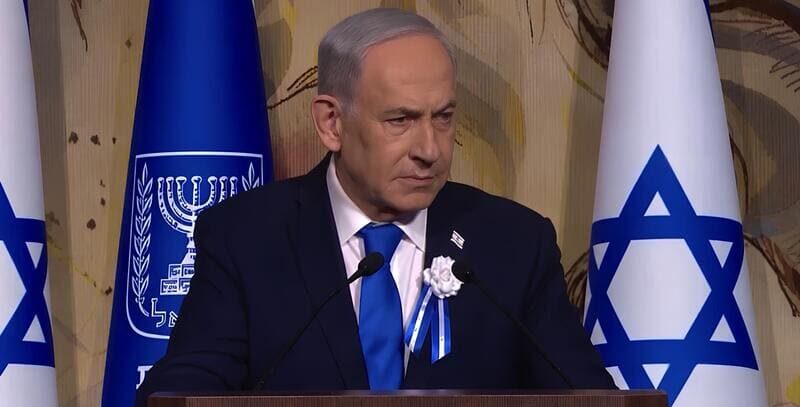
When Benjamin Netanyahu eventually steps down as Israel’s prime minister, there is a tendency among observers to assume that a change in leadership will fundamentally alter the security architecture of West Asia. However, such an assumption overlooks deeper systemic realities.

While executive leadership undoubtedly shapes critical decisions regarding military engagement, diplomacy, and coalition-building, attributing regional instability solely to Netanyahu obscures the enduring institutional frameworks, long-standing territorial policies, and external strategic alignments that govern Israeli statecraft. Consequently, a transition at the executive level warrants cautious scrutiny, as a change in personnel may ultimately preserve existing policy trajectories rather than initiate substantive reform.
As of 11 November 2026, Israel’s political landscape remains in a state of transition. Although President Isaac Herzog has tasked Gadi Eisenkot with forming a new government, Netanyahu continues to govern in a caretaker capacity. This distinction carries significant weight. Receiving a mandate to assemble a coalition does not confer immediate executive authority, nor does it guarantee a departure from established strategic doctrines. For regional actors, the immediate reality is not a newly empowered administration with a coherent diplomatic platform, but rather a prolonged period of political ambiguity.
The primary obstacle to substantive policy change lies within the arithmetic of the Knesset. With Netanyahu’s bloc holding 53 seats, the mainstream opposition 48, and Arab parties 19, an anti-Netanyahu coalition is mathematically viable. Nevertheless, parliamentary alignment aimed at unseating an incumbent does not equate to ideological consensus on core political questions, such as Palestinian self-determination, territorial compromise, or the integration of Arab citizens into decision-making processes. Removing a single political figure does not dismantle the underlying institutional mechanisms that perpetuate political exclusion.
To assess the potential for meaningful transformation, regional analysts must look beyond political rhetoric and examine operational governance. The allocation of key portfolios—specifically defense, internal security, and settlement administration—will ultimately determine the boundaries of the next government’s agenda. If a new coalition secures parliamentary survival by accommodating factions committed to permanent territorial control, its diplomatic messaging will carry limited credibility abroad. The central question remains whether a future prime minister will remain structurally dependent on political actors whose objectives preclude viable compromise.
Furthermore, the assumption that a leader with a senior military background, such as Eisenkot, will naturally pursue diplomatic restraint requires critical examination. Extensive military experience does not inherently translate into political support for Palestinian sovereignty. A government led by former security officials may indeed demonstrate greater operational discipline and strategic predictability in its use of force; however, calibrated military management is not synonymous with a commitment to political inclusivity. Improved civil-military coordination alone cannot resolve the structural grievances inherent in prolonged military administration.
The ongoing governance crisis in Gaza illustrates this dilemma. Diplomatic proposals centered on demilitarization, reconstruction, and technocratic administration may project an image of political progress, yet they leave fundamental questions of legitimacy unresolved. From where does a transitional authority derive its mandate, and to whom is it accountable? What institutional guarantees prevent the recurring displacement of civilians or indefinite external control? An administrative framework designed primarily to satisfy external security prerequisites risks functioning as a mechanism of population management rather than a foundation for sustainable political legitimacy. Long-term stability requires a governance model that addresses the political rights and agency of the Palestinian population.
This reality necessitates a broader reconceptualization of regional security. While the protection of Israeli civilians remains an essential imperative, a security paradigm in which Palestinian safety and mobility are strictly conditional upon Israeli threat perceptions is inherently unstable. Comprehensive security encompasses freedom of movement, political representation, and uninterrupted access to basic resources. When these dimensions remain subject to indefinite military oversight, the resulting vacuum frequently fuels cycles of asymmetric violence, leaving civilian populations vulnerable to both stringent restrictions and recurring hostilities.
Even in the event of leadership transitions elsewhere in the region, such as in Iran, these structural dynamics would persist. Israeli decision-makers exercise considerable agency over escalation thresholds, yet regional security outcomes are co-determined by a complex interplay involving the United States, Iran, and Gulf states. A change of prime minister in Jerusalem will not automatically resolve these broader geopolitical rivalries. Indeed, a newly installed leader may face domestic pressure to project deterrence and resolve in order to establish political credibility. Just as a military background does not guarantee de-escalation, military intervention alone rarely produces durable deterrence.
A more reliable metric for evaluating an incoming Israeli administration is its willingness to accept institutional and diplomatic constraints. Effective crisis management requires reliable communication channels, mutually recognized red lines, and credible commitments—all of which depend on domestic political cohesion. Without self-imposed strategic limits, policymakers risk becoming trapped in a cycle of tactical escalation, where short-term military gains substitute for a coherent political endgame, and each subsequent operation is justified by the inconclusive nature of the previous one.
Dynamics along the Lebanese border underscore this challenge. When tactical border incidents consistently trigger disproportionate military responses, establishing a durable framework for de-escalation becomes exceedingly difficult. Sustainable border security relies on credible monitoring mechanisms, mutual respect for sovereignty, and a diplomatic architecture capable of withstanding localized shocks.
The United States faces similar analytical scrutiny. If Washington seeks to advance a viable diplomatic process, it cannot decouple its mediation efforts from the realities of Israeli policy on the ground. A leadership transition in Israel may improve bilateral optics and diplomatic tone with Washington, yet it will not inherently alter the underlying distribution of power. External actors must therefore evaluate policy implementation rather than rhetorical shifts before concluding that a fundamental strategic realignment is underway.
Comparable dynamics shape the trajectory of Arab-Israeli normalization. A prevalent diplomatic assumption suggests that regional integration agreements can bypass or compartmentalize the Palestinian issue. However, state-level accords do not automatically resolve underlying territorial and political conflicts. Saudi Arabia’s continued insistence on an irreversible pathway to Palestinian statehood demonstrates that the issue remains central to regional legitimacy. For a new Israeli government to achieve broader regional integration, it will need to demonstrate a substantive commitment to addressing Palestinian political rights, rather than deferring the issue indefinitely.
Ultimately, regional observers evaluating Israel’s next government should focus on decisions that redistribute political agency and reduce structural vulnerability. Key indicators will include policies governing civilian protection, settlement expansion, Palestinian political representation, and the establishment of clear limits on military escalation.
While Netanyahu’s eventual departure could create an opening for policy recalibration, it could equally facilitate the continuation of the status quo under a more conventional diplomatic veneer. The critical question remains whose security will be institutionalized and whose rights will remain negotiable. A new prime minister may adopt a more measured lexicon, yet durable regional stability requires confronting the structural conditions that perpetuate asymmetry and recurring conflict.
Author: Dr. Aman Jaswal – Lecturer in International Studies, Royal Melbourne Institute of Technology (RMIT) Vietnam.
(The opinions expressed in this article belong only to the author and do not necessarily reflect the views of World Geostrategic Insights).