



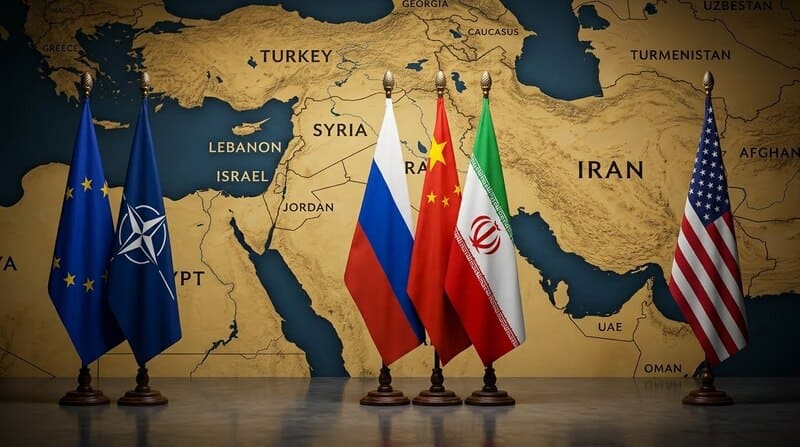
In his interview with World Geostrategic Insights, retired diplomat Tim Richardson delivers a rigorous analysis of the structural shifts redefining global security. Drawing on years of service in Brussels and Moscow, Richardson examines the fracturing of the U.S.–EU–NATO triad and the operational hurdles facing European strategic autonomy amid shifting American political landscapes.
The discussion also explores the long-term systemic costs of Russia’s internal militarization, the rise of the Moscow–Tehran–Beijing axis, and the strategic deadlock in the Middle East. Evaluating the limits of traditional Western leverage against high-tech proxies and authoritarian resilience, Richardson highlights a crucial diplomatic crisis: how the rise of digital transparency and performative “megaphone” diplomacy is actively eroding foreign ministries’ capacity to conduct sensitive, low-visibility negotiations in a multipolar world.
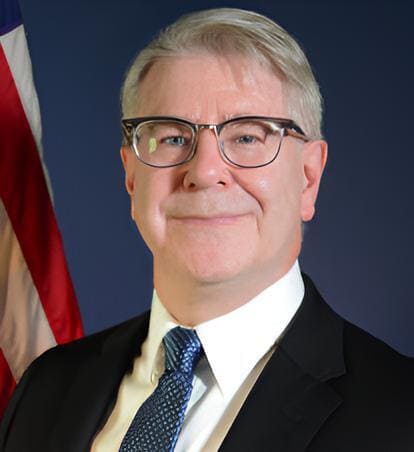
Tim Richardson is a retired Senior Foreign Service officer with a distinguished 30-year career in the U.S. Department of State. Before entering the diplomatic corps, he worked as a journalist. Throughout his three decades of public service, Richardson specialized in some of the most critical and complex arenas of modern American foreign policy, with an extensive focus on Russian affairs and Middle Eastern security frameworks.
His major international postings included serving as Minister-Counselor for Political Affairs in the U.S. Embassy in Moscow (2018–2021), and as Deputy Chief of Mission and Chargé d’Affaires at the U.S. Embassy to Belgium in Brussels, placing him at the heart of U.S.–EU–NATO synchronization. An expert in Iranian affairs, he also served as the Deputy Director of the Office of Iranian Affairs in Washington and within the Iran Regional Presence Office in Dubai. His strategic work across highly contested spaces has earned him the unique distinction of being formally sanctioned by the Iranian government and publicly targeted by the Russian Ministry of Foreign Affairs.
Richardson holds a bachelor’s degree in journalism from Washington & Lee University and attended graduate studies at the Committee on International Relations at the University of Chicago. He speaks French, Russian, Persian, and Georgian. He currently writes and analyzes global affairs, focusing on the intersection of strategic communication, institutional deterrence, and the operational realities of contemporary diplomacy.
Q1 – How has the strategic calculus within the U.S.–EU–NATO triad fundamentally shifted regarding the limits of collective deterrence and resource sustainability, given the prolonged war in Ukraine and changing Western political landscapes?
A1 – The key words in your question are “fundamentally shifted.” Since its creation, NATO has been a successful alliance that kept peace between the West and the Soviet Union, and then Russia, through the deterrence inherent in collective defense. But more than that, it was an alliance that transcended a response to a common threat. Its member states have shared a common world view and values: the belief in democracy, fundamental human rights and an international order that departed from the ideas of realpolitik in favor of international institutions. This, as much as the threats of the Cold War and after, was what made NATO. The question of the Europeans creating a security mechanism separate from NATO may have grabbed attention at times, but it was not a realistic alternative, as long as the United States continued to provide the lion’s share of defense capabilities on NATO territory. The political disagreements, minor as they were, could be dealt with in due course. European increases in defense spending have been a welcome step within the U.S. national security community.
What is new, however, is the question of the U.S. commitment to Europe and Canada. The Trump administration has stepped back from Ukraine, even though there is absolutely no question that this is a war of Russian aggression. It has announced troop reductions in Europe and called on Europe to shoulder more of the burden for its defense. Vice President J.D. Vance and Secretary of State Marco Rubio have called on Europe to “recommit” to the values of Western civilization — a move to redefine the common ties between the allies in more nationalist terms and tighter border controls. Trump continues to impose tariffs on partners and allies. And then there’s his relationship with Putin. Trump has waived sanctions on Russian diesel, with ongoing discussions between U.S. envoys Steve Witkoff and Jared Kushner and their Russian counterpart Kirill Dmitriev about reviving business ties through the sale of Lukoil and the return of U.S. companies to Russia. There are reports that Washington is threatening to cut off intelligence sharing with Kyiv and weapons sales to European countries acting on behalf of Ukraine.
All of this is affecting how NATO member states are engaging with the Trump administration. Rather than placate him, as they did in the past, Europe and Canada seem to be moving on amid serious doubts about future dependence on the United States. The discussion of Canada potentially becoming an associate member of the European Union is an obvious signal of the deteriorating relationship.
This doesn’t foreshadow a collapse in NATO and a new European security architecture, but European leaders have started to question the U.S. commitment to Europe’s defense, and they are taking the initial steps to strengthen European defenses. In the short term, the next two years will test NATO resilience: both the cohesion among its members and whether Russia intends to probe that cohesion by testing European and NATO resolve. The longer-term issue is how much of a deterrent Europe itself can present to Russia, when it will take years to rebuild its defense industrial base and U.S. weapons manufacturing is already years behind on orders, with restocking the U.S. arsenal now taking priority.
Europe now finds itself questioning the foundation of its security and the potential of a rising Russian threat without an immediate answer to either of those two issues.
Q2 – From your perspective as a former diplomat in Brussels, is the European pursuit of “strategic autonomy” evolving into a viable operational reality, or does it remain a rhetorical ambition that inadvertently exacerbates fragmentation within the alliance?
A2 – Europe’s pursuit of strategic autonomy is not an either-or proposition. Even with the announced increases in defense spending in most European countries, it will take years to expand Europe’s defense industrial base. Additionally, the war in Ukraine has already changed 21st-century warfare, so that strategy, tactics and needs are going to evolve quickly. Simultaneously, creating European capabilities to replace those currently provided by the United States will take years as well. Realistically, Europe will not have the means to achieve absolute strategic autonomy for some time, if that is defined as having the resources and capabilities to independently act militarily in pursuing European interests. It can, however, become more autonomous over time as it acquires new capabilities that reduce its dependencies while remaining in NATO.
The other aspect of the question of strategic autonomy is whether Europe can and will say no when pressed by the United States. We have seen some of that in how European countries have responded to the U.S. war with Iran. European support has stopped well short of joining combat operations, and European governments have trodden carefully in how much indirect support they have given. Some, like Prime Minister Meloni, have been very clear in expressing where their limits are, even if it meant a public disagreement with President Trump.
Overall, I think the question of European strategic autonomy can be managed without contributing to fragmentation in the alliance. I don’t see any indication that European officials want to push for the EU to become an alternative to NATO, but they do recognize the growing need to be able to defend their security without the United States. They see a new reality, much of it forced on them, and now they have to respond.
Further fragmentation will depend much more on U.S. action going forward – whether the United States continues to call its NATO commitment into question – than on European pursuit of strategic autonomy. A better armed, more capable Europe fits within expressed U.S. desires for greater burden sharing in Europe’s defense. Where friction has emerged is over who builds those arms. The EU’s Security Action for Europe program limits components from outside Europe and Ukraine to about 35 percent of a weapon’s cost, and Washington has objected to rules that exclude U.S. manufacturers. That’s a European choice, but one made in response to doubts about American reliability. The more important issue is how far does the United States go in disengaging from Europe and NATO. There are troubling signs in the conversations now taking place between the United States and Russia over Ukraine.
Q3 – How effectively can Washington and Brussels synchronize their economic statecraft—specifically regarding export controls, supply chain decoupling, and tariff structures—without triggering a protectionist spiral that undermines transatlantic cohesion?
A3 – There is a long history of Washington and Brussels synchronizing their policies to achieve shared objectives. I would argue it was the EU imposing severe sanctions on Iran that became an essential step toward persuading the Iranians to negotiate seriously and agree to the Joint Comprehensive Plan of Action. The Iranians had been under U.S. sanctions for years and had adapted to them. European sanctions affected trade and foreign investment that the Iranian economy needed, and it was the promise of European trade and investment after sanctions were lifted that became the incentive for Iran’s economic development as part of the JCPOA.
On Ukraine, U.S. and European cooperation in response to the Russian invasion significantly raised the costs to Russia, especially as Europe cut imports of Russian energy.
In both those instances, denying access to the U.S. banking and financial system was a hammer Washington had. In both those instances, however, there was minimal U.S. trade and investment. The Europeans, who were engaged in business directly with Iran and Russia, created decisive leverage when they joined with U.S. actions.
Those are dramatic examples. The relationship is such that there has been a close working-level cooperation. Information is shared on possible export-control violations and money laundering and sanctions designations are coordinated, down to synchronized announcements.
To a degree, that will continue, but there are policy differences now. President Trump’s temporarily waiving sanctions on Russian diesel and then calling for Europe to resume buying more Russian gas is the obvious one. The EU just adopted its latest Russian sanctions package and has spent the past four years reducing its reliance on Russian energy. Trump’s latest appeasement of Russia might spill over into more contentious discussion of how to treat the Russian assets held in Europe, which run into the hundreds of billions of dollars. On tariffs, it appears that neither side wants to resume a trade war, so the agreement appears to be holding. When I was in Brussels, the breadth and depth of the trade relationship was one thing that the Europeans hoped would temper Trump’s behavior, but they quickly realized it would not. When Washington announced tariffs, they were quick to respond in kind. I expect the Europeans are ready with reciprocal responses if they need them in the future.
Similar to what I indicated in the preceding question about NATO, any fragmentation on what had been close cooperation on economic statecraft is likely going to originate from the U.S. side. The bigger question is how the United States and EU choose to move forward on trade with China. The Biden administration and EU agreed on the need to “de-risk” their economies from China and to coordinate more closely. The Trump administration is not so inclined because it has an antipathy toward the EU on trade policy out of what it sees as overregulation and unfairness to U.S. companies. It would rather treat trade as a bilateral issue with European countries individually. With such a fundamental difference, there’s little reason to expect the same level of synchronization of economic statecraft going forward, even though there are common interests in sanctions enforcement, counterproliferation, anti-money laundering, and limiting access to sensitive technology.
Q4 – Reflecting on your tenure in Moscow, did Western intelligence and diplomatic communities underestimate the structural resilience of the Russian state, and what are the long-term systemic costs of this ongoing militarization on Russia’s internal stability?
A4 – Looking back, the early optimism about Russia after the collapse of the Soviet Union was short lived and gave way to the recognition that relations with Russia would be difficult at best. I’ll put it this way. Early in my career, in 2000, when I first began working on Russia, I was discussing Putin’s emergence with a senior U.S. diplomat who knew Russia well. He predicted change in Russia would take at least a generation. He was right to a degree. A generation has passed. There was some change, but the pendulum has swung back. Putin is still in power. The Kremlin relies on repression to maintain control, it has attacked its neighbors, and there is nothing democratic about Russia in 2026.
Personally, I had always hoped that change for the better would come, U.S.-Russian relations would improve, and Russians would be freer. I witnessed the methodical tightening of the restrictions on civil society, the bogus arrests, and the devastation Russia wrought in Chechnya. But I did not think they would invade Ukraine, and I was wrong in thinking there might be a limit to how far Russia would go. Putin hasn’t wavered. There have been moments of resistance and individuals who spoke out. The Kremlin’s response was intended to preserve Putin’s rule above all. The constitution was changed to give him additional terms as president. Critics, like Boris Nemtsov and Anna Politkovskaya, were murdered. Aleksey Navalny was poisoned and died in a penal colony. NGOs, like Memorial, were dissolved. The political and legal systems were subverted to serve the interests of the Kremlin. Putin’s social contract — higher standards of living in return for popular compliance — was used to create stability for and compliance from the vast majority of the population.
When active opposition did arise, as it did when I was posted there in 2019, it was contained and tolerated to a point. As one Russian contact told me at the time, the Kremlin expected the “intellectuals” in Moscow and St. Petersburg to protest and was not overly alarmed by them. What worried it was protests spreading to the regions, and that is why Navalny and his organization was a threat. Repressive measures became more severe, including the period after the invasion of Ukraine and the crackdown on any opposition to the war.
How much longer Putin can stay in power has become a perennial question. He has no visible opposition. The issue worth watching is whether the continued economic hardship for Russian citizens eventually evolves into opposition to Putin and brings people into the streets. It’s not there yet, and it may never materialize. The connection between economic wellbeing and political opposition is something the Kremlin watches carefully. The costs of the war will likely exacerbate Russia’s economic problems, forcing the government to take more drastic measures that add to the hardships of the Russian population. In addition, Russia’s population was already shrinking, the war has diverted skilled labor, and the Kremlin was forced to spend money from its national wealth fund.
Before the war, as protests carried on through the summer of 2019, the question we often got from Washington was “What is the tipping point?” I honestly didn’t know then, and I don’t know now, but if something happens, it will happen fast.
Q5 – How should Western policy adapt to the reality of a permanent, adversarial posture from Moscow, particularly in contested and vulnerable spaces like the South Caucasus and Moldova, where political warfare remains acute?
A5 – Western solidarity is a source of leverage against Moscow, but there’s a caveat. It worked most effectively when Moscow sought closer relations with the West. That has reversed. For almost 20 years, despite the ill-fated “reset” during the Obama administration and Trump’s personal esteem for Putin, U.S.-Russian relations certainly have become more adversarial. The reason I was posted to Moscow again in 2018 was the mutual expulsions that occurred after the 2016 U.S. election.
Russian-European relations are at a low point after Ukraine. Now there are gaps between the United States and Europe over how, or even whether, to deal with Russia in light of continued air attacks on Ukraine and Russian provocations in Europe.
With the emerging divide between the United States and Europe, there’s less risk for Russia in maintaining an increasingly threatening relationship toward Europe. It has less reason to moderate its positions, and given the disdain it has for Europe, specifically the EU, it will try to exacerbate U.S.-European differences, as well as intra-European ones, to achieve its objectives in Ukraine.
The Russians have always been extremely sensitive to the possibility of losing influence in the states along their periphery, and this is evident in the claims about NATO expansion toward its borders. They have lost influence, but not just to the West. China’s influence in Central Asia is increasing. Turkey is more active in the Caucasus and Central Asia. Moldova continues to express aspirations of joining the EU, is a potential model in resisting Russian pressure, and deserves further Western support for its continued development. Belarus and Georgia, which was exceptionally pro-American through the 1990s and early 2000s, are the only two that show some exaggerated degree of fealty to Moscow. Moscow can claim success in Georgia, going from the Rose Revolution and a street named for George W. Bush in Tbilisi to a government answerable to a pro-Kremlin oligarch. Its people largely remain pro-Western. Overall, Russia is losing influence through its own actions.
People recognize there is a better alternative to Russia. The aspirations of closer integration with the West remain strong in sizable portions of the populations in these countries. Given a fair choice, that is the one they will choose. The ability to make that choice is what needs to be protected, which means pushing back against Russian disinformation, ensuring free and fair elections, reinforcing anticorruption efforts, and support for training and professional development programs. It comes down to building the capacity in these countries to protect the choice they’ve made.
Q6 – How has the growing trilateral alignment and military-technical cooperation between Moscow, Tehran, and Beijing altered the traditional leverage points of Western diplomacy, such as economic sanctions and diplomatic isolation?
A6 – As I referenced above, Western solidarity used to create leverage that could affect Russian behavior. When Russia sought a closer relationship with the West, we were able to influence Russian behavior, at times, by isolating it or even publicly shaming it, if necessary. Often, there was the possibility of having quiet, constructive conversations that proved helpful. These mechanisms were effective because Russia saw no alternative to the economic or political power of the West. They did not want to be on the wrong side of it.
I noticed that had changed during my last posting in Moscow. Russian interference in the 2016 election had been a red line. The Russians did not get the benefits that they hoped from the first Trump administration, and they expected the Biden administration to take a harder line. In Moscow, we began to see their outreach to the Chinese, and to a lesser degree, to the Iranians. Use of disinformation increased, such as claiming the United States had created ISIS. Russian moves in Syria and Africa more broadly indicated Russian intent to reassert itself. These were deliberate moves to counter efforts to isolate them diplomatically, even before they invaded Ukraine. At the time, the closer relations with China and Iran appeared to be more marriages of convenience, given the history of the relations between Russia and China and Russia and Iran. Now, Russia’s invasion of Ukraine and the U.S. war with Iran are pushing them closer, if not toward a formal alliance. But they don’t need a formal alliance. A mutual understanding of the opportunity to weaken the United States is sufficient. Reports of Russian and Chinese assistance to Iran suggest how much these relationships have developed.
The United States is sending signals of wanting closer ties with Russia and China. Trump’s waiver of sanctions along with the granting of the license for sale of Russian diesel – undercutting new sanctions legislation he just signed – the summit with Xi that produced no major Chinese concessions, and Putin’s proposal of a U.S.-Russia-China trilateral meeting on the margins of APEC point toward a turn in U.S. policy toward Russia and an uneasy coexistence with China. Iran, at the moment, is seen in Washington as unfinished business. Even so, Trump apparently has not warned either Putin or Xi about aiding Iran.
Q7 – Given your extensive background in Iranian affairs, how can the United States effectively balance strategic deterrence with the preservation of functional backchannels to prevent a wider escalatory cycle in the Middle East?
A7 – Resetting the balance between the United States and Iran will take time. The current war is not over, and we could see another round of escalation, as neither side can defeat the other as things now stand; this “neither war nor peace” situation is likely to persist until the costs to both sides rise further. On top of that, there are very mixed signals coming from Washington on what an acceptable end to the conflict looks like, not just with Iran but in terms of the U.S. presence in the region and security guarantees for the Gulf states. The Iranians have discovered the strategic value of their ability to threaten the global economy and of the geography of the Strait of Hormuz, in addition to the value of the assistance they are getting from Russia and China. The United States doesn’t have answers to them, yet. At the same time, Iran hasn’t broken the U.S. blockade, its economy is cratering, and it cannot match the capabilities of the U.S. military.
There are plenty of proposals being floated that address aspects of the conflict – reopening the Strait of Hormuz and the future of the Iranian nuclear program – but I have yet to see anything acceptable to both sides that may form the basis of an agreement in the near future.
That said, the means of communication between the United States and Iran has never been an issue. Vice President Vance has sent a letter to Mohsen Rezaei, secretary of Iran’s Supreme National Security Council. There are various ways both sides message and signal each other. At the moment, you have the Pakistani and Qatari intermediaries, as well as others who are willing to be involved. Putin has offered to mediate, although he would hardly be an honest broker. Now we’re seeing messaging on social media in addition to statements made to traditional media. I’m sure the Iranians read Truth Social and are likely as perplexed as the rest of us. Foreign Minister Araghchi is active on social media. In the past there were press reports of Witkoff and Kushner texting or calling the Iranians. Now it’s a matter of whether the Iranian negotiators are authorized to pick up the phone and respond. The bottom line is that both sides are engaged in a process of communicating negotiating positions and telegraphing red lines to avoid a(nother) miscalculation, but they won’t seriously negotiate until the costs increase or they see some incentive. Each side thinks that the other is suffering more, so there’s little momentum to seriously negotiate.
If the United States wants to re-establish strategic deterrence, it must coherently communicate what its red lines are, what it is prepared to do if those red lines are crossed, and state unequivocally what its interests are in the region, in part to reassure its allies. Assuming there is an eventual settlement, those red lines going forward should include no attacks on U.S. forces that will remain in the region, no movement toward building a nuclear weapon, and no closing of the Strait of Hormuz (or Bab al Mandab). The other thing that is absolutely necessary is to hand responsibility for negotiations to a team that understands the Iranians, the region, and the issues, particularly the nuclear one.
Q8 – In an era where regional non-state actors and proxies possess advanced, state-grade technologies, what structural diplomatic frameworks remain viable for restoring regional stability and deterrence?
A8 – Non-state actors’ and proxies’ use of advanced technologies, like drones or hacking, makes them a more difficult but not impossible problem to deal with. It doesn’t negate diplomacy. I would argue the opposite. It requires greater diplomacy, whether that is through bilateral, multilateral, or ad hoc channels. Sponsors of these groups will always deny responsibility, but the deniability is what makes them an attractive option. Proxies and non-state actors can also be chameleon-like, disguising their actual purpose while portraying themselves as having some “legitimate” grievance.
Mechanisms, such as sanctions and export controls, have been only partially effective. These can always be tightened further, but tactics to evade them will inevitably evolve. Military action has not put an end to proxies either. Look at the Houthis in Yemen or the M23 in the DRC. Iran and Rwanda, respectively, are supporting them. Ultimately, use of proxies has to be treated as an extension of the root conflict, and the sponsors have to be treated as an integral party to the issue and face consequences, politically, economically or in the extreme, militarily.
The UN, or, in some cases, regional organizations can marshal the international community to act and support efforts to deal with the conflict. Because they have limits, much of the work diplomatically has to involve those most affected by the conflict, who have the most interest in settling it, and who can be credible, influential interlocutors. If needed, larger powers can use their influence to back negotiations and any settlement.
The fact is that there is no one mechanism that fits. These are often layered problems that require layered solutions that span the local, regional, and international levels.
Q9 – In your editorial work, you analyze the friction between substantive outcomes and performative diplomacy; how has the weaponization of information and the demand for immediate digital transparency degraded the capacity of foreign ministries to conduct sensitive, low-visibility negotiations?
A9 – Greater demands for transparency, compressed deadlines, and more direct communication at senior levels can not only create pressure for faster decisions, but also lead to bad decision making if the information is inaccurate or out of context.
The greatest change in my 30 years as a U.S. diplomat was brought about by the revolution in communications. The development of mobile phones and the internet made everyone available 24/7 and created a new form of media. For example, when I arrived for my first assignment in Tbilisi, Georgia, in 1996, our email, which we had just gotten used to having, was often out, and I had no mobile phone. Our home telephone rarely worked. The embassy had a low-bandwidth satellite line that could be used to call Washington, mostly for use by the ambassador. By 2008, when I arrived in Dubai, I had a BlackBerry and was answering messages in the middle of the night in a Pavlovian response because I woke up and saw the red light flashing. Now, senior officials in Washington are communicating directly with counterparts on messaging apps. Sometimes, you get back-briefed on their conversations, sometimes not. And everybody is on social media, either creating content or reading other people’s content to decide how to respond.
With a 24-hour news cycle and the rise of nontraditional media, there is pressure to respond or run the risk of allowing someone else to control the narrative or to disseminate disinformation. Responses are often rushed and may create more questions than they answer, which further complicates things if the objective is to engage in quiet diplomacy.
None of this has eliminated the need for or the ability to conduct quiet diplomacy, but it has complicated it.
There has always been a bit of the performative in diplomacy, but what we are seeing now is more public and playing to larger audiences. It is done with varying degrees of success. The Trump administration, starting with the President, makes very public proclamations of success or the airing of grievances that complicates a diplomatic relationship. In essence, using a bullhorn instead of a whisper. This type of performative diplomacy is not intended to win over foreign officials or publics. The intended audience is in the White House. The cost eroded trust and lost credibility in foreign capitals, and that is what undermines the ability to conduct quiet diplomacy.
Tim Richardson – Retired diplomat, strategist, communicator.