



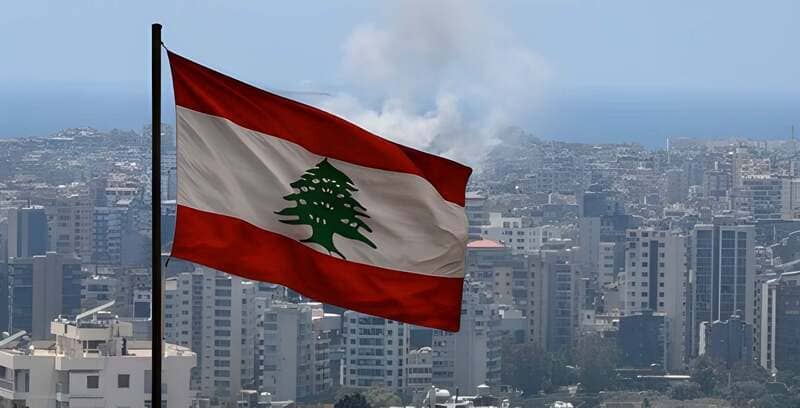
In this interview with World Geostrategic Insights, economist and Middle East analyst Nadim Shehadi delivers an assessment of Lebanon’s deepening crisis and the harsh structural realities reshaping the nation.
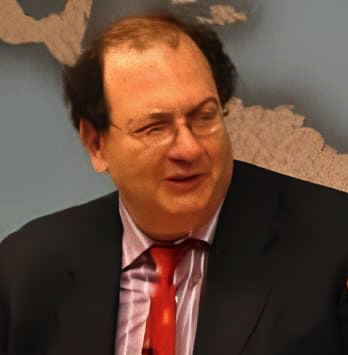
Nadim Shehadi is an economist, academic, and globally recognized expert on Lebanon and the Middle East. He is the former Executive Director of the Lebanese American University (LAU) New York Headquarters and Academic Center, where he bridged academic and cultural dialogue between the U.S. and the Middle East.
Previously he directed the Fares Center for Eastern Mediterranean Studies at Tufts University’s Fletcher School and the Centre for Lebanese Studies at St Antony’s College, Oxford, and served as an Associate Fellow at Chatham House in London, specializing in the Middle East and North Africa (MENA) region,
Q1 – The World Bank’s Summer 2026 Lebanon Economic Monitor recently projected a sharp 6.4% economic contraction for the country, erasing the brief 4.2% technical rebound seen in 2025. Given that the financial system remains severely impaired and sovereign debt is still unrestructured, what immediate fiscal steps can the Lebanese state take to survive this deepening recession?
A1 – There are no fiscal steps that can fix this if fixing it means anything like returning to previous levels. The economy is falling apart because of political and demographic factors that have transformed the country from a cosmopolitan hub to a war economy under siege. What can revive the country is the success of two tracks, one is the peace talks with Israel and the other an internal one where Hizballah will be dismantled and become part of the Lebanese consensus.
Lebanon is now the main battleground for a regional conflict, and over the past 20 years has been gradually taken over by Hezbollah, a branch of the Islamic Revolutionary Guard Corps, IRGC. This is similar to the manner in which the IRGC and armed groups operate in Iraq and Yemen, except that in Lebanon, it is the front line in what they see as a confrontation with Israel and the United States. These economic and demographic repercussions are critical and heading towards continuous decline which could become irreversible.
The Lebanese economy was at its most prosperous when it was a liberal open economy and the refuge of skills, talents and capital from the region. This was after WII when the countries of the region were turning into socialist military dictatorships under Nasserism and Baathism. Levantine merchant families and the intellectual elite from Palestine, Egypt, Syria, Iraq and southern Turkey gradually moved to Beirut making it into the financial and cultural capital of the region with networks on a global scale. The living standards and the economy were then comparable to those of southern Europe like Spain, Portugal and Ireland.
That phase ended with the civil war. In 1990 a different model was emerging with the advent of Rafic Hariri after the civil war. There were three competing forces, one was Hariri who became Prime Minister and his Gulf Arab contacts, mainly Saudi, whose inspiration was pre-war Lebanon that he was trying to recreate. The other was Syrian control with American and French blessing and the third was the rise of Hizballah as an armed resistance force gradually infiltrating the country’s institutions. Nevertheless, the economy grew from $3bn to over $50bn just before the collapse.
Hariri was assassinated in 2005 after he showed signs of plotting with the French and Americans to get rid of Syrian influence. After Syrian withdrawal Hizballah gradually replaced the Syrian regime as the dominant force using tools like assassinations and a constant state of war as well as isolation from the Gulf states which were the main economic partners of the country. But still, the economy adjusted and the model became that of the Lebanese residing in Lebanon, but their main businesses were abroad. But they still banked with Lebanese banks. The economy was still growing due to these external factors but domestically the government deficit was growing faster due to isolation and wars until it all collapsed in 2019. This phase also ended after the financial collapse followed by the COVID pandemic, the port explosion and the recent wars. The main driver of the decline is a demographic outflow of skills and businesses which are no longer using the Lebanese banking system. and the businesses that are leaving are not anymore contributing to the economy by banking in Lebanon.
The government can use fiscal measures to adjust to the new level, but the country cannot be revived towards anything resembling any previous level without a political solution leading to the dismantling of Hizballah and the end of the state of war.
I will give you one indicator that can encapsulate the extent of the crisis: I recently inquired about what used to be a dynamic youth branch of a political movement in Lebanon. It is composed of what you might describe as the Yuppies of the country. I was told that out of a core membership of 82 people, only two now remain in Lebanon. The rest have emigrated and got jobs or created businesses abroad. The country revives during the holiday season when people like these return temporarily, but that movement may become permanent and this is only a sample.
Q2 – In your August 2026 article for Arab News, “Only the Lebanese people can make Hezbollah disarm,” you emphasized that the transformation must come through internal, cross-community debate rather than just formal political dialogue. In practical terms, how can the broader, diverse Lebanese public—especially within communities most impacted by continuous conflict—effectively mobilize to reclaim national sovereignty?
A2 – Yes, ultimately the solution has to be internal even if external factors are important and have great influence. Hizballah will disarm when, within the Shiite community, its main support base, there will be enough of a consensus to pressure it to dismantle its armed presence and join the Lebanese consensus.
This is due to both the strength and the weakness of the Lebanese political system which is built around the concept of communities whose identities are recognized and having a certain autonomy in managing their legal affairs. The system also recognizes external political links of these communities and is based on compromises between them. Occasionally the compromise breaks down or one group turns rogue and this causes crises. But the freedom of these communities and the recognition of their relative autonomies is one of the pillars of the system.
Hezbollah’s existence depends on the support of the Shiite community, and Hezbollah’s existence also depends on its control of the Shiite community. If there is a time when the Shiite community decides that Hezbollah is no longer necessary and it wants to cut its relations with the IRGC and Iran, then this will be the only way, and this is when it will fully join the Ta’if Agreement, which was set up in 1989. Now, this seems to be difficult to happen, but it’s happened before.
The Sunnis in Lebanon supported Nasserism and the PLO, and it was difficult to imagine that they would abandon that and join the consensus in Lebanon, but it did happen. It happened mainly after they had supported the presence of the PLO and its use of Lebanon as a base to attack Israel. It probably ended when this provoked an Israeli invasion and Arafat declared that Beirut was the Stalingrad of the Arabs. They said goodbye to the PLO in 1983 and never looked back. The system could have recovered then had the May 17 agreement with Israel following PLO withdrawal not been abrogated under Syrian pressure and Iranian intervention.
Q3 – In mid-2026, over 400 prominent public figures from Lebanon and the global diaspora launched the “A Call to Save Lebanon” initiative, demanding an end to external interference and a return to state-exclusive legitimate arms. Having lived and worked extensively in both London and New York, how do you evaluate the power of transnational movements to turn these statements into structural changes on the ground?
A3 – I personally do not really put a lot of importance on the diaspora.
The diaspora can have an economic influence, but it is also limited to sustaining the country under crisis. Some families who have lost all their savings rely on diaspora support to survive. I know that the Lebanese boast about the strength of the diaspora and its achievements. I however, consider the growth of the diaspora and its importance as a symptom of the crisis. It is not even a particularly Lebanese phenomenon or part of the country’s strength. The fact that Lebanese businesses and professionals flourish abroad is an indication that they can no longer do so in the country. The collapse of the banking sector also means that the country no longer has economic links with the businesses of the diaspora who used to bank in the country.
The growth of the diaspora is part of Lebanon’s weakness, and it is also part of a demographic change. If the trend continues it may become irreversible and Lebanon will lose the role it has had in the region. A new model will emerge and it is not certain that whatever comes next will be as viable or as sustainable as previous ones. There are many examples of irreversible economic decline caused by demographic factors. The cities of Alexandria in Egypt and Smyrna in Turkey were prosperous cosmopolitan hubs, the richest in the Mediterranean in the 19th century. They died when the rise of nationalism in the 20th century meant that they lost their demographic diversity and international connections. Beirut in a way replaced them and benefited from the very changes that destroyed them, the Lebanese system managed to gain from their losses and the losses of other cities like Aleppo, Mosul and Damascus. Alexandria also had Levantine Greeks, French and Italians who were all your neighbors if you had grown up in Beirut. The Lebanese model skipped the 20th century but it eventually caught up with it, Beirut was the last cosmopolitan hub in the region.
Q4 – With UNIFIL’s mandate ending in December 2026, Italy and France have proposed a streamlined multinational coalition to prevent a security vacuum. If the traditional UN mission is phased out, can the Lebanese Armed Forces realistically enforce UN Resolution 1701—which mandates that only the Lebanese army and peacekeepers hold weapons south of the Litani River—or will this transition invite further escalation?
A4 – We are beyond such temporary measures. UNIFIL has failed, and so has the Lebanese army in disarming Hezbollah, and any interim measures will fail if we do not resolve the issue of the arms of Hezbollah. Lebanon as a state cannot survive if an armed group outside its control and with allegiance to Iran has the power to decide about war or peace.
Hezbollah as a militia can drag Lebanon into wars without consulting anyone. After 2006, UNIFIL was supposed to supervise the disarming of Hezbollah below the Litani and to help implement UNSC resolution 1701. This obviously has failed, and there has to be an investigation as to how Hezbollah managed to create such an arsenal in South Lebanon where the army and UNIFIL were not able to prevent it or either did not seem to know or were complicit in it. This is a failure of the 1701-2006 resolution. Hizballah was part of the government when two agreements based on 1701 were reached: in 2006 and in 2024. Hizballah relied on the Lebanese government to reach these agreements and did not abide by them. Instead it used them to gain time and rearm and launch other wars.
Q5 – In late June 2026, a groundbreaking “Trilateral Framework” agreement was discussed between Israel, Lebanon, and the United States to establish pilot zones and coordinate phased military withdrawals. Historically, such agreements face massive implementation hurdles. Do you view this framework as a tangible step toward long-term border stability, or is it bound to remain meaningless without a broader regional settlement?
A5 – The main characteristic of the trilateral framework and the discussions between Lebanon and Israel under American auspices is precisely that they are under American auspices. US sponsorship of this and support for the Lebanese government and the pressure it puts on Israel are the main points and represent a sort of US protection. The temporary measures that are being implemented like the zones are temporary steps, and unless there is a radical solution, it can fail completely. This sort of western protection is one of the pillars of the Lebanese system and is part of the Ottoman legacy where the Sultan accepted that western powers protected certain minorities which also had a measure of autonomy. The Lebanese system is based on that rather than on the 20th century secular nationalist model.
The worst-case scenario would be for Lebanon to become insignificant, for Hezbollah to remain in control and the country to remain under siege and in a state of war forever. This will reach the irreversible situation which we spoke about before. Between 1989 and 2005, Lebanon was under Syrian hegemony with the blessing of the west, at the time it was part of the efforts to woo Syrian president Hafez al Assad to join the Gulf War coalition to oust Saddam Hussein from Iraq. In effect the US, in order to save one small country, Kuwait, from the grips of a neighboring Baath tyrant, had handed another small country (Lebanon) to another Baath party tyrant. I am only citing this example to illustrate how important western protection is for Lebanon and how without it the system is not viable. The major change in recent years has been the collapse of the Assad regime in Syria. Lebanon’s relative neutrality in the Arab-Israeli wars of 1956, 1967 and 1973 was only made possible by such protection.
So it is US sponsorship of the talks with Israel and support for the Lebanese government and the pressure it puts on Israel are the main points. The temporary measures that are being implemented like the zones are interim steps too, and unless there is a radical solution, it can fail completely. The greatest risk is that of changes in US policy.
Q6 – You have often described U.S. policy toward Iran as a cycle of choosing between military escalation and diplomatic capitulation. In 2026, amid the rising economic costs of countering Iranian regional proxies and the caution of Gulf allies, do you think Washington will be forced to seek a pragmatic, transactional deal with Tehran, or will it push for a decisive confrontation?
A6 – There is one single factor which has broken the cycle you are mentioning. It is the direct confrontation with Iran on Iranian soil. For 47 years, Iran had managed to fight the United States by proxy outside its own territory and chose the time and place where the United States was at its most vulnerable. This was in places like Palestine, Lebanon, Syria, Iraq, and Yemen and managed to make deals with the U.S.
Iran could also predict and manipulate the US through negotiations. For example the JCPOA gave Iran a licensee to build its proxy militias even further because one of the conditions of the JCPOA was that it would concentrate on the technical issues of the nuclear deal and that no mention would be made of any regional factors like the ballistic missiles or like the Iranian proxies. So Iran had a free hand to build up its proxy militias like Hezbollah and the Houthis and the Iraqi Popular Mobilization Forces. Also its intervention in Syria was tolerated and ignored.
This could have continued forever on and off, except that now this time, since February this year, the war has shifted to Iranian territory. So, Iran cannot any longer maintain the same war model forever. The model it had before was sustainable because there was almost no cost to it, on its territory or no attack on it. Now, it’s become the main target and it will have to find a sustainable solution. US policy now is to address its problems with Iran comprehensively including its proxies. Lebanon will, of course, be affected by the larger picture.
Q7 – In recent years, China and the expanded BRICS bloc have increased their diplomatic and economic footprint in the Middle East. Do you view this shifting influence as a viable alternative for regional stabilization, or does it simply complicate Lebanon’s alignment with traditional Western partners?
A7 – I personally do not believe that BRICS are an alternative, mainly because it is really about the US dollar being the global reserve currency. Most of the countries that are participating in BRICS and joining BRICS do not have the legal framework to resolve disputes. You wouldn’t go to a Russian court or a Chinese court to resolve a dispute. So, there will always be, until they have such a system, they won’t be able to replace the U.S. dollar. They can weaken it and the U.S. dollar can go into crisis, but it’s gone through a crisis before. I don’t think that we are at that point yet.
Q8 – Lebanon continues to host one of the highest per-capita refugee populations in the world, creating immense internal strain. Given the current regional volatility, do you see any realistic international framework that could facilitate a safe return or resettlement process, or has this become a permanent structural challenge for the Lebanese state?
A8 – Yes, this is a permanent structural challenge. Historically, such great or huge movements of population are not fully reversible. They are never fully reversible. And we’ve seen that, we’ve never seen it reverse.
This is a part of demographic change in the country, and part of a step into the unknown, especially if the outward migration and the brain drain continue in Lebanon. But Lebanon is not prepared to accept yet the idea that a large proportion of the refugees from Syria will never return to Syria. There has been major population movements in the last 25 years, not only in Lebanon and I believe that demographics are a major factor of change.
Q9 – You have written that the fundamental conflict in the Middle East is a “battle of ideas” between completely opposing worldviews—one militant and radical, and the other liberal and collaborative. How can academic institutions and international think tanks, like Chatham House, better bridge this analytical gap for Western policymakers who often misinterpret these underlying ideological currents?
A9 – The model of ideas is fundamentally a battle between two large visions of where the region should go. One is probably encapsulated in what Iran or the IRGC is doing with the aim of driving the U.S. out of the region and controlling the Gulf states and the oil and continuing a fight with Israel. So, that’s one vision. The other vision, which I would associate with the Gulf states like Saudi Arabia, UAE, Qatar, and Oman, is that of peace with Israel, and it’s a completely different vision than, and of course, alliance with the U.S. So, that’s what it is.
I don’t think the two visions are compatible or that there can be a rapprochement because of any actions by think tanks. I think the best thing the think tanks, the best service the think tanks can do, is highlight these two visions to help policy makers choose between the alliance. When policy makers have short term and narrow views and tactical views, that’s when the region, when the confrontation continues.
And this is what you’ve seen when policy makers could not make up their mind about Syria when the Syrian regime was allowed to destroy the country, when Iran managed to grow its militias because of the JCPOA. These were done for, because of tactical measures and a tactical vision of understanding of the area without an understanding of the larger picture which would allow them to choose which allies to work with. The think tanks were sometimes part of the short term vision.
As for Lebanon, I do believe that its model of coexistence is viable and should be an example for many countries in the region. It is difficult to get western policy makers to understand this and they have always favored the artificial stability that they think dictatorships can offer. That is how Syria was allowed to control Lebanon for over thirty years with tacit western approval.
Nadim Shehadi – Economist and Middle East analyst.