



By Hira Bashir
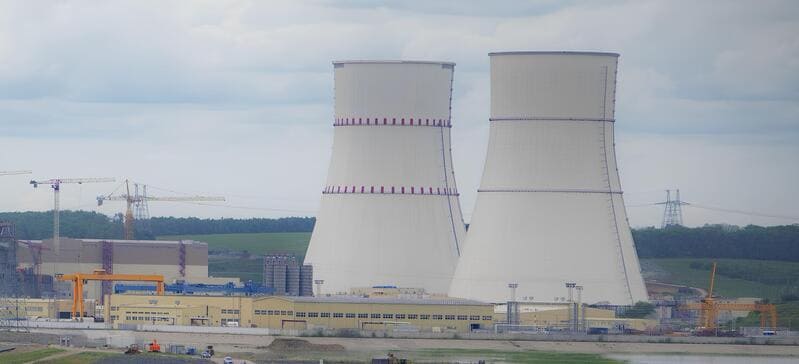
On October 29, 2026, Alexey Likhachev, the head of Rosatom, confirmed that Russia is talking with the United States about using small nuclear plants to power AI data centers. Two weeks earlier, Kirill Dmitriev, an envoy of President Putin, said the two countries were discussing joint data center projects, some of which would run on small nuclear plants.

These accounts come exclusively from Russian officials, as Washington has yet to publicly confirm the talks or comment on their scope. However, even though these discussions are at an early stage, no formal agreement has been reached, and major obstacles come from US sanctions, they represent a significant geopolitical signal. The mere fact that rival governments are exploring—or at least publicly floating—nuclear cooperation for AI underscores how steady, clean electricity has become a top strategic priority.
Nuclear power is now viewed as strategic infrastructure, and the Rosatom talks test three critical areas: sanctions, fuel, and the choice of partners.
AI needs a lot of electricity. Data centers used about 415 terawatt-hours in 2024, and the International Energy Agency expects this to reach about 945 TWh by 2030. Data centers also need power every hour of the day, not just on average. Nuclear plants fit this need well, as US reactors ran at a 92 percent capacity factor in 2024.
Big technology companies have noticed: Meta has announced nuclear deals of up to 6.6 gigawatts by 2035, while Microsoft is paying to restart a closed reactor at Three Mile Island. AI needs power that is steady, large, and low-carbon, and few sources offer all three. This demand is so strong that even countries in conflict are now part of the conversation.
Russia’s offer is serious. Rosatom is a state company with real experience, and its floating plant, Akademik Lomonosov, has worked commercially since 2020. It is one of only two small modular reactor projects in commercial operation in the world—the other is in China—while no Western design has reached this stage yet.
Rosatom is also working with a Russian university on ultra-small reactors for data centers, and it has been pairing data centers with nuclear plants inside Russia since at least 2018.
Moscow also has a clear strategic motive to keep economic channels with Washington open, with Dmitriev framing the proposal as practical cooperation that could begin even before the war in Ukraine ends. Ultimately, Russia’s offer serves a dual purpose: it addresses a genuine commercial energy need in the United States while offering Moscow a political pathway out of diplomatic isolation.
That is why Washington will read the offer carefully. Even without formal sanctions, placing Russian nuclear technology inside critical US AI infrastructure would likely meet strong political and security resistance in Washington. Advanced data centers are treated as sensitive national assets, and officials would worry about relying on a rival for their power.
The biggest hurdle, however, is not the reactor technology itself, but the deep American dependence on Russian nuclear fuel. Although the US enacted the Prohibiting Russian Uranium Imports Act in August 2024—allowing temporary waivers until a full ban takes effect in 2028—any bilateral talk on small reactors inevitably hinges on fuel supply.
Russia holds about 44 percent of the world’s uranium enrichment capacity, and in 2023 it supplied 27 percent of the enrichment services bought by US utilities, according to S&P Global. Russia replied by limiting its own exports of enriched uranium to the US, while many advanced reactor developers fear the US does not have enough capacity for the higher-enrichment fuel their designs need. While the reactor is the most visible component, uranium enrichment remains the true strategic chokepoint.
This dynamic has three major implications:
– For US policy, sanctions are being tested by need. Washington must decide if civil nuclear cooperation can be kept apart from sanctions. An exception would set a precedent, and critics would call it relief by another name, whereas a refusal would keep a useful technology out of reach when power is scarce. The dilemma already exists in the fuel market, and these talks only make it easier to see.
– For the nuclear industry, the race is about proof. Western firms have announced many designs, but few are running. The cancelled NuScale project in Utah is a warning, as its target price rose from $58 to $89 per megawatt-hour. A company that already runs a small reactor has an advantage that announcements cannot match.
– For third countries, selecting nuclear partners has become a high-stakes strategic decision, as no global supply chain is entirely neutral. The US–Russia dynamic matters well beyond Washington and Moscow. Emerging nuclear markets buy fuel, finance, and technology from the same few suppliers, meaning sanctions, export limits, and security rules between big powers can reach them too. Pakistan already works with a foreign reactor supplier and operates under IAEA safeguards, and countries like it will find that fuel, finance, and technology come with political conditions.
To navigate these geopolitical pressures, emerging markets should diversify their suppliers where possible, maintain strong, independent regulators, and insist on transparent international safeguards. Technology offered in a time of geopolitical need must still be judged on safety, cost, and long-term reliability.
Three signs will show if this is a real shift. First, does either government change how sanctions apply to civil nuclear cooperation? Second, does the US build enough enrichment capacity before the waivers end in 2027? Third, does any American tech company sign a deal that involves Russian technology? If none of these happens, the talks will stay just talks.
Still, the story points to a bigger change. The world is moving into an age where AI, data, and digital services depend on electricity, and in that world nuclear energy will become more important, not less. Power demand from AI is growing fast, and solar and wind alone cannot give round-the-clock supply. Nuclear is low-carbon, so it helps countries meet climate goals while meeting new demand, and countries that control nuclear fuel and technology will hold real influence. For countries like Pakistan, nuclear energy is not only about power plants; it is about energy security, technology access, and a place in the new digital economy.
Governments should act on what they can control. They should build fuel and enrichment capacity at home and with allies, so dependence cannot become leverage. They should keep civil nuclear safety cooperation separate from commercial deals, because safety protects everyone, and they should be honest with the public about the trade-offs.
Though the diplomatic update itself is modest, its broader implication is profound: when global rivals negotiate over reactors to power artificial intelligence, nuclear energy is no longer a niche policy debate. The defining question now is who will write the rules for nuclear power in the age of AI.
Author: Hira Bashir – Associate Research Officer at the Center for International Strategic Studies, Azad Jammu & Kashmir. Her research focuses on the peaceful uses of nuclear technology.
(The opinions expressed in this article are solely those of the author and do not necessarily reflect the views of World Geostrategic Insights).
Image Source: Rosatom.