



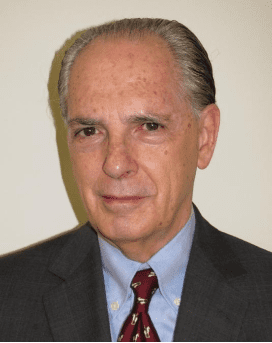
Alfredo Toro Hardy
ALFREDO TORO HARDY is a Venezuelan retired diplomat, scholar and author. He has a PhD on International Relations from the Geneva School of Diplomacy and International Relations (GSDIR), Master degrees from the University of Pennsylvania and the Central University of Venezuela and a Post-graduate degree from ENA (France).
Before resigning from his country’s foreign service in protest for the authoritarian outreach of the government, he served as Ambassador to the United States, the United Kingdom, Spain, Brazil, Ireland, Singapore and Chile, as well as Director of the Venezuelan Diplomatic Academy.
Former Fulbright Scholar and Visiting Professor at Princeton University. A two-times Rockefeller Foundation Bellagio Center Resident Scholar. He is an Honorary Fellow of the GSDIR and a member of the Experts Review Panel of the Bellagio Center. He is the author of twenty-one books and the co-author of fifteen more on international affairs. His latest book was published in 2022 by Palgrave Macmillan.
By Alfredo Toro Hardy While Donald Trump’s influence faces growing resistance in Europe, Canada and elsewhere, including among some of his traditional allies and followers both abroad and at home, Latin America presents a strikingly different picture. MAGA’s political appeal, indeed, continues to…
By Alfredo Toro Hardy The last eight decades have brought fundamental changes both for the West and for China. Actually, the last 81 years in the case of the former and the last 77 in the case of the latter. The Last Eight…
By Alfredo Toro Hardy The notion of hegemony is directly linked to the acceptance by a substantial part of the international community of a position of undisputed leadership. According to the classical definition of Antonio Gramsci the essence of hegemony entails the capacity…
By Alfredo Toro Hardy On the occasion of the United States’ 250 Anniversary it is pertinent to refer to the debate currently taking place in that country between the so-called originalists and living Constitutionalists. Such debate relates to the interpretation of its Constitution.…
By Alfredo Toro Hardy According to The New York Times, during Trump’s recent travel to China, Xi Jinping offered Washington a choice: Accept China as an equal power with red lines that must not be crossed or risk a superpower collision. (Pierson and…
By Alfredo Toro Hardy In a recent Foreign Affairs article Stephen M. Walt defines Donald Trump’s foreign policy as predatory hegemony. In his words “the grand strategy of his second presidential term is perhaps best described as ‘predatory hegemony’. Its central aim is…
By Alfredo Toro Hardy The war in Iran has direct implications upon the war in Ukraine, with costs and benefits for both Moscow and Kyiv. Given the obvious zero-sum nature of the conflict, whatever the pros for one side become cons for the…
By Alfredo Toro Hardy Iran is a fundamental strategic consideration for Israel. China is a fundamental strategic consideration for the United States. Should America’s war against Iran weaken it vis-à-vis Beijing, this would be a strategic mistake for Washington. If the opposite is…