



The electoral defeat of former prime minister Viktor Orban after sixteen years in power marks a defining moment for Hungary and a significant inflection point for European politics. Long seen as a central figure in Europe’s far-right ecosystem,

Orban’s loss is not merely a domestic political shift but a development with wider regional and geopolitical implications. It reflects both a pushback against entrenched leadership and a broader recalibration of far-right politics across Europe.
At one level, Orban’s defeat could be attributed to the inevitability of anti-incumbency after a prolonged tenure. However, such a reading would be reductive. Discontent with his government had been building for years, shaped by tensions with the European Union (EU), concerns over governance, and unease with his external alignments. His defeat, therefore, signals more than electoral fatigue—it points to a deeper political shift that resonates beyond Hungary’s borders.
Neither a Pushback Nor a Reversal
Across Europe, the far-right has witnessed a significant rise in recent years, with its electoral share increasing from roughly 14 percent to nearly 27 percent. This surge was driven largely by dissatisfaction with mainstream political actors, particularly on issues such as immigration, multiculturalism, and national identity. Far-right parties positioned themselves as alternatives capable of addressing these concerns.
Taken together, these developments point towards a more complex and evolving political landscape in Europe, one that is not unidirectionally tilting towards the far-right or the far-left or liberalism, but rather oscillating in response to multiple pressures. European politics is entering a more fluid phase.
Though one might assume there are signs of pushback against the far-right—not only in Hungary but also in other contexts such as Moldova. Similarly, electoral setbacks elsewhere, including the underperformance of far-right forces in France and the referendum defeat faced by Giorgia Meloni, indicate that voters are reassessing their choices. These parties did gain traction by highlighting unresolved societal issues, they have also often struggled to deliver on their promises. Efforts to restrict immigration, challenge multicultural frameworks, or promote nationalist narratives have not consistently translated into tangible outcomes. In some cases, they have risked exacerbating social divisions. Nonetheless, this does not amount to a wholesale rejection of the far-right nor a reversal.
Hungary’s New Leadership: A Signal of Reorientation
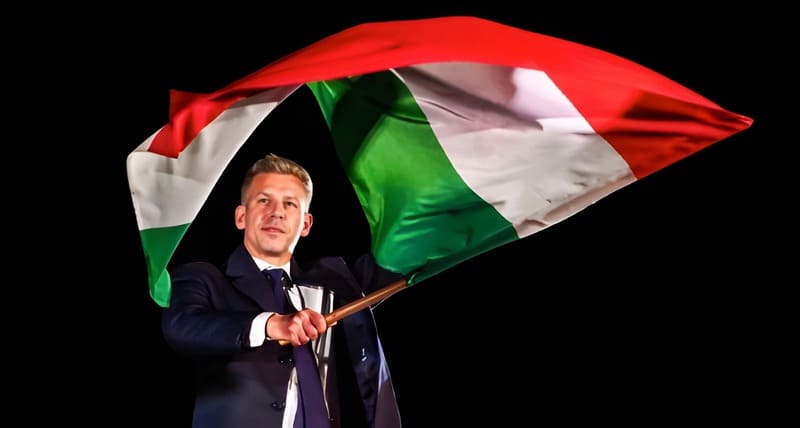
The emergence of a new leader, Peter Magyar, in Hungary following Orban’s defeat carries both symbolic and substantive importance. Domestically, it represents a break from a long period of centralized leadership and signals a demand for change among Hungarian voters. It suggests that even entrenched political figures are not immune to electoral accountability.
At the European level, the new leadership is likely to recalibrate Hungary’s relationship with the EU. Orban’s tenure had been marked by repeated clashes with the Union over governance standards and adherence to its core values. A leadership transition opens the possibility—at least in principle—of a less confrontational approach, potentially easing internal frictions within the EU and also a united front to the Ukraine war.
More broadly, the change in Hungary underscores a key message—political longevity and ideological positioning alone are insufficient to sustain power without continued public support and delivery on governance.
Implications for the EU: Relief Amid Uncertainty
For the European Union, Orban’s defeat comes as a moment of relative relief. His government had frequently challenged EU positions, complicating efforts at collective decision-making. This was particularly significant in the context of broader geopolitical pressures, including the ongoing tensions with Russia and evolving transatlantic dynamics.
Orban’s close relationship with Russian President Vladimir Putin had been a persistent concern for the EU. His alignment with Moscow, coupled with his growing affinity with President Donald J. Trump, raised questions about Hungary’s role within the European bloc. The leadership change, therefore, potentially reduces a source of internal divergence at a critical juncture for Europe.
However, this does not automatically translate into cohesion. The EU continues to face multiple internal and external challenges. What the Hungarian result does offer is an opportunity—rather than a guarantee—for greater alignment. It brings hope not only for the union but also to Ukraine.
A Message to Moscow and Minsk
Beyond the EU, the Hungarian election might carry symbolic weight for political leaderships in countries such as Russia and Belarus. Orban had often been viewed as a leader who maintained a degree of proximity to Moscow within European space. His defeat sends a subtle but notable message—political legitimacy, even for long-standing leaders, remains contingent on public support.
One might argue that the political contexts of Russia and Belarus differ significantly from that of Hungary, particularly in terms of electoral competitiveness and institutional frameworks. There are practically no strong opposition parties in Moscow and Minsk. For Putin and the leadership in Belarus, this outcome may not have immediate practical implications, but it contributes to a broader narrative about the limits of entrenched authority. Moscow and Minsk had their share of anti-government resistance for some time. Though nothing much changed, one undeniable fact was that there were rumblings from some sections of both countries. The message should not be understated.
The Hungarian result adds to a wider European pattern where voters are demonstrating an ability to challenge dominant political figures, a plausible moment of discomfort for Moscow and Minsk.
Trump and the Limits of External Endorsement
The Hungarian election also has implications for Trump and his efforts to build a far-right network in Europe. Trump had not only endorsed Orban but had also actively supported his campaign by deploying senior figures such as JD Vance and Marco Rubio.
Orban’s defeat, therefore, represents a setback for Trump’s broader political outreach. It highlights his limits of external influence in shaping electoral outcomes within Europe. Domestic political dynamics, voter expectations, and national contexts remain decisive. This comes at a time when Trump’s global position has been shaped by a series of contentious policies—from the Iran war to his stance on NATO and the Ukraine conflict, as well as his relationship with Putin. These factors have contributed to perceptions among some allies of the United States as an increasingly unpredictable partner. The Hungarian result may thus also reflect, in part, a Hungarian as well as a European response to these broader dynamics.
A Fluid Political Landscape
Taken together, these developments point to a European political landscape that is neither firmly tilting towards the far-right nor decisively rejecting it. Instead, it is marked by fluidity and contestation. Voters are navigating between dissatisfaction with traditional political actors and scepticism towards alternative forces.
The far-right remains a significant presence and cannot be ignored. At the same time, Orban’s defeat encapsulates this moment of transition. It is not an isolated event. To an extent, it is a definitive turning point. It is because it is part of an ongoing process of political recalibration across Europe—one that will continue to evolve in response to shifting domestic and geopolitical dynamics.
In this sense, Hungary’s political turn is less about the end of a particular leader and more about the beginning of a new phase in European politics—one defined by uncertainty, accountability, and the constant renegotiation of political legitimacy. For the EU, it will also be a test to regroup themselves and have a united front towards the shifts that the world order is going through.
Author: Dr. Indrani Talukdar – Fellow at the Chintan Research Foundation, New Delhi.
(The opinions expressed in this article belong only to the author and do not necessarily reflect the views of World Geostrategic Insights).