



By Aman Jaswal
There is a system shaping the world energy flows, influencing state policy, and structuring global power. It is not the stock market, nor the visible machinery of banking. It is the petrodollar system.

For over five decades, this system has secured the global economy. Yet, its deeper implications particularly for regions like South Asia remain insufficiently understood in public discourse. At a moment when global power is visibly shifting, understanding this system is no longer optional; it is essential.
At its core, the logic is simple: oil is indispensable. It powers industrial production, agriculture, and manufacturing of everyday goods, from plastics and fertilisers to textiles and consumer products. Modern economies, regardless of geography, are structurally dependent on energy, and oil remains central to that dependence. Oil being critical, countries are constantly engaged in buying and selling it. Some, like Saudi Arabia, produce vast quantities; others, such as India and Japan, are heavily import-dependent. This creates a continuous global market. But what transformed this energy market into a mechanism of geopolitical control was not oil alone, it was the currency in which oil was traded.
The origins of this system lie in the aftermath of World War II where the United States emerged economically dominant, with its industrial base intact unlike Europe and Asia. This position enabled Washington to shape the global financial order through the Bretton Woods conference of 1944, which established the US dollar as the central currency of international trade, backed by gold.
However, this system shifted in 1971 when President Nixon ended the dollar’s convertibility into gold, known as the “Nixon Shock.” This marked the transition from a commodity backed system to a fiat currency regime, where the value of money rests on trust and state credibility rather than physical reserves. Moreover, In 1973, the global economy was shaken by the OPEC oil crisis, triggered by an embargo imposed by Arab oil-producing nations (OAPEC) that halted oil export to US and other nations supporting Israel during the Yom Kippur War. Oil prices surged, exposing the vulnerability of industrial economies. In response, the United States reached a strategic agreement with Saudi Arabia: oil would be priced and sold exclusively in US dollars, and in return, the US would provide military protection and security guarantees. Other Gulf producers soon aligned with this arrangement.
This agreement institutionalised what we now call the petrodollar system. If oil, the world’s most critical commodity, was priced in dollars, then every country needed dollars to function. Central banks accumulated dollar reserves, global trade increasingly operated in dollars, and financial flows became anchored to the US economy. The system created a self-reinforcing cycle. Countries purchased oil using dollars; oil-exporting nations accumulated those dollars; and these earnings were reinvested into US financial assets, such as government bonds and real estate, a process known as petrodollar recycling. This ensured that the dollar remained strong, liquid, and central to the global economy.
For the United States, It could borrow at lower costs, run deficits, and exercise significant influence over global finance. Control over dollar-based systems also enabled Washington to deploy sanctions as a powerful geopolitical tool, given that most international transactions passed through US-linked financial networks. Yet, this system remained uncontested.
The 21st century has witnessed the gradual re-emergence of a multipolar global order, characterised by the rise of China, the assertiveness of Russia, and the relative diffusion of US dominance. Within this shifting landscape, the petrodollar system has come under increasing pressure not through sudden disruption, but through gradual diversification.
China has taken steps to promote yuan-denominated oil contracts, seeking to internationalise its currency and reduce reliance on the dollar. Russia, particularly after facing Western sanctions, has shifted parts of its energy trade away from the dollar, opting for alternative currencies in bilateral arrangements. Even traditional US partners have, at times, explored limited diversification in settlement mechanisms.
However, it is important not to overstate the speed of this transition. The dollar’s dominance rests not only on historical arrangements but also on structural advantages: deep financial markets, high liquidity, institutional stability, and global trust. Shifting away from such a system is complex, involving not just currency substitution but the reconfiguration of contracts, financial instruments, insurance systems, and regulatory frameworks. For South Asia, and India in particular, this evolving dynamic presents both opportunities and constraints.
India is one of the world’s largest importers of oil, making energy security a central pillar of its economic stability. Traditionally, these transactions have been conducted in dollars, exposing the Indian economy to exchange rate fluctuations and external financial pressures. A strengthening dollar, for instance, directly increases India’s import bill and contributes to inflationary pressures. At the same time, India has begun cautiously exploring alternatives. Its increased energy trade with Russia in recent years has involved non-dollar arrangements in certain cases, reflecting a pragmatic willingness to diversify.
This is where the contrast with China becomes instructive. China has adopted a far more proactive strategy building parallel financial infrastructures, promoting the yuan in trade settlements, and leveraging multilateral platforms such as BRICS to advocate for alternatives to dollar dominance. India, by contrast, has avoided overt alignment with any anti-dollar bloc, choosing instead a path of calibrated diversification.
This divergence is not merely economic, it is geopolitical. China’s strategy reflects an ambition to reshape global financial hierarchies, while India’s approach reflects a balancing act: seeking autonomy without risking instability or alienating key partners. In this context, the gradual evolution of the petrodollar system does not signal a sudden collapse of US hegemony. Rather, it points to a more complex and layered order, where multiple currencies and systems coexist, compete, and overlap. For India, navigating this transition requires strategic clarity.
India’s Strategic Choices in a Changing Order
For India, the question is not whether to move away from the petrodollar system, but how to navigate its gradual transformation without undermining economic stability. The challenge lies in balancing immediate energy needs with long-term strategic autonomy.
A calibrated approach is essential. India can begin by incrementally expanding the use of the rupee in bilateral trade, particularly with key energy partners in West Asia and Russia. The objective is not to displace the dollar, but to reduce overdependence by building parallel channels of exchange. Over time, such arrangements can enhance resilience against currency volatility and external shocks.
At the same time, energy diplomacy must evolve into financial diplomacy. India’s engagement with major oil producers should extend beyond securing supply to shaping the terms of trade itself through flexible payment mechanisms, long-term contracts, and investment partnerships. This would allow India to gradually embed financial strategy within its energy security framework.
Equally important is India’s engagement with emerging financial platforms. While groupings such as BRICS offer opportunities to explore alternative settlement systems, India must approach them with strategic caution rather than ideological alignment. The goal is diversification, not dependence. However, external strategy alone is insufficient without domestic readiness. The internationalisation of the rupee ultimately depends on strong economic fundamentals stable macroeconomic conditions, deep and liquid financial markets, and predictable regulatory systems. Without these, any shift away from the dollar will remain limited in scope.
Taken together, India’s path forward is best understood as managed diversification: continuing to operate within the dollar-dominated system while gradually building credible alternatives. This dual-track approach allows India to retain the benefits of the existing order while preparing for its transformation.
Author: Dr Aman Jaswal – Lecturer of International Relations and security studies at University of Staffordshire, UK, specialising in conflict dynamics across South and West Asia. In addition to his academic work, he has contributed to the training of practitioners through the UK Ministry of Defence, teaching courses on global and regional security, and on the evolution of conflicts in border regions.
(The opinions expressed in this article belong only to the author and do not necessarily reflect the views of World Geostrategic Insights).
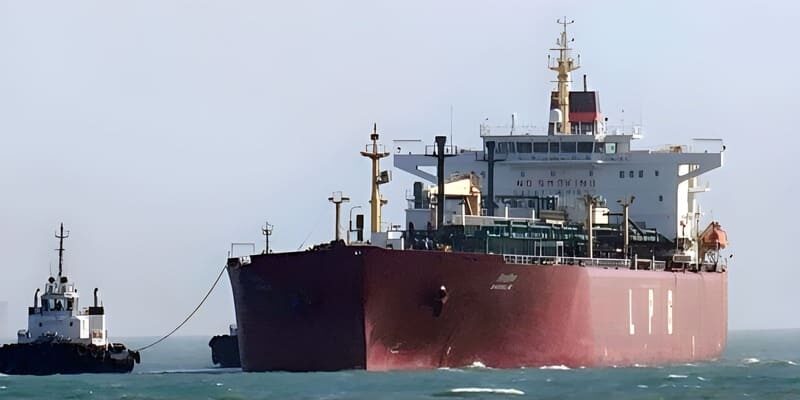
Image Credit: PTI Photo (Indian LPG tanker Shivalik arriving at Mundra Port after crossing the Strait of Hormuz).