



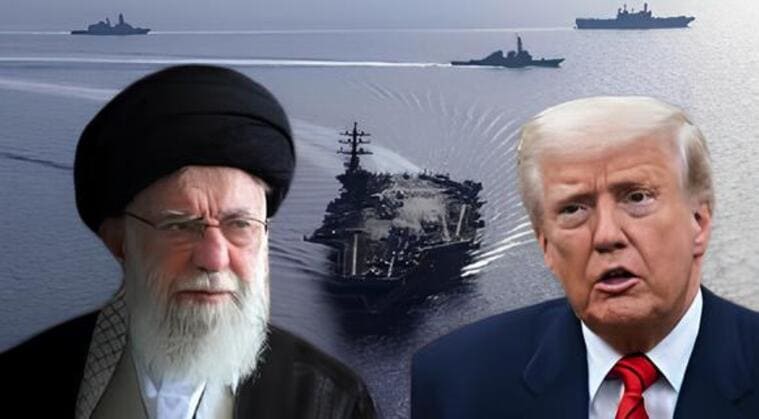
World Geostrategic Insight interview with Gawdat Bahgat on the prospects of the current talks between Iran and the United States on Tehran’s nuclear program; the red lines and objectives of both countries in the negotiations; the probability of a US military attack on Iran as a tactic to exert pressure in the talks; Iran’s defence doctrine; Oman’s role in the dialogue between the US and Iran; and the rivalries within the Gulf in a context of evolving regional dynamics and Israel’s growing influence.
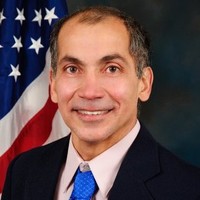
Dr. Gawdat Bahgat is a distinguished professor of National Security Affairs at the Near East South Asia (NESA) Center for Strategic Studies at the National Defense University in Washington, D.C. With over 30 years of experience in academia and political consulting, Dr. Bahgat is considered a leading expert on Middle East geopolitics. His academic career began in Egypt and then consolidated in the United States. He is the author of several books and more than 200 articles in scholarly journals. His areas of expertise include energy transition, climate change, proliferation of weapons of mass destruction, Iran, GCC states, Egypt, Israel and American foreign policy.
Q1 – On Tuesday, February 17, 2026, the second round of indirect talks between Iran and the United States to resolve the dispute over Tehran’s nuclear program concluded in Geneva. Iranian Foreign Minister Abbas Araghchi announced that the two sides had reached a broad agreement on a set of guiding principles that will serve as the basis for drafting a future agreement, but he made it clear that a final agreement is not imminent. How do you assess these peace talks in perspective? What are the fundamental interests of the US and Iran at stake? What are the red lines for each nation? What could be a positive outcome for both sides?
A1 – The gap between the United States and Iran is very large and it looks there is very little, if any, room for compromise. The Trump administration thinks Iran is at its weakest point in decades and this is the right time to extract the most concessions and/or trigger a regime change. On the other hand, having survived the 12-day war and inflicted some damage on Israel, the Iranian leaders do not accept the notion that their country was defeated. Against this background, Washington insists on zero enrichment, restrictions on missile capabilities and cutting ties with Iran’s regional allies. Having invested so much resources and pride and as a signatory of the NPT, the Iranians insist on keeping their right to enrich and their right to defend themselves (missile capabilities) and ties with regional allies. Based on media reports, it looks Iran has not tried to enrich uranium since the 12 day war last June. Iran’s economy is in bad shape, the country lacks the necessary financial resources to support regional allies. Maintaining missile capabilities looks Iran’s redline. Cannot see Iran compromising on its missile program.
Q2 – US President Donald Trump said on Thursday, May 20, that he is considering a limited military strike on Iran in order to pressure its leaders to agree to a deal to curb the nuclear program. Is a US military attack on Iranian territory, and particularly against Iran’s nuclear facilities, likely if Tehran does not capitulate on nuclear issues? What could be the consequences?
A2 – On a positive note, both US and Iranian negotiators have been guarded in their public statements. It looks that President Trump wants a better deal than the one President Obama negotiated in 2015. The Iranians have not made any concessions public. Iran will present a written proposal in the coming few days. This is where they might or might not meet Trump’s demands. If the two sides cannot reach a compromise, some form of military confrontation is likely or almost certain.
Q3- With reference to your book Defending Iran: From Revolutionary Guards to Ballistic Missiles, how has the indigenous development of missile and space technologies changed Iran’s doctrine of ‘asymmetric deterrence’? Is this proxy and missile-based doctrine still effective, or is Iran being forced to transition to a conventional defense doctrine? Indeed, the US and its European allies suspect that Iran is moving towards the development of a nuclear weapon, something Iran has always denied. How likely do you think it is that the perception of regional threats will push Iran towards a definitive militarization of its nuclear program?
A3 – Occasionally some Iranian leaders have threatened to re-define their military doctrine and consider making a nuclear bomb. BUT, the official policy as stated by the president and foreign minister is Iran has no interest and is not seeking nuclear weapons. Given the Israeli and Western intelligence penetration of Iran, any efforts to acquire nuclear weapons will be discovered and dealt with. Based on open sources, I believe Iran is not seeking to make the bomb. Instead, Iran has invested heavily in building cyber, missile and drone capabilities.
Q4 – The Iran-US meeting took place at the Omani diplomatic mission in Geneva, with Omani Foreign Minister Badr Al Busaidi acting as mediator. Over the past two decades, the Sultanate of Oman has successfully maintained a policy of neutrality and assumed the role of mediator, both within the Arabian Peninsula and more broadly across the Middle East. How do you assess Oman’s role in the region?
A4 – Oman has always played a positive role in regional de-escalation. It is one of a few countries with warm relations with both Washington and Tehran. Traditionally, Oman has been Iran’s closest regional ally. Part of Oman’s political culture is that the country is not eager to publicize its success and being in the spotlight. This is why both Iran and the United States chose to secretly negotiate the nuclear deal (2013-2015) and the Sultanate has been playing a key role in releasing hostages and political prisoners.
Q5 – The rivalry between Riyadh and Abu Dhabi for regional leadership is more heated than ever. Referring also to your research on post-Arab Spring ‘New Models’, is this competition fragmenting the security of the Gulf Cooperation Council (GCC) and undermining the stability of the region, or is it paradoxically creating a new multipolar balance that is more resilient to external pressures?
A5 – The strategic rivalry between Saudi Arabia and the UAE is rooted in the UAE’ s perception of itself as the regional leader. It has taken the lead in economic reform, nuclear power and normalization with Israel. Given Saudi Arabia’s size, population, large economy and Islamic credentials, the kingdom with its young and energetic leader is well placed to be the Arab and Islamic leader. But the rift between the two countries is likely to be overcome. The United States, Europe, Turkey, Egypt and many other countries want to maintain good relations with both Riyadh and Abu Dhabi.
Q6 – Have the ceasefire agreements and the peace plan for Gaza redrawn the regional power hierarchy? Can we talk about a real decline in the influence of non-state groups in favor of a renewed diplomatic centrality of actors such as Qatar and Egypt?
A6 – Non-state actors, i.e., Hezbollah, Hamas and Al-Houthis, are down but not out. There is no doubt all these non-state actors have been weakened by the Israeli and US attacks, but Hamas is still active in Gaza, Hezbollah has refused to disarm and Al-Houthis still control a big part of Yemen. The main strategic change in the ME is the emergence of Israel as the regional hegemon. Before October 2023, there was a fragile regional balance of power. There were several power centers (Iran, Turkey, Israel, GCC & Egypt). Now, Israel has emerged as the strongest military power in the ME, supported by unconditional US backing. Saudi Arabia is working with Turkey and other countries to restore a balance of power.
Q7 – How is the integration of AI into defense systems changing risk calculations in Gulf capitals? Is there a danger that the automation of military response will drastically reduce the time available for diplomacy, making regional conflict almost inevitable?
A7 – It is probably too early to predict how AI will change military doctrine. For now, what is clear is GCC states, particularly UAE and Saudi Arabia, are trying to become regional and even global AI hubs. So far, people, not the machines, make military decisions. I believe the GCC states’ interests in AI and other emerging technologies have a positive impact on peace and security. They are interested in economic prosperity and political stability. They do not want to see war with Iran or Israel that would complicate their efforts to build their scientific and technological infrastructure.
Q8 – Instability in the Red Sea has transformed the Suez Canal from a strategic asset to a high-risk bottleneck. How is this ongoing crisis accelerating the creation of alternative land or Arctic routes, and what will be the consequences for the economy of Egypt, your country of origin?
A8 – Undoubtedly instability in the Red Sea has had a significant impact on the Egyptian economy. Al-Houthis attacks on commercial shipping, UAE support to separatist groups in South Yemen, Sudan and Somalia, and Israel’s recognition of Somali Land all add to political insecurity and instability in the Horn of Africa and the Red Sea. There is no regional mechanism to address these crises and coordinate diplomatic negotiations between regional powers on the two sides of the Red Sea.
Dr. Gawdat Bahgat – Professor of National Security Affairs at the Near East South Asia (NESA) Center for Strategic Studies at the National Defense University in Washington, D.C