



The Middle East is navigating a complex phase of fragmentation, kinetic escalation, and institutional transformation. As regional friction points scale up, the structural frameworks driving diplomacy, crisis management, and post-conflict stabilization are undergoing critical re-evaluation.
In this interview with World Geostrategic Insights, Hesham Youssef (هشام يوسف), a senior diplomat with decades of high-level experience within the League of Arab States, the Organization of Islamic Cooperation (OIC), and leading international peace institutes, offers a systemic analysis of these dynamics. The discussion examines the evolving space for regional mediation, the viability of the two-state paradigm, transatlantic influence in the Levant and the Gulf, and the critical intersections between security frameworks and humanitarian recovery on the ground.
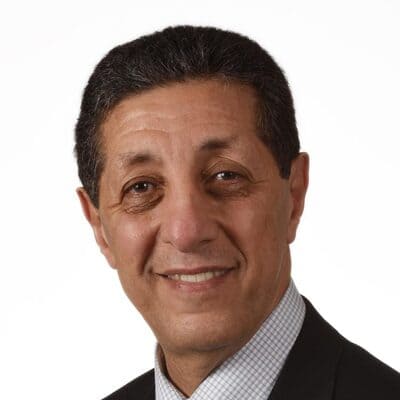
Ambassador Hesham Youssef is a distinguished career diplomat and expert in international conflict resolution and peacebuilding, with over three decades of high-level experience navigating complex geopolitical and humanitarian crises in the Middle East and the wider Islamic world.
Entering the Egyptian Foreign Ministry in 1985, Youssef served in Canada, at the UN and WTO mission in Geneva, and in the Foreign Minister’s cabinet. From 2001 to 2014, he held key roles at the League of Arab States as Spokesman and Chief of Staff, later serving as Assistant Secretary-General for the Organization of Islamic Cooperation (OIC) from 2014 to 2019.
He has worked extensively on regional conflicts and collaborated as a Senior Advisor with institutions like the United States Institute of Peace (USIP) and the European Institute of Peace (EIP).
Q1 – Ambassador Youssef, the contemporary Middle East is undergoing an unprecedented phase of fragmentation and kinetic escalation. From an analytical perspective, do you believe the structural space for traditional diplomatic mediation has fundamentally contracted, or do viable backchannel mechanisms still exist to mitigate these systemic shocks?
A1 – You are absolutely right, the Middle East is passing through an unprecedented phase of fragmentation, escalation and wars, but the space for traditional mediation has not contracted. As a matter of fact, it has expanded. There are more conflicts and also many more countries particularly in the region, like Egypt, Qatar, Oman, and others that are willing to play a more active role in mediation.
Globally, there is a dual challenge, translating mediation efforts into agreements, and secondly, when agreements are reached, to ensure their implementation on the ground.
In the Middle East, the challenge is that several parties believe that they can be victorious militarily or at least that military action can significantly improve their negotiating positions.
Many conflicts in the region also have become protracted conflicts resulting in the involvement of more national, regional and international actors, and foreign powers often support or fund different sides to advance their own interests making achieving peace much more complicated.
Moreover, several conflicts are characterized by historical grievances, zero-sum perceptions, or identity and ideology related differences, in addition to the presence of powerful spoilers. As a result, mediation requires a huge commitment because achieving peace will require utilizing huge political capital and a very long time with very limited potential for success.
Q2 – Throughout your career, you have extensively analyzed the viability of the two-state solution to solve the Israeli-Palestinian conflict. Given the severe degradation of civil infrastructure and the compounding radicalization observed in recent years, does this paradigm remain a legally and politically feasible framework for self-determination, or must the international community formulate entirely new post-conflict statebuilding models?
A2 – Yes, in the last forty years or so, I have worked on the Israeli Palestinian conflict more than any other conflict in the region. And yes, radicalization has become more rampant, but in these forty years not a single idea has commanded as much support when compared with the two-state solution.
We have to distinguish between four issues. Whether the two-state solution remains the legal framework according to international law, whether it is achievable on the ground, whether an agreement can be reached at this point in time, and whether an agreement can be implemented if it is reached.
I recognize that as time passes by there are millions that are added to those believing that the two-state solution is no longer possible but it remains the legal framework in accordance with international law. The right of the Palestinian people to self-determination does not just disappear because of their inability to exercise that right. I did not see any credible alternative being proposed by anyone, and if we mobilize political will, an agreement can be reached and it can be implemented.
I also recognize the additional huge challenges resulting from the devastation of 7/10 as well as the war on Gaza and how the current most extreme government in Israel’s history has complicated the situation further. This is why we should focus now on being extremely firm in confronting any policies or measures that would further undermine the prospects of the establishment of a Palestinian state and in particular settlement activities and expropriation of Palestinian land.
The international community must not continue to advocate for the two-state solution rhetorically while allowing the erosion of the political, territorial, and institutional conditions necessary for its realization. Our collective responsibility is to create the conditions that would make Palestinian self-determination achievable.
Q3 – Having served within both American and European institutional architectures—notably the United States Institute of Peace (USIP) in Washington and the European Institute of Peace (EIP) in Brussels—how do you evaluate the current strategic efficacy of Western powers in the Gulf and the Levant? Specifically, while independent operational bodies like the EIP enhance European diplomatic agility, do you believe the European Union as a political entity possesses the institutional cohesion to act as an autonomous mediator, or does its foreign policy remain structurally constrained by Washington’s security umbrella?
A3 – This is a very complicated multidimensional question.
First, you are asking about the efficacy of Western powers in the Gulf and the Levant. I do not think that we can talk today about the West as a block on many issues, whether it is related to Ukraine for example or the Middle East. We see the divisions within Europe and with the US in as far as Ukraine is concerned.
As for the Middle East, the Gulf is passing through a soul-searching process. They realize they can no longer rely on the US security umbrella as much as they thought they could. They also realize that they are unable to defend themselves effectively whether individually or collectively, and that they are much more vulnerable than they thought. They also realize that they cannot rely on Europe that is preoccupied with Ukraine and its own internal challenges and is neither capable nor willing to provide a security umbrella for the Gulf.
The Levant is even more complicated. The West is united in supporting the new regime in Syria but the situation there remains precarious. Europeans are quite united in their willingness to support Lebanon but the US is controlling the situation and is giving leeway and freedom of action to Israel that is unsustainable and cannot be tolerated much longer by Lebanon, the region and many European countries and in particular France. So, the situation there can escalate further if the Israeli elections result in a continuation of an extremism coalition. However, the EU’s recent foreign minister’s decision on 12 October 2026 to establish a support mission for Lebanon, proves that it can take practical consequential steps that can make the difference between stability and further escalation. The challenge remains how to connect such initiatives to a wider, more coherent political strategy.
Europe has significant diplomatic and economic leverage, but political fragmentation limits its ability to use this leverage, and the foreign policy of the European Union will remain structurally constrained by its own limitations and divisions more than by Washington’s security umbrella as suggested by the question.
Q4 – In analyzing the indirect negotiations and security frameworks involving Iran, the United States, and regional partners, maritime chokepoints—specifically the Strait of Hormuz—remain critical flashpoints. From a crisis management standpoint, what concrete security guarantees or diplomatic concessions are required to stabilize these trade corridors and prevent systemic escalations?
A4 – The Strait of Hormuz cannot be dealt with in isolation. We have an intricate three-dimensional problem regarding this situation that is associated with the US, Israel and Iran.
Trump wants a deal that is significantly superior to the one reached by Obama and a total Iranian surrender which will not happen. Israel wants the war to continue and regime change which is unlikely to happen through military means. Iran wants to take advantage of the fact that it was not defeated and its control of the Strait of Hormuz, and to translate these developments into a long-term strategic advantage, leverage and influence particularly over Hormuz. The whole world is not willing to allow Iran to control Hormuz after the war.
Another challenge is the oscillating positions of Trump that change on a continuous basis. Furthermore, the current mediators- Pakistan and Qatar- do not have a meaningful leverage on both the US and Iran. The US because of Trump and Iran because it considers the conflict existential, and therefore the difficulty in de-escalation and achieving some form of stabilization in this critical maritime chokepoint.
The objective should not merely be to reopen the Strait after each crisis. It should be to reduce the ability for any party to use the Strait as an instrument of coercion to the region and international maritime trade in general.
Q5 – Having operated at the highest administrative levels of both the League of Arab States and the Organization of Islamic Cooperation (OIC), you have experienced their internal decision-making processes firsthand. These bodies are frequently critiqued for a perceived lack of enforcement capability. What is the realistic margin of maneuver for these regional organizations when confronting crises driven by direct great power intervention?
A5 – The margin of maneuverability for both organizations is quite limited when confronting crises driven by direct great power intervention for internal and external reasons. But before elaborating I have to indicate that at the end of the day any international organization is a reflection of the political will of its member states. Neither organization has a supranational authority, a military capability, or enforcement mechanisms available to some other institutional arrangements. Their decisions depend substantially on the political will and cooperation of their member states.
So, internally for these two organizations, there is the question of capacity. They will find it extremely challenging to effectively deal with conflicts of such magnitude.
The external dimension is related to the decisions required by member states of these organizations and whether they are unified to a degree that would allow them to mandate the organization to intervene based on a coherent directive, which is not the case, and this is why such a mandate was not given.
However, both organizations can contribute in undertaking important functions. First, they can establish a common political position. Even when consensus is incomplete, they can clarify areas of agreement and identify the limits of acceptable outcomes. Second, they can mobilize diplomatic pressure. Third, they can provide a platform for mediation. They can help coordinate initiatives, avoid competing mediation efforts, and identify opportunities for de-escalation. Fourth, they can support humanitarian and reconstruction efforts. Finally, they can connect regional diplomacy to the UN and other international efforts.
None of these functions should be exaggerated. A declaration without implementation has very little impact, and a consensus statement that conceals profound disagreements becomes meaningless.
Q6 – How can the reconstruction and early-recovery frameworks proposed by Arab states effectively interface with the UN Security Council, given the persistent legislative paralysis induced by reciprocal vetoes among permanent members?
A6 – The problem is not in the possible reciprocal veto among permanent members of the Security Council. The problem is in the fact that the US as well as the European Union are not willing to put pressure on Israel to implement its obligations in the humanitarian annex of the ceasefire whether as it relates to humanitarian assistance or early recovery. This is also the case regarding allowing the technical committee that is supposed to govern Gaza that Israel is not allowing it to enter Gaza as well.
In contrast to what is happening today on the ground, humanitarian assistance and early recovery must preserve human dignity, restore Palestinian institutional capacity, and create the conditions in which a political settlement can become sustainable. This will not happen without meaningful pressure on Israel.
In all cases, Palestinian ownership must be at the center of any early recovery and reconstruction effort that should also not be separated from the political objectives, and Palestinian displacement must not be allowed in whatever form Israel is trying to achieve it.
Q7 – As the former Assistant Secretary-General for Humanitarian Affairs at the OIC, your portfolio encompassed protracted crises not only in Palestine but also in Sudan, Somalia, and Myanmar. Analytically speaking, to what extent does the weaponization of aid delivery and induced food insecurity structurally alter the timeline and outcome of a conflict?
A7 – This is a very important question. The situation varies from one conflict to another. One thing should be made clear at the outset, using food and humanitarian assistance as an instrument of warfare is a violation of International Humanitarian Law. This does not merely aggravate human suffering, it can change the strategic calculations of the parties, the duration of the conflict, the prospects for negotiation, and the conditions under which eventual peace may become possible.
There is no doubt that humanitarian deprivation can create pressure for concessions. We have witnessed this in Gaza, Sudan, and in many other wars. Civilians may become desperate, but desperation does not necessarily translate into capitulation. However, it will also not produce a political settlement. In some circumstances, it can harden positions, deepen social fragmentation, and make reconciliation more difficult.
Furthermore, the consequences extend far beyond the immediate conflict. This, in my view, is one of the most underestimated aspects of the question. Food insecurity destroys livelihoods, disrupts agricultural production, displaces communities, weakens public institutions, and destroys the relationship between the people and those responsible for protecting them. When children experience prolonged malnutrition, when families lose their homes and livelihoods, and when entire communities are displaced, the damage is no longer confined to the period of active hostilities. It affects the prospects for peace and the willingness of communities to coexist after the fighting ends. It can also create conditions conducive to recruitment by armed groups, intercommunal tensions, and future cycles of violence.
Q8 – Contemporary geopolitical discourse often bifurcates military strategy from humanitarian intervention. However, structural deprivation and the absence of socio-economic mobility are proven catalysts for future asymmetric threats and radicalization. How can policymakers sever this cyclical feedback loop in territories where institutional trust has completely collapsed?
A8 – It has to be understood by everybody that security is essential, but it cannot produce a stable political order on its own. Similarly, humanitarian assistance and economic development cannot, by themselves, resolve a deep-rooted conflict in which political exclusion, coercion, and competing claims to authority remain unaddressed.
When institutions collapse, people lose access not only to basic services but also to protection, justice, and meaningful participation in decisions that affect their lives.
It is true that in such circumstances, armed groups can exploit grievances, provide alternative forms of authority, or offer economic and social support where public institutions are absent.
Violent extremism must be addressed where it threatens people but I would also caution against treating radicalization exclusively as a security problem.
This cycle can be broken by restoring essential services and livelihoods as early as possible, reaching vulnerable groups and dealing with them fairly, and rebuilding institutions that people have reason to trust. Where security forces have been implicated in abuses, reform and accountability are essential. A process of political participation, community dialogue, and inclusive reconciliation initiatives have to be undertaken. Communities need mechanisms through which they can influence priorities, challenge decisions, resolve disputes, and hold authorities accountable. Local mediation can help rebuild relationships across social divisions, although they cannot substitute addressing national political grievances. People need to believe that their sacrifices and participation can contribute to a different future.
Security, humanitarian assistance, development, and peacebuilding must be integrated and not delivered as isolated programs. Security-sector measures should create the conditions for civilian recovery, not displace it. Development programs should address structural inequalities and economic exclusion. Political dialogue should tackle the disputes over power, rights, and representation that cannot be resolved through service delivery alone. Those in power should also establish a credible political horizon. This may be one of the most important elements.
If I were to draw one common thread from these questions, it would be that we cannot separate security from politics, diplomacy from implementation, or humanitarian recovery from the search for a durable political settlement. Ultimately, the test of diplomacy is not in the number of agreements signed. It is whether diplomacy changes realities on the ground. Whether it prevents further escalation, protects civilians, restores political agency, and creates conditions in which people can live with dignity and security. That is the standard against which we should assess our collective efforts.
Ambassador Hesham Youssef – Career diplomat and expert in international conflict resolution and peacebuilding,
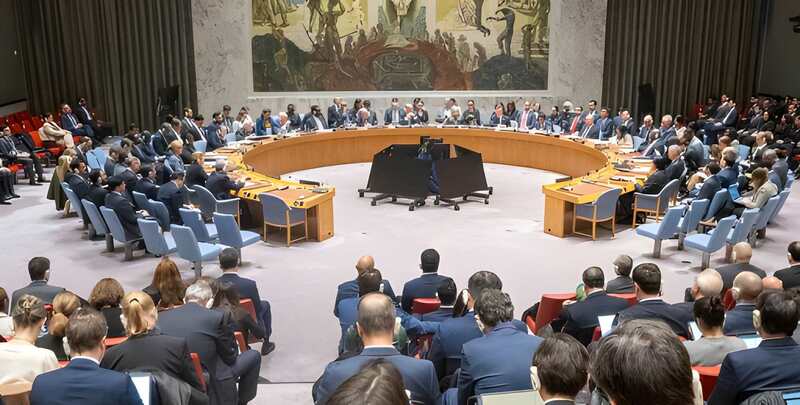
Image Source: UN Photo/Eskinder Debebe (The UN Security Council meeting in emergency session on Iran, on 28 February 2026, in the aftermath of major airstrikes across Iran on Saturday by the United States and Israel).