



By Ajmal Shams
The ruling Taliban in Afghanistan marked five years in power last August, having returned to power in 2021. During this period, the country’s economic, political, security, and developmental landscape has remained fluid.
One reality, however, has not changed: girls beyond grade six remain barred from schools, and women continue to be banned from employment. Five years is not a short span in the life of any nation. These years of missed education will leave a lasting impact on an entire generation.
In five years, societies often make notable progress across many sectors of life. Unfortunately, a misinterpretation of Islamic teachings by those in power has restricted access to knowledge for half of the country’s population. Islamic principles clearly instruct both men and women to seek knowledge, with no distinction drawn between religious learning and modern education.
Beyond the restrictions on education and employment, Afghanistan’s humanitarian situation is equally concerning. According to United Nations, 28 million Afghans were living in poverty in 2025—nearly two thirds of the population, while 14 million Afghans face acute hunger. This already severe situation has been further strained by the return of nearly five million Afghan refugees since 2023, adding additional pressure on an economy struggling to recover. A large portion of the country is affected by drought, with serious implications for national food security. Afghanistan has therefore remained in a prolonged humanitarian crisis since August 2021.
The international community has largely rejected the Taliban’s repeated appeals for recognition as Afghanistan’s legitimate government, with only Russia offering such recognition. There is a broader international consensus on Afghanistan as regards granting legitimacy to the government in power. The Taliban must respect women’s rights and establish an inclusive government representing all segments of Afghan society.
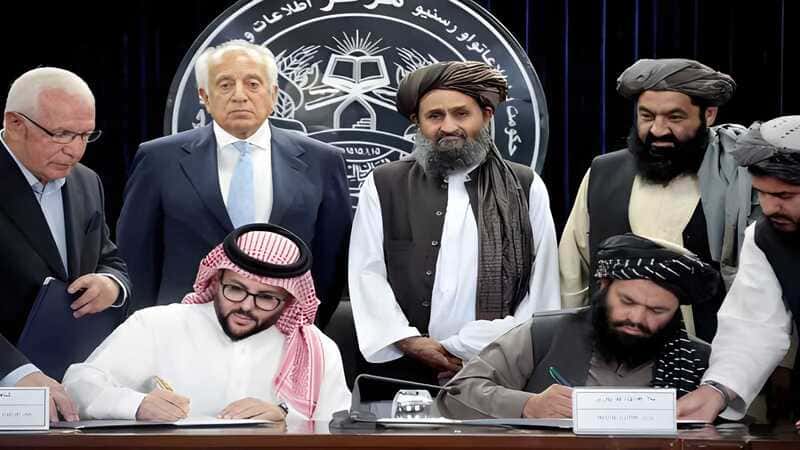
Despite concerns over credibility, economic hardship, and humanitarian crises, the Taliban have consistently sought foreign investment. In this regard, a significant development occurred recently when the Saudi oil and gas company Delta International Energy signed a $200 million investment agreement with the Taliban-controlled Ministry of Mines. The agreement aims to explore and extract oil and gas reserves in western Herat Province, bordering Iran.
The deal attracted significant media attention, partly because of the presence of former U.S. Special Representative for Afghanistan, Ambassador Zalmay Khalilzad, at the signing ceremony. Although Mr. Khalilzad no longer holds an official U.S. government position, he remains an influential figure in discussions concerning Afghanistan due to his role in U.S.-Taliban negotiations and his decades of diplomatic engagement with the country. His long involvement in Afghan affairs has given him a deep understanding of the country’s internal dynamics, regional politics, and societal complexities.
Judging by reactions on social media, many Afghans have expressed cautious optimism about this new economic venture. Some hope such initiatives could gradually soften the Taliban’s hardline positions and encourage greater engagement with the international community, creating space for political compromise and economic openness. For many ordinary Afghans, each new economic initiative represents a potential step toward national development and an opportunity for job creation, regardless of who holds power in Kabul.
Amid the Taliban regime’s ongoing efforts to normalize its international relations, some members of the former Afghan government, many of whom have settled in Western countries, have recently become more vocal on social media and other platforms, calling for change. However, the current rulers’ lack of credibility does not automatically absolve former officials of scrutiny regarding past allegations of corruption, mismanagement, and failures in governance. Considering the substantial financial and political support provided by the United States and other international partners, one could argue that, had there been a stronger commitment to public service and national responsibility among the country’s political and government leadership, the republic would have had a better chance of survival. In this context, it is difficult to justify the aspirations of some former officials to return to power without first addressing concerns about past governance and accountability.
If Afghans were to consider who could help guide the country’s future, those with a clean record of public service would likely be among them. These are individuals who have served with integrity and without using public positions for personal gain. Those who continue to demonstrate a genuine commitment to Afghanistan’s future could make a valuable contribution as the country seeks a peaceful and constructive path forward.
For the current rulers, the message is equally clear: regardless of how power was obtained, national and international credibility is essential. A government that relies solely on the exercise of authority, without fairness or inclusion, is unlikely to achieve lasting stability and legitimacy. Afghanistan’s future ultimately depends on accountable leadership, responsible governance, and an inclusive political order that serves the interests of its people.
Author: Ajmal Shams – Former Deputy Minister in the Government of the Islamic Republic of Afghanistan and Vice-President of the Afghanistan Social Democratic Party.
(The views expressed in this article belong only to the author and do not necessarily reflect the views of World Geostrategic Insights).
Image Source: Ministry of Mines and Petroleum (Afghan Mines and Petroleum Minister Hedayatullah Badri and Delta CEO Shaher Al-Taqi sign an exploration agreement in the presence of Zalmay Khalilzad, former US special representative for Afghanistan, in Kabul on Sept. 7, 2026.