



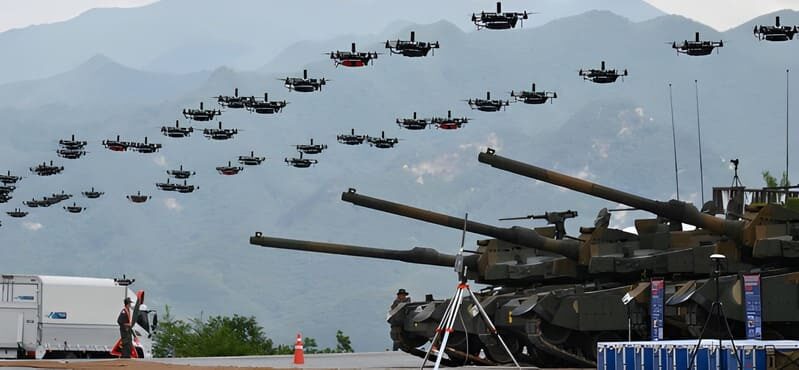
Artificial intelligence and autonomous systems are fundamentally restructuring the paradigms of global deterrence, defense economics, and geopolitical strategy. In this interview with World Geostrategic Insights, Jong Ung Cheon delves into the operational realities of contemporary algorithmic warfare, examined through the lens of technological innovation and strategic doctrine. The discussion contextualizes the systemic challenges facing the Indo-Pacific, ranging from the technical constraints of multi-sensor fusion along highly volatile borders to the strategic imperatives of Multi-Domain Operations (MDO).
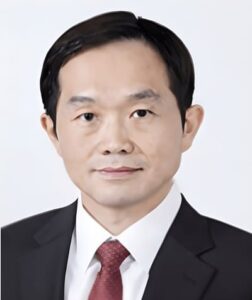
Jong Ung Cheon is the Chief Executive Officer of WAR LAB and WAR LAB NEXUS, operating at the intersection of private-sector technological innovation and military defense requirements. An expert in strategic planning and military pedagogy, he also serves as an Adjunct Professor training future military specialists in algorithmic systems and robotics.
Cheon’s professional background bridges high-level military operations with elite academic research. He is a former Lieutenant Colonel in the Republic of Korea Army, having served as a strategic planning officer at the Joint Chiefs of Staff. Notably, during his military tenure, he directly managed the deployment of advanced surveillance and security architectures along the Korean Demilitarized Zone (DMZ).
His academic background reflects a multidisciplinary foundation spanning military affairs, management, security studies, and engineering. He holds a bachelor’s degree in Economics and Management from the Korea Military Academy, a master’s degree in Business Administration from Korea University, an MA in Science and Security from the Department of War Studies at King’s College London, and a PhD in Engineering from Kwangwoon University.
He also served as a Visiting Research Fellow at the Changing Character of War Centre (CCW) at the University of Oxford, where his research focused on historical military doctrines, geopolitical stability, and contemporary strategic developments.
Q1 – During your tenure as a Visiting Research Fellow at the Changing Character of War Centre (CCW) at the University of Oxford, your research examined historical military doctrines alongside contemporary strategic developments. From a geopolitical perspective, how significantly are military AI and autonomous robotic systems reshaping the traditional concept of deterrence, particularly in the Indo-Pacific?
A1 – Traditional military deterrence seeks to discourage an adversary from taking military action by increasing the anticipated costs and risks of aggression. During the Cold War, nuclear weapons and large-scale conventional forces formed the foundations of deterrence. However, advances in artificial intelligence and autonomous weapons systems are transforming not only the capabilities underpinning deterrence, but also its credibility and the perceptions of potential adversaries.
I see this transformation taking place across three principal dimensions.
First, deterrence is evolving from a predominantly platform-centric concept towards one increasingly defined by the effectiveness of intelligent, interconnected combat systems.
Traditionally, the number and performance of fighter aircraft, naval vessels and tanks were among the principal indicators of military strength. In future warfare, however, what will matter increasingly is not simply the performance of individual weapons platforms, but how effectively sensors, artificial intelligence, command-and-control systems and unmanned platforms are integrated into a coherent operational architecture.
For example, even if an adversary possesses hundreds of manned aircraft, a force equipped with distributed sensor networks, AI-enabled command-and-control systems and coordinated unmanned combat platforms may be capable of establishing a fundamentally different form of deterrence.
Second, the economic structure of deterrence is changing.
The ability of relatively inexpensive unmanned systems to threaten costly manned platforms or critical infrastructure is creating new forms of military asymmetry. This offers opportunities for middle powers to strengthen their deterrent capabilities without necessarily matching the conventional military expenditure of larger powers. At the same time, however, these technologies also provide new offensive capabilities to militarily weaker states and non-state actors.
Consequently, AI and autonomous systems do not automatically enhance strategic stability. By lowering the costs of certain forms of military action, they may also reduce the threshold for provocation or escalation.
Third, AI is transforming the temporal dimension of deterrence.
Artificial intelligence can significantly shorten the time required for detection, analysis, decision support and military response. However, faster decision-making does not necessarily mean better strategic judgement.
This is particularly important in the Indo-Pacific, where strategic competition between the United States and China, tensions across the Taiwan Strait, North Korea’s nuclear and missile threats, and complex maritime disputes coexist.
In such an environment, excessive confidence in AI-generated assessments could lead to misinterpretations of an adversary’s intentions or premature military responses during a crisis.
During my research at Oxford, one question that particularly interested me was whether technological change necessarily alters the fundamental nature of war.
I believe Clausewitz’s insights into uncertainty, friction and the political nature of warfare remain highly relevant in the age of artificial intelligence.
Indeed, while AI may help lift certain aspects of the traditional fog of war, it may simultaneously create new forms of uncertainty arising from algorithmic opacity, manipulated data and errors in automated decision-making.
Ultimately, the future of deterrence will depend not simply on how much AI a state possesses, but on how effectively it can translate AI-enabled military superiority into credible, reliable and controllable deterrent capabilities.
Q2 – Critics often argue that the rapid integration of autonomous systems is outpacing the development of international humanitarian law and strategic frameworks. How can states balance technological superiority with robust ethical safeguards for AI-driven defence systems?
A2 – I do not believe that ethical considerations surrounding military AI should be viewed merely as constraints on technological innovation. On the contrary, reliability, accountability and controllability will become essential components of military effectiveness in the age of artificial intelligence.
Throughout military history, the emergence of new weapons technologies has frequently outpaced the development of the legal and institutional frameworks governing their use. However, AI presents a particularly significant challenge.
Whereas traditional weapons primarily execute actions determined by human operators, artificial intelligence increasingly participates in the processes of perception, analysis and decision-making themselves.
I believe this challenge should be addressed through three fundamental principles.
The first is human responsibility.
Regardless of how sophisticated AI systems become, humans must remain responsible for determining the political objectives of war, assessing the legitimacy of the use of force and accepting accountability for its consequences.
This does not necessarily mean that a human must intervene in every individual decision. In areas such as air defence, where reaction times may be extremely limited, a degree of automation can be operationally necessary.
What matters is not simply whether a human is formally included in the decision-making process, but whether human authorities retain genuine control over the operational boundaries and conditions under which force may be employed.
The second principle is technological verification and validation.
Unlike ordinary civilian AI applications, errors in military AI systems can result in casualties, unintended engagements or military escalation.
It is therefore essential to evaluate the reliability of training data, resilience against adversarial attacks, performance degradation under unexpected conditions and the interaction between human operators and AI systems. Such evaluations must be conducted under conditions that closely resemble actual operational environments.
The third principle is institutional accountability.
When an AI system makes an incorrect assessment, determining responsibility among developers, commanders and operators can be extremely complex.
For this reason, accountability mechanisms must be established throughout the entire lifecycle of military AI systems, from design and development to operational authorisation, deployment and post-operation evaluation.
There is one distinction I consider particularly important.
Including a human in the decision-making process is not the same as ensuring that the human genuinely exercises control.
If a human operator merely presses an approval button without understanding the reasoning or limitations of an AI-generated recommendation, the arrangement may become little more than a formal mechanism for transferring responsibility to a human.
The central issue, therefore, is not simply the presence of a Human-in-the-Loop, but the implementation of Meaningful Human Control.
I do not regard ethical safeguards and technological superiority as inherently contradictory objectives. In the long term, I believe states that develop reliable, accountable and controllable military AI systems will be better positioned to sustain their strategic advantages.
Q3 – As a former Lieutenant Colonel in the Republic of Korea Army and a strategic planning officer at the Joint Chiefs of Staff, you have had direct experience of the Korean Peninsula’s security environment. How has South Korea’s defence doctrine evolved from conventional territorial defence towards high-tech Multi-Domain Operations (MDO)?
A3 – The modernisation of the Republic of Korea Armed Forces requires more than the replacement of existing weapons systems with more advanced platforms. It demands a fundamental transformation in how military operations are conceived, organised and conducted.
For decades, South Korea’s defence posture was primarily designed to counter North Korea’s large conventional ground forces, mechanised formations and long-range artillery. Under those circumstances, concentrating manpower, firepower and defensive infrastructure along the forward areas was a rational approach.
However, the strategic environment on the Korean Peninsula has changed considerably.
North Korea continues to develop asymmetric capabilities, including nuclear weapons, ballistic missiles, cyber operations, unmanned systems and electronic warfare. At the same time, modern military operations increasingly extend beyond the traditional domains of land, sea and air into space and cyberspace.
Consequently, the ROK Armed Forces must move beyond strengthening individual services and weapons platforms towards integrating capabilities across multiple operational domains.
I would emphasise that Multi-Domain Operations are not simply about conducting operations simultaneously in several domains. They are about integrating capabilities across those domains to constrain an adversary’s choices and generate operational advantages.
For example, when a ground unit detects a potential threat, that information should be rapidly shared with air assets, long-range precision-strike systems and electronic warfare capabilities, enabling commanders to select the most appropriate response.
AI can contribute to this process by analysing large volumes of data, identifying possible courses of action and improving the speed and effectiveness of command-and-control systems.
However, an important challenge remains. Acquiring advanced weapons systems does not automatically create an effective multi-domain force.
If command-and-control structures remain fragmented between services, data standards are incompatible, organisational cultures remain rigid and acquisition systems are slow to adapt, the operational benefits of advanced technologies will inevitably be limited.
In my view, South Korea’s preparation for future warfare must therefore combine technological modernisation with reforms in military doctrine, organisation, training and defence acquisition.
This is particularly important because South Korea also faces structural demographic challenges. A declining population and shrinking pool of military-age personnel will increasingly constrain the traditional manpower-intensive model of national defence.
Against this background, AI and robotics are not merely optional modernisation initiatives. They are becoming essential elements in sustaining the country’s future defence capabilities.
Nevertheless, unmanned systems do not automatically translate into greater combat effectiveness. We must consider how unmanned platforms will cooperate with manned forces, how commanders will maintain effective control and how military operations can continue when communications are disrupted.
Ultimately, the future of the ROK Armed Forces does not lie in abandoning territorial defence. Rather, it lies in preserving the fundamental purpose of territorial defence while transforming the structures and methods through which military power is generated and employed.
Q4 – Given North Korea’s asymmetric threats and accelerating military modernisation, what role do you envisage for automated surveillance systems and unmanned manoeuvre capabilities in securing the Demilitarised Zone (DMZ) and enhancing regional stability?
A4 – The Korean Demilitarised Zone represents one of the world’s most distinctive military environments. Large military forces are concentrated within a relatively narrow geographical area, terrain and weather conditions are complex, and even a limited military incident can carry significant political and strategic consequences.
I believe this environment demonstrates both the potential of AI and robotics in military operations and the importance of rigorously evaluating their limitations.
For me, however, this is not simply an academic subject.
During my military career, I served at the Republic of Korea Army Headquarters as the officer responsible for overseeing a project to establish an advanced surveillance and security system along the forward areas of the DMZ.
The project sought to enhance border surveillance by integrating advanced sensors and monitoring technologies, thereby supplementing traditional manpower-intensive security operations.
However, actual operational conditions revealed several important technological limitations. One of the most persistent problems was the high frequency of false alarms.
Strong winds moving branches or vegetation, as well as the movements of wild animals, frequently triggered sensors even when no genuine infiltration threat existed.
The significance of this problem extended far beyond the technical performance of the surveillance equipment. Repeated false alarms can gradually undermine the confidence of soldiers and operators in the system itself.
Initially, personnel may respond to every alert with considerable attention and urgency. However, when the overwhelming majority of alarms repeatedly prove to be false, operators may gradually become desensitised.
I often describe this phenomenon as the “Crying Wolf Effect”.
A sophisticated surveillance system designed to improve security can, paradoxically, weaken human vigilance if it generates excessive false alarms.
This experience taught me that the effectiveness of military technology cannot be assessed solely through detection rates. False-alarm rates, operator confidence, human-machine interaction and the wider operational consequences of system performance must also be considered.
Today, artificial intelligence offers significant opportunities to address these challenges. AI-enabled video analytics and multi-sensor fusion can potentially distinguish more accurately between environmental disturbances, animal movements and suspicious activities that warrant further investigation.
Of course, AI is not infallible. Nevertheless, by integrating multiple data sources and continuously evaluating system performance, we can reduce unnecessary alerts and allow soldiers to concentrate on genuine threats.
Recent landmine incidents in South Korea’s forward areas, which have resulted in injuries to military personnel, have been particularly distressing for me.
Having served in a position responsible for developing surveillance capabilities in these areas, I cannot regard such incidents as distant or abstract events.
I often find myself wondering whether some of these accidents might have been prevented if advanced unmanned ground vehicles (UGVs), remote surveillance systems, mine-detection robots and other protective technologies had been developed and deployed earlier.
Of course, it would be inappropriate to claim that any particular accident could definitely have been prevented by a specific technology.
Nevertheless, one principle is clear. A fundamental purpose of defence innovation should be to reduce the need for soldiers to undertake dangerous tasks that can be performed by machines.
Whenever I hear about soldiers being injured in such circumstances, I also feel a profound sense of responsibility as a former officer who once worked on the development of forward-area security systems.
This is not a claim of direct responsibility for any particular incident. Rather, it reflects a personal and moral responsibility towards the younger generation of soldiers who continue to serve in these dangerous environments.
I cannot help feeling that we should have done more, and perhaps acted sooner, to provide them with safer operational conditions.
Indeed, this sense of responsibility has become one of the important motivations behind my continuing research into military AI, robotics and future warfare.
The central objective of an advanced surveillance system should not simply be to deploy more cameras and sensors. What matters is how accurately the system can interpret the information it collects, distinguish genuine threats from harmless activities and support appropriate responses.
Traditional surveillance systems have relied heavily on human operators continuously monitoring screens and identifying suspicious activities.
AI-enabled video analytics and sensor fusion can help automate aspects of this process, reduce cognitive burdens on soldiers and improve situational awareness.
However, an AI-generated detection must never automatically be treated as confirmation of hostile intent.
In the DMZ, animals, weather conditions, sensor malfunctions and complex terrain can all produce misleading signals. Appropriate verification procedures and graduated response mechanisms are essential to prevent technological errors from escalating into military incidents.
The automation of manoeuvre capabilities is equally important. Unmanned ground vehicles and robotic systems can support reconnaissance, logistics, hazardous-area exploration, casualty evacuation and explosive ordnance disposal.
As military manpower becomes increasingly constrained, assigning repetitive or dangerous tasks to robotic systems could allow human personnel to focus on complex tactical responsibilities, command and judgement.
However, I do not believe that the automation of military manoeuvre should be understood simply as replacing human soldiers with robots.
The effectiveness of military operations depends on the coordination of multiple combat elements, not merely the performance of individual platforms.
Furthermore, North Korea may attempt to exploit vulnerabilities in advanced systems through electronic warfare, cyberattacks and communications disruption.
Unmanned systems must therefore be designed to maintain a degree of operational capability even when GPS signals or communications networks are unavailable.
The success of military AI on the Korean Peninsula should not be measured simply by the number of robots deployed.
More meaningful indicators include how effectively these technologies improve soldiers’ survivability, enhance the accuracy of surveillance and response, and reduce the risk of unintended military escalation.
Above all, the automation of the DMZ must be designed not only for operational efficiency, but also with crisis management and escalation control in mind.
I believe the ultimate value of advanced defence technology should not be measured exclusively by how effectively it enables us to engage an adversary.
Protecting soldiers’ lives, reducing unnecessary casualties and contributing to the prevention of war are equally important objectives of military technological innovation.
Q5 – As CEO of WAR LAB and WAR LAB NEXUS, you operate at the intersection of private-sector innovation and military requirements. In an era of minilateralism and deepening security partnerships, how can defence technology startups align their research and development with allied interoperability standards?
A5 – I believe future military competition will increasingly extend beyond the performance of individual weapons systems into competition between technological ecosystems and the standards that govern them.
Whereas traditional defence cooperation often focused on purchasing or jointly manufacturing completed weapons platforms, future cooperation will increasingly depend on interoperability across artificial intelligence, autonomous systems, communications, data and software.
The development of AUKUS and the deepening of trilateral security cooperation between the United States, Japan and South Korea illustrate this transformation.
AUKUS Pillar II, for example, emphasises cooperation in advanced technologies, including artificial intelligence, autonomous systems, quantum technologies, cyber capabilities and undersea warfare.
Similarly, US-Japan-ROK cooperation has the potential to expand beyond traditional military exercises and intelligence-sharing towards emerging defence technologies, supply-chain resilience and technical standardisation.
I believe South Korea now faces an important strategic choice.
Will South Korea remain a country that manufactures defence technologies according to standards established by others, or will it become a country that actively participates in defining the standards of future warfare?
Recently, I organised a seminar focusing on trilateral defence-industrial cooperation between South Korea, the United States and Japan in advanced science and technology.
One of the central questions I considered while preparing this seminar was how South Korea’s success in traditional defence exports could be extended into emerging technological domains.
South Korea’s defence industry has attracted considerable international attention in recent years.
There are several reasons why Korean weapons systems, including tanks, self-propelled artillery and military aircraft, have become increasingly competitive in international markets.
First, South Korea possesses a substantial industrial and manufacturing base.
Second, Korean defence manufacturers have demonstrated strengths in production capacity, delivery schedules, cost-effectiveness and long-term support.
Third, many Korean weapons systems are already operated by the ROK Armed Forces. This provides prospective buyers with an important degree of confidence, as the equipment has been deployed and tested by an established military organisation.
However, I believe another factor deserves particular attention.
Korean weapons systems have benefited from a relatively high degree of compatibility with Western military standards and operational architectures.
For decades, the ROK Armed Forces have developed within the framework of the military alliance with the United States. Throughout this process, South Korea has adopted and incorporated numerous Western military specifications, including NATO-related standards and operational practices.
This does not mean that every Korean weapons system complies with every NATO standard, nor that standardisation alone explains the success of Korean defence exports.
Nevertheless, compatibility with Western ammunition specifications, communications systems and logistical arrangements has helped make Korean weapons systems attractive to European and other international customers.
In other words, the competitiveness of South Korea’s defence industry derives not only from its ability to manufacture high-quality equipment, but also from the relative ease with which that equipment can be integrated into the military systems of purchasing countries.
This experience offers important lessons for the future of Korea’s advanced defence technology sector.
Historically, South Korea has been particularly successful at adopting established international military standards and developing reliable, competitive weapons systems that conform to them.
However, this approach may no longer be sufficient.
In emerging fields such as artificial intelligence, quantum technologies, robotics, autonomous systems, software and cybersecurity, technologies are developing rapidly and many international standards are still evolving.
South Korea should therefore move beyond its traditional role as a standards adopter and become an active participant in the creation and development of international technological standards.
South Korea possesses significant capabilities in semiconductors, batteries, shipbuilding, electronics, telecommunications and advanced manufacturing.
However, industrial competitiveness does not automatically translate into influence over international military technology standards. To help shape these standards, countries must participate in international cooperation from the earliest stages of technological development.
For example, the effectiveness of future unmanned combat systems will depend on much more than the performance of individual drones or robotic platforms.
Systems developed by different countries must be capable of exchanging information, operating within compatible command-and-control architectures and integrating software efficiently.
Data formats, communications protocols, cybersecurity requirements, and AI testing and certification frameworks will therefore become increasingly important.
In artificial intelligence, international standards may emerge in areas such as data governance, model validation, security and human-machine interaction.
Quantum technologies will similarly require international cooperation concerning quantum communications, quantum sensors, system interfaces and security requirements.
In this context, I also believe South Korea must adopt a balanced approach towards the growing emphasis on Sovereign AI and indigenous technological development.
Securing national control over strategically important technologies and reducing excessive dependence on foreign suppliers are legitimate and necessary objectives.
This is particularly important in military AI, where sensitive operational data must be protected and systems must remain functional during wartime.
However, technological sovereignty should not be confused with technological isolation.
Nor should it imply that every component or system must be developed independently.
If an excessive emphasis on indigenous development results in technologies that are incompatible with allied systems or international standards, it could ultimately undermine both South Korea’s military effectiveness and its defence export competitiveness.
For example, even a highly capable domestically developed AI-enabled command-and-control system would have limited strategic value if it could not exchange information with American, Japanese or NATO systems during coalition operations.
In my view, Sovereign AI should therefore be understood as the ability to retain control over critical technological capabilities while preserving international connectivity and interoperability.
This presents significant opportunities for South Korean defence technology startups.
However, individual startups cannot address these challenges alone. A collaborative framework involving government, the military, research institutions, major defence contractors and innovative startups is essential.
NATO’s experience with standardisation provides particularly valuable lessons. Over many decades, NATO has developed standardisation agreements and common procedures to improve interoperability among allied forces.
South Korea should move beyond simply adopting such standards and participate more actively in their development, testing and validation.
Trilateral cooperation between South Korea, the United States and Japan should also be supported by institutional mechanisms capable of sustaining collaboration despite changes in political circumstances.
Joint research programmes, technology demonstrations, personnel exchanges, expert fellowships and regular technical standardisation forums could all contribute to this objective.
I see the mission of WAR LAB NEXUS within this broader context.
Our ambition is not simply to introduce or analyse emerging technologies. Rather, we seek to connect civilian technological innovation with real military operational requirements and help Korean technology companies participate more effectively in international defence innovation ecosystems.
Ultimately, South Korea’s future competitiveness in defence technology will depend not only on how many advanced weapons systems it can manufacture, but also on how actively it participates in defining the rules and standards governing future military technologies.
If the success of South Korea’s traditional defence industry was built on producing excellent weapons systems compatible with international standards, the success of its future defence industry must increasingly come from helping to design and establish those standards.
Q6 – Dual-use technology is central to modern defence acquisition. How are civilian advances in AI, robotics and edge computing being adapted for military environments, and what challenges do defence technology companies face in bridging the gap between commercial innovation and military procurement?
A6 – One of the defining characteristics of contemporary military innovation is that the centre of technological development has increasingly expanded beyond the traditional defence industry into the commercial technology sector.
Historically, many important technologies were initially developed in response to military requirements before finding wider civilian applications. The internet and satellite navigation are well-known examples.
Today, however, many critical technologies, including AI, robotics, semiconductors, cloud computing and drones, are advancing rapidly through commercial investment and market competition.
The challenge for modern armed forces is therefore increasingly about how quickly and effectively they can translate civilian technological innovation into operational military capabilities.
However, an important distinction must be made.
A technology that performs exceptionally well in a civilian environment will not necessarily perform equally well on the battlefield.
Commercial AI systems are often developed with assumptions of relatively stable communications, sufficient data availability and continuous software updates.
Battlefields, by contrast, are environments in which communications may be disrupted, GPS signals jammed, sensors damaged and data deliberately manipulated by an adversary.
Consequently, adapting civilian technologies for military use requires more than simply transferring existing products into a defence environment. It requires redesign, hardening, testing and validation against realistic operational requirements.
Edge computing provides a particularly important example.
A system that relies on transmitting all data to a central server for analysis may become ineffective when communications are unreliable or latency is unacceptable.
By contrast, drones, robots and forward-deployed sensors capable of processing data locally can reduce dependence on communications networks and improve operational resilience.
Nevertheless, edge AI also presents challenges involving power consumption, computational capacity, cybersecurity, model updates and hardware reliability.
I believe the challenges facing defence technology companies can be divided into two broad categories: technological and institutional.
From a technological perspective, companies must meet demanding military requirements for reliability, security, safety and resilience.
From an institutional perspective, they must navigate defence requirements processes, testing and evaluation procedures, procurement regulations, budget cycles and long-term maintenance obligations that often struggle to keep pace with commercial innovation.
Artificial intelligence is particularly different from traditional military platforms such as tanks and warships.
Conventional weapons systems have generally been developed, tested and fielded according to relatively stable performance requirements, after which they remain in service for extended periods.
AI systems, however, can evolve continuously through improvements in data, algorithms and software.
If AI is subjected to procurement processes designed primarily for traditional hardware, the technology may already be outdated by the time development and acquisition are completed.
Addressing this challenge requires a shift away from a procurement model focused exclusively on purchasing finished products.
Instead, armed forces must establish mechanisms for continuous experimentation, evaluation and improvement.
I believe operational military units and technology companies should work together within practical experimentation environments.
The military should identify real operational problems, startups should propose technological solutions, and these solutions should then be refined through repeated testing and feedback from actual users.
This process also requires a culture that accepts failure during experimentation.
Of course, failure in military operations can have severe consequences. However, if organisations become excessively risk-averse during development and testing, genuine innovation becomes extremely difficult.
The objective should be to identify failures, learn from them and correct weaknesses during experimentation, thereby reducing the likelihood of failure during actual operations.
In my view, the future of defence innovation will depend as much on a nation’s institutional capacity to adopt, validate and operationalise emerging technologies as on its ability to invent those technologies in the first place.
Q7 – Looking towards the next decade, the geopolitical landscape appears increasingly fragmented, with technology becoming a central arena of great-power competition. How do you assess the technological decoupling between the West and China, and how should middle powers such as South Korea navigate this increasingly competitive technology-security environment?
A7 – The technological competition between the United States and China is not simply an economic rivalry.
It represents a structural competition in which national security, industrial policy, military capabilities and the international order are increasingly interconnected.
Semiconductors, artificial intelligence, quantum technologies, telecommunications, space systems and advanced manufacturing are becoming essential foundations of both economic competitiveness and future military power.
Because many of these technologies have dual-use applications, the distinction between economic security and military security is becoming increasingly difficult to maintain.
To understand the strategic significance of this competition, I believe we must consider not only contemporary economic and military developments, but also China’s historical experience.
Following the Industrial Revolution in the nineteenth century, Western powers developed substantial military advantages through advances in science, technology and industrial production.
The Qing dynasty, meanwhile, struggled to adapt to these transformations and suffered severe military defeats, including those associated with the Opium Wars.
From the mid-nineteenth to the mid-twentieth century, China experienced foreign intervention, unequal treaties, warfare and prolonged national instability.
These experiences are frequently remembered in China through the concept of the “Century of Humiliation”.
Of course, China’s historical difficulties cannot be explained solely by technological backwardness. Political, institutional and geopolitical factors also played important roles.
Nevertheless, one historical lesson remains particularly relevant.
A widening gap in scientific and industrial capabilities can produce military inferiority, and military inferiority can have profound consequences for national sovereignty and international standing.
I believe this historical understanding helps explain why China is investing so heavily in artificial intelligence and other strategically important technologies.
China is determined not to repeat the experience of falling behind during a major technological transformation.
In particular, Beijing increasingly regards AI not merely as an emerging commercial technology, but as a foundational capability that could shape future economic strength, military power and national competitiveness.
China’s strategy of Military-Civil Fusion should also be understood in this context. It seeks to connect civilian scientific and technological development with military modernisation and to mobilise national resources in pursuit of strategic technological advantages.
From this perspective, the contemporary US-China AI competition is not simply about which country develops the most capable AI model.
It is fundamentally a competition over who will shape future industrial structures, military capabilities, technological standards, supply chains and ultimately the international distribution of power.
China is attempting to reduce its dependence on American technologies while developing a more independent technological ecosystem.
The United States, meanwhile, has introduced export controls and supply-chain measures partly because of concerns that advanced semiconductors and AI-related technologies could strengthen China’s military capabilities.
Nevertheless, I do not believe that technological decoupling should be understood as the complete separation of the American and Chinese technological ecosystems across every sector.
A more accurate interpretation is that we are witnessing selective decoupling and restructuring in strategically sensitive technologies and supply chains.
This creates a particularly complex strategic environment for South Korea.
South Korea’s national security is anchored in its alliance with the United States, while its economy remains deeply connected to China.
Furthermore, many of South Korea’s major industries depend on global supply chains. A simplistic strategy of severing economic or technological relationships with either side could therefore impose substantial costs.
South Korea requires a carefully calibrated strategy that considers both technological security and economic interests.
I believe three priorities are particularly important.
First, South Korea should strengthen cooperation with trusted allies and partners in technologies directly related to national security.
Military AI, advanced semiconductors, cybersecurity, space technologies and defence communications require high levels of reliability and supply-chain resilience.
In these areas, technological security, continuity of supply and interoperability may be more important than price competitiveness alone.
Second, South Korea must strengthen its strategic autonomy.
Strategic autonomy does not mean developing every technology domestically or becoming independent of its allies.
Rather, it means distinguishing between technologies that South Korea must control directly and those that can be secured through international cooperation. It also means reducing excessive dependence on individual countries or companies.
I believe this should be understood less as technological self-sufficiency and more as the preservation of strategic choice.
Third, South Korea should become an active participant in shaping the international technological order rather than remaining a passive recipient of rules established elsewhere.
South Korea possesses globally competitive capabilities in semiconductors, batteries, shipbuilding, telecommunications and advanced manufacturing.
These strengths should provide a foundation for greater participation in international standardisation, supply-chain cooperation, joint research and technology-security frameworks.
Within trilateral cooperation involving South Korea, the United States and Japan, Korea should not simply function as a manufacturing base or one component of a broader supply chain.
It should participate throughout the technological lifecycle, from research and design to standardisation, experimentation and production.
South Korea’s approach towards China must also recognise the differences between military security and civilian economic cooperation.
Treating every technological relationship with China as a security threat would be problematic.
Equally, assessing security-sensitive technologies solely through the lens of short-term economic benefit would be dangerous.
South Korea should evaluate cooperation and restrictions according to the strategic importance and security risks of individual technologies.
The central point I wish to emphasise is that strategic autonomy for a middle power does not necessarily mean remaining neutral between great powers. It means developing sufficient technological and industrial value to preserve meaningful choices and negotiating power.
As technological competition intensifies, South Korea’s international position will increasingly depend not only on which strategic partnerships it belongs to, but also on what capabilities it contributes and which international rules it helps establish.
China has drawn important lessons from a historical period in which technological inferiority contributed to national vulnerability.
South Korea must likewise recognise the profound relationship between science, technology, national security and economic prosperity.
However, this does not mean that Korea should imitate China’s model of state-led technological mobilisation or pursue technological self-sufficiency in every field.
Instead, South Korea should develop its own approach by combining an open innovation ecosystem, strong alliances, industrial competitiveness and strategic autonomy.
In the technological competition of the twenty-first century, the objective should not be to possess every technology independently, but to secure the critical capabilities and international partnerships necessary to protect national security and preserve strategic freedom of action.
Q8 – As an Adjunct Professor educating future specialists in military AI and robotics, what cognitive and strategic skills do you believe military commanders and defence policymakers must develop to operate effectively in an increasingly algorithmic battlespace?
A8 – I do not believe future military commanders necessarily need to become expert programmers or AI developers.
However, they must understand what artificial intelligence can and cannot do, when its assessments can be trusted and when those assessments should be questioned.
When considering the skills required of future commanders, I often return to two nineteenth-century military thinkers: Antoine-Henri Jomini and Carl von Clausewitz.
Jomini sought to analyse and systematise warfare, identifying principles and methods that could improve the prospects of military success.
Clausewitz, by contrast, placed particular emphasis on uncertainty, friction, human emotion, political objectives and the role of chance in war.
Of course, it would be an oversimplification to portray these two thinkers merely as representatives of science and philosophy.
Nevertheless, applying their perspectives to the age of military AI offers an important lesson.
I would express that lesson as follows:
“Prepare like Jomini, fight like Clausewitz.”
If Jomini were alive today, I believe he would be an enthusiastic advocate of using artificial intelligence for military analysis and planning.
AI can analyse enormous volumes of data, compare alternative operational scenarios, optimise logistics and force allocation, and support sophisticated military simulations.
Analytical tasks that earlier military thinkers had to undertake with limited information and computational resources can now be performed with far greater speed and precision.
Future commanders should therefore be capable of understanding data, employing quantitative analysis and using AI to improve operational planning and military training.
However, actual warfare rarely unfolds according to plan.
Adversaries do not necessarily behave as predicted. Information is incomplete, communications can be disrupted, and political circumstances and human psychology can profoundly influence the outcome of military operations.
This is precisely where Clausewitz’s insights become essential.
There is considerable optimism that AI may help eliminate the fog of war. However, I believe AI may remove certain aspects of the traditional fog while simultaneously creating entirely new forms of uncertainty.
Algorithmic opacity, biased data, adversarial deception and excessive confidence in automated systems can all become sources of what might be described as a new algorithmic fog of war.
Indeed, the more sophisticated and convincing an AI-generated recommendation appears, the more important it becomes for commanders to question its assumptions and limitations.
In this context, I believe future military leaders require several essential capabilities.
First, technological literacy.
Commanders must understand the fundamental principles of AI, robotics, data systems, networks and cyber operations, and how these technologies can be translated into military capabilities.
Second, critical thinking and independent judgement.
They must be capable of examining the assumptions, evidence and limitations underlying AI-generated recommendations rather than accepting them uncritically.
Third, systems thinking.
Future commanders must understand how different technologies, organisations and combat capabilities interact to generate operational effects. The performance of an individual weapons platform is often less important than the effectiveness of the wider system in which it operates.
Fourth, decisiveness under uncertainty.
Military leaders must retain the ability to make difficult decisions based on incomplete information. They cannot always wait until every uncertainty has been resolved.
Fifth, ethical responsibility.
Regardless of technological progress, humans must remain accountable for the political and moral consequences of employing military force.
Finally, I believe military education must move beyond simply teaching personnel how to operate new technologies.
It must also develop their ability to recognise technological limitations, identify incorrect AI-generated assessments and formulate alternative courses of action.
AI should enhance human judgement, not replace the intellectual responsibility of commanders.
It would be dangerous for military leaders to become so dependent on AI that they gradually lose the ability to think and decide independently.
Ultimately, the central question of future warfare is not whether humans or artificial intelligence are inherently superior.
It is how human intelligence and artificial intelligence can complement one another to produce better military decisions.
In my view, the most effective commanders of the future will not necessarily be those who use AI most extensively.
They will be those who understand AI most deeply, employ it most effectively and, when necessary, possess the judgement and courage to reject its recommendations.
Jong Ung Cheon – CEO, WAR LAB & WAR LAB NEXUS.
Image Source: Yelim LEE/AFP (Drones fly in formation during a joint US-South Korea military drill).