



By Richard M. Sanders
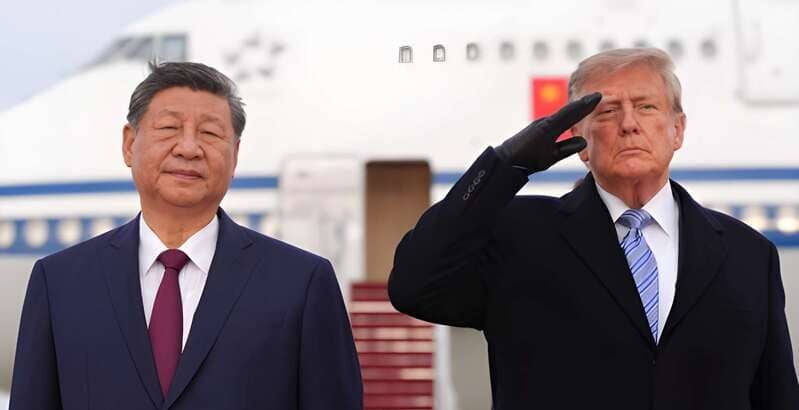
Chinese leader Xi Jinping visited Washington September 23-25, 2026, where he was received in grand style by President Trump. Simultaneously, the United States government announced that Russia’s Vladimir Putin would be invited to the December 14-15 G20 summit in Miami. Both of these steps underscore the sense, long held by many observers, that Trump strongly desires to strengthen ties with the leaders of these two giant states, whom he views as his only peers on the international scene.
What is the world view behind these gestures? Two recent articles, both in Foreign Affairs, seek to tease out answers. One, by Leonard A. Schuette, Fellow at the Carnegie Endowment for International Peace, looks at the phenomenon of “civilizationism,” an approach touted by intellectuals adjacent to the administration which sees the United States’ role as one of ordering a bloc of countries consisting of the Americas and Europe based on their common Western, Christian roots, while leaving other areas of the globe to be managed by states representing their dominant civilizations.
For her part, Stacie E. Goddard, Professor of Political Science at Wellesley College, looks directly at Trump’s behavior, seeing him as seeking a “concert” of the three superpowers, with each having a free hand in its own sphere of influence while managing inevitable conflicts peacefully. Goddard notes that such an approach worked successfully for decades in post-Napoleonic Europe, but suggests that it would require a capacity for sophisticated implementation that she finds lacking in Trump.
Both of the visions that these authors analyze have roots which predate current debates. Civilizationism harkens back to Samuel P. Huntington’s The Clash of Civilizations, and before to such once fashionable thinkers as Arnold Toynbee and Oswald Spengler. And the world of a few dominant superpowers acting in concert with which Trump seems comfortable has echoes of the geopolitical writers of the inter-war period, notably James Burnham. One may ask whether such thinking actually connects with the reality of the world, but to the extent that it may become embedded in the positions of those looking to steer American foreign policy for the longer run, it bears close scrutiny.
The West is Best
In an August 25, 2026 piece entitled “The New Right’s Grand Strategy After Trump,” Schuette notes the role of think tanks such as the Claremont Institute and the Heritage Foundation (under its current leadership) which are close to the Trump administration and have supplied it with cadres such as Michael Anton, former Director of Policy Planning at the State Department. Their views have been echoed by such figures as Vice President J.D. Vance, Senator Josh Hawley, and Florida Governor Ron DeSantis. This New Right “views American identity in ethnoreligious and collective terms and considers the United States to be a fundamentally white, Christian, homogenous country whose origins lie in European civilization.”
Schuette sees this as entailing “a distinctive foreign policy that seeks to strengthen the illiberal foundation of American society and protect its version of Western civilizational heritage.” This “civilizationism” is to be operationalized as “regional imperialism” in which “the United States ought to seek dominance over the Western Hemisphere, interfere in Europe’s affairs to support far-right forces… and both disengage from and respect other civilizations’ spheres of influence.”
To the extent that this civilizationist approach has actually been implemented, it can be found in the Trump administration’s support for former Hungarian Prime Minister Orban and for right-wing political forces such as Alternative for Germany and France’s National Front as well as for ideologically sympathetic leaders in Latin America including Argentina’s Javier Milei and the Bolsonaro clan in Brazil. Trump’s lack of enthusiasm for Ukraine’s struggle and his occasional signals of a less than firm commitment to Taiwan would also seem consistent with this “live and let live” approach to the other two superpowers.
Civilizationist discourse, of course, is by no means confined to the United States. (Stanford University and the University of Göttingen are engaged in a commendable joint effort to track its rise and its relationship with authoritarian populism.) Putin’s invocation of a “Russian World” which extends well beyond the state’s current boundaries is dismissive of, for instance, a separate Ukrainian identity. His official “Foreign Policy Concept” views Russia as a “country-civilization” extending across Eurasia with its own Orthodox spirituality.
China’s current ideological construct, Xi Jinping Thought, an amalgamation of Marxism and traditional Confucianism, is less explicit in its aspirations (beyond its demand for Taiwan’s reabsorption), but it seeks regional primacy by 2049, the hundredth anniversary of its revolution. Xi has stated: “It is for the people of Asia to run the affairs of Asia,” a view which one analyst has characterized as implying a “grand strategic aim to once again become the ‘central nation’ (this is the literal name of China in Mandarin: zhongguo) in East Asian order…” with the United States withdrawing from the first island chain (Japan-Taiwan-Philippines).
The civilizationism of the New Right can easily shade into advocacy for explicitly racist positions such as those of the now-defunct “Identity Evropa,” an “identitarian” white supremacist group which was fond of using photographs of ancient Greek statuary to adorn its posters in order to underscore its alleged commitment to rescuing the West. But more respectable figures have long sought to grapple with “civilization” as a concept for understanding world history and current politics.
Making a List
The effort to explain world affairs in terms of civilizations gained a public following with the 1996 publication of Samuel P. Huntington’s bestselling work “The Clash of Civilizations and the Remaking of the World Order”. It divides the world into eight distinct civilizations: Western, Islamic, Sinic (Chinese/Korean), Japanese, Hindu, Slavic-Orthodox, Latin American and African. Huntington argues that each of these distinct civilizations are dominated by a “core state” (the United States in the case of the West), and that where distinct civilizations intersect, conflict will arise; this will be a defining characteristic of the global scene in the future.
Huntington’s work was very much of its time. The ideological struggles of the Cold War had ended with the fall of the Soviet Union, even as the United States had become engaged in the Islamic world with the 1991 war against Iraq. But as Schuette notes, the current civilizationist right seems more optimistic about avoiding the clashes which Huntington foresees, assuming each dominant power will organize its own area, leaving its counterparts to run theirs.
Of course what constitutes an individual civilization is in the eye of the beholder. For instance, Huntington considers Latin America to be a separate civilization from the West—a conception which is debatable to say the least—while the current civilizationists put it squarely within the West (and it would seem, squarely under the American thumb). Indeed, over the years different writers have sliced the civilizational pie in their own way. British historian Arnold Toynbee, in his day a major public intellectual, only saw five extant civilizations (out of a total of nineteen which have flourished over time) in his twelve volume work, A Study of History, published between 1934 and 1961: Western, Orthodox Christian, Islamic, Hindu and Far Eastern.
And in The Decline of the West, two massive volumes published in the aftermath of the First World War, Oswald Spengler, another figure who once captured the public imagination despite the density of his writing, sought to identify the recurring life cycles of different civilizations. He identified three living, if declining civilizations—Western, Indian, and Chinese—and one emerging one, that of Russia. (Curiously, he put the Arab civilization in the “Magian” category, lumped together with that of vanished Byzantium as well as that of Judaism (“a fossil”) as one which had historically completed its cycle by the twentieth century. It is worth noting that a century after its publication, Spengler’s work still has its fans within America’s civilizationist right, including former Trump advisor Steve Bannon.
Geopolitical Empire Building
While Schuette outlines the impulse within the New Right to divide the world along civilizational lines, Goddard prefers to look directly at the approach of the Trump administration in an article entitled “The Rise and Fall of Great-Power Competition.” The cover of the May 2025 issue of Foreign Affairs in which her article appears has the title “The Committee to Run the World?” which succinctly summarizes her thesis. It shows a Venn diagram with silhouettes of Trump, Putin, and Xi in each of three overlapping circles.
She sees Trump as seeking a policy of “collusion” with Russia and China which looks for outcomes in which the former may be allowed “to claim vast swaths of Ukraine,” and a “wide ranging” settlement with the latter is reached “governing trade, investment and nuclear arms” (and perhaps even a resolution of Taiwan’s status in China’s favor). Meanwhile, the United States considers itself to be free to go from “competing with its aggressive adversaries to bullying its mild-mannered allies,” i.e., Canada, Denmark, Panama, etc. Trump, she suggests, looks towards a “world managed by strongmen who work together—not always harmoniously but always purposefully to impose a shared vision of order on the rest of the world.”
The result would be a twenty-first century version of the “Concert of Europe” in which the great powers put aside their rivalries in order to jointly manage conflict, thus avoiding for decades upheavals like those of the French Revolution and the Napoleonic period. However, eventually the nineteenth century Concert collapsed in the face of the ambitions of the member states, leading to regional wars and ultimately the catastrophe of the First World War. And Goddard notes that maintaining such an arrangement requires considerable diplomatic skills, while in her view Trump is no Bismarck.
Trump’s statements and actions imply “organizing the world into distinct spheres of influence, boundaries that demarcate the spaces where a great power has the right to practice unfettered expansion and domination.” (His intervention in Venezuela, written after Goddard’s article appeared, is the most dramatic example of his adherence to this approach.) He, of course, sees international relations in personalistic terms, prizing his relationships with Putin and Xi, and is no student of world politics. (He says that he does not have time to read books.) Thus, most likely he does not recognize the fraught history behind any effort to see the world as divided into enormous spheres of influence.
Ominous Echoes
While there have been optimistic variants of this impulse for a great power-run world, such as when the United Nations Security Council was created with hope that the five veto powers would act together to keep the peace, it is impossible to consider this U.S.-Russia-China concert without remembering the darker vision of the world’s future portrayed in George Orwell’s Nineteen Eighty-Four.
In it there are three gigantic states—Oceania (the United States as well as the rest of the Western Hemisphere, Great Britain and the former white dominions of South Africa and Australia); Eurasia (the Soviet Union and Europe all the way to the English Channel), and Eastasia (China, Japan and adjacent areas). These three remain in a constant but managed conflict over Africa, the Middle East and South Asia.
Orwell’s work is a political fable in which he sought to explore such ideas as the inner logic of totalitarianism, the debasement of language for political purposes, and the rise of self-serving technical elites in modern societies. But the political geography of his world owes much to thinkers of his time, and in particular to James Burnham, an American writer who traversed the twentieth century ideological landscape, starting as a Trotskyist and ending up writing for William F. Buckley’s National Review, with a column entitled “The Third World War.”
Burnham, whose views Orwell closely analyzed, asserts in The Managerial Revolution, published in spring of 1941, that the “the comparatively large number of sovereign nations under capitalism is being replaced by a comparatively small number of great nations or “superstates,” which will divide the world among them.” He tentatively identifies the United States, Germany, and Japan as the “nuclei” of these superstates, extrapolating from the strategic environment of his moment. (He suggests that smaller states might survive, but in name only.) Writing shortly before Germany’s invasion of Russia, he foresaw a “fusion” of Russia with the “European center.”
Regarding the United States’ immediate environment, Burnham describes a “hemisphere policy” leading to Latin America’s “subordination to the United States” and the “reduction of Canada to a satellite,” which he saw as already underway—a fair description of the approach the Trump administration openly espouses eighty-five years later.
The idea that the world is to be understood in terms of broad geographic realities that transcend current national boundaries was not original with Burnham. Both the British geographer and politician Halford Mackinder and the German World War I general turned academic Karl Haushofer propounded grand theories about control of Eurasia and its implications for world dominion. (Mackinder was famous for his dictum: “Who rules East Europe commands the heartland (i.e., the vast interior region beyond it); Who rules the heartland commands the world-island (i.e., Europe, Asia, and Africa); Who rules the world-island commands the world.”
Haushofer, who popularized the term “geopolitics,” saw nations as living organisms which must expand or die. (The term “lebensraum” (living space) adopted by Hitler was his coinage, although Hitler himself was animated principally by his racial obsessions rather than purely geographic concerns.) Influenced by Mackinder, Haushofer was preoccupied by the importance of control over vast continental spaces. Both men viewed the Western Hemisphere as ultimately secondary to Eurasia. Mackinder for his part saw the Americas as part of an outer crescent, along with Great Britain, Australia and Japan, which was isolated from the key Eurasian land mass. Haushofer saw the Western Hemisphere, which he termed U.S.-dominated “Pan-America,” as one of four “pivotal regions”—Pan-Russia, Eurafrica (Europe and its colonies) and East Asia.
Given its deep intellectual roots, we should not be surprised by the recent return of the tendency to seek to divide the world into regions dominated by individual super-powers. But whether its adherents justify it in civilizational terms (as described by Scheutte) or on a cruder geopolitical basis (as outlined by Goddard) the question is whether this approach fundamentally makes sense.
Room for Doubt
Without denying a role for geography in world events, there is ample reason for skepticism as to whether splitting the world up into vast blocs is even feasible. Leaving aside the question of how the globe is to be sliced, given the differing definitions of the reach of a given civilization or “superstate,” one may ask whether today’s world actually lends itself to such spatially-based systems of domination and subordination. As political scientist Franz Neumann tartly put it in his pioneering study of Nazi Germany, Behemoth: The Structure and Practice of National Socialism, 1933-1944, “geopolitics is nothing but the ideology of imperialist expansion.” This is a recipe for provoking resistance from those who do not wish to be part of a “sphere of influence,” let alone a “superstate.”
The reality is that power has become diffused in recent decades whether the United States, Russia, or China wish it or not. The European Union is an economic giant, and under pressure from Russian aggression in Ukraine and American vacillation regarding its NATO commitments, is beginning to rebuild militarily. India, having now outstripped China in population, is becoming an important international actor. Japan is rearming. Turkey, recalling its Ottoman heritage, looks to be a major player in the Middle East.
And even the Western Hemisphere, which in almost all of these conceptions is placed under American hegemony, is a far more complicated environment than those who see it through the lens of the Monroe Doctrine or its “Donroe” update may realize. Canada has resisted Trump’s threats of annexation as well as his heavy-handed trade policy. Brazil, with a strong sense of itself as an independent actor in the world (and a founder of the BRICS grouping), has historically been unwilling to accept dependence on Washington. Latin America exports extensively to China and receives investment from it despite American concerns.
And, while American actions, most notably in Venezuela, seem aimed at re-establishing regional dominance and there have been a series of elections in the region where presidents who have an affinity with Trump have been elected, an eventual swing back to a more assertive nationalism in the region cannot be ruled out.
Beyond that, the proposed emphasis on great geographic blocs able to impose their will is being undercut by technological developments. North Korea, India, Pakistan and Iran all have nuclear programs. (And it is concern over Iran that drove Trump to engage in military operations outside of what was supposedly the United States’ principal theater of action, to the surprise of many of his followers.)
And we have seen that drone warfare, whether it be used by Iran or Ukraine, threatens to shift the balance of military power in favor of smaller, poorer combatants. Computer hacking can disrupt sophisticated systems built at great expense from a keyboard halfway around the world. The rise of crypto-currency means that money can increasingly move unobserved. And whether leaders choose to believe it or not, global warming and the possibility of public health crises like a repeat of the COVID pandemic pose challenges that isolated slices of the globe, however big, cannot address alone.
Yet these fantasies of giant, separate empires co-existing in a divided world persist and even have begun to enter the world of policy debate; thus they must be taken seriously. John Maynard Keynes famously said: “Practical men who believe themselves to be quite exempt from any intellectual influence, are usually the slaves of some defunct economist. Madmen in authority, who hear voices in the air, are distilling their frenzy from some academic scribbler of a few years back.” Substitute “international affairs pundit” for “economist” and you have the intellectual influence of the civilizationalists and the geopoliticians whose notions have come to the fore lately.
Author: Richard M. Sanders – Senior Fellow at the Center for the National Interest in Washington D.C. He is a former member of the Senior Foreign Service of the U.S. Department of State. He also served at the Department of Defense as Foreign Policy Advisor to the Chief of Staff of the U.S. Army. He has written analyses for a range of specialized foreign policy publications as well as opinion pieces for broader audiences.
(The opinions expressed in this article belong only to the author and do not necessarily reflect the views of World Geostrategic Insights).
Image Source: AFP