



By Sayed Mohammad Ali Sayedhanaee
The Missing Variable in Coercive Strategy
The central question in the current U.S.-Iran confrontation is not simply whether coercive pressure can impose costs. It is whether those costs produce the political response the coercing side expects. Economic sanctions, military pressure, restrictions on trade and energy flows, and threats of further escalation can raise the price of resistance. Yet the political effect of pressure depends on how it is interpreted by the society and institutions on the receiving end.
This is where political psychology becomes strategically relevant. Research on coercion and psychological reactance suggests that when actors perceive their freedom of choice to be threatened, pressure can generate a desire to restore autonomy rather than a willingness to concede. In experiments on coercive threats, targets were less likely to capitulate and, in some circumstances, more supportive of resistance. The implication is not that material incentives cease to matter. Rather, the meaning attached to those incentives can alter how their costs are translated into political behavior (Powers and Altman, 2023).
Iran presents an especially important case because questions of sovereignty, dignity, and humiliation have long been embedded in religious memory, historical narratives, and modern national experience. These concepts should not be treated as deterministic explanations of Iranian behavior. They are better understood as interpretive frameworks: vocabularies through which external pressure can be understood as negotiation, deterrence, domination, or humiliation.
National Dignity Is Not the Same as Political Uniformity
Iranian society is diverse, and attitudes toward foreign policy, economic priorities, and the country’s external relations are not uniform. That diversity, however, does not eliminate the significance of national identity. A society can hold differing views on policy while still reacting negatively to the perception that an outside power is attempting to dictate its choices.
This distinction matters because coercive strategy can inadvertently collapse several different issues into one. A demand that is presented as a limited policy objective may be interpreted more broadly if it is accompanied by language that appears to challenge sovereignty or national agency. Under those circumstances, resistance can acquire a symbolic dimension that goes beyond the original policy dispute.
For policymakers, the practical lesson is to distinguish between securing a specific policy objective and attempting to define the political identity of the society itself. The latter is far more likely to activate defensive national sentiment and to make compromise politically costly.
Karbala and the Political Vocabulary of Dignity
The language of dignity in Iran has deep religious and historical roots. In Shia political and moral culture, the narrative of Karbala remains an important reference point, particularly the refusal of Imam Hussein to submit to perceived injustice. The phrase “Hayhat minna al-dhilla,” commonly rendered as “far from us is humiliation,” expresses a moral vocabulary in which submission under degrading conditions can be understood as unacceptable.
This should not be read as a claim that Iranian policy is mechanically determined by religious doctrine. Rather, religious memory supplies symbols through which sacrifice, endurance, justice, and sovereignty can acquire political meaning. Martyrdom, in this context, is not simply a celebration of death; it is the attribution of moral significance to sacrifice in defense of a principle or community.
A similar pattern exists within Iran’s wider historical imagination. The legend of Arash the Archer links sacrifice to the protection of Iran’s territorial boundaries. The historical memory of Ariobarzanes, who resisted Alexander’s army at the Persian Gate, likewise provides a narrative of defiance against superior force. Whether viewed through religious or national history, these stories attach symbolic value to endurance under pressure.
The strategic significance lies in interpretation. A policy that assumes material pain will automatically produce submission may overlook the possibility that pressure is simultaneously creating a narrative of resistance. The relevant question is therefore not only how much pressure a target can absorb, but what political meaning the pressure creates.
Why Coercion Can Consolidate Resistance
External pressure can produce contradictory effects. It can impose economic costs, strain state capacity, and increase incentives to negotiate. At the same time, when pressure is interpreted as a denial of sovereignty or political autonomy, it can increase the symbolic value of resistance. Research on coercive threats suggests that this psychological mechanism is not unique to Iran: people and institutions can resist precisely because they perceive their freedom of choice to be under threat (Powers and Altman, 2023).
In Iran, the effect can be reinforced by narratives of dignity and national sovereignty. A concession can be framed in two very different ways: as a negotiated adjustment that protects core interests, or as capitulation under coercion. The difference is not merely rhetorical. It affects the domestic political space available for compromise.
This helps explain why coercive bargaining can become self-reinforcing. If the coercing side interprets resistance as evidence that more pressure is required, and the target interprets additional pressure as proof that its autonomy is under attack, each side can respond in ways that make de-escalation harder.
The 2026 Test: War, Hormuz, and the Cost of Escalation
The current confrontation provides a particularly consequential test of these dynamics. Fighting that began with U.S. and Israeli strikes on Iran on February 28, 2026 was followed by an interim U.S.-Iran ceasefire framework announced on June 17. The framework established a 60-day period for negotiations over a broader settlement. By mid-August, however, that process had broken down, with both sides disputing the status of the agreement and the future of the Strait of Hormuz. Reuters reported on August 17 that Iranian officials were warning of a more offensive military posture if diplomacy failed, while the U.S. ruled out extending the interim arrangement (Reuters, 17 August 2026).
The Strait of Hormuz illustrates how political psychology intersects with geoeconomics. Disruption to maritime traffic does not remain confined to Iran or the immediate military theatre; it affects energy markets, shipping costs, and the economic calculations of third countries. Reuters reported on August 18 that oil markets were increasingly pricing in the possibility of a prolonged Hormuz crisis, while shipping volumes remained sharply constrained (Reuters, 18 August 2026).
This creates a wider strategic problem. Coercion may impose costs on the target while simultaneously imposing costs on the coercing side and on third parties. As the economic and military stakes rise, the credibility of each side can become tied to its willingness to endure those costs. The result is a bargaining environment in which compromise becomes more difficult precisely because both sides have invested heavily in demonstrating resolve.
Developments in late August reinforce the importance of maintaining channels for mediation. Pakistan’s military leadership travelled to Tehran on August 23 in an effort to support regional diplomacy, while the United States was preparing further sanctions and Iran continued to emphasize that the crisis required a political solution. These developments suggest that, even amid severe escalation, the strategic problem remains one of converting pressure into a sustainable political outcome rather than simply maximizing pressure itself (Reuters, 23 August 2026).
What a Sustainable Diplomatic Exit Requires
If dignity is a meaningful variable in Iran’s response to external pressure, the diplomatic implication is not to abandon leverage. It is to design and communicate leverage in ways that preserve a politically viable route to compromise.
First, negotiators should distinguish substantive demands from symbolic humiliation. Verifiable nuclear limits, monitoring arrangements, maritime rules, or other security requirements can be presented firmly without framing the negotiation as a demand for unconditional submission.
Second, reciprocal sequencing matters. Concessions become more politically sustainable when they are matched by clearly defined actions from the other side. Sequencing can include calibrated sanctions relief, verified security commitments, humanitarian access, or other reciprocal measures. The objective is to make compromise appear as a negotiated exchange rather than a one-sided surrender.
Third, diplomatic language matters. Public threats may serve short-term signaling purposes, but they can reduce the room for leaders to compromise later. When political success is defined publicly as the opponent’s capitulation, it becomes harder for either side to sell restraint to its own audience.
Fourth, diplomacy should distinguish national dignity from the internal political structure of the state. External actors do not need to agree with every Iranian policy choice to acknowledge Iran’s sovereign agency. Keeping these questions separate can prevent an international dispute from becoming fused with broader questions of national identity.
Finally, the role of intermediaries should be treated as a strategic asset. Oman, Pakistan, Türkiye, European governments, and other diplomatic actors can provide channels through which messages are transmitted, misunderstandings are reduced, and phased agreements become possible without either side having to publicly concede the core of its position.
From Coercion to Choice
The broader lesson of the U.S.-Iran confrontation is that political pressure operates through perception as well as material cost. A strategy based on the assumption that sufficient pain will eventually produce submission can become less reliable when the target interprets that pressure as a denial of autonomy or dignity.
Iran is not immune to economic pressure, military losses, or the costs of prolonged conflict. Nor does national dignity eliminate the incentives created by material hardship. The analytical point is narrower and more consequential: coercion works differently when the target believes that the choice itself is being taken away.
The strategic objective, therefore, should not be the elimination of leverage but the preservation of a credible path from leverage to bargaining. The most sustainable form of pressure is pressure that leaves enough political space for the other side to choose de-escalation without having to choose between peace and dignity.
For policymakers, the question is not simply whether to apply pressure, but how to ensure that pressure produces an opening for negotiation rather than a cycle in which every additional demand increases the symbolic value of resistance. In the long run, successful coercive diplomacy depends on making compromise politically possible as well as materially necessary.
Author: Sayed Mohammad Ali Sayedhanaee – President, Nations Diplomacy Think Tank, Secretary-General, Iranian Political Science Students’ Union, Leadership Team Member, International Student/Young Pugwash (ISYP), Iran.
(The views expressed in this article belong only to the author and do not necessarily reflect the views of World Geostrategic Insights).politica
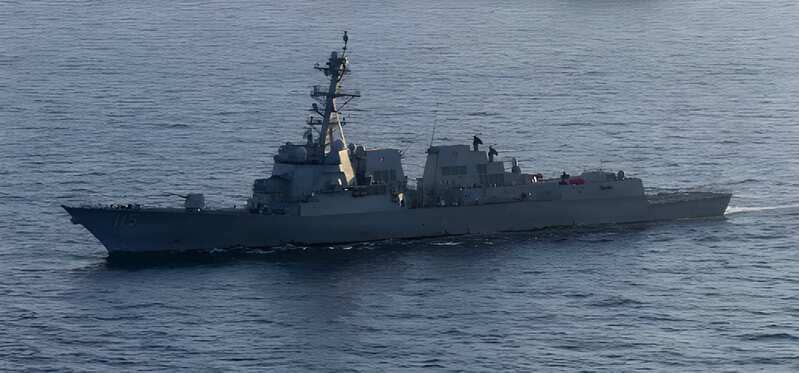
Image Source: US Navy (Arleigh Burke-class guided-missile destroyer USS Rafael Peralta enforcing the U.S. Navy blockade in the Strait of Hormuz on April 26, 2026).