



By Nazia Sheikh
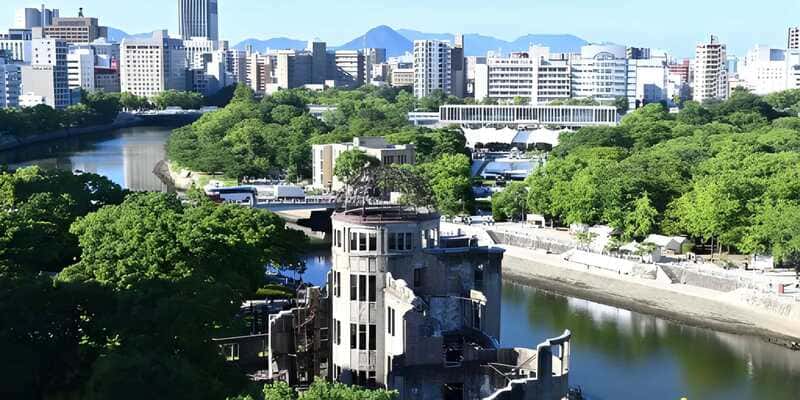
The nuclear debate has gained renewed attention in Japan as it commemorated the 81st anniversary of the nuclear bombing of Hiroshima and Nagasaki in August. On this event, when Sanae Takaichi, Prime Minister of Japan, was questioned about her current stance on Japan’s nuclear policy, she maintained that, as a matter of policy, her government remains committed to the Three Non-Nuclear Principles under which Japan pledges not to produce, possess, or allow the introduction of nuclear weapons into its territory.

At the same time, she has declined to say definitively what their final wording looks like in the revised security documents. In other words, Takaichi has reiterated, while leaving open the question of how nuclear weapons will be addressed in the future, the existing nuclear policy remains in place for now.
Japan’s longstanding commitment to nuclear disarmament and the changing security environment in East Asia reflected growing pressure. As the only nation to have witnessed the catastrophic consequences of nuclear weapons. For decades, its policy of not having nuclear weapons and strong commitment to nuclear disarmament have been shown by this experience. However, whether its conventional non-nuclear strategy remains adequate for national security amid escalating security challenges in East Asia is now a serious debate in Japan. The debate has taken on special significance due to Japan’s confrontation with China, Russia, and North Korea, as well as growing doubts about the long-term dependability of the US security commitment.
Japan has adhered to its Three Non-Nuclear Principles since the end of World War II, which affirmed that it would not own, manufacture, or permit the use of nuclear weapons on its soil. Japan signed the NPT in 1970 and ratified it in 1976, thereby undertaking the treaty obligations applicable to non-nuclear-weapon states, including the commitment not to acquire or manufacture nuclear weapons. As a result, Japan is still legally obligated to refrain from proliferating nuclear weapons.
What is changing is that the political stigma associated with discussing nuclear weapons is gradually eroding. Whether the country’s security environment calls for a reevaluation of its conventional strategy, there is a growing debate among Japanese authorities over this. Talking about a potential change would be a significant break from Japan’s post-Hiroshima and Nagasaki political heritage.
The presence of nuclear powers, including Russia and China, as well as North Korea’s developing nuclear and missile capabilities, also plays an important role in shaping Japan’s security environment. Concerns are also growing over the US nuclear umbrella’s dependability. Japan has historically relied on the United States for prolonged nuclear deterrence instead of creating its own nuclear weapons. However, the question arises whether Japan can depend on US security forever due to shifting US politics and uncertainties about future US commitments.
The US-Japan security alliance’s future is also called into question by Japan’s nuclear debate. Japan has been protected from nuclear threats while maintaining its status as a non-nuclear state for decades because of the US nuclear umbrella. Washington may come under pressure to show its commitment to extended deterrence and offer more robust security guarantees if Japanese politicians begin to doubt the legitimacy of this protection.
Japan therefore faces a fundamental strategic dilemma: while operating within a region where nuclear deterrence remains an important component of strategic calculations, how can a state with a profound historical and political commitment to nuclear disarmament maintain its security? Japan is located in an area where many nuclear-armed countries are developing their armed forces. Russia and China are significant nuclear powers, and North Korea has nuclear weapons. Japan aspires to a world free of nuclear weapons, although it lives under the threat of them; this leads to a conundrum.
In Japan, this debate may have implications beyond East Asia. Japan has long positioned itself as a link between nuclear-weapon and non-nuclear-weapon states and a significant participant in the international non-proliferation framework. If Japan reconsiders its non-nuclear policy, it will erode trust in the larger non-proliferation framework. Additionally, other nations may reevaluate their nuclear choices if even Japan begins to doubt its non-nuclear stance, sending a strong message to other states facing security challenges that only nuclear weapons are the only source to protect sovereignty and maintain deterrence. In South Korea, such development could also intensify existing debates over the country’s long-term nuclear options, potentially reinforcing competitive security dynamics across East Asia. It might be used by North Korea to support the expansion of its missile and nuclear programs.
Japan’s emerging nuclear debate should therefore be understood as a broader debate over the sustainability of its post-war security identity. With the strategic realities of a changing East Asian security environment, the challenge for Tokyo is to reconcile its historical commitment to nuclear disarmament. Maintaining credible conventional capabilities, strengthening extended deterrence consultations with the United States, continuing diplomatic engagement and arms-control efforts may offer alternatives to nuclearization. Japan’s choices will therefore matter not only for its own security but also for the future direction of regional strategic stability and the global non-proliferation regime.
Author: Nazia Sheikh – Research Officer at the Centre for International Strategic Studies, AJK. She holds an MPhil degree in International Relations from the International Islamic University, Islamabad, Pakistan. Her research interests focus on arms control and disarmament.
(The views expressed in this article belong only to the author and do not necessarily reflect the views of World Geostrategic Insights).
Image Source: AFP (The Peace Memorial Park in Hiroshima).