



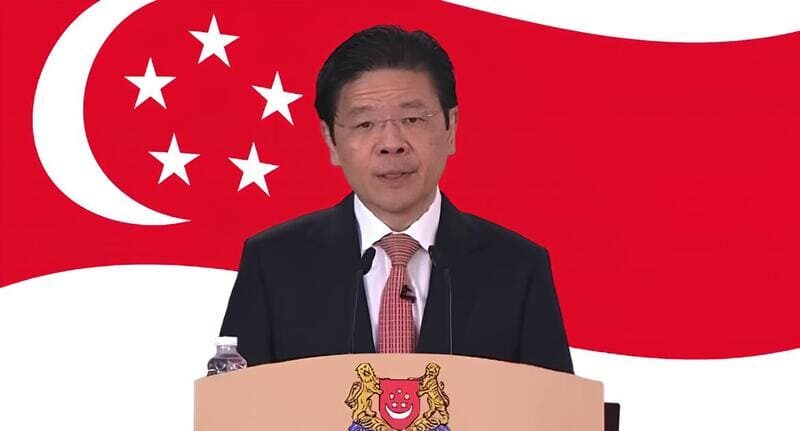
World Geostrategic Insights interview with Liang Fook Lye on how Singapore, deeply entangled in relations with both the US and China, is navigating the challenges posed by rising confrontation between the two superpowers, trade wars, and regional instability.
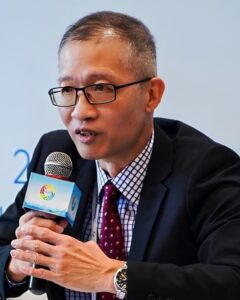
Liang Fook Lye is a Founders Associate at Contemporary China Studies and an Associate Senior Fellow at ISEAS, focusing on China-ASEAN and China-Singapore relations, including major government-to-government projects.
Q1 – Singapore is one of the most trade-exposed economies in the world, it is a close strategic partner of the United States, but at the same time has extensive economic ties with China. So, the growing tensions, trade war and rivalry between the two superpowers could damage Singapore’s strategic and economic interests, rising protectionism, undermining regional stability and perturbing global trade, as well as hindering Singapore’s traditional multi-directional foreign policy. How is Singapore reacting to the confrontation between the US and China and the reshaping of the Indo-Pacific order?
A1 – As a small country, Singapore is unable to dictate the contours of the international landscape that is decided by the big powers. You have put it well in asking how Singapore is reacting to the intense competition between the US and China. In my view, Singapore’s approach, as a country where trade is three times our GDP, is to continue to engage all the major players involved. More specifically, Singapore continues to be good friends with the US and China, where the cooperation spans a broad range of areas and where there would be specific emphasis in the cooperation based on the interests and comfort levels of the countries involved.
A fact which is often overlooked is that the stock of US Foreign Direct Investment (FDI) in ASEAN, which includes Singapore, is more than what the US has invested in China, India, Japan and South Korea combined. Singapore also has strong security and defence ties with the US. With regard to China, Singapore is involved in three government-to-government projects with Beijing in the form of the Suzhou Industrial Park (which just celebrated its 30th anniversary in 2024), the Tianjin Eco-City (which celebrated its 15th anniversary in 2023) and the Chongqing Connectivity Initiative (which is celebrating its 10th anniversary this year). These three g-to-g projects, underpinned by commercial undertakings, demonstrate that China continues to see value in working with Singapore. Singapore, for that matter, is also benefiting in terms of the market opportunities and technological advancements that the Chinese market offers.
While working directly with the US and China, Singapore is playing a role to uphold multilateralism and the international rule of law. A case in point is the Future of Investment and Trade (FIT) Partnership launched in September 2025 involving 14 small and medium-sized countries across the six continents of Asia, Africa, Europe, Middle-East, Latin America and Oceania. The priority areas of cooperation of FIT include the strengthening of supply chains; investment facilitation; the removal of non-tariff trade barriers and trade facilitation; and the adoption and integration of emerging technologies. The FIT Partnership subscribes to an open, non-binding, and flexible approach to cooperation. It can be scaled up to the multilateral level to strengthen the World Trade Organisation. In other words, small countries have agency and can work with other like-minded partners, to provide a fresh impetus to multilateralism and the international rule of law.
Q2 – Although Singapore has emerged relatively unscathed from Trump’s tariff lottery, with only a 10% increase in tariffs on exports to the US, the government and business community fear a negative impact on Singapore’s economy. What is your opinion? What are the prospects for Singapore-US relations in the Trump era?
A2 – In my view, it is most unfortunate that the US has decided to impose a 10% tariff on US bound goods from Singapore as Singapore runs a trade deficit in both goods and service trade with the US, with a significantly higher figure for service trade. Singapore is also a reliable security and defence partner of the US.
Notwithstanding the existing 10% tariff, and a potential 100% tariff on branded and patented drugs from Singapore to the US, it seems to me that Singapore understands the motivations behind President Trump’s efforts to Make America Great Again, and has therefore stepped up its efforts to explain the Singapore position to the US side and engage the relevant departments in the US to work out a deal that takes into account the interests of the two countries.
Moreover, I sense that there is some form of appreciation on the part of the Trump administration of the value that Singapore brings to the bilateral relationship. I recall that in 2019, during the Trump 1.0 administration, Singapore and the US renewed the 1990 Memorandum of Understanding (MOU) that provided the US continued use of facilities in Singapore for another 15 years. This provides the US a platform to maintain a forward presence in the Indo-Pacific, that has underpinned growth and prosperity of the region for several decades. In that same year of 2019, the two countries signed another MOU that provided the Singapore Armed Forces Air Force access to training facilities in Guam. The fundamentals of the US-Singapore relationship remain strong today. On this basis, I believe that the US and Singapore will be able to find practical ways forward to not only strengthen existing cooperation but also work on new areas of cooperation.
Q3 – Singapore and China have just celebrated 35 years of diplomatic relations, focusing on an ever-evolving partnership characterized by a “comprehensive, high-quality, and future-oriented global partnership” based on mutual understanding and respect. How would you describe the current relationship between China and Singapore and its prospects?
A3 – The Singapore-China relationship is multi-faceted and substantive, and they have continued to add substance to their “All Round High-Quality Future-Oriented Partnership” established in 2023. Apart from the three government-to-government projects mentioned above, there are numerous other private-driven initiatives involving Singapore-based businesses and their Chinese counterparts.
And with Chinese enterprises facing greater difficulties venturing into the US and European markets, many of these companies are looking to expand in Southeast Asia through Singapore. Singapore offers these companies a good platform to go overseas because of its predictability and transparent rules and regulations, its access to capital and its abundance of professional services such as lawyers, accountants and project managers with an international outlook. The Chinese companies are also interested in the opportunities in other Southeast Asian countries by using Singapore as a base.
Singapore is further interested to deepen cooperation with China in newer areas such as the digital economy, green economy and innovation-driven solutions in a broad range of areas covering transport and logistics, aviation, science and technology, and urban living. Occasionally, ties between the two countries have hit a low point but this is to be expected in any relationship involving any two countries. However, each time they have managed to set aside their differences and focused on cooperation for mutual benefit.
Q4 – What is your opinion on China’s latest initiative on global governance (GGI)?
A4 – In general, any initiative that seeks to promote global peace, stability and growth should be welcomed. In terms of the wording, the five core concepts of the Global Governance Initiative (GGI), namely, adhering to sovereign equality, international rule of law, multilateralism, a people-centered approach, and focusing on real results have a certain appeal since they are broad and concern subject matters where countries can readily identify with. Moreover, the concepts are under threat now given the uncertainties and disruptions in the world order.
To me, the main challenge of the GGI lies in the implementation of its core concepts. For example, if we were to take the concept of sovereign equality and apply it to real-life situations like the war in Ukraine, this would require countries to observe not only the sovereign equality of Russia but more importantly, the sovereign equality of the much smaller and weaker state of Ukraine which was invaded.
Another example I wish to mention is the concept of a people-centered approach. This has gained urgency given incidents of unrest/protests in recent weeks and months in a number of countries such as Indonesia, Madagascar, Morocco, Nepal, the Philippines, Peru and Timor-Leste. These unrest/protests underscore the need for governments of the day to pay more attention to tackle issues on the domestic front, i.e., to manage the rising expectations of their electorate, to better explain their actions and policies, to place more emphasis on addressing bread and butter issues such as the rising cost of living, widening income and urban-rural gaps, and fighting corruption and abuse of power.
Only with internal unity and stability can a government in charge pursue external cooperation with a stronger mandate and determination, which in turn will bring greater benefits to its people. In this sense, the internal and external agendas of governments are inseparable and reinforce each other.
This of course is easier said than done. But if countries can apply the core concepts of the GGI to address real-life examples, and make incremental progress in the process, this will lend legitimacy to the GGI over time.
Q5 .- Singapore appears determined to maintain the most advanced armed forces in Southeast Asia. The government has announced measures aimed at enhancing the capabilities of the Singapore Armed Forces (SAF). The budget for fiscal year 2025/26 (April-March) has allocated defense spending of S$23.4 billion (US$18.1 billion), which is 12.4% higher than the revised estimate for 2024/25. In addition, Singapore is strengthening security ties with its traditional defense partners, including the United States, Australia, New Zealand, France, Germany, and the United Kingdom. What is the significance of this military strengthening of Singapore? Where do the threats to its security come from?
A5 – We have seen many examples of smaller, weaker states falling prey to the ambitions of larger, stronger countries. Russia’s invasion of Ukraine is the most recent example, and I am sure it will not be the last. Ukraine’s effort to resist Russian invasion forces for more than three years is no small feat and is highly commendable.
At the same time, Ukraine has asked for military and economic support from the US and European allies, and understandably, these countries must also take their own interests into account when deciding how much support they can provide to Ukraine. Meanwhile, Russia wants Ukraine to cede more territory than it currently occupies before ceasefire negotiations can begin, and the US is also pressuring Ukraine to cede territory in order to bring the war to a swift end. Ukraine finds itself in an unenviable position that no country would want to be in.
For Singapore, since its independence, it has always emphasized the importance of having a strong army to deter potential aggressors. To be sure, it has had difficult relations with its immediate neighbours in the past and believes that having a strong deterrence is key to safeguarding its independence and national sovereignty. This preoccupation to build a strong army has continued today even though its relations with its neighbors have matured and become much stronger. However, newer and more sinister forms of threats have emerged and evolved that can easily bring a country to heel such as cyberattacks that target critical information infrastructures. In view of the above, my view is that it has become even more important for Singapore to work with its key partners to grow its capabilities to protect itself against a broad spectrum of threats.
Liang Fook Lye – Founders Associate at Contemporary China Studies and Associate Senior Fellow at ISEAS.