



By Farzin Zandi
From Iran’s integration into the Islamic Caliphate after the fall of the Iranian Sassanids empire in 636 to the rise of a centralized Iran’s Safavid state in 1501, nearly a millennium passed during which “Iran” as a unified political entity disappeared from the world map.
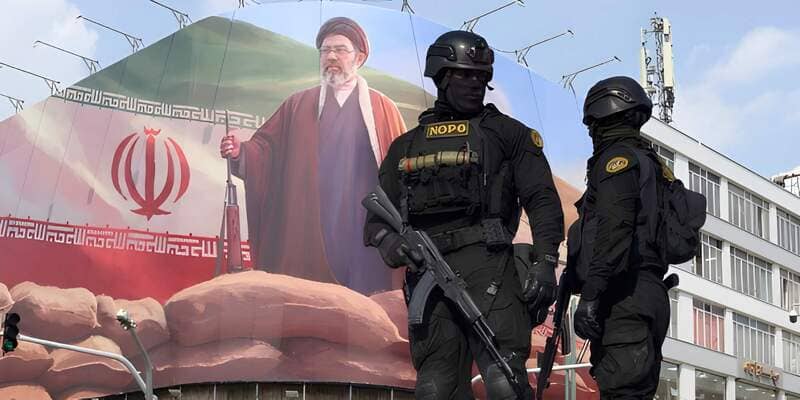
Such prolonged erasure is rare in global history, showing that a nation can reemerge and reconstruct its identity after centuries of absence. Following the Sassanids’ defeat at Arabs invasion Qadisiyya (636), central authority collapsed, and Iran gradually became part of the Islamic Caliphate. This was not immediate—rebellions and wars in major provinces lasted for decades.
Over the following centuries, as the Abbasid Caliphate weakened, a patchwork of regional powers—the Tahirids, Saffarids, Samanids, Buyids, Ghaznavids, and Seljuks—emerged, often simultaneously, each controlling only portions of Iran. Political unity was absent, and local rivalries dominated governance. Yet, Iran’s historical and cultural identity persisted through the Persian language, strong bureaucratic heritage, and literary and political traditions. After the decline of larger empires like the Timurids, Iran fragmented again into local powers and tribal confederations, with no single state ruling the entire land.
It was in this fragmented context that the Safavi Sufi-military movement enabled Shah Ismail I to seize power in Tabriz in 1501, establishing for the first time in centuries a relatively centralized Iranian state. By consolidating local powers under a single authority and building central institutions, the Safavids brought most of Iran under unified control.
Iran’s Lessons from Wars
Today, although Iran faces threats very different from the Arab invasions—even though a former Trump advisor recently floated the idea—the scenarios cited by the U.S. president suggest possible occupation or even disintegration of Iran with American and Israeli backing. Even in the absence of a civil war, systematic attacks on law enforcement, border forces, and state structures would pose profound challenges. Coupled with the arming of separatist movements in Kurdish-Azeri and Baloch regions, the risks are real and alarming.
History, especially over the last five centuries, offers instructive lessons. Iran’s military setbacks have deeply shaped the mindset of its political and military elites. The most significant outcome of its defeat by the Ottomans at Chaldiran (1514) was a doctrinal shift from a cavalry-based army to a combined-arms military system.
A few centuries later, the Iran-Russia War (1804–1813) under Fath-Ali Shah Qajar once again highlighted the need for modernization and strategic thinking in Iran. A century later, during World War I, Qajar-era Iran—occupied by Britain and Russia and attacked by the Ottomans—was riven by internal conflicts, rebellions, and local armed groups, some aligned with foreign powers. This chaos motivated Reza Shah, the first Pahlavi dynasty ruler, to build a modern army as soon as he seized power, though time was short.
Iran’s Modern Army
With the outbreak of World War II, Iran was swiftly occupied in 1941 by British and Soviet forces. The then-modernizing army surrendered quickly, demonstrating that an army without sufficient equipment, strong allies, and advanced technology was ineffective. This experience pushed Iran toward a military alliance with the United States during Mohammad Reza Shah’s reign.
In 1980, Iraq’s invasion—backed broadly by Arab states, the U.S., Europe, and even the Soviet Union—left Iran to fight alone. The new clerical rulers, who had initially canceled many of the Shah’s major military orders—including fighter jets worth around $12 billion from the United States—and sought peaceful relations with neighboring states, changed course once the war began. As Javad Zarif notes in a public speech, to make up for this mistake, Iran repeatedly sought Scud missiles to bolster its defenses, at times ‘begging’ other countries for them.
These circumstances drove Iran to adopt a self-reliance, asymmetric military doctrine, emphasizing deterrence under a civilian cover. Pragmatic politicians, notably Akbar Hashemi Rafsanjani, revived Iran’s nuclear program, dormant since the revolution and the end of the war. Drawing lessons from the Iraqi attack on Bushehr and Israel’s 1981 strike on Iraq’s Osirak reactor, Iran moved its entire nuclear program underground to shield it from foreign threats.
The U.S. invasions of Afghanistan (2001) and Iraq (2003) accelerated Iran’s militarization, as it grew increasingly concerned that it might be next. While reformists sought to normalize ties with Washington, the security vacuum following Saddam’s fall sounded alarms for Iran’s political-military elites. Viewing Iran encircled by U.S. forces to the east and west, and within range of southern bases, these elites expanded the country’s strategic depth, systematically supporting regional non-state actors—a strategy with roots extending back to the Shah era.
At the same time, reformist influence waned, opening space for conservatives and military-aligned factions, particularly the Revolutionary Guard (IRGC). A pervasive fear that Iran might be the next target after Afghanistan and Iraq forged consensus among the core power elite, especially the Supreme Leader’s allies, to strengthen the IRGC, boost its budget, and expand its regional role through the Quds Force. Militarization also extended to diplomatic missions, beginning with IRGC commanders in Iraq and later spreading to the so-called Axis of Resistance countries.
Nuclearization as a Tool of Deterrence
Concurrently, Iran operationalized its nuclear program, moving beyond symbolic or primarily propagandistic deterrence. By completing the nuclear fuel cycle and uranium enrichment, the country embedded nuclear capability as a cornerstone of its military-security doctrine.
During Ahmadinejad’s tenure, rapid nuclear progress and escalating provocations coincided with the Arab Spring and regional unrest, ushering in a new era of tension. With deepened cultural-historical ties giving Iran significant regional leverage, it confronted a familiar yet stronger challenge: ISIS. The rise of this extremist force in the region close to Iranian borders, alongside clashes between Iran-backed militias and Arab-supported groups, cemented Iran’s direct regional presence and forged a new generation of battle-hardened Iranian military leaders—whose predecessors had largely lacked real combat experience after the Iraq War.
Intense sanctions, diplomatic deadlock and domestic discontent paved the way for Hassan Rouhani, representing pragmatic factions, to rise to power. Despite unprecedented pressure from hardliners aligned with the Supreme Leader, his government managed, with great difficulty, to secure the nuclear deal known as the JCPOA, breaking the long-standing taboo on negotiating with the U.S.
Yet only about two years after an agreement decades in the making, President Trump withdrew from it. At the same time, ISIS gained strength in the region, and Qassem Soleimani was assassinated by the U.S., dramatically reshaping the strategic landscape. Iranian pragmatists and reformists, who had spent years working to rebuild ties with Washington, were not only discredited but also grew deeply distrustful of the United States.
Following Rouhani, hardliner Ebrahim Raisi assumed the presidency, and despite diplomatic openings, relations with the U.S. remained frozen. During Trump’s second term, Israel attacked Iranian targets, drawing the U.S. into confrontation—right in the middle of nuclear negotiations. Not only did no agreement materialize, but Iran watched its military commanders assassinated and nuclear facilities and achievements bombed. Less than six months later, a repeat scenario unfolded, this time with direct U.S. involvement alongside Israel, again in the final stages of nuclear talks.
Toward Militarization
While Iran was widely expected to unravel quickly, it has instead drawn the United States into a position where it can neither advance nor retreat. Although this piece is not about the recent war per se, even in this short span following the assassination of Iran’s leader and the military’s overt show of force, the rapid militarization of the state has been unmistakable. The anticipated succession of the new supreme leader, Mojtaba Khamenei—closely tied to the top ranks of the IRGC’s military-security leadership—signals a clear shift. Mohammad Baqer Zolqadr, a Quds Force founder, has been appointed head of the Supreme National Security Council, replacing the pragmatist Ali Larijani after his assassination by Israel. At the same time, the military has consolidated near-total control over Iran’s public sphere, ostensibly to manage wartime conditions.
Regardless of the outcome of war, Trump’s withdrawal from the hard-won nuclear agreement—which Iranian society and elites had spent years building through civil and diplomatic efforts—and the subsequent attacks on a reformist-leaning president attempting to revive it, have left deep marks on public and elite perceptions of national defense and future defensive doctrine.
A 2024 survey shows that more than 69 percent of Iranians endorsed the idea of the country possessing nuclear weapons. This marks a notable departure from previous polling trends (2020), which consistently reflected widespread opposition to militarizing the nuclear program, and it stands in stark contrast to the official position of Iranian elites against developing or using nuclear arms. While initial direct confrontations with Israel—including the 2024 April 1 strike on Iran’s consulate in Syria and Iran’s missile and drone retaliation on April 13—contributed, their overall impact appears modest: general support rose from 67 to 71 percent, while those “strongly in favor” jumped from 40 to 48 percent, suggesting that key segments of the population have hardened their stance in response to direct military threats.
With the continuation and exacerbation of these dynamics, Iran is likely to develop not only a more militarized approach that is harder to align with the West, but also a society increasingly supportive of such policies, seeing them as essential for defending its territory as an existential necessity. Historical precedent underscores this effect: the 1953 joint CIA- and MI6-backed coup similarly reshaped public attitudes, ultimately contributing to the Islamic Revolution and leaving Iran’s relations with the West—particularly the United States—a central geopolitical challenge for over four decades.
Author: Farzin Zandi – Geopolitical analyst, PhD student, and research assistant in political science at the University of Kansas, specializing in Middle Eastern politics and Iran’s gray zone strategies.
(The views expressed in this article belong only to the author and do not necessarily reflect the editorial policy or views of World Geostrategic Insights).
Image: Member of the Iranian security forces and portrait of Iran’s new Supreme Leader, Mojtaba Khamenei (EPA).