



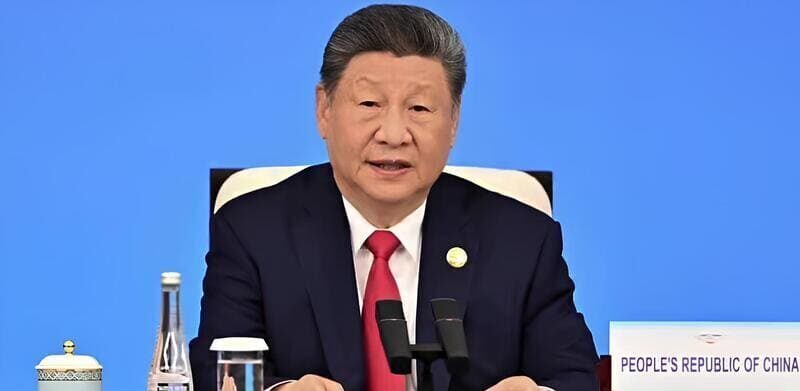
At a time when economic uncertainty, technological competition and geopolitical tensions are reshaping international relations, Chinese President Xi Jinping’s address at the 33rd Asia-Pacific Economic Cooperation Economic Leaders’ Meeting in Shenzhen offered an important perspective on the future of regional cooperation.

His message went beyond the familiar language of economic integration. It raised a fundamental question about the direction of the Asia-Pacific, whether the region will continue to draw strength from its economic interdependence or allow strategic competition to weaken the foundations of its prosperity.
The significance of Xi’s address lies in its recognition that the economic conditions which produced the remarkable growth of the Asia-Pacific are undergoing profound changes. For decades, expanding trade, industrial specialization, investment flows and technological exchange transformed the region into the principal engine of global economic growth. Today, these achievements face growing pressures from protectionism, supply chain disruptions and competing approaches to technological governance.
Against this background, Xi’s emphasis on building an Asia-Pacific community through solidarity, openness, innovation and inclusive development provides a framework for understanding how regional cooperation must evolve. It places shared economic interests at the centre of regional stability while recognizing that prosperity increasingly depends upon the ability of economies to manage their differences.
The choice of Shenzhen as the venue carried considerable significance. Once a relatively modest border town, Shenzhen became a centre of manufacturing, entrepreneurship and technological innovation through China’s reform and opening up. Its transformation illustrates how domestic reforms, access to international markets and participation in global production networks can reinforce one another. Hosting APEC in Shenzhen therefore connected China’s development experience with a wider discussion about the region’s economic future.
Perhaps the most important dimension of Xi’s speech was his defence of open regionalism. The Asia-Pacific contains economies with diverse political systems, development priorities and economic capabilities. Its strength has historically emerged from the ability to accommodate these differences while expanding commercial cooperation. An inclusive regional architecture allows countries to pursue their respective interests without making economic participation dependent upon political alignment.
This principle acquires greater importance as technological competition increasingly influences trade and investment decisions. Restrictions affecting advanced technologies, industrial inputs and strategic infrastructure have created uncertainty for businesses operating across several jurisdictions. Xi’s call for scientific cooperation and an open environment for innovation highlights a central economic reality. Technological progress produces wider benefits when knowledge, investment and commercial opportunities can circulate across borders under predictable arrangements.
His proposed four pillars of cooperation, covering trade, connectivity, innovation and development, deserve attention as mutually reinforcing components of regional integration.
Trade agreements create opportunities, but their benefits depend on efficient transport networks, interoperable regulations and reliable digital infrastructure. Similarly, technological advances generate lasting productivity gains when businesses possess the skills and institutional support required to adopt them. Development cooperation becomes particularly important because the economies of the Asia-Pacific occupy markedly different positions along the technological and industrial spectrum.
Xi’s support for the eventual Free Trade Area of the Asia-Pacific reflects an awareness that economic integration requires sustained institutional development. The region already contains overlapping trade arrangements with different standards and membership structures. Greater compatibility among these arrangements could reduce transaction costs, encourage investment and expand opportunities for smaller economies. Progress will depend upon patient negotiations and sufficient flexibility to accommodate different stages of development.
Equally significant was the attention given to the human dimension of economic growth. Xi emphasized employment, vocational education, women’s economic empowerment, youth exchanges and healthy aging. These priorities address an increasingly important challenge facing regional economies. Productivity growth alone cannot guarantee social stability unless its benefits translate into improved livelihoods and broader economic participation.
China’s announcement of $20 million to support practical APEC cooperation, alongside plans for a Center for Asia-Pacific Community Studies in Shenzhen and specialized cooperation institutions, offers an opportunity to translate political commitments into institutional capacity. Their eventual value will depend on sustained engagement, measurable outcomes and the accessibility of these initiatives to participating economies.
Yet the broader vision also presents challenges. Differences over market access, industrial policies, data governance and economic security remain substantial. Building confidence will require transparency, reciprocity and respect for legitimate development concerns. Open regionalism becomes more credible when its principles are reflected in practical arrangements that participating economies regard as fair and beneficial.
The deeper significance of Xi’s address is therefore its emphasis on cooperation as an enduring strategic necessity. In an increasingly competitive international environment, economic interdependence remains one of the most effective foundations for constructive relations. The ability to preserve that foundation will influence the region’s economic resilience and political stability for decades.
The Shenzhen summit offered an important reminder that the next chapter of Asia-Pacific prosperity will emerge through collective choices. If its members can combine economic openness with technological cooperation and inclusive development, the region can continue to demonstrate how diversity and shared interests contribute to sustained progress.
Xi’s vision places China within that collective endeavour, presenting regional prosperity as a responsibility shared by all participating economies. Its lasting significance will ultimately be measured by the opportunities it creates for businesses, communities and future generations across the Pacific.
Author: Muhammad Asif Noor – Founder Friends of BRI Forum, Advisor to Pakistan Research Center, Hebei Normal University.
(The views expressed in this article belong only to the author and do not necessarily reflect the views of World Geostrategic Insights).