



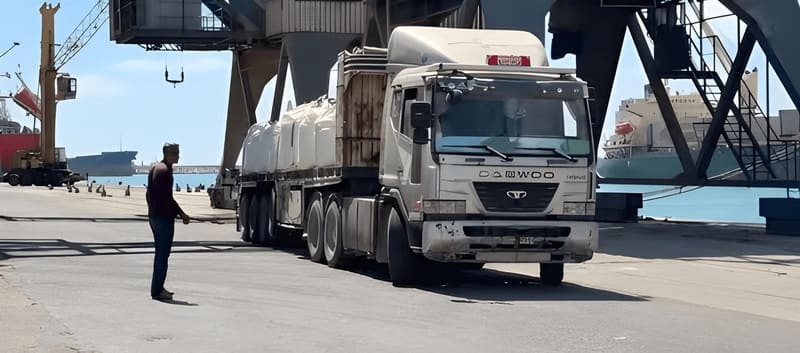
In this interview with World Geostrategic Insights, Murhaf Jouejati explores the operationalization of strategic foresight in deeply fragmented environments. He brings a systemic analysis to the primary impediments facing post-conflict stabilization in Syria, alongside the institutional mechanics of Security Sector Reform (SSR) amid the proliferation of proxy networks. He also examines the legally sound pathways for Foreign Direct Investment (FDI) under complex transnational sanctions regimes, and evaluate the broader doctrinal shifts driving Gulf defense strategies in response to evolving global power balances.
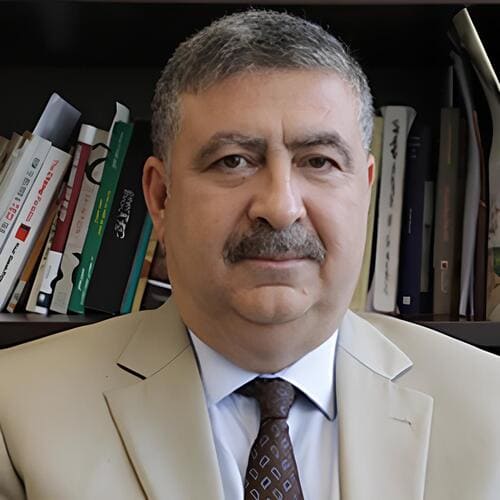
Dr. Murhaf Jouejati is the founder and CEO of SyriaConsult, a specialized geopolitical risk advisory firm focusing on institutional reconfiguration, compliance, and strategic foresight in the Levant. A distinguished scholar and practitioner with over twenty-five years of experience in international relations and Middle East security, Dr. Jouejati has served as a political advisor to the European Commission delegation in Damascus, a National Program Officer for Syria within the United Nations Development Program (UNDP), and a presidential envoy to the Syria-Israel peace talks. His extensive academic and pedagogical background includes appointments as a Distinguished Visiting Professor at the U.S. Naval Academy, as Director of the Middle East Studies Program at The George Washington University, and as a resident scholar at the Middle East Institute.
Q1 – In July 2025, you transitioned from a distinguished 25-year academic career at institutions like the National Defense University and the Anwar Gargash Diplomatic Academy to found SyriaConsult. How has your extensive background in strategic studies and international relations theory shaped your approach to operationalizing geopolitical risk analysis for private and public sector clients?
A1 – If I analyze your question from the perspective of how my 25-year career at institutions like the National Defense University (NDU) and the Anwar Gargash Diplomatic Academy (AGDA) would uniquely shape the methodology of a firm like SyriaConsult, I can identify several distinct advantages that likely define my approach to geopolitical risk analysis:
1 – Bridging Theory and Operational Necessity
Academic institutions often prioritize theoretical frameworks, while defense and diplomatic academies emphasize practical application. My background allows me to bridge this gap by:
- Applying Rigorous Theory: Utilizing established international relations frameworks to identify long-term structural trends rather than relying solely on surface-level news.
- Operationalizing Insights: Translating complex theoretical models into actionable intelligence that private and public sector clients can use to make high-stakes investment or policy decisions.
2 – The NDU and AGDA Perspective
My experience at these specific institutions suggests an approach that is deeply rooted in both security and diplomatic dimensions:
- Defense & Security (NDU): This provides a structural understanding of power dynamics, military capabilities, and regional security architectures. It leads to an approach that prioritizes “hard” risks—such as conflict escalation, infrastructure security, and the physical stability of operational environments.
- Diplomacy & Statecraft (AGDA): This emphasizes the “soft” power components—negotiation, international norms, institutional relations, and the nuanced motivations of regional and global actors. This helps my firm anticipate not just the what of a conflict or crisis, but the why—the underlying diplomatic or political motivations that often escape purely economic or security-focused models.
3 – Creating a Holistic Analytical Framework
For clients in both the public and private sectors, the most valuable analysis is integrated. My background enables a holistic methodology that considers:
- Multidimensional Risk: Viewing a geopolitical event not in isolation, but as the intersection of economic interests, diplomatic maneuvering, and security imperatives.
- Contextual Depth: Moving beyond surface-level political commentary to understand the historical context and institutional constraints that dictate why actors behave as they do. This is crucial for avoiding the common trap of “mirror imaging,” where analysts mistakenly assume other actors share the same strategic incentives as their own clients.
4 – Credibility and Trusted Advisory
For a consultancy operating in a highly sensitive area like the Middle East, the transition from high-level academic/diplomatic service to private advisory confers significant institutional credibility. Clients look for:
- Deep Access to Thought Leadership: An approach that reflects years of engagement with the very systems and actors being analyzed.
- Balanced Perspective: The ability to navigate competing narratives—a hallmark of both high-level diplomacy and robust academic inquiry.
In essence, my background positions SyriaConsult to offer a unique “insider-outsider” perspective: the analytical rigor of the academy combined with the pragmatic, risk-aware mindset of the defense and diplomatic communities. This allows my firm to offer more than just data; it offers the strategic foresight needed to navigate the complex geopolitical landscape of the region.
Q2 – SyriaConsult operates at the intersection of political risk, legal frameworks, and security dynamics. From a methodological standpoint, how does your firm model and quantify political risk in a theater characterized by rapid institutional reconfiguration and complex multi-actor dynamics?
A2 – At SyriaConsult, I model political risk as a dynamic, actor-driven system rather than as a static country score. In environments characterized by rapid institutional reconfiguration and overlapping authorities, I distinguish between formal governance, de facto control, and the ability of each actor to make and enforce commitments.
My framework combines five elements:
- Actor and power mapping: I assess each relevant state, sub-state, external, commercial, and community actor by objectives, capabilities, cohesion, territorial reach, dependencies, and relationships. I pay particular attention to veto power and the ability to disrupt or enable a client’s activities.
- Risk decomposition: I separate institutional, legal-regulatory, security, social, economic, and external-environment risks. This helps identify transmission channels—for example, how a sanctions change may affect elite incentives, administrative behavior, and ultimately operational security.
- Leading indicators: I monitor changes in appointments, command structures, local taxation, licensing, checkpoints, detention patterns, rhetoric, sanctions, trade routes, and inter-elite disputes. I distinguish slow-moving structural conditions from fast-moving trigger events.
- Scenario-based quantification: For each material risk, I estimate probability, impact, and time horizon. Continuous updating and stress testing: We maintain baseline, adverse, stabilization, and—where appropriate—tail-risk scenarios. We then test how changes in actor alignment, legal rules, sanctions, territorial control, or regional dynamics would affect the client’s position. Assessments are revised when indicators invalidate prior assumptions.
- The key distinction I make is between theater risk and client-specific exposure. The same political development may be manageable for a humanitarian organization but highly disruptive for an infrastructure investor, financial institution, or logistics operator. My objective is therefore not merely to assign a Syria-wide risk rating, but to determine which political, legal, and security developments could materially change the client’s operating assumptions—and what mitigation, monitoring, or exit measures should follow.
Q3 – A primary challenge in post-authoritarian transitions is the consolidation of the state’s monopoly on the legitimate use of force. What are the primary impediments to effective Security Sector Reform (SSR) in Syria today, given the historical proliferation of non-state armed actors and external proxy networks?
In Syria, the problem is compounded by the historical proliferation of non-state armed actors and external proxy networks. The transition therefore involves not simply reorganizing security institutions, but renegotiating political authority and the terms under which coercive power is exercised.
1 – Fragmentation of the coercive landscape. Syria inherited a fragmented security environment involving the former Syrian Arab Army and intelligence services, former opposition formations, Kurdish-led forces, tribal and local armed groups, Islamist formations, community-based militias, and forces connected to external powers. The central SSR problem is integration versus disarmament. Rapid attempts to eliminate armed actors can generate resistance; integration without clear national command can institutionalize fragmentation.
2 – The legacy of the Assad security state. The previous system combined military, intelligence, police, and party-security institutions. Excessive purging can destroy institutional capacity, while indiscriminate incorporation can reproduce abusive practices and patronage networks. A credible approach requires vetting, accountability for serious abuses, professional retraining, institutional restructuring, and preservation of legitimate technical expertise.
3 – Foreign-sponsored security networks. Iran, Russia, Turkey, and the United States have each developed security relationships or strategic interests in Syria. This gives SSR an international dimension: domestic armed structures may have incentives and external backing that complicate their incorporation into sovereign Syrian institutions.
4 – The Kurdish/SDF question. The SDF combines military organization, territorial administration, Kurdish political concerns, and a history of external security support. Integration raises questions concerning chain of command, local security, border control, Kurdish administrative arrangements, relations with Turkey, personnel integration, the ISIS threat, and the future role of outside powers.
5 – Lack of trust between communities and former combatants. Many Syrians view armed organizations as protectors of particular communities or territories. This produces a security dilemma: groups retain weapons because they fear other groups will retain weapons. Confidence-building and credible guarantees of civilian protection therefore need to accompany disarmament and integration.
6 – Economic incentives surrounding armed groups. Wartime armed organizations developed revenue sources through checkpoints, taxation, smuggling, contracting, external financing, and control of strategic assets. Successful SSR therefore requires competitive salaries, pensions, vocational alternatives, transparent recruitment, integration programs, and mechanisms to dismantle wartime patronage networks.
7 – Weak civilian institutions. SSR cannot succeed through military restructuring alone. Effective civilian control requires functioning ministries, professional armed forces and police, military and civilian justice, prosecutors, and meaningful legislative and judicial oversight. The objective is civilian control of the security sector, not merely a stronger security sector.
8 – The ISIS and transnational-jihadist problem. The continuing threat from ISIS creates a sequencing dilemma. Syria needs capable security institutions to prevent jihadist resurgence, but rapid expansion of coercive capacity without accountability and civilian oversight can reproduce the conditions associated with abusive security governance.
9 – The Deeper Problem: SSR Is Fundamentally Political. Syria’s SSR should not be treated as a technical exercise in reorganizing ministries or merging military units. It is fundamentally a process of renegotiating political authority. The central objective is to establish security institutions that derive their authority from law and the state rather than from individual commanders, communal structures, or external patrons.
Three Tests for Successful SSR:
- Monopoly: Can only the state legally authorize the use of organized coercion?
- Accountability: Can members of the security forces be held accountable through courts and civilian institutions?
- Impartiality: Do Syrians have reason to regard the security sector as protecting citizens as citizens rather than particular sectarian, ethnic, regional, or political constituencies?
If Syria achieves a legitimate state monopoly on coercion, meaningful accountability, and an impartial security sector, it will have moved substantially beyond the security architecture inherited from the conflict. If it merely merges armed groups into a larger military structure while leaving commanders, patronage networks, and external relationships intact, it may achieve military consolidation without genuine Security Sector Reform.
Q4 – The economic rehabilitation of Syria requires navigating complex legal environments and political risk. From a macro-economic perspective, which sectors present the most viable pathways for foreign direct investment (FDI), and how can the transitional authority effectively mitigate the persistent legal ambiguities that deter international capital?
A4 – Syria’s most credible FDI strategy is unlikely to begin with large, capital-intensive projects that depend heavily on state guarantees. The more viable entry points are sectors where investment can generate foreign exchange, rebuild productive capacity, and operate under relatively transparent commercial rules.
1 – Energy and Power. Chronic electricity shortages create major unmet demand; generation, transmission, distribution and solar can support the wider economy.
2 – Agriculture & agribusiness Irrigation, storage, food processing and logistics can add value to an existing agricultural base and export potential.
3 – Transport & logistics; telecom & digital. Syria’s geographic position can support trade links among Turkey, Iraq, Jordan and the Mediterranean. High unmet demand and relatively lower physical-capital requirements create opportunities in telecom, fintech and IT.
4 – Construction & building materials. Reconstruction generates demand for cement, steel, glass, prefabricated materials and engineering.
5 – Banking & financial services. A functioning financial system is essential for reconstruction, trade and SME finance. Correspondent banking, AML/CFT and currency convertibility.
6 – Tourism. Cultural and historical assets offer longer-term potential as security and infrastructure improve.
7 – Mining & natural resources. Potentially significant foreign exchange earnings.
The Core Problem: Legal Uncertainty
For international investors, Syria’s risk is multidimensional: political risk can translate into legal uncertainty, which produces financial and compliance risk, raises the required return on capital, and reduces the number of viable investments.
Immediate Legal and Institutional Priorities
A – Establish a single investment. An investment law should clearly establish national treatment for foreign investors; rights to establish and own companies; protection against arbitrary expropriation; transparent compensation; predictable profit and capital repatriation rules; transparent licensing; and access to independent dispute resolution.
B – Create a genuine investment one-stop shop. A single digital platform should coordinate company registration, investment licensing, tax registration, land-use approvals, customs documentation, sectoral permits and environmental approvals. Routine procedures should have statutory processing deadlines and, where legally appropriate, deemed approval mechanisms.
C- Establish credible commercial dispute resolution. Investors need confidence that contracts will be enforceable. Syria could combine transparent commercial courts, specialized investment/commercial chambers, and access to recognized international arbitration mechanisms for qualifying disputes.
D – Clarify property and land rights. Reconstruction requires reliable answers to the question: who legally owns the land? Digitized registries, title verification, mechanisms for resolving competing claims and publication of government-owned land available for investment would materially reduce risk.
E – Separate sanctions compliance from ordinary investment regulation. The government should maintain an authoritative legal database of applicable restrictions and provide official compliance guidance to investors and banks. Foreign investors must also account for the laws of their home jurisdictions, which may impose obligations beyond Syrian law.
F – Make public procurement transparent. Large reconstruction contracts should use published tenders, clear qualification requirements, transparent evaluation criteria, publication of awards, beneficial-ownership disclosure, independent auditing and mechanisms to challenge procurement decisions.
G – Establish special investment zones with clear rules. Pre-cleared land, guaranteed infrastructure, simplified customs, standardized contracts, expedited licensing and reliable dispute mechanisms can create demonstrable proof that Syria can provide a predictable investment environment.
H – Build a Diversified Investment Model. Syria’s economic rehabilitation should not depend exclusively on hydrocarbons. A sustainable FDI model can combine energy, agriculture, logistics, manufacturing, digital services and tourism. The strongest projects will create domestic linkages—for example: reliable electricity fi food processing fi cold storage fi agricultural exports fi logistics fi port activity fi foreign exchange.
Sequencing the Reform
Contract-stability and due-process provisions. Transparent courts and/or recognized arbitration. Official sanctions and compliance guidance. Published, predictable tax rules. Explicit transfer and exit provisions. Phase I — Confidence building (0–18 months): investment law; property registration; commercial courts/arbitration; sanctions and compliance clarification; banking reform; customs modernization; transparent procurement; and an investment authority. Phase II — Productive investment (18–36 months): electricity; renewable energy; agriculture; food processing; logistics; construction materials; telecommunications; and industrial parks. Phase III — Higher-value investment (3–7 years): manufacturing; regional logistics; technology; financial services; tourism; export-oriented industries; and larger infrastructure partnerships.
Strategic Synthesis
The central challenge is not simply finding investors. It is creating an environment in which an investor can answer five questions with reasonable certainty: Can I enter? Can I operate? Can I enforce my rights? Can I move my money? Can I leave?
If the transitional authority can provide credible answers to those questions, Syria’s infrastructure needs, agricultural potential, geographic position and human capital become investable economic assets rather than merely reconstruction needs.
Q5 – The current Gulf crisis has highlighted a divergence between Western offensive strategic priorities and the GCC’s preference for diplomatic de-escalation. Given that regional infrastructure has exposed critical vulnerabilities despite political neutrality, how do you foresee Gulf capitals reforming their defense doctrines?”
A5 – Strategic Assessment: The likely direction is not a wholesale abandonment of diplomacy, but a shift toward “armed de-escalation”: Gulf states would seek to make themselves harder to coerce or attack while preserving diplomatic channels and avoiding being drawn into major-power wars.
From neutrality to “protected neutrality”: GCC governments may increasingly distinguish political neutrality from physical neutrality. Even if they do not participate in a conflict, they will want credible capabilities to protect ports, airports, energy facilities, desalination plants, data centers, and financial infrastructure.
Integrated air and missile defense: Recent attacks have reinforced the problem of defending dispersed critical infrastructure against ballistic missiles, cruise missiles, and drones. This points toward greater GCC interoperability: common sensors, shared early-warning networks, layered defenses, and potentially coordinated procurement rather than six largely national systems.
Infrastructure resilience becomes part of defense doctrine: Hardening individual facilities is only one element. Gulf capitals are likely to invest more heavily in redundancy—alternative power and water supplies, distributed fuel storage, backup communications, rapid repair capabilities, and geographically dispersed logistics. The objective is to ensure that an attack does not produce strategic paralysis even when some defenses are penetrated.
Greater emphasis on counter-drone and electronic warfare: The relatively inexpensive nature of drones creates a difficult cost-exchange problem for sophisticated air-defense systems. GCC militaries are therefore likely to expand lower-cost interceptors, electronic warfare, directed-energy technologies where practical, and passive defenses alongside conventional missile defenses.
A stronger national-security role for diplomacy: Diplomacy would increasingly be viewed not as an alternative to deterrence but as one of its instruments. Maintaining channels with Iran and other regional actors, establishing crisis communications, and negotiating understandings concerning civilian infrastructure could become components of defense planning.
Strategic autonomy from Washington without abandoning the U.S. relationship: Gulf governments have strong incentives to retain American intelligence, air-defense, naval, and extended-deterrence capabilities. But recent experience could encourage them to reduce dependence on any single external guarantor. That could mean diversification of suppliers, greater indigenous defense production, European and Asian partnerships, and more autonomous intelligence and surveillance capabilities.
Civilian infrastructure may receive a regional security architecture of its own: Energy, desalination, aviation, telecommunications, and financial infrastructure increasingly constitute strategic assets. One possible evolution is a GCC framework for protecting these systems collectively, analogous in concept to collective military defense but centered on infrastructure continuity and recovery.
Broader Strategic Implication: The larger strategic implication is that Gulf defense doctrine may become less expeditionary and more denial-oriented. Rather than asking, “How can we project power into a conflict?”, the question becomes, “How can we prevent an external conflict from disabling the Gulf while preserving our freedom to mediate?” This would also explain the apparent divergence between Western and GCC preferences. Western militaries can conceive of escalation and offensive action as instruments for changing an adversary’s calculations. Gulf states, because they physically absorb the consequences of escalation, have stronger incentives to emphasize resilience, deterrence, diplomatic channels, and controlled escalation.
Key Development to Watch: The most consequential development to watch is whether the GCC moves from six national approaches toward a genuinely integrated Gulf security doctrine — particularly shared early warning, missile/drone defense, critical-infrastructure protection, and crisis diplomacy. That would represent a significant evolution from simply purchasing more sophisticated weapons.
Q6 – Given your deep familiarity with U.S. foreign policy architectures, how would you characterize Washington’s current strategic posture toward the Levant? Conversely, how are the relative contraction of Russian influence and the expansion of China’s economic diplomacy altering the balance of power in the broader region?
A6 – As of 2026, I would characterize the strategic picture in the Levant as a transition from a predominantly U.S.-Russian competitive arena toward a more fragmented, multi-polar system in which the United States retains the strongest security position, while China increasingly acquires economic and diplomatic leverage.
The assessment below focuses on the broader strategic architecture.
1 – Washington: security primacy without an ambition to dominate every arena.
The U.S. posture toward the Levant can be understood as selective strategic engagement rather than the large-scale transformational interventionism associated with the post-9/11 period. Washington’s principal interests remain:
● Israel’s security and deterrence, including maintaining its qualitative military advantage.
● Containing the expansion of Iranian military networks and limiting the ability of Iran and aligned armed groups to threaten U.S. partners.
● Counterterrorism, although this has become a more targeted rather than expeditionary mission.
● Freedom of navigation and regional access, particularly through the eastern Mediterranean, Red Sea and Gulf.
● Preventing any hostile power from establishing a dominant regional position.
● Encouraging regional states to assume greater responsibility for their own security.
The significant change is that Washington appears less willing to make political reconstruction of Middle Eastern states a central American objective. Security relationships, intelligence, military access and deterrence remain important, while economic reconstruction and political settlement increasingly require regional and international partners.
2 – Russia: from strategic competitor to more constrained regional actor.
Russia’s position has changed considerably from the period following its 2015 military intervention in Syria. Its earlier strategy gave Moscow several advantages simultaneously: a military presence in Syria, access to the Mediterranean, influence over Damascus, relationships with Iran and Turkey, and the ability to portray Russia as a power willing to challenge the United States. The contraction of that position has consequences beyond Syria. Russia’s reduced capacity means that:
First, Moscow has less ability to function as the principal alternative security guarantor for Arab governments dissatisfied with Washington.
Second, Russian leverage over Syria becomes more limited if Moscow cannot simultaneously provide military protection, economic investment and diplomatic sponsorship.
Third, Turkey, the Gulf states and Israel acquire greater freedom to maneuver because there is less of a Russian-U.S. bipolar structure constraining their choices.
But Russia should not be treated as irrelevant. Its diplomatic relationships, arms connections, energy interests and historical networks remain assets. The important change is relative capacity, not disappearance.
3. China is filling an entirely different space.
China’s expansion is particularly interesting because Beijing is not attempting to replace the United States militarily. Its model is principally economic and diplomatic. China’s interests include:
● energy security;
● infrastructure;
● ports and logistics;
● telecommunications;
● construction;
● industrial investment;
● access to markets;
● integration of the region into Belt and Road networks;
● diplomatic relationships with governments across political divides.
This gives Beijing an unusual advantage: it can maintain relationships with actors that are simultaneously hostile to one another. China can deal with Iran while maintaining relations with Saudi Arabia and the Gulf monarchies. It can engage Israel while maintaining relationships with Arab governments. It can work with governments that have very different relationships with Washington. That makes Chinese diplomacy less about choosing sides and more about building interdependence.
4 – The resulting balance is asymmetric.
This produces a division of strategic labor. The United States remains the predominant external security actor. China is increasingly an important economic and diplomatic actor. Russia has lost some of its previous position but retains pockets of influence.
5 – The most consequential development may actually be regional autonomy.
The biggest structural change, in my view, is not simply the rise of China or decline of Russia. It is the growing willingness of Middle Eastern states themselves to diversify their external relationships. Saudi Arabia, the UAE, Qatar, Turkey and others increasingly operate according to the principle: Do not depend exclusively on any one great power. They can maintain security ties with Washington, purchase technology or infrastructure from China, retain relationships with Russia, and simultaneously pursue their own diplomatic initiatives.
This is a fundamentally different Middle Eastern order from the Cold War or immediate post-Cold War periods.
Murhaf Jouejati, Ph.D. – President, SyriaConsult, LLC.
Image Source: SANA (Port of Tartous).