



In this interview with World Geostrategic Insights, independent policy advisor and former senior diplomat Paul Fritch assesses the structural shifts reshaping global security architecture. Drawing on his extensive experience with NATO and the OSCE, Fritch examines the current state of U.S. national defense strategy, the operational strain on force posture following the conflict in Iran, and the erosion of traditional interagency decision-making. He further analyzes the future of the Transatlantic alliance, the geopolitical path forward for Ukraine, and the long-term prospects for diplomatic leverage and deterrence across the European and Indo-Pacific theaters.
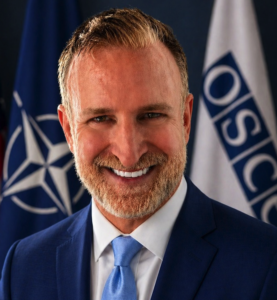
Paul Fritch is a Senior Fellow at the Middle East Institute Switzerland and an Executive in Residence at the Geneva Centre for Security Policy., specializing in international security, multilateral diplomacy, and Euro-Atlantic affairs. He currently provides high-level policy analysis, risk assessments, and strategic guidance to international stakeholders navigating the complexities of contemporary regional deterrence and defense planning. Prior to his current advisory roles, Fritch was a senior diplomat with over three decades of institutional experience. He served as a senior official within the North Atlantic Treaty Organization (NATO), where he led political relations with Russia and Ukraine and played a key role in establishing the NATO-Russia Council (NRC). His extensive background also includes a senior leadership role within the Organization for Security and Co-operation in Europe (OSCE), focusing on conflict resolution, military transparency, and Eurasian security architecture. More recently, his expertise in strategic planning informed the 2021 U.S. Global Posture Review and 2022 National Security Strategy, National Defense Strategy, and National Military Strategy.
Q1 – Having contributed directly to the 2021 Global Posture Review and the 2022 National Defense Strategy, how would you assess the evolution of the U.S. military footprint today? Are we witnessing a permanent pivot away from traditional theaters, or is Washington forced into a permanent state of overextension?
A1 – What concerns me is not just a question of overstretch. What I see is a wholesale collapse of strategic planning and informed national security decision-making. President Trump’s National Security Strategy and National Defense Strategy represent an unusually sharp departure from longstanding bipartisan national security priorities, downgrading traditional alliances and retreating from leadership of a rules-based international order in favor of a push for regional hegemony in the Western Hemisphere. But even more alarming has been a chaotic decision-making process and a lack of discipline in adhering to the administration’s own publicly declared priorities. As a result, instead of careful posture planning and force development that calibrates requirements to each region’s unique strategic environment, we see Washington’s attention shift from crisis to crisis according to the President’s whims. Forces allocated to counter long-term threats in Europe or the Asia-Pacific are redeployed at short notice to the Caribbean, to Venezuela, to the Persian Gulf, with a seeming lack of regard for the strain this places on the force or the capabilities gaps it leaves behind.
This administration has taken many foreign policy actions of dubious wisdom and legality – missile strikes on alleged “drug boats” in the Caribbean and Eastern Pacific, military intervention in Venezuela, a public push to acquire Greenland, punitive tariffs against Canada and other close allies. But these actions are arguably in line with the administration’s own strategy. The Iran war is different. It came after the U.S. claimed to have “obliterated” Iran’s nuclear program and rendered the regime a second-tier challenge to be managed by regional partners. It is difficult to reconcile this sustained military engagement and its associated costs with U.S. national security interests, but it is nearly impossible to reconcile it with the Trump administration’s own published strategy documents. Foreign interlocutors can adjust to changes in Washington’s strategic focus, but this lack of predictability leads allies to question America’s reliability and adversaries to disregard deterrent signals.
Q2 – From your perspective as a former senior diplomat, how effectively is the U.S. currently balancing the Pentagon’s military planning with the State Department’s diplomatic tools? Is the U.S. relying too heavily on deterrence at the expense of strategic dialogue?
A2 – Here again, I see several interrelated problems. Decisions taken in the first year of the Trump administration did much to diminish America’s diplomatic, intelligence, and public information capabilities. The professional Foreign Service was cut by more than 20%, and high-profile diplomatic challenges – Russia-Ukraine, Israel-Gaza, the Iranian nuclear program – were entrusted to amateurs with close personal ties to the President (and significant financial conflicts of interest). Even now, nearly two years into the administration, more than half of all ambassadorial posts worldwide remain vacant. So a certain imbalance in favor of military tools was inevitable – when the only tool you’ve got is a functioning military, every problem starts to look like a target set. But the problem runs deeper.
In May 2025, following the dismissal of former National Security Advisor Michael Waltz, the National Security Council effectively ceased functioning as a policy coordination body. Experts were released back to their home agencies, and multi-level interagency deliberation on foreign and security policy issues ground to a halt. Decisions are taken by a small circle of individuals around the President, often without the benefit of the best intelligence and diplomatic reporting available to the U.S. government. Across the national security community, a culture of merit is being replaced with a culture of ideological alignment. High-profile firings of officials who reported intelligence the political leadership did not want to hear have resulted in a climate of self-censorship in the diplomatic and intelligence services. This is a reckless and dangerous way to run a superpower.
Also, the U.S. military itself has suffered substantial institutional damage. Pete Hegseth, the self-styled “Secretary of War,” has purged dozens of experienced military commanders and judge advocates-general, and blocked the merit-based promotions of dozens more. Global stockpiles of key offensive and defensive munitions have been depleted, and a year of sustained, unplanned military actions has strained America’s carrier fleet, taking several strike forces out of service for long-term maintenance.
Q3 – How significantly do sudden shifts in presidential administrations disrupt the long-term, structural defense planning of the United States, and how do Washington’s core allies adapt to this lack of predictability?
A3 – Sudden shifts in national strategy can be extremely damaging, disrupting long-term planning and procurement processes across the U.S. government, unsettling allies, and emboldening potential adversaries. For this reason, they are also extremely unusual. While each President comes to office with his own priorities and points of focus, past administrations (including the first Trump administration) have built on a solid foundation of bipartisan consensus. Where significant adjustments are made, these generally come in response to significant external events – the fall of the Berlin Wall, 9/11, the rise of China – and new ideas are stress-tested in a vigorous interagency process that takes account of uncomfortable realities. In the Biden administration, it took well over a year to produce a National Security Strategy and National Defense Strategy, with significant revisions following Russia’s February 2022 invasion of Ukraine.
The 2025-2026 strategy documents are fundamentally different, in both content and process. They recast previously identified strengths of the U.S., such as its global network of alliances, openness to trade, and a vigorous immigration system that provides a substantial economic advantage over peer competitors such as Europe and China, as vulnerabilities to be addressed. It is inevitable that such abrupt shifts, not only in tactics but in the fundamental principles that have underpinned U.S. policy for decades, will cause both allies and adversaries to recalibrate, and that is exactly what we have seen. Europe has dramatically increased its defense spending, not to operate more effectively alongside the U.S. within NATO, but rather to plan for a world in which American security guarantees are unreliable. Longtime trading partners have diversified their supply chains to reduce their dependence on trade with the U.S. And in the aftermath of the Iran war, allies and partners in the Middle East will no doubt re-evaluate their dependence on Washington in their security arrangements.
Q4 – You previously led NATO’s political relations with Russia and Ukraine. Looking back at the creation of the NATO-Russia Council, what was the precise turning point where institutional cooperation permanently gave way to systemic rivalry?
A4 – It is impossible to understand the creation of the NATO-Russia Council without recalling the specific atmosphere of the days immediately following the September 11, 2001, attacks on the United States. President Putin was the first foreign leader to express condolences to President Bush, and his letter included a pledge of support for whatever action the U.S. deemed necessary in response to the attacks. This led to a brief but intense period of robust NATO-Russia counter-terrorism cooperation, and soon thereafter to a wholesale restructuring of the NATO-Russia relationship itself in May 2002. 25 years later, in the context of the Ukraine war and persistent Russian “hybrid” activities probing the defenses of NATO Allies themselves, it is difficult to recall the optimism of those days.
I would not identify a single turning point, but rather a number of significant milestones that brought the NATO-Russia (and the broader Western-Russia) relationship to its current state. Russia itself became more authoritarian at home and more aggressive toward its neighbors, making cooperation more difficult. But NATO leaders also moved on to other priorities. In late 2002 and early 2003, as Washington’s military focus shifted from Afghanistan to Iraq, the need to manage emerging differences within NATO itself consumed much of the energy and political will that had previously been devoted to building the NATO-Russia partnership. A “big bang” wave of NATO enlargement in 2004 brought a large (many would say overdue) dose of Russia-skepticism into the Alliance. By 2007, President Putin made clear in a landmark speech to the Munich Security Conference that Moscow was no longer satisfied with post-Cold War security arrangements in Europe. NATO’s April 2008 Bucharest Summit Declaration, which included a vague, hastily drafted commitment to eventual Alliance membership for Ukraine and Georgia, was received in Moscow as a challenge to stop these countries’ Western reorientation at all costs before it was too late. It is unclear whether a different approach might have averted the catastrophes that followed – Russia’s de facto annexation of Georgian regions Abkhazia and South Ossetia in 2008, and Crimea in 2013, and its full-scale invasion of Ukraine in 2022 – but despite Western efforts to put the relationship on more solid ground, such as the Obama-Clinton “reset,” relations have been on a steady downward trajectory since then.
Q5 – Given your early involvement in Ukraine’s initial steps toward NATO integration, what is your realistic assessment of Ukraine’s path forward today? Can there be a sustainable European security architecture without either clear NATO membership for Ukraine or a fundamental transformation inside Russia?
A5 – Twenty-one years ago, when NATO and Ukraine launched their first “Intensified Dialogue on Membership Issues,” Ukraine’s NATO aspirations were largely an elite project, with NATO membership rarely receiving anything close to a majority in public opinion polls. Most Ukrainians at the time would have greatly preferred a clear prospect of EU membership. As this was not on offer, however, Allies and Ukraine used the NATO membership dialogue as a stand-in, establishing a comprehensive framework to discuss not only military reform, but also necessary political, economic, legal, and anti-corruption measures. This process also began in the context of a much more constructive NATO-Russia relationship than exists today. Again, it’s hard to imagine from the perspective of 2026, but there was significant concern at the time that the protests that followed Ukraine’s disputed 2004 Presidential election might provide a pretext for Russian military intervention (as indeed happened nine years later). But a December 2004 meeting of NATO-Russia Council Foreign Ministers agreed to respect Ukraine’s sovereignty and territorial integrity, and to call jointly for a free and fair electoral process that respected the will of the Ukrainian people.
Today, the situation is fundamentally different. The human suffering inflicted by the Russian military aggression against Ukraine has been horrific. But the conflict has also strengthened Ukraine’s sense of national identity, and solidified public support behind the country’s NATO and EU membership aspirations. It has also shown Ukraine to be a capable and innovative military and military-industrial force, with the capacity to make tremendous contributions to Europe’s collective military capabilities. The current conflict is a significant obstacle to Ukraine’s NATO and EU aspirations. Russia wants a guarantee of Ukraine’s “neutrality,” which would block progress toward the country’s membership in NATO or the EU. But in my view, this would at best result in a temporary reprieve from the conflict. Ukraine’s long-term security is best ensured by integration into the larger European and Euro-Atlantic community.
Q6 – With your extensive background in the OSCE, do you see a path forward for cooperative security frameworks in Europe, or has the continent entered a rigid, multi-decade era of military containment?
A6 – I do see a path forward for cooperative security in the OSCE area, but this will take time and some fundamental changes to the political environment. Looking back, both the 1975 Helsinki Final Act and the processes it set into motion were remarkable achievements. Between the 1990 Charter of Paris and the 1999 Istanbul Charter for European Security, OSCE participating States established a remarkable number of landmark agreements to promote conflict resolution, military transparency and cooperation, and democratic institution-building throughout the Euro-Atlantic and Eurasian area. Equally remarkable (in a bad way) is the speed at which these structures were allowed to deteriorate.
When the Euro-Atlantic and Eurasian community gathered at the OSCE Summit in Istanbul in November 1999, we were facing real security challenges – wars in Kosovo and Chechnya, “frozen conflicts” in the Caucasus and Moldova, and a growing lack of trust between Russia and the West. Yet we were able to reach agreement on meaningful, far-reaching agreements such as the adapted CFE Treaty and Vienna Document and the Charter for European Security. We did not realize it at the time, but this would be the last such meeting for 11 years. Changes of government in Moscow and Washington, and a transformed security environment in the wake of the September 11, 2001, terrorist attacks on the United States, initially promised to bring us closer together in the face of common threats. But the “unfinished business” of the Cold War remained unfinished, and East-West tensions were allowed to fester. But this situation is also not necessarily permanent. The conflict in Ukraine must end one day, and arrangements must be put in place to ensure it is not repeated. Here, all members of the Euro-Atlantic/Eurasian security community would be well-served to draw upon the OSCE’s history as a comprehensive security conference aimed at bridging fundamental differences, and its substantial toolbox in promoting both military transparency and restraint and institution-building.
Q7 – U.S. defense strategy explicitly designates China as the ‘pacing challenge.’ From a defense planning perspective, do you believe the U.S. and its regional allies (like AUKUS and the Quad) have successfully established an effective deterrent in the Indo-Pacific, or are they lagging behind Beijing’s naval expansion?
A7 – It was actually the 2022 National Defense Strategy that adopted the “pacing challenge” paradigm. President Trump’s strategy, adopted in January 2026, appears to back away from it, and from the fundamental importance of alliances and partnerships like AUKUS and the Quad. The current administration seems to have abandoned a multidimensional (political, economic, cultural, and military) strategic competition with China as an organizing principle of U,S. foreign policy – something of a surprise, since this was first articulated during Mr. Trump’s own first term.
There are many reasons to be concerned that the new approach has weakened the U.S. position in the Asia-Pacific region. The administration’s trade and tariff policies have strained relations with traditional allies, forcing some to reorient their supply chains in ways that have strengthened Beijing. Military assets have been redeployed to support operations in the Caribbean and Eastern Pacific, and then the Persian Gulf. The depletion of critical munitions such as ballistic missile interceptors has raised concerns about the strength of U.S. and allied military deterrence against China and North Korea. Trump himself has raised questions about Washington’s resolve in protecting Taiwan from a potential military attack. And unexpected bilateral tensions with key allies have arisen over such diverse subjects as military exercise schedules (in South Korea), sanctions against the President of the International Criminal Court (who happens to be Japanese), even a personal dispute over whether President Trump deserved credit for defusing tensions between India and Pakistan. All of these dynamics make it more difficult to present a coherent, unified deterrent message to Beijing.
Q8 – How intertwined are the European and Indo-Pacific theaters today? If a major crisis escalates in the Taiwan Strait, what are the realistic expectations for European NATO allies in terms of logistical or military support?
A8 – The Iran conflict has highlighted the interdependence of security in Europe and the Asia-Pacific. The war’s impact on global energy prices has been mitigated significantly by China’s decision to draw down its own national petroleum reserves. Over the long term, an accelerated shift toward renewables aimed at reducing vulnerability to future price shocks, combined with a conscious move by the Trump administration away from green technologies, will increase Europe’s dependence on China-based supply chains for electric vehicles, batteries, and solar panels. That dependence necessarily creates a security vulnerability.
With regard to a Taiwan Strait contingency specifically, it is unlikely that European allies would play a significant role, either bilaterally or through NATO, in providing logistical or military support. In Iran, while there was some principled opposition to the U.S. action (for example in Spain), Europe for the most part did not provide logistical support because it was not asked. The U.S. (together with Israel) launched the military action without consulting European allies, either bilaterally in the NATO framework, and asked for basing and overflight rights after the fact. In the Asia-Pacific, the main obstacle to European participation would be geographic. U.S. forces would depend on regional allies such as Japan and the Philippines rather than NATO allies.
Beyond military planning, however, there is much Europe and the U.S. could do together to exert political and economic pressure on Beijing. Unfortunately, diminished trust within NATO (driven by the administration’s stated desire to reduce the U.S. troop presence in Europe, its periodic attempts to acquire Greenland, and its open support for far-right parties within European states) and divergent trade policies have complicated the ability of the Transatlantic community to deliver clear, coherent messages to Beijing.
Q9 – You have closely monitored the military and diplomatic escalations between Washington and Tehran. How shiftable is the balance of power in the Strait of Hormuz, and what asymmetric capabilities does Iran possess that pose the greatest threat to global energy markets?
A9 – The vulnerability of key maritime chokepoints should factor into any military plan. Iran’s ability to disrupt commercial shipping in the Strait of Hormuz was a predictable outcome of any prolonged military conflict. So was a threat by Iranian-aligned Houthis in Yemen to shipping in the Bab-al-Mandeb and to Saudi energy infrastructure. These threats are not linked to specific capabilities, they are rooted in simple geography. All indications are that the decision to go to war simply disregarded these contingencies due to overly optimistic assumptions about the fragility of the Iranian regime and the prospects for a quick, decisive victory. The same goes for the conflict’s impact on munitions stockpiles and U.S. deterrent capabilities in other regions such as Europe and the Asia-Pacific.
Iran’s ballistic missile capabilities have proven far more resilient than expected, but the real game-changer has been its ability to manufacture large numbers of low-cost drones, which have threatened commercial shipping and drained neighboring states’ stocks of ballistic missile interceptors. In military terms, closing the strait is much simpler than keeping it open. Iran does not need to strike all of the ships attempting to transit, just to create sufficient uncertainty to drive up insurance rates and make shipping companies hesitant to take the risk. This was always a theoretical possibility, but now it is a reality. And combined with the ability of Iranian-aligned Houthis in Yemen to similarly disrupt alternative export routes via the Red Sea, it represents a fundamental shift in the balance of power in the region. The conflict has also exposed differences within the GCC between those states pushing for a decisive military resolution and those who would prefer to reach their own bilateral accommodations with Tehran. And it has raised questions over the reliability of the U.S. as a security guarantor.
Q10 – We have recently seen non-Western actors, such as Pakistan, stepping in to mediate critical ceasefires in the Middle East. Does this signal a structural decline in U.S. diplomatic leverage in the region, or does it open new avenues for minilateral diplomacy?”
A10 – Third-party mediation, in itself, does not necessarily signal a decline in U.S. diplomatic leverage. After all, Washington and Tehran have not maintained direct diplomatic relations for 47 years, and some involvement of an honest broker who can talk to both sides would be necessary in any case. Pakistan did a remarkable job in this respect, engaging actively and persistently at the highest levels to push both the U.S. and Iran toward a negotiated settlement.
Ultimately, however, the sustainability of any negotiated peace deal will depend on the political will of the conflict parties themselves rather than the skill of the mediator. And it is here that we see a dangerous erosion in U.S. diplomatic leverage. Despite (or perhaps because of) the strategic importance of reaching a negotiated ceasefire with Iran, President Trump entrusted the negotiations, not to the deep bench of regional and substantive experts at the Departments of State, Energy, and Defense, but rather to his son-in-law and a business associate. Predictably, this led to fundamental disagreements over what had been agreed, and the rapid collapse of the ceasefire.
The absence of consistent, predictable U.S. leadership has indeed opened up space for initiatives by regional actors, and we’ve already seen moves in this direction. The most significant of these is the August Mecca Joint Defense Agreement between Pakistan, Saudi Arabia, and Türkiye. It remains to be seen whether the political solidarity expressed in this agreement can be translated into effective military cooperation, or whether this will undermine Pakistan’s role as an honest broker between Washington and Tehran, but it clearly represents an alignment of regional powers that would have been unimaginable just a few years ago. The conflict has also created opportunities for outside powers such as China (and to a lesser extent Russia) to increase their influence in the region.
Paul Fritch – Independent Policy Advisor, Senior Fellow at the Middle East Institute Switzerland and Executive in Residence at the Geneva Centre for Security Policy.
Image Source: US Department of War (2026 National Defence Strategy)