



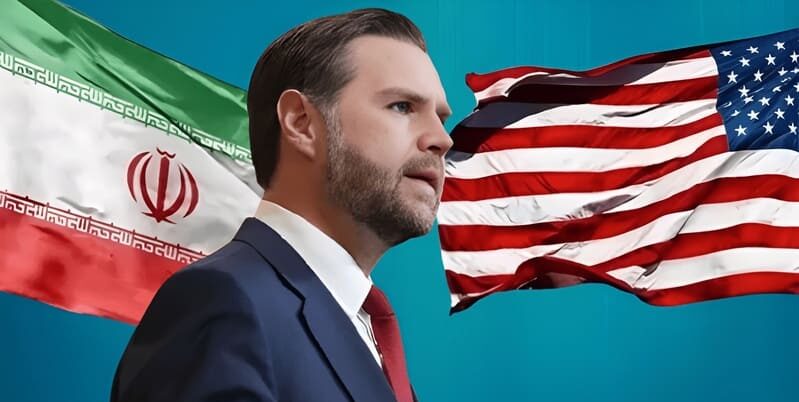
History rarely offers moments where power, pressure, and prudence collide so visibly and so dangerously. The unfolding Iran-United States confrontation is one such moment. At a moment when the world stands on the edge of economic and strategic rupture, the looming second round of Iran-United States talks in Islamabad is not a diplomatic routine, it is a confrontation between pressure and defiance.

Tehran has drawn a hard line against negotiating under coercion, while Washington, under Donald Trump, finds its own assertive rhetoric colliding with the mounting economic cost of conflict at home. What brings both sides back to the table is not trust, but necessity; a shared recognition that continued escalation from the Strait of Hormuz to global markets – risks consequences neither can fully control.
At the heart of this crisis lies a fundamental contradiction. Iran has made it unmistakably clear that it will not negotiate under pressure. Tehran’s leadership has framed U.S. demands as attempts at capitulation rather than dialogue, insisting that any engagement must be based on mutual respect, not coercion. Its conditions lifting the naval blockade, halting aggressive posturing, and recognizing its strategic autonomy are not bargaining chips; they are red lines.
This deep-seated posture is not simply ideological, it is strategic. Iran understands that time, geography, and asymmetry are on its side. By leveraging its position around the Strait of Hormuz and demonstrating resilience under sanctions and military pressure, it has effectively reshaped the negotiation environment. Its temporary refusal to attend talks is less a withdrawal than a calibrated signal: diplomacy will proceed, but not on terms dictated by Washington.
On the other side, Donald Trump’s approach reveals a different kind of pressure, one driven not only by geopolitics, but by domestic realities. His rhetoric oscillates between threats and optimism, between extending ceasefires and maintaining blockades. This is not inconsistency; it is calculation. Trump understands that a prolonged conflict carries costs that extend far beyond the battlefield.
In recent times, substantial economic impact on the United States is already visible. Rising oil prices, triggered by instability in the Strait of Hormuz, have translated into higher fuel costs for American consumers. Inflationary pressures are building, supply chains are under strain, and market volatility has become a constant concern.
For ordinary Americans, this is not an abstract geopolitical contest; it is felt at the gas pump, in grocery bills, and in the broader cost of living. A war thousands of miles away has begun to reshape daily economic realities at home. This is the paradox confronting Washington, the desire to project strength abroad collides with the imperative to maintain stability at home.
The naval blockade imposed after the first round of Islamabad talks may have been intended to pressure Iran economically, but it has also contributed to global energy disruption – an outcome that ultimately rebounds on the U.S. economy itself. It is within this tension that the urgency for renewed talks emerges.
Despite the intense, behind-the-scenes shuttle diplomacy, reports from the White House and international media of a possible second round in Islamabad on Friday the 24th April reflect not a diplomatic breakthrough, but a shared recognition of limits. Pakistan’s role in this equation has become increasingly pivotal. Islamabad is actively working behind the scenes – engaging Tehran, coordinating with Washington, and attempting to bridge gaps that remain wide and deeply entrenched.
The arrival of U.S. delegations, ongoing backchannel contacts, and Pakistan’s sustained diplomatic engagement all point toward a fragile but persistent effort to keep dialogue alive. Even as uncertainty lingers over Iran’s participation, the very fact that both sides continue to signal openness to talks suggests that neither is prepared to abandon diplomacy entirely.
Despite the recent progress, beneath this cautious optimism lies a stark reality – the core disagreements remain unchanged. The nuclear issue, sanctions regime, and control over strategic waterways continue to divide the two sides. The first round of talks demonstrated this clearly, ending after marathon discussions without agreement.
Consequently, there is little reason to believe that a second round will suddenly resolve these structural differences. What may emerge instead is something more modest—but no less significant. A continuation of ceasefire arrangements, incremental confidence-building measures, and a gradual shift toward sustained engagement.
As the emerging world order is shifting from unipolarity to multipolarity and the end of hegemony, for Pakistan, this moment carries both opportunity and risk. Its role as mediator has elevated its diplomatic standing, positioning it as a rare actor capable of engaging both Washington and Tehran. But this role is inherently delicate, success depends not on delivering an agreement, but on sustaining a process and keeping both sides at the table without becoming entangled in their disputes.
Hostilities are ongoing on the ground, and both sides remain far apart on key issues. The upcoming round of talks will therefore be less about outcomes and more about trajectories. Will Iran soften its stance without appearing to yield? Will the United States recalibrate its pressure tactics in recognition of their limits? And can Pakistan maintain the balance required to facilitate dialogue in an increasingly polarized environment?
Ultimately, these questions remain unanswered. But one conclusion is already clear, neither war nor peace is imminent. What lies ahead is a prolonged phase of negotiation under pressure, where rhetoric and reality will continue to diverge, and where progress – if it comes – will be incremental, fragile, and reversible.
To make a long story short, it is time for leadership to lay their cards on the table. In this evolving landscape, Islamabad is no longer just a venue. It has become a space where competing visions of power, sovereignty, and order intersect. Whether it can also become a space where those visions begin to reconcile or agitate remains the defining question of emerging world order.
Author: Mirza Abdul Aleem Baig – President of Strategic Science Advisory Council (SSAC) – Pakistan. He is an independent observer of global dynamics, with a deep interest in the intricate working of techno-geopolitics, exploring how science & technology, international relations, foreign policy and strategic alliances shape the emerging world order.
(The opinions expressed in this article are solely those of the author and do not necessarily reflect the views of World Geostrategic Insights).