



By Sadaf Nadeem
In the 21st century, Pakistan’s greatest challenge has shifted from terrorism to a far more complex geopolitical test. The US withdrawal from Afghanistan has fundamentally altered the landscape, intensifying the need for Islamabad to navigate its relationships with the United States and China.
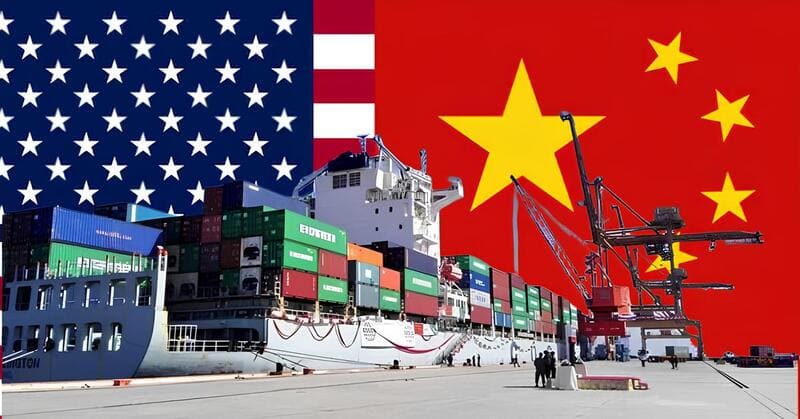
Caught between its “iron brother,” China, and its long-time, transactional partner, the U.S., Pakistan is walking a dangerous tightrope. Our history is tied to American strategic interests, but our economic future is now deeply linked to China through the massive CPEC project. The ultimate test for Islamabad is to protect its national interests and sovereignty, refusing to become a pawn in a great power conflict.
For years, China has been called Pakistan’s ‘all-weather friend,’ but today, that relationship is almost entirely defined by the China-Pakistan Economic Corridor (CPEC). This project has been a backbone for Pakistan’s development, especially for its struggling energy and infrastructure sectors. The military partnership has also grown stronger, with collaboration on everything from fighter jets to cyber warfare. But recently, this ‘iron brotherhood’ is showing visible signs of strain. Persistent attacks on Chinese nationals have damaged trust, and Beijing’s frustration is evident in its public demands for better security. Coupled with disagreements over the strategic control of Gwadar, it is clear this cornerstone alliance faces serious challenges.
While on-the-ground realities test the relationship with Beijing, Pakistan’s engagement with Washington presents a contrasting narrative of transactional engagement. It has always been driven by security needs, with Pakistan relying on American aid and diplomatic support. Today, Washington’s focus has shifted to India as its primary partner in the Indo-Pacific, underscored by alliances like the QUAD and AUKUS, leaving Pakistan feeling marginalized. Despite this, the U.S. still holds important cards. It remains Pakistan’s largest single export market, holds significant influence over international financial institutions like the IMF, and continues cooperation on key defense systems. This means Washington’s voice, though quieter, still carries immense weight in Islamabad.
This leaves Pakistan trapped in a classic strategic dilemma. The core of this predicament is economic: Pakistan requires long-term capital investment from China for infrastructure, yet it simultaneously depends on short-term liquidity from Western-dominated institutions like the IMF to keep its economy afloat. The pressure to choose a side is immense. Leaning too heavily toward China could invite American sanctions, while turning away from Beijing is not a realistic option. This challenge is further complicated by differing priorities within Pakistan’s civil-military establishment. It is a catch-22 where any misstep could jeopardize critical support and risk the nation’s stability.
So what is Pakistan’s answer to this challenge? For now, the answer has been a policy of ‘strategic hedging’ or ‘multi-alignment’, an attempt to secure benefits from both powers without full commitment to either. But this cannot be a passive stance. Islamabad needs to be smarter. This requires a revitalized foreign policy apparatus, perhaps a dedicated strategic unit to predict global shifts. It must implement substantive domestic governance and economic reforms to win back international trust. Crucially, it must proactively diversify its partnerships, strengthening ties with regional powers like Turkey, Saudi Arabia, and the ASEAN bloc to create more diplomatic leverage.
The bottom line is this: in a world that demands allegiance, choosing strategic autonomy is not weakness; it is an essential strategy for survival. To succeed, Pakistan must move from a reactive to a proactive posture. This means fixing foundational problems at home and, most importantly, defining its future on its terms, not as a playing piece in someone else’s great game.
Author: Sadaf Nadeem – Independent researcher with two master’s degrees in Chemistry and Education, and an MPhil in Education. Her work focuses on geopolitical affairs, education policy, and regional development.