



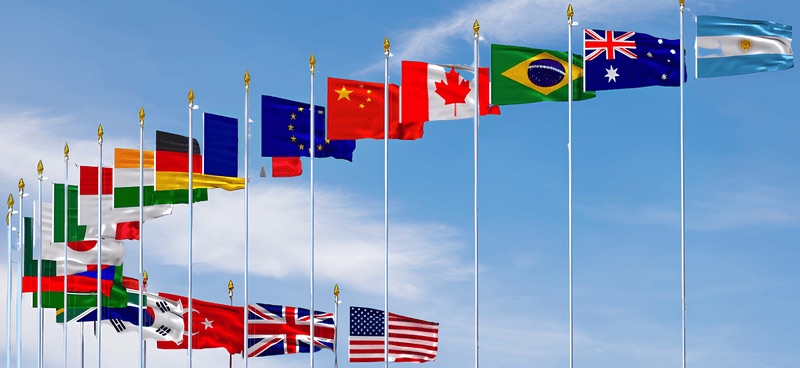
Multilateralism, and not multipolarity, has drawn global acceptance by major and minor players in world politics aimed at achieving solidarity amid schism. It is not an embodiment of push overs from overnight platforms to create a sphere of powers that multipolarity is deemed of, but as the United Nations puts in one word — it stands for “many-sided” or compound prisms.

In Chinese zodiac sign, 2026 is the year of the fire horse, bringing bold, enthusiastic energy, innovation, and quick opportunities; while globally, it is also the U.N.-designated International Year of the Woman Farmer, focusing on gender equality in agriculture. The pantone color of the year for 2026 is associated with “cloud dancer” and symbolizes a serene white. These volatile outlooks are contemplated as China itself will play a key role in defense and diplomacy in succeeding decades.
However, world politics will carry heavy cudgel as the world transitions to overwhelming “Trumpnado,” the AI bubble alongside massive infrastructure investments, and rise of dual-agonist slimming injections and pills to calm obese global population. The year 2026 will certainly shake up global leadership tables beginning with the Philippines, as the next Asean chair following a rewarding theme on artificial intelligence and emerging technologies outside the ambit of controversial maritime security. France will unite the G7 members, the United States will roll out its red carpet for the G20, China will lead the economic convergence of APEC, and India will strengthen its non-alignment movement in the BRICS.
As Europe consolidates its position to counter Russian expansionism towards the west, Washington is now prepared to recognize Moscow’s control over Crimea and other occupied Ukrainian territories in order to secure an agreement that will end the long war between Russia and Ukraine. Since the large-scale invasion of Kyiv, the world has witnessed a realignment of alliances, with renewed Anglo-Saxon unity on full display during German President Frank-Walter Steinmeier’s three-day state visit to King Charles III of England, while French politicians witness a continuing “brutalization” of international law and the rules-based order.
On the other hand, U.S. President Donald Trump declared to successfully have ended eight wars in his eight-month-old presidency in 2025 despite the on-going tariff war with Beijing and the done deal on rare earth minerals between the two fat economies of the world. Trump’s greatest feat saw the termination of the two-year conflict between Israel and Hamas. He was also instrumental in the peace pacts between Israel and Iran, Pakistan and India, Rwanda and the Democratic Republic of Congo, Thailand and Cambodia, Armenia and Azerbaijan, Egypt and Ethiopia, and Serbia and Kosovo.
Failure to receive the Nobel Peace prize, he was instead awarded the inaugural FIFA Peace prize, a spectacle to set matchups for the quadrennial World Cup fit for a Trumpian flair, as the U.S. will co-host the biggest sporting event with North American neighbors in Canada and Mexico next year. Trump’s indicative dominance this year will resurface in 2026 as the world reconfigures the apex of multilateralism if it works for the betterment of the fading world order, and if minilateralism will overshadow the gaslighting of imminent proponents of multipolarity from China, India, and Russia to create a new world order.
The showdown of multilateral initiatives among like-minded countries will find truce in 2026 as a favorable year for power competition bounded by global issues on disinformation, foreign interference to national sovereignty, strategic autonomy, and the rise of the Indo-Pacific region. A new form of multilateralism will thrive next year, not through the return of old structures, but through a reformed, networked, and pragmatic approach that adapts to the turbulent current world order that needs daunting change challenged by climate change and digital governance.
For instance, the United Nations Headquarters in New York will also revitalize commitments and strengthen the disarmament architecture of active state parties that will pave a way for the 2026 Review Conference of the Parties to the Treaty on Non-Proliferation of Nuclear Weapons (NPT) to be chaired by Vietnam. They will examine the operation of the Treaty and ensure its effective implementation across three pillars on nuclear disarmament, nuclear non-proliferation, and peaceful uses of nuclear energy. It will also provide a forum to discuss new developments on the impact of innovative technologies, nuclear security threats, and free zones on nuclear weapons.
Instead of broad and sweeping consensus, multilateral efforts must focus on specific and issue-based agreements. For instance, a Pact of the Future can lay down global digital compact, and potential new multilateral green trade pacts, energy transitions, the relevance of regionalism, newer causes of terrorism, anticipatory governance, and the rise of younger generations from Gen Z to Alpha generation — the destiny of multilateralism moves beyond state-centric institutions to actively embrace the potential contributions of civil society, city networks, the private sector, and non-state influencers. This “networked multilateralism” is more grounded in local politics and realities and can be more effective at catalyzing global change.
Institutions must remain relevant and adapt to becoming more agile, efficient, and outcome oriented. It involves future-proof operating models, using advanced technology for decision-making and strategy building, and breaking down silos towards collective transparency to solve real-world problems. The existential nature of threats from pandemics to security issues necessitates global cooperation. The shared realization that these problems cannot be solved unilaterally but multilaterally will present alternative options as a powerful incentive for smaller-medium-larger nations to work together.
Author: Dr. Chester Cabalza – Founding President of the Manila-based think tank International Development and Security Cooperation (IDSC).
(The views expressed in this article belong to the author and do not necessarily reflect the views of World Geostrategic Insights).