



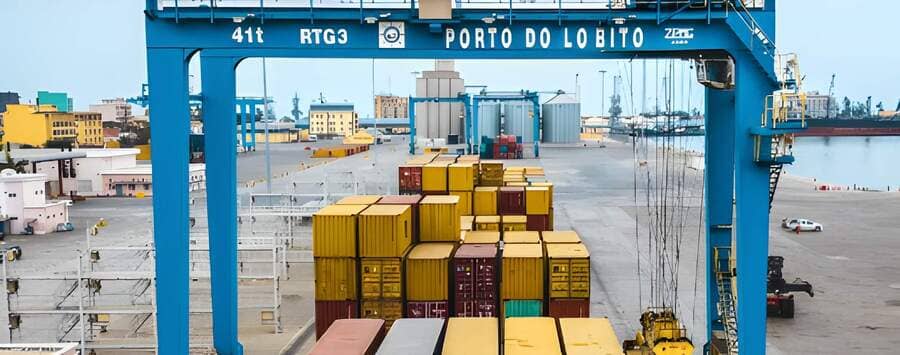
Word Geostrategic Insights interview with Manuel Da Cruz on cohesive operational systems aimed to streamline global trade, and enhancing operational efficiency for SMEs.
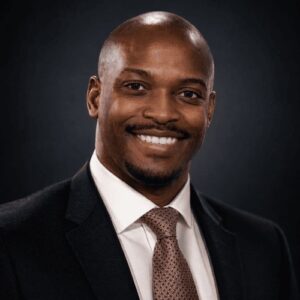
Manuel Da Cruz is the CEO of the FACTO Chamber of Commerce. Based in Houston, Texas, Manuel is a trade corridor strategist, digital transformation consultant, and entrepreneur focused on creating infrastructure and innovations that connect people, businesses, and demand within a unified system.
Q1 – The FACTO Chamber of Commerce is an organization that combines physical and digital infrastructure to facilitate global trade. How does it differ from traditional chambers of commerce?
A1 – Most traditional chambers operate primarily as networking or advocacy organizations. They create visibility, introductions, and business representation, which is important, but they usually stop before execution.
What we are building with the FACTO Chamber is different because we treat trade as an operational system, not just a relationship ecosystem.
We combine physical infrastructure, digital infrastructure, execution systems, and commercial coordination into one integrated framework.
That means we are not only helping businesses meet each other, we are helping reduce the friction that prevents transactions, projects, and cross-border activity from actually materializing.
In many markets, especially emerging or transitional ones, the issue is rarely a lack of opportunity. The issue is fragmentation between institutions, logistics, capital access, compliance, workforce coordination, payments, communication, and operational follow-through.
FACTO is designed to function more like an execution layer sitting between opportunity and implementation. So the Chamber becomes less of a symbolic organization and more of an operational trade infrastructure platform.
That is why our model combines digital systems, strategic corridors, infrastructure participation, business enablement, and long-term ecosystem development into one coherent structure.
Q2 – The “Execution Gap” in international transactions is often mentioned. How does the FACTO Chamber step in to turn strategic planning into tangible business results for its members?
A2 – The execution gap exists because global business is still extremely disconnected operationally. A company may find a supplier, investor, government partner, or client, but the actual process of moving from conversation to execution becomes fragmented across dozens of systems and intermediaries.
That fragmentation creates delays, uncertainty, compliance issues, trust issues, and ultimately failed opportunities. Our approach is to reduce those gaps through coordination infrastructure.
We focus heavily on workflow alignment, operational visibility, digital coordination, structured introductions, execution support systems, and corridor-level relationships.
In simple terms, we are trying to reduce the distance between “intent” and “implementation.” A lot of organizations focus only on transactions. We focus on transaction environments. That distinction is very important. If the environment itself is inefficient, fragmented, or unstable, even good opportunities struggle to scale consistently.
Q3 – FactoMobile promises to centralize marketplaces, fintech, and networking. In a world saturated with apps, why is the “all-in-one” approach the solution modern businesses need?
A3 – Because businesses are suffering from operational fragmentation. Today, companies are forced to jump between disconnected tools for communication, payments, logistics, networking, workforce coordination, sourcing, and execution management.
The issue is not that businesses lack software. The issue is that the systems do not communicate effectively with each other. Our philosophy is that execution improves when friction decreases. So the “all-in-one” approach is not about trying to become another super app for the sake of scale or hype. It is about creating operational continuity.
Especially in emerging trade environments, fragmented systems create inefficiencies that small and medium-sized businesses cannot absorb easily. When workflows become more centralized, businesses move faster, make decisions faster, coordinate faster, and execute faster. That creates compounding efficiency across the ecosystem.
Q4 – How are artificial intelligence and “AI Agents” within your platform concretely changing the way SMEs negotiate and close deals across borders?
A4 – AI is becoming less of a standalone tool and more of an operational layer. Most SMEs globally still do not have access to institutional-level coordination capacity. Large corporations can afford teams for compliance, sourcing, legal review, trade intelligence, communications, workflow management, and market analysis. Smaller businesses usually cannot.
AI changes that equation. Our view is that AI Agents will increasingly function as digital operational assistants that reduce informational and coordination inefficiencies across cross-border trade.
That can include document preparation, workflow management, market intelligence, communication support, sourcing coordination, language adaptation, compliance assistance, and execution tracking.
The long-term goal is not replacing human relationships. Trade is still deeply relationship-driven. The goal is reducing unnecessary friction around those relationships so businesses can operate with greater speed and clarity.
Q5 – You describe yourself as a “Trade Corridor Strategist.” Can you explain this concept and what operational gap it fills in today’s market?
A5 – Trade corridors are usually viewed only through a logistics lens. I view them more holistically. A corridor is not just a shipping route or a highway. It is an economic system. It includes infrastructure, institutions, energy, digital systems, labor, finance, logistics, regulatory alignment, commercial trust, and long-term geopolitical positioning.
A corridor only functions efficiently when those layers are coordinated together. The operational gap today is that many regions build isolated infrastructure projects without building integrated execution ecosystems around them.
Ports without industrial systems Digital systems without logistics coordination. Capital without execution frameworks. Trade corridor strategy is really about aligning those layers into a coherent economic flow.
That is why our projects connect physical infrastructure, digital infrastructure, business ecosystems, and long-term market access simultaneously.
Q6 – Experts refer to a “fragmented globalization.” How do you address the challenge of creating stable corridors when “geopolitical risk” has become a constant variable rather than an exceptional event?
A6 – I think fragmentation is becoming the new normal. Globalization is not disappearing, but it is reorganizing. Countries and businesses now prioritize resilience, redundancy, strategic positioning, and regional diversification much more heavily than before. That changes how corridors must be designed.
You cannot build corridors assuming a perfectly stable geopolitical environment. You have to build adaptive systems. That means diversification of routes, diversified partnerships, stronger regional integration, digital coordination layers, and flexible operational structures. The future belongs to ecosystems that can absorb shocks while maintaining continuity.
That is one reason we focus heavily on both physical and digital infrastructure simultaneously. Digital coordination becomes increasingly important when geopolitical environments become less predictable.
Q7 – Many companies are moving production closer to end markets (nearshoring) to reduce risks. Does this trend threaten or reinforce the vision of long-distance trade corridors?
A7- I actually think it reinforces them. Nearshoring changes trade architecture, but it does not eliminate global interdependence. Supply chains are becoming more distributed rather than purely centralized. That creates demand for new regional corridors, secondary hubs, and strategic connector markets.
Africa, for example, could benefit significantly from this shift if infrastructure, logistics systems, and execution environments improve. The future may not belong only to mega centralized supply chains.
It may belong to interconnected regional ecosystems linked through strategic corridors. So the opportunity becomes creating systems that connect those ecosystems efficiently.
Q8 – Beyond ports and railways, to what extent do misaligned regulatory and customs barriers today slow the flow of goods along strategic corridors?
A8 – Massively. In many cases, regulatory fragmentation creates more inefficiency than physical infrastructure limitations. A port can be modernized, but if customs systems, payment systems, licensing frameworks, documentation standards, or compliance processes remain disconnected, execution still slows dramatically.
Trade efficiency is not only about moving goods physically. It is also about moving information efficiently. That is why digital coordination infrastructure becomes extremely important. The future competitive advantage for many corridors will not only be physical capacity, but operational synchronization.
Q9 – Are the persistent tensions in the Red Sea altering the structure of the trade corridors managed by FACTO?
A9 – Events like the Red Sea tensions reinforce something we already believed: Global trade systems need diversification and resilience. When one corridor becomes unstable, the entire system feels the pressure.
That creates long-term strategic importance for alternative Atlantic-facing routes, regional marine infrastructure, and diversified logistics ecosystems. Africa’s Atlantic corridor becomes increasingly important within that context. Especially for energy, maritime services, logistics, and south-south trade flows.
So rather than viewing these disruptions only as temporary crises, we analyze how they permanently reshape global trade behavior over time.
Q10 – Given your experience in Texas, Portugal, and Angola, which trade corridors are the most promising today, and what physical or digital infrastructure is still lacking to unlock their full potential?
A10 – I think the Atlantic corridor remains extremely underestimated strategically. The Angola–U.S.–Europe connection has significant long-term potential because it sits at the intersection of energy, logistics, maritime positioning, industrial development, and emerging digital coordination opportunities.
But unlocking that potential requires more than ports alone. It requires integrated execution ecosystems. That includes logistics infrastructure, marine services, digital coordination systems, financing access, customs modernization, workforce enablement, and stronger institutional-commercial alignment. In many emerging markets, the opportunity already exists. The missing layer is coordinated execution infrastructure. That is the gap we are trying to help solve.
Q11 – Can you explain the importance of projects like FACTO Ocean Drive in Luanda and how this type of real estate development fits into the Chamber’s commercial vision?
A11 – Projects like FACTO Ocean Drive are not isolated real estate concepts. They are ecosystem projects. Modern economic development increasingly depends on environments that attract talent, tourism, investment, commerce, and long-term participation simultaneously.
Hospitality, tourism, mixed-use development, marine activity, workforce ecosystems, and business infrastructure all reinforce each other. So we look at development from a systems perspective. If trade corridors grow, urban ecosystems around those corridors also need to evolve. Otherwise infrastructure grows without broader economic activation around it.
Ocean Drive reflects part of that broader philosophy. It is about creating environments that support commercial activity, tourism, connectivity, and long-term ecosystem participation together.
Q12 – What is the ideal profile of a company that should join the FACTO Chamber compared to a standard local chamber of commerce?
A12 – The ideal company is forward-looking, execution-oriented, and internationally minded. Not necessarily large. In fact, many SMEs are positioned extremely well for this next era of trade if they can access better coordination systems and stronger corridor relationships.
The companies that benefit most are usually those looking to expand across borders, enter emerging markets, improve operational efficiency, build strategic partnerships, or participate in larger ecosystem opportunities.
We are particularly focused on businesses that understand that the future of commerce is becoming increasingly interconnected across digital systems, logistics systems, infrastructure systems, and international relationships.
The Chamber is designed for companies that want to participate actively in that future rather than operate inside fragmented legacy structures.
Manuel Da Cruz – CEO of the FACTO Chamber of Commerce, Houston, Texas.