



World Geostrategic Insights interview with Michel Zubenica on the shifting political dynamics, current challenges, future prospects, and economic opportunities in the Balkan region.
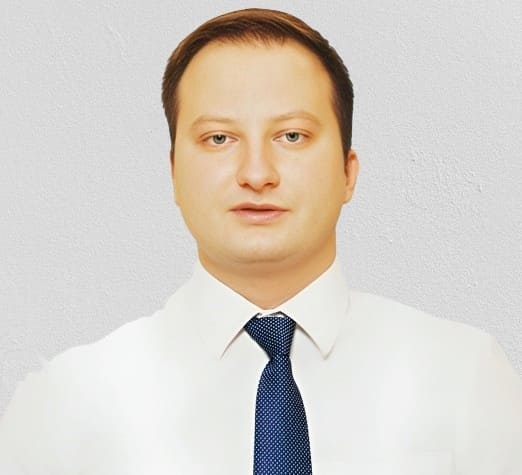
Michel Zubenica is CEO of Winning Strategy, a consulting and political intelligence firm focused on European affairs, geopolitical analysis and strategic communications. He advises companies, investors, and think tanks on political and economic developments across Europe, with a particular focus on the Western Balkans and the evolving geopolitical landscape. His work is centered on strategic forecasting, political risk assessment, election campaigns, and regional policy trends, helping organizations navigate complex political environments and emerging strategic challenges.
Q1 – Your work lies at the intersection of political intelligence and economic decision-making. How does your company, Winning Strategy, support those who wish to operate in the Balkans, a region that is so complex and full of shifting dynamics?
A1 – We provide support primarily through in-depth analyses that enable our clients to gain reliable insights into what is truly happening in this region, which has a very complex history, strong political dynamics, but also exceptional importance due to its geographical location.
Our experience, on-the-ground information, and network of contacts from the Balkans allow our partners to be informed in a timely manner about opportunities in this region and to gain a strategic advantage if they decide to enter this market. We have a deep understanding of who the key players in the Balkans are, how business processes function, and where the opportunities lie. This helps us minimize risk as much as possible for those who want to be present in this region.
Q2 – What is the most complex challenge in translating local political dynamics—which are often opaque and uncertain—into strategic advice for international investors?
A2 – Perhaps the most challenging aspect of forming strategic advice for international investors and stakeholders who want to engage in the Balkans is conveying the local atmosphere and all those societal elements of these countries that cannot be explained through numbers and concrete facts. I believe that informal local factors are extremely important to include in analyses; however, people at the top levels of business and institutions often cannot quickly understand these factors, which is why companies, states, and institutions despite all resources and analyses often make incorrect assessments. That is why in my analyses I often talk about these hidden informal factors that can influence political and business processes, which often gives our partners a decisive advantage.
Q3 – What are the “weak” signals or indicators that are usually overlooked but can drastically change the prospects of an investment?
A3 – For example, the local atmosphere is often overlooked by large investors, even though it can lead to the collapse of multi-million-euro investments. We have many examples of investments that suffer from major strategic communication problems, which in my opinion should be prepared before entering the market, rather than waiting for a crisis situation. There are also changes in influence within networks of local interest groups, which are extremely important to understand in order to respond to any challenge.
Q4 – What is your approach to balancing open-source intelligence (OSINT) with human intelligence and field analysis to provide an accurate risk assessment?
A4 – Although technology has advanced significantly in OSINT, I still prefer and insist on human intelligence and field analysis. Open-source intelligence allows for quick access to relevant data, but I believe it cannot provide the same level of understanding and insight as being physically present on the ground and having relevant actors as your sources.
I believe the human factor in this business is irreplaceable and will become even more important as the world becomes increasingly complex and risks and challenges more sophisticated. On-the-ground presence, deep networks of contacts, and contextual understanding are key for proper in-depth analysis. Of course, the best approach is when you can cover everything and consider every piece of data. Also, everything must be verified, and you should never rely on just one source.
Q5 – Artificial intelligence is changing the way we gather information. What is your view on the impact of AI in the field of geopolitical forecasting?
A5 – AI will change a lot in terms of analytical production, but not as much as is sometimes expected. It should also be taken into account that the most powerful AI tools will be available only to the most important centers of power. In any case, artificial intelligence will bring faster data processing, enable relevant statistics for everyone, and improve efficient information gathering through OSINT, but it still will not be able to cover the human factor and informal channels, which will remain decisive in political and business processes. So AI will be able to cover technical aspects, but it still cannot understand context, human nature, and interpersonal relations, which are crucial for decision-making.
Q6 – Which sectors in the Western Balkans (e.g., energy, infrastructure, IT) offer the safest opportunities for foreign investors seeking to mitigate political risk?
A6 – The Western Balkans has in fact proven in recent years to be a very attractive investment destination across many sectors. When you speak with German or Italian entrepreneurs who have already invested in this region, the vast majority of them have only positive experiences and would invest again. The Western Balkans offers a good geographical location, skilled and hardworking labor at lower costs than Western Europe, favorable trade arrangements, and cheaper resources such as electricity and energy. Because of all these factors, the Western Balkans, especially Serbia, has become highly attractive for German and Italian manufacturing industries, particularly in the automotive sector.
The IT sector has experienced a huge boom; for example, one of Microsoft’s key development centers in Europe is located in Belgrade. On the other hand, Montenegro and Albania are becoming increasingly recognized tourist destinations, accompanied by major infrastructure development. People in the Balkans are very ambitious and open to the world, which is why all relevant players want to be present there.
Having traveled extensively in Europe, I can freely say that in many cases administration and digitalization are even more efficient and advanced in Western Balkan countries than in Western Europe, although many people do not believe this until they see it themselves. Therefore, the Western Balkans is overall becoming an increasingly desirable business location, and investments in renewable energy, IT, industrial production, as well as real estate, can be an extremely smart move.
Q7 – The year 2030 is considered a realistic, albeit ambitious, target for the Western Balkan countries’ accession to the European Union. How real is the risk that this deadline will become yet another “postponed promise”?
A7 – There are several risks for such a scenario, but they are two-sided. On the one hand, there is a justified concern that the governments of the Western Balkan countries will not carry out the necessary reforms on time, that certain political issues will remain unresolved, and certainly the problem of a very high level of corruption and organized crime, which is a chronic issue across the entire region.
However, on the other hand, it is an open secret that many structures within Western European states do not genuinely want to see EU enlargement to the Western Balkans in the near future, considering it would be an additional burden at a time of economic instability. There is also the danger of influence from third actors, which could actually be strengthened if the European Union does not seriously approach the integration of this region.
Q8 – The Western Balkans region is undergoing a phase of growing instability, characterized by inter-ethnic conflicts, crises in Bosnia and Herzegovina, tensions between Serbia and Kosovo, political scandals, institutional uncertainties, energy nationalism, internal corruption, and external interference. Are these the reasons holding back EU accession, or is there rather a lack of political will in Brussels?
A8 – Everything you mentioned in the question exists. As I stated in the previous answer, responsibility lies on both sides. On the one hand, the governments of the Western Balkans are not doing their homework, which is not simple during the EU integration process, while on the other hand the EU is quite passive and does not use enough of its leverage.
Sometimes I really get the impression that political elites both in the Balkans and in Brussels and some other European capitals are comfortable with this status quo and therefore continuously postpone long-term solutions. There are of course also certain behind-the-scenes relations that are not well known, but in the end, this situation mostly affects the citizens of these countries, who feel betrayed and disappointed. I believe this issue must be addressed much more seriously, especially considering the current geopolitical circumstances.
Q9 – What internal reforms do you consider absolutely essential for the countries of the Balkan region, beyond diplomatic rhetoric?
A9 – Establishing full rule of law must be the priority and main task. I often say that for these countries it is more important to establish European standards than to formally join the EU, because there is always the option of formal accession without real implementation of European standards. A high level of corruption and organized crime is a common problem across all Western Balkan countries; unfortunately, Balkan political elites are largely the source of such conditions.
Inter-ethnic conflicts, tensions between neighbors, and high nationalism often serve as a mask for corruption and the exploitation of these states by domestic elites who cooperate behind closed doors while using propaganda to incite hatred between peoples. If institutions were strengthened and the rule of law reinforced, I believe these problems would largely be resolved.
Q10 – Can tensions in the Balkans be seen as a microcosm of the broader dynamics of confrontation between Russia and the West?
A10 – They can, although these tensions are often oversimplified through global geopolitical relations. The peoples of the Balkans have a turbulent history often marked by bloody wars and atrocities that remain in the collective memory. Unfortunately, these emotions, fears, and uncertainties are often exploited by both domestic elites and external powers. It is very easy to provoke problems in a region with so many small nations that are almost identical in mentality but divided along political and religious lines.
After Russia’s attack on Ukraine, the Balkans unfortunately became an even more sensitive region, as many assessments suggest that it could be the next area where Russia and the West might confront each other through proxy actors. The risk still exists, but I believe Russian influence is declining in this region; however, the presence of other powers such as China and Turkey is increasing.
Q11 – Serbia has often been viewed as a potential “bridge” between East and West. What is your opinion?
A11 – That is indeed the case, and I believe it already is such a bridge, the question is whether it will remain so. Serbia’s role as a bridge between East and West is evident in many examples, such as free trade agreements Serbia simultaneously has with the EU, CEFTA, EFTA, the Eurasian Economic Union, China, Turkey, and the UAE. It is truly difficult to find another country in the world that has such an advantage of freely trading with all currently competing major powers.
At the same time, Serbia is fully integrated into the European economy; investments from Germany, Italy, and France are dominant, but Serbia has still not imposed sanctions on the Russian Federation and continues to receive cheap energy from that country. In addition, rising global powers such as China see Serbia as a key gateway to Central and Western Europe and therefore invest billions in Serbian infrastructure.
There are also increasingly strong relations with Israel, as well as with Turkey and the UAE. Former Yugoslavia, where Serbia was the largest republic, played a mediating role during the Cold War as one of the leaders of the Non-Aligned Movement. Today’s Serbia does not have that capacity, but its position still facilitates contacts between global actors and ensures the presence of all major powers on its territory.
Q12 – China has invested heavily in the region’s critical infrastructure. What risks does this economic dependence pose to the sovereignty of individual Balkan states?
A12 – The risk is enormous, as we have already seen in the case of Montenegro, which at one point fell into a Chinese debt trap due to a highway construction contract that severely endangered state finances. Brussels helped Montenegro exit that situation. China has a long-term strategy, while Balkan political elites often use cooperation with China for short-term interests. I believe a “red light” will eventually be triggered in the West, because China could, through investments in critical infrastructure, place this strategic region under its dominance.
I think this alarm will be raised sooner in Washington than in Brussels, as the current US administration considers such a high level of Chinese influence in the Balkans unacceptable, especially given the global competition between the two powers. There have already been serious warnings from the United States, but Chinese influence, especially in Serbia, has already taken deep root.
Q13 – If we were to look at the Balkans five years from now, do you see a region more integrated into the Western bloc or a mosaic of “buffer states” influenced by competing external powers?
A13 – I believe the Western Balkan countries will not be in the same position in five years. The situation is such that each country in the region must be monitored and analyzed separately. I believe only Montenegro currently has realistic chances of becoming a full EU member within the next five years, as it has progressed furthest in reforms and, as a small coastal state, would be acceptable to all member states.
Albania and Kosovo will be a US stronghold in the Balkans and also serve as intermediaries between Israel and Turkey, whose influence in this area is rapidly growing. Serbia will try to continue balancing and cooperating with all sides, while North Macedonia will unfortunately remain burdened by complicated relations with its neighbors.
Bosnia and Herzegovina could make a step toward the West, but not through EU membership, rather through NATO membership. I believe this country is the most likely future member of the military alliance. However, at the same time, Bosnia and Herzegovina will remain the most fragile country, with unresolved internal relations that will either lead to reforms strengthening internal unity or to a potential disintegration of the state.
Michel Zubenica – CEO of Winning Strategy
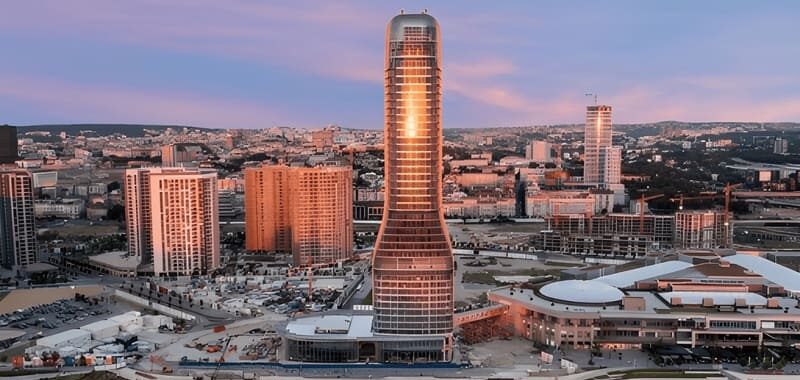
Image Souce: ATI Project (Belgrade Waterfront – Kula)