



World Geostrategic Insights interview with Yasir Masood on the dynamics that are redefining Pakistan’s international role, current strategic positioning in global diplomacy, and future as an influential player in a multipolar world.

Dr. Yasir Masood is a Pakistani political and security analyst, academic, and broadcast journalist specializing in strategic communication. He holds a PhD in International Relations with a focus on conflict transformation in Balochistan and an MSc from Kingston University, London. His research covers South Asian geopolitics, Pakistan’s foreign policy, U.S.–Pakistan relations, and the China–Pakistan Economic Corridor (CPEC). His commentary and analysis have appeared in South Asian Voices (Stimson Center), TRT World, South China Morning Post, Dawn, The Express Tribune, and The Diplomat. He has taught at the National Defense University and Quaid-i-Azam University in Islamabad and has served as Director of Media and Publications at the Center of Excellence for CPEC, as well as Consultant for Communication and Media at UNESCO (Islamabad). His study, Media Warfare: Comparative Perspectives on U.S.–China Relations, has been accepted for a visiting affiliation at the University at Albany, SUNY (2025–2026).
Q1 – Which recent diplomatic developments are most decisive in reshaping Pakistan’s international profile over the past two years?
A1 – Let me begin with a proposition that may sound counterintuitive. In my assessment, the most decisive diplomatic development reshaping Pakistan’s international profile over the past two years has not been a treaty, summit, or memorandum, but the gradual erosion of a decades-old narrative that viewed Pakistan primarily through a security lens and the emergence of a more complex image of Pakistan as a state capable of calibrated engagement, restraint under pressure, and selective diplomatic facilitation in regional crises.
The real momentum was reinforced by the May 2025 confrontation with India, which altered external perceptions of Pakistan’s deterrent credibility and its ability to absorb pressure without strategic collapse. What mattered was not triumphalism, but the fact that Pakistan demonstrated political resolve, operational discipline, and strategic restraint under fire. In that sense, Pakistan’s image began shifting from reactive containment to a posture more closely associated with responsible state behavior under stress. That was an important diplomatic turning point because it showed that Pakistan could remain composed under extraordinary pressure while preserving its strategic and moral standing.
For much of the post-Cold War order, Pakistan was viewed through a narrow security framework, often interpreted primarily through instability-centric narratives rather than its full diplomatic and geopolitical complexity. This framing became entrenched over time through prevailing international perceptions, regional rivalries, and selective amplification of security-related developments. The significance of recent diplomacy is that this narrative has begun to lose its monopoly over how Pakistan is interpreted in international discourse.
As I argued in my recent analysis, Is Pakistan West Asia’s Emerging Swing State?, what has emerged instead is a gradual but notable recognition of Pakistan’s ability to engage simultaneously with competing actors, maintain dialogue where others cannot, and contribute to de-escalation during periods of regional turbulence.
The culmination of this diplomatic trajectory was the gradual institutionalization of a structured U.S.–Iran negotiation framework in mid-June 2026, widely referred to in reporting as the “Islamabad Memorandum of Understanding.” Pakistan’s role was primarily facilitative, built on sustained backchannel diplomacy and shuttle engagement throughout early 2026. These efforts included enabling early indirect contacts and contributing to the first face-to-face engagement between American and Iranian representatives in April 2026 in Islamabad, alongside other regional interlocutors. The subsequent talks transitioned into a more formalized negotiating format in Switzerland in June 2026, where Pakistan continues to play a coordinating and mediating role. However, the implementation of any prospective commitments remains contested amid continuing regional instability linked to the Israel–Lebanon escalation and its spillover effects on maritime security in the Gulf.
The deal has been welcomed by world leaders across the globe. Russian President Vladimir Putin praised the agreement, noting that stabilizing the Middle East would benefit global energy markets. China called it a “positive step” for de-escalation. The G7 welcomed it as a “historic opportunity”. French President Emmanuel Macron said it “paves the way for lasting peace”. UN Secretary-General António Guterres called the accord “a major step towards ending the conflict” and specifically thanked Pakistan. The recognition has gone further. Former Italian Prime Minister Paolo Gentiloni explicitly stated that “Pakistan should be given the Nobel Peace Prize” for its role. Similarly, Scott Ritter, a former UN weapons inspector and U.S. Marine Corps intelligence officer, speaking on Pakistani media, Express 24/7, stated that “if there ever was somebody who deserved the Nobel Peace Prize, the Pakistani leadership that has played this very essential role deserves this.” He described Pakistan as “the only game in town” capable of moving the crisis toward resolution.
That is the level of recognition we are talking about. This is not hyperbole. This is the international community recognizing Pakistan’s “finest hour.” This is also consistent with the argument I advanced in Could CPEC Become South Asia’s Peace Corridor? for The Diplomat, where the central proposition is that sustainable influence increasingly derives from connectivity, interdependence, and the creation of incentives for stability rather than confrontation alone.
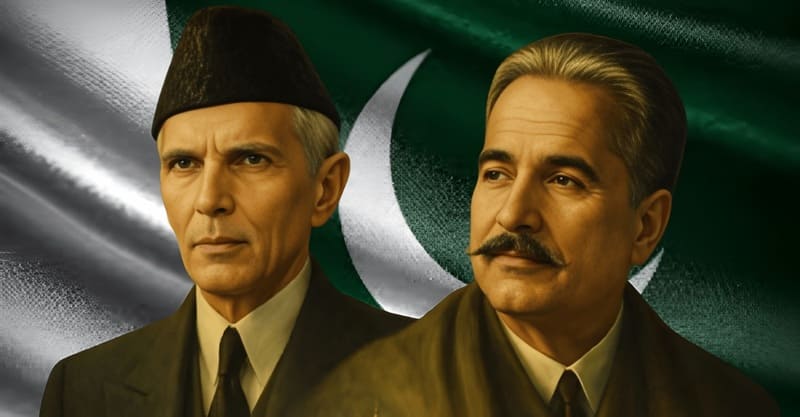
What we are witnessing today is the international community beginning to see a Pakistan closer to the vision articulated by the founder, Muhammad Ali Jinnah. When he described Pakistan as “the pivot of the world, placed on the frontier on which the future of geopolitics of the world revolves,” he was describing not merely geography but a strategic role — a nation that shapes the architecture of regional peace rather than simply reacting to it. This is also the deeper lesson I drew from my analysis of the Athens conference, where I noted that retrospection, in search of order, meaning, and coexistence, can meaningfully shape today’s world, and that in that process lies “the deeper metaphor of PEACE the world needs more than ever before.”
This diplomatic trajectory is not merely a shift in perception; it is a structural repositioning that has already begun to reshape how Pakistan engages with the region and the world.
Q2 – How has Pakistan shifted from a security-driven foreign policy to a geoeconomic one centered on trade, connectivity, and investment?
A2 – Let me start with a point that is often misunderstood. In my assessment, the shift toward geoeconomics is not a strategic doctrine that policymakers in Islamabad suddenly decided to implement. It is a structural adaptation to prolonged macroeconomic constraint. That distinction matters because it reveals both the drivers and the fragility of the transition.
For decades, Pakistan remained trapped within geostrategic and geopolitical compulsions. From Cold War alignments to the Afghan jihad to the post-9/11 front-line role, its security landscape was defined by recurring crisis cycles. This left limited space for sustained economic consolidation, while several smaller Asian economies moved ahead by embedding themselves in global production and trade networks.
It was actually the China-Pakistan Economic Corridor (CPEC) that first created the enabling conditions for geoeconomic thinking in Pakistan. As detailed in one of my pieces for the Express Tribune, under CPEC, Pakistan began shifting from “Geo-Strategy” to “Geoeconomics.” The infrastructure and energy projects of Phase-I provided physical connectivity, but more importantly, CPEC demonstrated Pakistan’s capacity to attract long-term strategic investment at scale. The formal crystallization of this shift came with Pakistan’s first National Security Policy (2022–2026), which explicitly prioritized geoeconomics over geopolitics. The policy positioned Pakistan as a potential “melting pot of global economic interests” and emphasized economic resilience, trade integration, and connectivity as central to national security. Its “no-rigid-bloc” approach broadened foreign policy beyond an India-centric framework to West Asia, Central Asia, Africa, and both the Global North and South.
However, this shift was not born in abstraction. As I argued in a 2020 analysis of The CPEC narrative, Pakistan’s trajectory has long reflected the condition of a “global pivot state” exposed to hybrid warfare, economic pressure, and diplomatic contestation. CPEC itself became a focal point of these competing pressures, and Pakistan’s ability to sustain and defend it reflected a degree of resilience in its strategic communication and external positioning.
Pakistan’s geoeconomic transition broadly mirrors middle-power experiences, in which economic depth eventually becomes the basis for strategic autonomy. Turkey expanded regional influence through trade and industrial capacity. Indonesia leveraged scale and connectivity to enhance diplomatic flexibility. Vietnam embedded itself in global supply chains while maintaining strategic balance. Pakistan is attempting a similar transition, but from a weaker macroeconomic base, making coherence and institutional alignment far more critical than mere rhetoric.
Yet the transition remains uneven. Pakistan is attempting to reposition itself as a hub for Gulf investment, critical minerals, digital infrastructure, renewable energy, and regional transit trade. The Special Investment Facilitation Council reflects a serious attempt to streamline decision-making and attract external capital. But institutional fragmentation remains a central constraint, particularly the lack of synchronization between economic planning, foreign policy, and security imperatives.
This fragmentation is not abstract. During my PhD research on Balochistan, I have highlighted how decades of inequitable resource extraction and governance failure have deepened structural imbalance. Local elites, corporate actors, and state institutions often capture resource rents, while communities remain excluded. This same pattern of elite capture and fragmented governance, scaled nationally, directly undermines the credibility and effectiveness of Pakistan’s geoeconomic pivot.
What emerges is a dual-track external policy structure: geoeconomic ambition layered over persistent security primacy. This creates friction. It creates uncertainty for investors and undermines the signaling needed for sustained economic diplomacy.
Consider Pakistan’s ambition to become a transit corridor linking Central Asia to Arabian Sea ports. Strategically coherent, but operationally fragile. Any escalation along the Afghan frontier or instability near the Iranian border immediately affects investor confidence, insurance premiums, and commercial viability. In that sense, geoeconomics cannot replace security management; it is structurally dependent on it.
Beyond structural constraints, Pakistan also faces a deeper institutional challenge. It requires reforms that go beyond leadership cycles and political turnover, toward an institutional framework capable of delivering tangible economic benefits to its population of over 250 million. Without improvements in taxation, governance, education, healthcare, and social protection, the geoeconomic transition risks remaining an elite-managed narrative rather than a mass economic transformation.
Ultimately, the central question is whether Pakistan can move from a rent-dependent geopolitical model, where geography generates external inflows, to a value-creating geoeconomic model grounded in productivity, connectivity, and sustained investment. The answer to that question will define not only its foreign policy trajectory, but its structural position in the international system over the next decade.
Q3 – Is Pakistan a swing state or a bridge state in the emerging multipolar order?
A3 – I am not convinced that the term “swing state” adequately captures Pakistan’s reality. Swing-state logic assumes discretionary alignment choices. It assumes the ability to move between competing poles primarily based on preference and interest. Pakistan does not enjoy that degree of flexibility.
We operate under structural constraints: IMF conditionalities, Chinese financial commitments, Gulf remittance dependencies, India-centric deterrence imperatives, and continuing instability spillovers from West Asia and Afghanistan. These are not policy choices; they are strategic realities.
At the same time, recent diplomatic developments show that Pakistan has exercised agency within these constraints. But the constraints themselves remain the defining feature of its strategic position. That is why I prefer the term “constrained bridge state.” Pakistan operates under competing external pressures that limit freedom of alignment, even as it retains selective diplomatic maneuverability.
Historically, bridge states derive value from enabling exchanges that others cannot easily replicate. But today, geography alone no longer guarantees relevance; connectivity has become a competitive advantage. States must build institutional capacity to convert geography into durable influence. For Pakistan, this means moving beyond crisis-driven relevance to sustained institutional depth.
Pakistan sits at the intersection of overlapping systems: the U.S.-linked financial architecture, Chinese infrastructure and strategic investment networks, Gulf capital flows, South Asian security competition, and West Asian instability spillovers.
Pakistan has long pursued a “no-camp politics” approach, maintaining functional engagement across rival strategic blocs without formal alignment. This is not passive neutrality; it is an active effort to preserve diplomatic space in a fragmenting international system. Geography creates opportunity, but institutions determine whether opportunity becomes influence. That distinction will decide whether Pakistan evolves into a genuine bridge state or remains a transit space shaped by others’ priorities.
The emerging risk is what I have called the “swing-state trap”: Pakistan becomes indispensable to all sides without becoming decisive to any. It is consulted, but not shaping outcomes; included, but not structuring the system.
What the current environment therefore requires is a different kind of statecraft. Pakistan can no longer rely on crisis-driven relevance. That demands internal coherence, regulatory credibility, and policy continuity.
Ultimately, the question is not whether Pakistan is a swing state or a bridge state. The real question is whether it can transform from a structurally constrained connector into a strategically enabling node in a fragmented multipolar order. That will determine whether geography remains Pakistan’s limitation, or becomes its leverage.
Q4 – How should we understand the recent convergence between Washington and Islamabad?
A4 – Let me be direct, but also precise. In my assessment, the U.S.–Pakistan convergence is tactical, not strategic. It is driven by crisis necessity, not institutional depth. But that does not make it insignificant. It means we must understand both its utility and its limits.
I documented the foundational moment of this convergence in my June 2025 WGI interview, Recalibrating US-Pakistan Ties in Regional and Global Upheaval. The June 18, 2025, White House meeting between President Trump and Field Marshal Syed Asim Munir was a landmark, the first time a sitting U.S. president hosted Pakistan’s army chief alone for a two-hour one-on-one meeting. The real pivot was economic, reframing Pakistan as a growth market and stability partner rather than only a defense ally. What has followed since then broadly confirms that assessment: the relationship has expanded in scope, but it has not transitioned into structural alignment. It remains crisis-responsive, even if diplomatically more sophisticated than in previous cycles. The key analytical point is that expanded engagement should not be misread as institutional consolidation.
At the same time, the broader U.S. strategic environment is shifting in ways that further reinforce this tactical framing. As I argued in my May 2026 analysis, Can Washington Adapt to a Multi-Vector World Order?, the global order is moving away from rigid alliance blocs toward a “multi-vector” diplomatic approach based on transactional and issue-based alignments rather than fixed geopolitical architectures. The June 2026 decision to revert U.S. Indo-Pacific Command to its previous designation, Pacific Command, reflects a re-centering of U.S. strategic emphasis away from the framework that had rhetorically elevated India as a core reference point. In parallel, the relative deprioritization of rigid multilateral constructs such as the QUAD signals a wider shift toward overlapping issue-based coalitions.
For Pakistan, this means the convergence with Washington is best understood as a pragmatic response to a more fluid strategic environment, not as a strategic realignment. The Abraham Accords debate has reinforced the boundaries of this convergence. Pakistan’s consistent position, reaffirmed across its political and diplomatic leadership in 2026, underscores continuity in its Middle East policy and reflects the limits of transactional expectations in U.S. diplomacy.
Structurally, the drivers of U.S. engagement remain largely unchanged. The post-Afghanistan security environment continues to require selective counterterrorism coordination and border stabilization. Regional crisis cycles have increased the value of interlocutors capable of communicating across adversarial blocs. In parallel, U.S. economic and strategic diversification has encouraged limited re-engagement with secondary regional partners, including Pakistan.
Crucially, Washington’s long-term relationship with India remains important, but the broader strategic environment is more fragmented than the assumptions that originally underpinned the Indo-Pacific framework. Historically, U.S.–Pakistan relations have moved in cycles: Cold War alignment, post-9/11 cooperation, and now tactical convergence. Each phase has been shaped less by institutional continuity and more by external shocks. The present phase is unlikely to break that pattern. It is sectoral in nature, focusing on counterterrorism, selective investment, technology cooperation, climate resilience, and maritime security.
The analytical caution, therefore, is straightforward. Pakistan should engage this convergence fully, but it should not misread episodic diplomatic utility as a long-term structural realignment. That distinction is essential for avoiding strategic overextension while preserving diplomatic flexibility in an increasingly fragmented order.
Q5 – Has China’s support strengthened Pakistan’s autonomy or increased dependency?
A5 – The honest answer is both. And we need to be precise about what that means in practice.
On one level, Chinese investment has given Pakistan breathing room. When Western financial institutions tighten access, Beijing provides alternatives. CPEC, despite its challenges, has built infrastructure that would not otherwise exist and expanded Pakistan’s diplomatic optionality. It has reduced vulnerability to Western financial pressure in specific domains. That is autonomy.
The most visible examples include energy generation projects that helped address chronic electricity shortages, transport infrastructure connecting previously underdeveloped regions, and the gradual expansion of Gwadar’s logistical potential along the Arabian Sea. Yet the broader significance of CPEC was never purely economic. It demonstrated that Pakistan could attract long-term strategic investment at a scale capable of reshaping external perceptions of its geopolitical value. The challenge today is ensuring that CPEC Phase II, focused on industrialization, technology transfer, and joint ventures, translates into productive economic activity, export capacity, and employment rather than remaining infrastructure-heavy. This is also a strategic question because economic stability is now directly linked to Pakistan’s external bargaining position.
But autonomy should not be confused with independence. Pakistan is now structurally dependent on Chinese liquidity, infrastructure systems, and strategic coordination in ways that were not true a decade ago. Debt servicing constraints are real. Policy alignment pressures exist in sensitive sectors. Integration in areas such as energy, telecommunications, logistics, and digital infrastructure creates dependencies that are not easily reversible.
In analytical terms, Pakistan’s autonomy is best understood not as independence from major powers, but as the capacity to manage and diversify external dependence. This is less rhetorically satisfying, but more accurate.
A useful illustration of this dynamic is the March 2026 engagement between Chinese Foreign Minister Wang Yi and Pakistani Deputy Prime Minister Ishaq Dar in Beijing. The meeting included coordination on broader regional stability discussions, including the evolving U.S.-Iran crisis. Wang Yi described Pakistan as an “honest interlocutor,” reflecting a role that extends beyond infrastructure cooperation into selective strategic coordination. I explored this dimension in my April 2026 CGTN analysis, Can Pakistan and China Calm the Chaos in West Asia?
The wider geopolitical environment reinforces this duality. The intensifying U.S.-China rivalry continues to shape the strategic space available to middle powers such as Pakistan. For Islamabad, great-power competition creates both opportunities and constraints. It can generate diplomatic relevance, but it can also narrow strategic maneuvering room.
As I argued in my Al Jazeera analysis during the Trump-Xi summit in Beijing, Pakistan increasingly finds itself in a diplomatic position in which multiple major actors view it as a useful interlocutor rather than solely through a security lens. That emerging diplomatic space is valuable, but it remains contingent on Pakistan’s ability to maintain productive relations across competing power centers.
Historically, Pakistan has experienced similar cycles. During the Cold War, alignment with the United States brought security assistance but also dependency on external military and financial support. When that relationship weakened in the 1990s, the costs of overconcentration became visible. The structural lesson remains unchanged: reliance on any single external partner reduces strategic flexibility over time.
Within this context, China provides both insulation and exposure. It insulates Pakistan from certain external pressures, but it also embeds Pakistan more deeply into a single external ecosystem. Recent developments also show that the relationship is not one of passive dependency. Pakistan has, at times, leveraged its ties with China to expand its diplomatic reach, including through coordination on regional de-escalation efforts. This reflects limited but real agency within the partnership.
As I noted in my analysis of Pakistan’s balancing role, Pakistan and China also enjoy a long-standing defense partnership. During the May 2025 India-Pakistan confrontation, Chinese-origin military systems were tested under real operational conditions, attracting significant international attention. The episode reinforced perceptions of deepening defense cooperation between Beijing and Islamabad while simultaneously highlighting Pakistan’s growing importance within broader Global South security conversations.
Ultimately, the question is not whether we should engage China. The question is whether we are building the institutional and economic capacity to absorb the asymmetries that come with that engagement. On that front, I am not confident we are doing enough.
Q6 – How should Pakistan manage its Afghanistan policy amid persistent instability?
A6 – Let me start with a basic observation that is often avoided. Pakistan’s central challenge is not how to manage Afghanistan; it is how to prevent Afghanistan’s instability from continuously reshaping Pakistan’s own security environment.
The Durand Line is therefore not merely a border issue. It is the primary interface through which regional instability enters Pakistan’s domestic security landscape, shaped by militant mobility, informal economies, tribal linkages, and governance deficits on both sides. Treating Afghanistan only as a border-management problem inevitably leads to policy failure because the underlying challenge is structural and regional.
Recent years have demonstrated the limits of purely kinetic approaches. Military operations can suppress immediate threats and disrupt networks, but they cannot address deeper drivers of instability such as governance collapse, radicalization, and transnational financing structures. The resurgence of the TTP, alongside ISIS-K activity and cross-border militancy, should be understood as symptoms of a wider regional disorder rather than isolated incidents. As I have argued in my analysis of the Jaffar Express ambush, Afghanistan now functions as a transnational terrorism node linking groups such as Al Qaeda and ISIS-K with regional spillovers. In June 2026 alone, TTP militants killed six paramilitary personnel and abducted eight others in northwestern Pakistan on June 9, and two roadside bombs in Bannu in the Khyber Pakhtunkhwa province killed at least seven people on June 20, underscoring how quickly Afghan instability spills across the border.
The scale of the threat remains severe, even if precise militant totals vary across assessments. Reuters reported in March 2026 that UN-linked humanitarian agencies aimed to assist 17.5 million Afghans that year, with the appeal only 10% funded, and the UN Security Council extended UNAMA in June 2026 amid continuing concerns about Afghanistan’s security and humanitarian crisis. The point is not a single number; it is the persistence of a regional disorder that combines militancy, displacement, and state weakness.
Pakistan has repeatedly pressed the Taliban to take verifiable action against militant groups operating from Afghan soil, while Kabul denies providing sanctuary to such actors. That mutual distrust now shapes the policy space on both sides, making it harder to convert temporary de-escalation into durable stability.
The June 10 Pakistani airstrikes in Kunar, Khost, and Paktika further showed how quickly the conflict can escalate. The Afghan Taliban said the strikes killed at least 13 people, while Pakistan denied hitting civilians and said it had targeted militant infrastructure. The same week, both sides continued exchanging accusations over cross-border strikes, further reinforcing the fragility of the current equilibrium.
In this context, Afghanistan has effectively become a hub of regional instability. If left unmanaged, its spillover effects extend beyond Pakistan to Central Asia, Iran, China’s western periphery, and wider Eurasian security calculations. It is therefore no longer a bilateral issue but a regional security concern.
Despite Pakistan repeatedly pressing the Taliban for “visible and verifiable actions” against militant groups, and participating in multiple rounds of talks facilitated by international partners, including 18 rounds of failed negotiations in locations such as Doha, Istanbul, Riyadh, and Urumqi, the process has yielded no tangible results. Defence Minister Khawaja Asif has publicly acknowledged that “all efforts” to resolve these disputes have failed, as the Taliban has refused to provide written guarantees that Afghan territory will not be used for attacks against Pakistan. The failure of these multiple negotiation tracks, despite China’s active mediation efforts in Urumqi, represents a critical turning point. The Taliban’s refusal to provide formal written guarantees has led Pakistan to conclude that dialogue alone cannot resolve the crisis. This reality is further underscored by the scale of the threat: Asif noted that more than 4,300 Pakistani military personnel and civilians have been killed since the Taliban’s return to power in 2022.
Pakistan therefore needs a strategy that operates on multiple levels. Immediate security threats require calibrated containment and intelligence-based counterterrorism. Diplomatic engagement with Kabul must continue, not as endorsement, but as necessity imposed by geography.
Beyond security lies the economic dimension. Historically, Afghanistan has been more stable when integrated into regional trade and transit networks. A stable Afghanistan would unlock connectivity between South Asia, Central Asia, and West Asia. An unstable Afghanistan, by contrast, risks becoming a permanent spoiler in Eurasian connectivity ambitions. But current disruptions already make the opposite point: instability raises the costs of trade, transit, and regional integration.
Ultimately, Pakistan cannot disengage from Afghanistan. The question is whether it can shape a regional framework that reduces instability rather than merely managing its consequences. The limitation is clear: Taliban tolerance of anti-Pakistan militant groups constrains diplomacy, making calibrated containment necessary alongside engagement. Force alone will not resolve the problem, nor will diplomacy alone suffice. What is required is a sustained strategy that combines deterrence, regional diplomacy, and economic integration incentives to make stability the more rational choice for all actors involved.
Q7 – Can Pakistan realistically pursue rapprochement with India?
A7 – Let me be direct. Full normalization between Pakistan and India is not realistic under current conditions. The structural obstacles remain deeply embedded. Territorial disputes remain unresolved. Security dilemmas remain entrenched. Political incentives often reward confrontation more than compromise. Most importantly, the strategic environment has deteriorated rather than improved in recent years.
Pakistan’s objective should therefore not be reconciliation for its own sake. It should be strategic stability. These are fundamentally different concepts. Reconciliation requires political transformation on both sides. Strategic stability requires preventing rivalry from escalating into conflict. The latter is difficult but achievable. The former remains distant under present conditions.
This assessment must be understood within the context of developments since 2019. From Islamabad’s perspective, the constitutional changes in Jammu and Kashmir, the continued securitization of the dispute, and the broader rise of Hindutva-oriented political discourse, including narratives associated with civilizational or “Greater India” thinking, have narrowed the political space for meaningful rapprochement.
As I noted in my analysis for South Asian Voices (Stimson Center), India’s current leadership has maintained a “stern, cynical stance” toward Pakistan, plagued by a “lack of critical communication”. Critics increasingly argue that majoritarian nationalism, together with the treatment of religious minorities, reflects patterns that resemble other ethnonationalist projects elsewhere. Whether one accepts this interpretation or not, it has become an important component of Pakistan’s threat assessment and has contributed to skepticism about the prospects for durable normalization. If such trends continue, peace is likely to remain aspirational rather than transformative.
It is also important to situate this within the longer history of limited engagement between the two states. Even at moments when dialogue mechanisms existed, including composite dialogue frameworks and episodic confidence-building measures (CBMs), progress remained vulnerable to crisis shocks. This history matters because it demonstrates that institutional mechanisms have often interrupted crises without transforming the underlying structure of hostility.
The May 2025 crisis and Operation Sindhoor reinforced this reality. From Pakistan’s perspective, India ultimately had to seek President Trump’s intervention to halt the fighting, underscoring both the importance of Washington’s role and the continuing contest over how the episode is understood. The crisis also demonstrated that existing bilateral mechanisms were insufficient to prevent escalation, reinforcing the need for robust crisis-management frameworks.
The question, therefore, is not whether Pakistan and India can become partners. The more relevant question is whether they can prevent persistent competition from producing recurring crises. On that issue, both sides have a compelling interest in restraint.
A useful historical analogy is the Cold War. The United States and the Soviet Union never reconciled ideologically, yet both gradually developed crisis-management mechanisms because they recognized that unmanaged confrontation carried unacceptable risks. Today, the most realistic objective is managed competition. This framework preserves military communication channels, crisis de-escalation mechanisms, and backchannel diplomacy, while exploring limited confidence-building measures in carefully selected non-sensitive sectors. This is not a strategy of resignation; it is a strategy of survival until more favorable political conditions emerge.
At the same time, the regional security environment has become considerably more complex than in previous decades. As I argued in Drones, Diplomacy and Deterrence: How India’s Israel Ties Are Changing Indo-Pakistan Dynamics for WGI, India’s defense, doctrinal, and ideological alignment with Israel, as reflected in precision-strike investments, hybrid warfare tactics, and strategic signaling, poses a unique challenge to Pakistan. Precision-strike capabilities, integrated surveillance systems, drone warfare platforms, cyber capabilities, and networked intelligence architectures have expanded the scope of competition beyond traditional military deterrence. Recent large-scale defense agreements between India and Israel further illustrate the depth and trajectory of this cooperation.
This is no longer a classical deterrence equation. It is a multi-domain competition spanning kinetic, cyber, informational, and technological spaces. The May 2025 escalation demonstrated this clearly, as narrative warfare, satellite imagery claims, artificial intelligence-generated content, and social media amplification became integral components of operational signaling. Conflicts are now increasingly fought in perception space as well as on the battlefield.
Pakistan’s security establishment also remains concerned about the continued use of Afghan territory by anti-Pakistan militant groups. These concerns, together with broader questions regarding regional intelligence competition and cross-border militancy, further complicate efforts to build strategic trust. Regardless of competing narratives, the persistence of such perceptions continues to shape national security calculations and reinforces the wider trust deficit.
Meanwhile, the costs of unmanaged rivalry continue to accumulate. Climate stress across the Indus basin is intensifying. Water insecurity is becoming more pronounced. Economic opportunities for regional integration remain unrealized. Connectivity potential remains structurally constrained. Resources that could be directed toward development are instead absorbed by enduring security competition.
Pakistan, meanwhile, has increasingly sought to expand its diplomatic options through regional connectivity initiatives and diversified partnerships. This broader diplomatic expansion has also provided a degree of strategic hedging that reduces Pakistan’s vulnerability to a single adversarial relationship with India.
The same logic of managed competition that now governs great-power relations, where even strategic rivals like the United States and China maintain crisis-management mechanisms, also applies to South Asia. The challenge is not to eliminate competition, but to prevent competition from becoming permanently destabilizing.
The alternative, persistent hostility without a credible escalation-control architecture, is not a strategy. It is a gamble. And for two nuclear-armed states facing demographic pressure, economic stress, environmental vulnerability, and recurring crisis cycles, it is a gamble neither can afford.
Concluding Remarks
Pakistan’s strategic position is shaped less by isolated events than by a wider transition in the regional and global order. What is unfolding is a shift from military competition to connectivity competition, from alliance-based politics to issue-based coalitions, and from territorial influence to infrastructural and networked forms of power.
In that environment, geography remains important, but it is no longer self-sufficient. The decisive variable is institutional capacity: the ability to convert location into connectivity, connectivity into economic leverage, and external engagement into sustained national capability. Whether Pakistan emerges as an active node in global systems or remains a passive corridor will depend on that transformation.
Jinnah’s idea was never about automatic destiny; it was about conditional possibility. Dr. Muhammad Allama Iqbal’s concept of Khudi (selfhood) reinforces the same logic: autonomy is not inherited from geography or alignment but built through discipline, agency, and collective effort.
The strategic question facing Pakistan, therefore, is not where it is located, but what it can do with that location. In an increasingly fragmented world, influence will belong to states that can translate position into capability and opportunity into lasting national strength.
Dr. Yasir Masood – Pakistani political and security analyst, academic, and broadcast journalist specializing in strategic communication.