



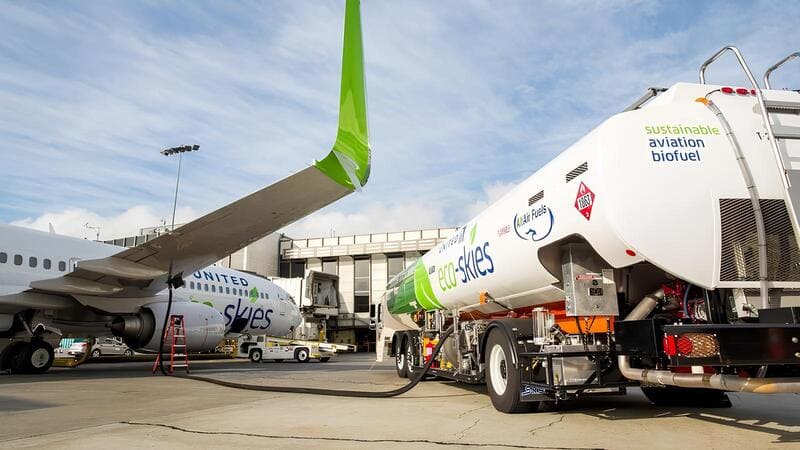
Biofuels refer broadly to solid, liquid, or gaseous fuels composed of or converted from biomass. They represent an important resource for the development and use of renewable energy, have good storability and transportability, and provide liquid fuels that can replace petroleum. In a narrower sense, biofuels refer only to liquid fuels, mainly including ethanol, biodiesel, and aviation biofuels.

In the context of transforming the global energy structure and responding to climate change, biofuels, as a key component of renewable energy, demonstrate irreplaceable strategic value. Statistics show that global biofuel production reached 823 million barrels in 2023, with an annual increase of 8.01%. North America, Brazil, and Europe hold the highest market share of biofuels, accounting for 86% of the market.
With the growing global demand for renewable energy and increasing environmental awareness, biodiesel has attracted considerable attention as a green and renewable alternative fuel. Biodiesel production also uses used cooking oil (“waste oil”) and oily residues from the fat industry as raw materials, ensuring a large and stable supply.
Bioethanol is obtained from the fermentation of plant sugars, mainly using starchy plants as raw materials. The United States, Brazil, India, the European Union, and the People’s Republic of China are the world’s top five producers of bioethanol.
With the continuous development of new technologies, biofuels such as biodiesel, bioethanol, and aviation biofuel have successfully entered the commercialization phase, marking significant progress in the field of renewable energy. To meet the growing demand for biofuels, the development of efficient, environmentally friendly, and low-cost production technologies based on diversified raw materials has become crucial to driving the development of this industry.
Despite significant advances in biofuel production technology, cost remains a key factor hindering its large-scale adoption. Currently, biofuel production costs are relatively high, and their price competitiveness with fossil fuels still needs improvement. To reduce costs, governments and companies around the world are increasing investment in research and development to promote technological progress and large-scale production. At the same time, governments are providing policy support to reduce production costs and improve the market competitiveness of biofuels.
Creating a more comprehensive market for emissions trading is also an important way to reduce costs. Quantifying and valuing the low-carbon benefits of biofuels can incentivize industry to use them, further promoting their development. At the same time, the key to the development of biofuels lies in achieving sustainable energy regeneration and promoting their large-scale application through technological innovations and cost reductions. With continuous technological advances and ongoing policy support, the biofuel industry will usher in broader development prospects, contributing significantly to the energy transition and sustainable development.
Many companies use a combination of documentary research, quantitative surveys, and qualitative analysis to comprehensively and objectively analyze the overall market capacity, industrial chain, operational characteristics, profitability, and business models of the biofuel industry.
They scientifically use research methods such as the SCP (Structure-Conduct-Performance model), which analyzes how the structure of the industry influences the conduct and performance of a company and identifies the factors that enable a company to achieve above-average profits, SWOT analysis (Strengths and Weaknesses and external Opportunities and Threats) helps a company to capitalize on its strengths, address its weaknesses, exploit opportunities, and mitigate threats, PEST analysis (Political, Economic, Social, and Technological), includes external forces that may impact a company’s strategy and identifies opportunities and threats in the external environment), regression analysis (a statistical method for understanding the relationship between a dependent variable and one or more independent variables, and SPACE matrix (a strategic management tool used to assess a company’s competitive position and determine an appropriate strategy). In such a way, relevant factors are studied comprehensively, including the market context of the biofuel industry, industrial policies, the competitive landscape, technological innovation, market risks, barriers, opportunities, and challenges in the sector.
Based on the development trend and practical experience of the biofuel industry, research papers are being prepared on the monitoring and direction of investments in the biofuel industry development landscape for the period from 2025 to 2031, providing an important reference for investment decisions, strategic planning, and industry research for enterprises, research institutes, and other organizations.
The global biofuel market is expected to grow and diversify by 2026, driven by efforts to reduce carbon emissions and build more sustainable energy systems. However, growth will be uneven, depending on regional policies, infrastructure, and economic factors.
The European Union, the United States, the Asia-Pacific region, and Latin America, particularly Brazil, are likely to see large-scale use of biofuels. This is possible thanks to their advanced biofuel markets, supportive policies, and subsidies. In addition, concerns about biofuel fraud could lead to stricter EU regulations in 2026.
However, in Africa, parts of the Asia-Pacific region, and other developing economies, biofuel growth has been slow due to limited infrastructure, less political support, and higher costs. Despite this, some countries are making significant progress through specialized hybrid programs.
According to a report by SGS Inspire (the world’s largest digital repository of information on conventional, alternative, and new fuels, as well as vehicles, engines, and powertrain emissions), biofuels will continue to be part of efforts to reduce fuel import costs in the Asia-Pacific region. Previously, China’s PR mainly exported biodiesel to the international market, but in 2024, following European anti-dumping policies, the Chinese government began working with local companies and agencies to promote the use of biodiesel in road vehicles and domestic maritime sectors.
Dumping is the practice of selling a product in a foreign market at a price lower than the domestic market price or below the cost of production; this practice is often used to gain market share, but is considered an unfair trade practice that can harm the domestic industries of the importing country. In Indonesia, there are plans to increase the biodiesel blend in regular diesel to B40 starting in January and to introduce a 5% renewable diesel blend in premium diesel. In addition, there is a proposal to implement a 50% palm oil biodiesel blend (B50) from 2025 onwards, given the need for testing and capacity building.
The Malaysian government plans to distribute B20 biodiesel blends (20% biodiesel and 80% fossil diesel) throughout the country. However, it is currently only available in specific areas, including Langkawi and Sarawak. The Malaysian government may introduce B30 biodiesel blends in the second half of 2025, depending on the availability of biodiesel. India may slightly miss its target of blending 20% ethanol by the end of 2025, thanks to the introduction of ethanol-100 and flex-fuel vehicles. In the Philippines, with E20 available on the market, demand for biodiesel is expected to increase to B4 in the fourth quarter. Thailand plans to phase out conventional E10, focusing on E20 and B7 as its main biofuel grades.
Demand for advanced biofuels in Europe has been growing since 2018 and will continue to grow due to the demand for transport biofuels. Advanced biofuel production in the EU is expected to increase, driven by the transposition of the Renewable Energy Directive III (RED III) into national laws by 2025, the implementation of the Sustainable Aviation Fuel (SAF) mandate, and greenhouse gas intensity reduction targets for the maritime sector. On January 1, 2025, the UK began implementing the SAF mandate, with several projects receiving government funding to promote domestic SAF production.
The implementation of the EU Biofuels Database, launched in 2024 to combat certification fraud, may be postponed to January 1, 2026, due to technical issues following requests from 16 EU member states, including France, Germany, Italy, and Spain, to delay its implementation. SGS Inspire predicts that, although the initial impact of the UDB on the market may be limited, in the long term it could increase market transparency and help stabilize raw material prices by eliminating counterfeit supplies.
The US Environmental Protection Agency set targets for renewable fuel production in 2025, demonstrating its support for stable biofuel policies. These targets set minimum levels for blending renewable fuels, such as ethanol and biodiesel, into the national fuel supply and ensure predictable demand for biofuels. Renewable diesel production capacity in the United States is expected to continue to increase, albeit at a slower pace than in recent years. In addition, there is steady growth in the US fuel ethanol sector, driven by potential annual sales of E15 (15% ethanol and 85% gasoline), national energy policies, and strong export demand from Canada, the United Kingdom, and India.
SGS Inspire also expects political and regulatory uncertainties to impact the trajectory of the biofuel sector. Potential policy changes, resulting from shifting federal funding priorities by the new US administration, could weaken the renewable fuel mandate and reduce incentives for clean energy. In Canada, the biofuel sector is expected to grow steadily from 2025, driven by supportive policies such as the Clean Fuel Regulation and increased provincial requirements for renewable fuel blending. Demand for ethanol is expected to increase in Ontario and Quebec, as the two provinces plan to increase blending requirements to E11 and E12, respectively. This change could lead to an increase in ethanol imports from the United States to Canada.
In Latin America, first-generation biofuels will continue to dominate market share in the short to medium term, while fuel quality specifications and vehicle exhaust emission standards will gradually become more stringent. In 2025, Brazil increased its biodiesel blending ratio to 15%, while sugarcane and soybean oil will maintain their dominant position as feedstocks for ethanol and biodiesel production, respectively. Colombia will reintroduce the requirement to blend 10% biodiesel into fossil diesel by 2025. In Paraguay, fuel ethanol production reached 680 million liters, an increase of 6% compared to 2024, while domestic consumption is expected to grow by 9%, reaching 430 million liters.
In Africa, demand for biofuels will depend on mandatory national biofuel requirements. The example of Uganda illustrates the conflict between politics and the market. Since 2018, Uganda’s Biofuels Act has promoted the use of biofuels in transport, but it has not been implemented due to insufficient domestic ethanol production. In 2020, Uganda again attempted to further promote the use of biofuels through the Biofuels Act of 2020, but the implementation date was postponed to July 2022 and then to July 2024. As of July 2024, the regulation requiring gasoline to contain 1% ethanol has not been implemented and is expected to be postponed until ethanol supply is sufficient to meet local demand.
Similarly, the Republic of South Africa is considering incentives to promote biofuel production, with the aim of making ethanol and biodiesel regulations mandatory. Regulations were introduced in 2015 but have not yet been implemented due to supply constraints.
Different market research companies provide slightly different figures for global biofuel sales in 2024, with estimates ranging from $109.08 billion to $167.4 billion, based on different market definitions and reporting methods, according to reports by Grand View Research and Cognitive Market Research.
The ten largest bioenergy companies in the world: 1. Archer Daniels Midland Company (United States, founded in 1902); 2. Petrobras (Brazil, founded in 1953); 3. Valero Energy Corp. (United States, founded in 1980); 4. Chevron (United States, founded in 1879); 5. Bunge North America (United States, founded in 1884); 6. Shell (United Kingdom, founded in 1907); 7. Cosan S.A. (Brazil, founded in 1936); 8. Green Plains Inc. (United States, founded in 2004);9. POET LLC (United States, founded in 1987);10. Drax Group PLC (United Kingdom, founded in 2005)
The ten largest biofuel producers in the world in 2024 (figures are shown in barrels of oil equivalent [159 liters = 140 kg] per day (BOE): 1. United States 856,000; 2. Brazil 510,000; 3. Indonesia 205,000; 4. PR China 106,000; 5. India 70,000; 6. Germany 66,000; 7. Thailand 39,000; 8. Netherlands 39,000; 9. Canada 33,000; 10. Argentina 31,000; Italy ranks 13th with 20,000.
The ten largest consumers of biofuels in the world in 2022 (in BOE per day): 1. United States of America 1,131,523; 2. Brazil 591,539; 3. Indonesia 178,822; 4. India 91,719; 5. PR China 78,097; 6. France 76,883; 7. Canada 72,414; 8. Germany 69,511; 9. Thailand 48,081; 10. United Kingdom 45,463.
Author: Giancarlo Elia Valori – Honorable de l’Académie des Sciences de l’Institut de France, Honorary Professor at the Peking University. Giancarlo Elia Valori is a highly regarded Italian manager, playing a leading role in fostering dialogue and cooperation between countries. He is currently President of the Foundation for International Studies and Geopolitics.
(The opinions expressed in this article are solely those of the author and do not necessarily reflect the views of World Geostrategic Insights).
Note: This article, like all articles published on World Geostrategic Insights, cannot be republished without the written permission of the editor of World Geostrategic Insights.
Image Source: UkrAgroConsult.