



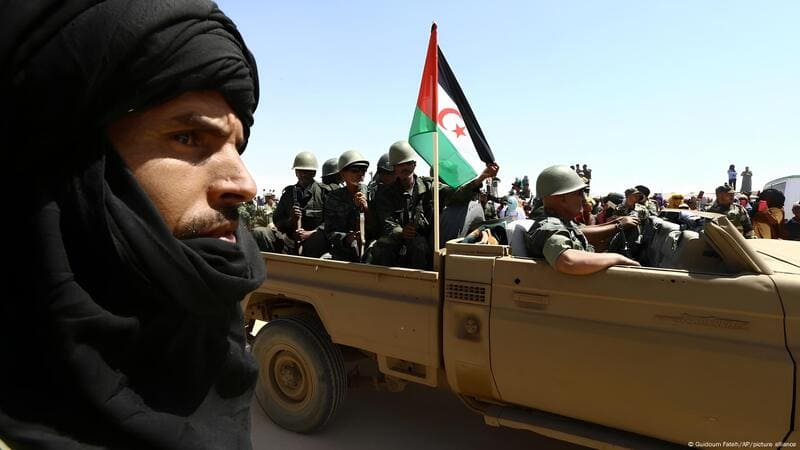
The convergence of Iranian proxy expansion, jihadist consolidation across the Sahel and Sahara, and an intensifying American counterterrorism focus has rendered continued tolerance of the Polisario Front strategically untenable.

This moment reflects not only the maturation of long-ignored security threats, but also active U.S. diplomatic efforts to reshape North Africa through stabilization, integration, and conflict resolution. As Washington works to prevent Sahelian terror corridors from reaching the Atlantic and seeks to anchor a durable settlement in Moroccan Sahara around Morocco’s autonomy plan, armed actors embedded in jihadist networks and foreign proxy strategies now obstruct American objectives directly.
Senator Ted Cruz’s initiative to designate the Polisario Front as a foreign terrorist organization emerges from this strategic environment, where diplomacy, counterterrorism, and regional integration now operate as a single, interdependent agenda, and where unresolved conflicts have become platforms for transnational violence. It is a counterpart to Rep. Joe Wilson’s proposed bipartisan House bill.
The Polisario Front formed in 1973 with the declared purpose of ending Spanish colonial rule in Western Sahara and establishing an independent Sahrawi state. Its founders portrayed the movement as a broad national liberation organization seeking self-determination for a colonized population. In practice, however, a narrow oligarchic structure dominated the organization from its inception. Approximately six interconnected families concentrated political and military authority in their hands, deriving power not from popular consent but from control over arms, patronage networks, and foreign sponsorship. Algeria cultivated and protected this leadership cadre from the outset, viewing Polisario as a strategic instrument to weaken Morocco and assert regional primacy.
Polisario leaders used the language of liberation to mask an exclusionary system that aligned naturally with Cold War proxy politics, presenting themselves internationally as representative while suppressing internal pluralism and civilian governance. Although the movement framed armed struggle as a temporary necessity, it never created mechanisms for political inclusion or democratic transition, revealing that it never intended to evolve into a representative political entity after colonial withdrawal.
Cold War dynamics reinforced and institutionalized this structure. As Spain withdrew following Morocco’s peaceful Green March, Algeria integrated Polisario into a wider geopolitical contest, positioning it within the Soviet aligned bloc in North Africa. Soviet and Cuban governments provided political backing, military training, intelligence support, and diplomatic cover, transforming Polisario into a durable proxy force rather than a transitional liberation movement. Cuban military advisers trained Polisario cadres in revolutionary discipline, ideological conformity, and permanent mobilization, while Soviet doctrine supplied the strategic framework for proxy warfare against Western aligned states. These training pipelines embedded habits of dependency, confrontation, and militarized governance that persisted long after the Cold War ended. Early leaders enforced violence as the organization’s primary mechanism of relevance, while Algerian sponsorship ensured that Polisario remained accountable to external patrons rather than to the Sahrawi population.
This alignment developed in deliberate opposition to Morocco’s long-standing partnership with the United States. Morocco consistently aligned itself with Washington, a relationship that predates modern geopolitics and forms part of the foundation of American foreign relations. Morocco became the first country to recognize U.S. independence, establishing a precedent of strategic alignment that endured through centuries of upheaval. During the Cold War, Rabat resisted Soviet penetration and cooperated closely with the United States on security and intelligence matters. Polisario’s sponsorship and ideological framing therefore aimed not only to contest territorial claims, but to weaken a pro-U.S. partner and introduce a hostile proxy presence along the Atlantic flank.
Under the decades-long leadership of Mohamed Abdelaziz, Polisario entrenched itself as a Marxist, anti-capitalist permanently militarized organization and ruled through security organs rather than civilian institutions, leaving few options for broader social participation by the youth, who eventually started to defect to Morocco. The 1991 ceasefire froze this structure in place rather than dismantling it. Polisario commanders kept armed units intact, preserved command hierarchies, and redirected organizational energy toward consolidating control over the Tindouf camps in southwestern Algeria, where even 50 years after said events Sahrawis continue to reside as permanent refugees. Polisario authorities transformed these camps into closed political environments. They restricted movement, suppressed dissent, and enforced loyalty through coercion. Camp administrators denied families the ability to travel freely, seek independent employment, or participate in pluralistic political activity. They raised children within militarized educational systems that glorified armed struggle and framed grievance as identity. Polisario officials diverted humanitarian aid systematically, as per OLAF report, reselling supplies and channeling resources into patronage networks that sustained elite control. Through these actions, the leadership built a political economy that depended on permanent displacement, dependency, and isolation.
Polisario’s operational conduct exhibited terrorist characteristics well before the emergence of modern jihadist networks in the Sahel. Throughout the 1970s and 1980s, the group attacked Moroccan civilian targets, including fishermen operating in Atlantic waters, commercial transport routes, and noncombatant infrastructure. Polisario planners selected these targets to instill fear, disrupt economic life, and attract international attention through civilian harm. These operations affected maritime commerce, regional trade, and coastal security, directly implicating broader international interests tied to Atlantic shipping lanes and energy routes central to U.S. strategic calculations.
As security conditions across the Sahel deteriorated in the 2000s and 2010s, Polisario integrated itself into an expanding militant ecosystem. Smuggling corridors linking Moroccan Sahara to Mali, Niger, and southern Algeria enabled militant and criminal convergence. Former Polisario fighters moved into Al Qaeda affiliated groups operating in northern Mali, carrying with them weapons training, organizational discipline, and recruitment networks cultivated inside the camps. Adnan Abu Walid al Sahrawi, labeled as a Specially Designated Global Terrorist by the US State Department and eventually eliminated by the French troops, exemplified this trajectory. Raised within the Polisario environment, he later assumed leadership of the Islamic State in the Greater Sahara. Under his command, ISIS aligned forces carried out mass casualty attacks against civilians, local security forces, and Western aligned missions in areas where U.S. forces, diplomats, contractors, and partner militaries operated. His organization ambushed units in zones hosting U.S. advisory missions, degrading operations, forcing repositioning, and eroding American counterterrorism reach across parts of the Sahel.
Criminal activity reinforced this convergence. Polisario embedded itself in narcotics trafficking routes that moved cocaine and hashish across the Sahara toward European markets. These routes generated revenue that sustained terrorist groups operating near U.S. partner forces and intelligence assets. Gold smuggling networks provided additional funding for weapons purchases and militant logistics, strengthening organizations responsible for attacks on installations and convoys supporting U.S. led counterterrorism efforts. These illicit economies weakened regional governance, undermined border security, and sustained extremist organizations hostile to American interests.
Iran deepened and transformed this threat environment by relying on a model of proxy warfare that merges military assistance with covert intelligence operations conducted under diplomatic cover. Tehran identified Polisario as a permissive and deniable proxy capable of extending Iranian influence into North Africa and toward the Atlantic and activated Islamic Revolutionary Guard Corps networks to manage that relationship indirectly. Through Hezbollah intermediaries, Iran trained Polisario fighters in asymmetric warfare, explosives handling, intelligence tradecraft, and tunnel construction. Hezbollah operatives visited Polisario leadership and worked in and around the Tindouf camps, transferring operational doctrine developed in Lebanon and Syria. Polisario engineers replicated Hezbollah-style tunnel systems designed to conceal fighters, store weapons, and survive surveillance, signaling an intent to embed long-term proxy capacity rather than provide episodic assistance.
This Iranian involvement became explicit in 2018, when Morocco severed diplomatic relations with Iran after determining that Tehran had used its embassy in Algiers as a conduit for Hezbollah support to Polisario. Moroccan authorities identified the now-former Iranian presidential adviser and diplomat Amir Mousavi as a central coordinator of these activities, operating as a liaison between IRGC networks, Hezbollah trainers, and Polisario leadership. Mousavi later emerged as Iran’s ambassador to Iraq, underscoring how Tehran rotates operatives between diplomatic posts while preserving their role within the same proxy management system.
The Mousavi case fits a broader and well-documented Iranian pattern of deploying IRGC and intelligence personnel under diplomatic status to facilitate terrorist activity abroad. European security services dismantled this model publicly when Assadollah Assadi, an Iranian diplomat based in Vienna, was arrested and later convicted for coordinating a planned mass-casualty attack in Europe, using diplomatic immunity and embassy infrastructure to move explosives and manage operatives across borders. He was eventually exchanged for a Belgian humanitarian worker. Similar exposure occurred in the Balkans, where Albanian authorities expelled Iranian diplomats, including Gholamhossein Mohammadnia, sanctioned and wanted by the US for his links to the abduction and disappearance of the FBI Special Agent Robert A. Levinson, after uncovering Iranian intelligence coordination of terrorist cells targeting dissidents on Albanian soil. German security services and courts likewise disrupted Iranian intelligence networks operating through diplomatic and cultural cover, reinforcing a consistent pattern in which Iranian embassies serve as operational hubs for surveillance, recruitment, logistics, and attack planning. When viewed through this lens, Polisario’s relationship with Iran does not represent an anomaly but an extension of a global Iranian doctrine that merges diplomacy, intelligence, and terrorism into a single instrument of state power.
The strategic logic behind confronting Polisario also intersects directly with the Trump administration’s renewed posture toward Cuba. Washington has moved aggressively to end the longstanding tolerance of the Cuban dictatorship’s role as an exporter of revolutionary doctrine, intelligence facilitation, and proxy training abroad. This shift matters for North Africa because Polisario’s organizational DNA, command culture, and political discipline trace directly to Cuban and Soviet revolutionary models. Cuban advisers did not merely train Polisario fighters decades ago; they helped institutionalize a system of permanent mobilization, ideological rigidity, and proxy dependence that survives today under new sponsorship from Iran. By dismantling Havana’s external influence networks and rolling back Cuba’s permissive role in global proxy ecosystems, the Trump administration has signaled that Cold War-era militant structures will no longer receive indulgence simply because they cloak themselves in outdated liberation rhetoric. Polisario’s continued reliance on these legacy frameworks places it squarely within the category of armed movements Washington now seeks to neutralize rather than accommodate.
At the same time, the administration has elevated the resolution of the Morocco–Algeria dispute from a secondary diplomatic issue to a core pillar of its North Africa strategy. U.S. policymakers have treated normalization between Rabat and Algiers as essential to closing the security vacuum that allows jihadist networks, Iranian proxies, and criminal syndicates to operate across borders with impunity. Quiet but sustained American engagement has focused on confidence-building measures, economic connectivity, and regional security coordination, with the explicit objective of removing the Moroccan Sahara conflict as a perpetual source of instability. This effort reflects a recognition that as long as the dispute remains unresolved, armed spoilers like Polisario retain leverage, relevance, and external sponsorship. A durable peace between Morocco and Algeria would sever that leverage and dramatically reduce the space available for proxy warfare in North Africa.
Within this diplomatic framework, Morocco’s autonomy plan has emerged as the central, internationally supported mechanism for resolution. The plan has secured growing and explicit backing at the United Nations as the most realistic, credible, and stabilizing basis for ending the dispute. Rather than pursuing maximalist outcomes detached from governance realities, the autonomy proposal offers local self-administration under Moroccan sovereignty, political participation, economic development, and security integration. Washington has treated this support not as symbolic diplomacy but as a practical foundation for regional stabilization, trade expansion, and counterterrorism coordination. The convergence of U.S. diplomacy, UN momentum, and regional buy-in has narrowed the political space for armed rejectionist actors and placed pressure squarely on those who profit from perpetual conflict.
Iranian weapons flows expanded Polisario’s tactical reach. Advanced rockets, improved explosives, and unmanned aerial systems increased strike range and precision beyond traditional guerrilla capabilities. After the ceasefire collapsed, Polisario launched attacks toward Moroccan territory using methods consistent with Iranian proxy doctrine(“forward defense”), applying sustained low-intensity pressure designed to impose political and security costs on a U.S. aligned partner. Iran has used this model across multiple theaters to constrain American influence through chronic instability.
Polisario leaders actively advanced this alignment. Under Brahim Ghali, the organization deepened its relationships with Iranian and Hezbollah networks and expanded coordination with armed actors across the Sahel. Leadership messaging increasingly echoed Iranian proxy narratives, framing armed struggle as part of a broader confrontation with Western influence. Iran’s expanding outreach across Africa reinforced this repositioning, as Tehran sought leverage through militant partnerships, arms transfers, and exploitation of unresolved conflicts.
These developments affected U.S. interests directly and lethally. Former Polisario fighters operating within ISIS and Al Qaeda aligned networks participated in attacks that destabilized regions hosting U.S. counterterrorism missions. Militants abducted Americans and U.S. affiliated contractors in Mali and Niger, including Jeffrey Woodke, while jihadist forces killed U.S. service members Staff Sgt. Bryan Black, Staff Sgt. Jeremiah Johnson, Staff Sgt. Dustin Wright, and Sgt. La David Johnson in Niger. These incidents were not isolated tragedies but indicators of a security environment in which unresolved proxy conflicts generate direct costs for American lives, missions, and credibility.
It is precisely this accumulation of bloodshed, operational disruption, and strategic erosion that has driven a recalibration of U.S. policy toward North Africa. Rather than treating the Moroccan Sahara dispute as a frozen diplomatic file, the Trump administration has integrated it into a broader effort to dismantle permissive environments for terrorism, close proxy corridors, and stabilize the region through enforceable political solutions. American diplomacy has prioritized de-escalation between Morocco and Algeria as a prerequisite for regional integration, trade connectivity, and coordinated counterterrorism action, recognizing that unresolved rivalry creates space for Iranian, jihadist, and criminal exploitation.
This diplomatic architecture requires the neutralization of armed spoilers whose power depends on perpetual instability. Senator Cruz’s legislative proposal fits squarely within this logic. By conditioning terrorist designation on demonstrable changes in behavior, the proposal establishes a coercive mechanism that operates alongside diplomacy. Designation would criminalize material support, restrict access to financial systems, expose facilitators to prosecution, and force allied governments and private actors to reassess engagement. From a legal perspective, the bill directly addresses the hybrid nature of Polisario’s threat by targeting organizations that combine armed violence, criminal financing, and foreign intelligence support conducted under diplomatic cover. From a political perspective, it signals that proxy warfare cloaked in diplomacy will no longer enjoy ambiguity or immunity.
The proposal reframes the Moroccan Sahara issue within a counterterrorism and proxy warfare framework rather than a legacy narrative. It directs attention to operational conduct rather than historical branding. This clarity strengthens U.S. diplomacy by aligning legal instruments with security realities and reinforcing incentives for a settlement grounded in accountability and lawful governance.
The implications extend beyond the immediate dispute. Morocco’s role as a cornerstone of the Abraham Accords and a key U.S. security partner reflects a relationship rooted in centuries of strategic alignment, beginning with its early recognition of American independence and continuing through modern security cooperation. North Africa’s – and especially Morocco’s – importance to global supply chains for phosphates, rare earth elements, and strategic minerals ties regional stability directly to American economic and defense interests. Disrupting militant recruitment pipelines, Iranian proxy penetration, and criminal financing networks strengthens a regional architecture capable of resisting extremist resurgence and hostile foreign influence.
Designating the Polisario Front recognizes that unresolved conflicts evolve when diplomacy shields them from accountability. It strengthens US-Morocco relations at a key moment and undercuts an ally of Russia, China, and Iran. They become platforms for extremism, organized crime, and foreign manipulation. Senator Cruz’s initiative reflects an understanding that effective counterterrorism policy must confront entire threat ecosystems while supporting diplomacy aimed at durable peace. By clarifying legal status during a period of active negotiation and regional realignment, the United States strengthens its ability to protect its interests, support its allies, and shape a more stable North African order.
Author: Irina Tsukerman – National security & human rights lawyer, Fellow at Arabian Peninsula Institute, Fellow at Jerusalem Center for Public Affairs, Board Member at The Washington Outsider Center for Information Warfare. She is President of Scarab Rising, Inc, an advisory company specializing in media, communications, reputational management, & security strategy.
(The opinions expressed in this article belong only to the author and do not necessarily reflect the views of World Geostrategic Insights).
Image Credit: Guidoum Fateh/AP/Picture-alliance