



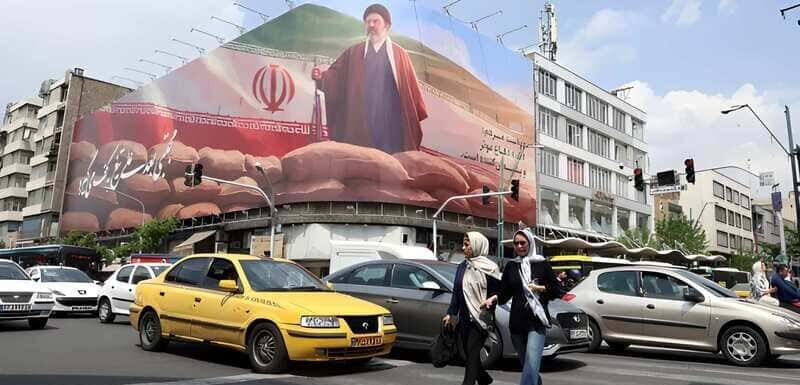
World Geostrategic Insights interview with Reza Khanzadeh on the dynamics characterizing the Iranian educational system, the dichotomy between regime insiders (khodi) and outsiders (ghayre-khodi), the growing disengagement from state ideologies and desire for reform among young Iranians, the factors underpinning the resilience of the Islamic Republic’s power structure, the internal divisions within the Iranian leadership, the rise of the Pasdaran’s (IRGC) economic and military dominance, and the challenges to the traditional authority of the Supreme Leader and clerical institutions.
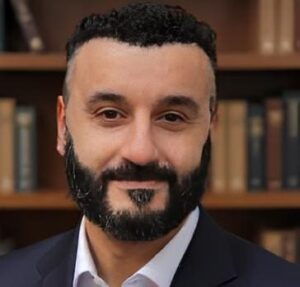
Dr. Reza Khanzadeh is a geopolitical analyst, an expert on the Middle East, and an adjunct professor of Political Science and Religious Studies at George Mason University. He earned his Ph.D. from the University of Oxford and regularly appears as a political commentator on global news networks. Author of the book *Generation Denied: The Broken Promise of Education in Iran*, he is listed in the prestigious biographical directory *Marquis Who’s Who in America* for his contributions to Middle Eastern studies and human rights advocacy.
Q1 – In your book *Generation Denied: The Broken Promise of Education in Iran*, you analyze the youth protest movements in Iran and the mechanisms by which the Islamic Republic of Iran controls the education of the younger generation. How does political orientation end up overshadowing the value of human capital, social capital, and academic merit in the Iranian labor market?
A1 – In Iran, the labor market is not a space where education, skill, and productivity should be rewarded. It is rather a political sorting mechanism. Academic merit matters to an extent, but it is filtered through ideological trustworthiness, regime networks, institutional loyalty, and proximity to the state. This is why a talented graduate with strong human capital may still be blocked from meaningful employment if they are considered disloyal to the regime, while a less qualified person with the right ideological credentials may gain access to public-sector jobs, university posts, state contracts, or security-connected institutions.
In my book, I argue that this creates a profound distortion: education promises upward mobility, and the state repeatedly endorses this only to try to mislead young people into a subordinate life. Thereby allowing the khodi — or the insiders to the regime — to reap the benefits of the job market while the ghayre-khodi — or the outsiders — to continue to struggle. The result is not only economic inefficiency but moral injury. Young people come to understand that their degrees, talents, and aspirations are subordinate to ideological obedience. This weakens trust in institutions, accelerates brain drain, and transforms education from a vehicle of emancipation into a system of controlled selection.
Q2 – The book analyzes how the education system systematically pushes students toward STEM/STEMM (science, engineering, and medicine). Why does the regime consider these disciplines politically “safer” or more docile than the humanities and social sciences?
A2 – The regime’s preference for STEM, medicine, and engineering is not accidental. These fields are seen as useful for state capacity: they produce doctors, engineers, nuclear scientists, cyber specialists, infrastructure experts, and technocrats. They can strengthen the state materially without necessarily encouraging students to question the foundations of political power.
By contrast, the humanities and social sciences ask dangerous questions: What is legitimacy? What is justice? What is citizenship? How does power reproduce itself? Who has the right to rule? Since the early years of the Islamic Republic, universities — especially the social sciences and humanities — have been treated as sites of ideological vulnerability. Scholars have documented repeated efforts to Islamize universities and reshape political science, sociology, and the humanities into “safe” knowledge compatible with authoritarian governance.
So, STEM is not inherently apolitical, but the regime imagines it as more governable. A medical student may become socially critical, of course, but the curriculum itself is less likely than sociology, law, political science, philosophy, or history to generate direct critiques of state ideology. That is why the Islamic Republic tries to produce technically competent but politically obedient citizens.
Q3 – You highlight the deep social divide between insiders (khodi) and outsiders (ghayre-khodi). What are the heaviest psychological and social costs for those young people who consciously choose to remain outsiders rather than bow to ideological conformity?
A3 – The heaviest cost is the internalization of exclusion. Young people who refuse ideological conformity often pay a price long before they are formally punished. They know they may be denied scholarships, jobs, promotions, university opportunities, publication platforms, or public-sector careers. This produces a form of chronic uncertainty: you are educated enough to understand the injustice, but structurally blocked from overcoming it.
Psychologically, this creates anxiety, depression, alienation, self-censorship, and a deep sense of wasted life. Socially, it produces delayed marriage, delayed independence, emigration pressure, fragmented families, and a politics of exhaustion. Many young Iranians are not apathetic; they are strategically silent because the cost of speech is high. The tragedy is that remaining an outsider can become a form of dignity — but dignity without opportunity is painful. These young people refuse to lie, but the system punishes them for telling the truth with their lives.
That is why my book also details the difference between an active ghayre-khodi versus a passive ghayre-khodi in order to distinguish between the moments when an outsider is feeling more self-censored or anxious or unwilling to sacrifice their family’s livelihood.
Q4 – In recent years, the Islamic Republic has demonstrated remarkable political resilience in the face of suffocating sanctions, mass protests, and external military pressure. What are the structural pillars that have ensured the resilience of the Iranian power system?
A4 – The Islamic Republic’s resilience rests on several pillars. First, it has a highly developed coercive apparatus: the IRGC, Basij, intelligence services, judiciary, and cyber-surveillance networks. Second, it has institutional redundancy. Power is not located in one office alone; it is distributed across clerical, military, security, judicial, and economic institutions. Third, it has a patronage economy that rewards loyalty and makes elite defection costly. Fourth, it has mastered crisis management: repression, selective concessions, propaganda, controlled elections, internet disruption, and nationalist framing. I have explained in other interviews that even severe protest cycles have not automatically produced elite fracture, because the state retains coercive capacity and because high-level defections remain limited.
But resilience should not be confused with legitimacy. The system survives not because it has solved its social crisis, but because it has built mechanisms to endure the crisis. Its durability is real, but increasingly brittle. And for the first time in this regime’s existence this system is faced with four very different generations: the baby boomers, generation X, Y, and Z. And generation Z is taking over the protest movements and is very active in wanting regime change therefore the Islamic Republic’s time is numbered unless it is willing to drastically reform how it operates.
Q5 – Historically, external aggression tends to mobilize populations around the national flag out of patriotic spirit. Do you believe this “nationalist mobilization effect” still works today for Tehran, in the face of attacks by the United States and Israel?
A5 – No, I do not believe it works. To a certain extent, external aggression still activates Iranian nationalism, especially when ordinary people perceive attacks as violations of sovereignty rather than attacks on the regime. Many Iranians can oppose the Islamic Republic while also opposing foreign military action against Iran. That distinction is crucial. However, those who do rally around the flag are primarily the khodi while the ghayre-khodi are just waiting for the conflict to be over so they can go back on the streets and protest.
The regime’s ability to convert nationalism into regime loyalty has weakened tremendously – especially with generation Z who increasingly separate Iran from the Islamic Republic. They may defend the country’s territorial integrity without accepting the state’s ideological narrative. In moments of U.S. or Israeli attack, Tehran can still generate a rally-around-the-flag effect, but it is thinner, more conditional, and more temporary. The state can mobilize fear of chaos; it cannot easily rebuild trust. And many of the pro-regime rallies we have seen throughout the months of the conflict were primarily of employees who are obligated and shuttled to the rallies.
Q6 – The West has often perceived the Iranian leadership as a monolithic bloc. What are the main fault lines or points of ideological and strategic disagreement currently dividing Tehran’s political and military establishment? What is their stance regarding the possibility of internal reforms, opening up to the West, and a potential peace agreement with the United States and Israel? Is the current level of geopolitical pressure uniting Tehran’s leaders, or is it rather accelerating their internal divisions?
A6 – The Iranian leadership is not monolithic and there are no real fault lines or disagreements that could lead to fracturing of the regime because all the different groups within the Islamic Republic have one common denominator which is the survival of the Islamic Republic. There is, however, philosophical disagreements on the future of Iran and that is primarily between the:
- ideological hardliners who prioritize revolutionary confrontation;
- pragmatic conservatives who want regime survival above ideological purity;
- technocrats who understand the economic costs of isolation;
- IRGC-linked actors who benefit from sanctions and securitization; and
- marginalized reformists who seek limited opening but lack real power.
Of course, these five groups are not an exhaustive list and there are many denominations that exist within and between these five groups. We must keep in mind that while it may seem hopeful or promising that real positive change might come every time we see public disagreements among these five groups, at the end of the day their loyalty will always lie with the khodi and their ability to retain control over the country which supersedes any internal disagreements.
Thus, on reform, the deepest disagreement is not whether society is dissatisfied — everyone knows it is — but whether reform would save the system or endanger it. Hardliners fear that opening the political system would unleash uncontrollable demands. Pragmatists may support tactical flexibility with the West, but rarely support structural democratization. The IRGC tends to support negotiations when they preserve its interests, but opposes openings that threaten its economic and security privileges. These many factions within the khodi system have spent over four decades fine tuning how they compromise with each other and share the wealth that they deprive from the ghayre-khodi.
Q7 – In light of the recent signing of the framework agreement between the United States and Iran, Iranian state media and the leadership in Tehran are presenting the lifting of the naval blockade, the 60-day oil exemptions, and the promises to unfreeze assets as a strategic victory. However, the new Supreme Leader, Mojtaba Khamenei, while approving the agreement, has explicitly stated that he has “different views,” effectively shifting political responsibility onto the Supreme National Security Council and President Pezeshkian. What does this caution on the part of the Ayatollah signify?
A7 – Mojtaba Khamenei’s cautious endorsement of the agreement should not be interpreted simply as disagreement with diplomacy. It is better understood as a calculated effort to separate approval from ownership. By allowing the agreement to move forward while publicly noting that he held “different views,” he is preserving political flexibility. If the framework produces tangible gains — relief from the naval blockade, temporary oil exemptions, access to frozen assets, or broader sanctions negotiations — the leadership can present the outcome as the result of Iranian endurance and strategic resistance. But if the process fails, or if Washington presses for concessions Tehran cannot accept, responsibility can be shifted toward the Supreme National Security Council and President Pezeshkian.
This exact strategy was implemented by Mojtaba’s father, Ali Khamenei, throughout the entirety of the JCPOA. The Supreme Leader authorizes a major strategic move, but the elected government and formal security institutions are made to carry the operational and political burden. In this case, Mojtaba appears to be saying: I permitted this path because the state needed a way out of confrontation, but I am not giving the negotiators unlimited authority, and I will not personally absorb the blame if the outcome is seen as a retreat.
His caution also reflects the fragile legitimacy of his own position. Unlike Ayatollah Khomeini, who possessed revolutionary charisma, or Ali Khamenei, who accumulated authority over decades, Mojtaba’s leadership rests on a more delicate combination of inheritance, elite bargaining, clerical symbolism, and security-sector support. He therefore cannot afford to look naïve toward the United States, nor can he appear indifferent to the economic exhaustion of Iranian society. His formulation allows him to stand above the agreement rather than inside it.
There is also a message to the hardliners. By emphasizing that Iran’s rights and the interests of the resistance front must be protected, Mojtaba is reassuring the IRGC, ideological conservatives, and regional allies that negotiation does not equal surrender. The regime wants to claim the material benefits of de-escalation while maintaining the language of resistance. This is why the agreement is being framed domestically not as compromise, but as proof that pressure on Iran failed.
At the same time, the statement functions as a warning to Washington. Mojtaba is narrowing the political space for further concessions. He is signaling that the Iranian government may negotiate, but only within boundaries acceptable to the Supreme Leader, the security establishment, and the revolutionary narrative. If the United States expands its demands on enrichment, inspections, missiles, or Iran’s regional network, Tehran can argue that the agreement was conditional from the beginning.
So the deeper meaning of his caution is this: Mojtaba Khamenei wants the economic and strategic benefits of a diplomatic opening without paying the ideological cost of appearing to compromise with the United States. His position is a hedge. It protects him from hardline backlash, limits Pezeshkian’s room for maneuver, reassures the security establishment, and keeps open the option of blaming others if the 60-day process collapses. In short, this is not merely diplomatic caution. It is succession politics, regime survival, and narrative management operating at the same time.
Q8 – What role does the Pasdaran’s (IRGC) military-economic apparatus play in ensuring the regime’s stability, given that it now controls not only security but also large sectors of Iran’s economy and commerce?
A8 – The IRGC has not been an exclusive military institution since the eight-year war with Iraq. Over the decades, it has grown into a multi-million (if not billion) dollar political economy. Through construction, energy, telecommunications, ports, smuggling networks, sanctions-evasion channels, and state contracts, it has become one of the central beneficiaries of Iran’s isolation. Its economic power helps stabilize the regime because it binds commanders, contractors, bureaucrats, and loyalist networks to the survival of the system. These actors are all key members of the khodi.
This is why sanctions have had paradoxical effects. They hurt ordinary Iranians and weaken the private sector, but they can also empower actors best positioned to operate in opaque, militarized, sanctions-resistant markets. Studies and intelligence assessments have described the IRGC as deeply embedded in Iran’s economy and foreign-policy machinery, with major influence through patronage networks and affiliated enterprises.
The IRGC’s role is therefore stabilizing in the short term and corrosive in the long term. It protects the regime, but it also militarizes governance, hollows out meritocracy, and prevents normal economic development. The current trajectory Iran is on may lead to a more militarized form of government that resembles that of Egypt or Pakistan. The clerical establishment has essentially taken a back seat to the IRGC when it comes to non-religious decision making.
Q9 – The Shiite clergy of Qom has historically been the guardian of the Islamic Republic’s ideological legitimacy. However, in recent years, many Grand Ayatollahs have increasingly distanced themselves from active politics. Is there a silent rift between the traditional clergy and the ultra-conservative, militarized faction led by the Supreme Leader?
A9 – Absolutely there is a rift between the traditional clergy and the khodi. Though it is often quiet and coded, there were rare occasions when the clerics in Qom were outwardly critical – particularly before 2023 when conversations increased on who would be Ali Khamenei’s successor. At that time there were criticisms of how the Islamic Republic had greatly deviated from the vision that Khomeini had. Ever since 2023, however, the clergy in Qom are quieter than ever before out of fear of losing their livelihoods and possibly their lives – similar to how many Iranians believe Khomeini’s son, Ahmad, and Iran’s fourth President, Rafsanjani, were killed by the khodi under suspicious circumstances.
Many senior clerics in Qom are not liberal democrats, but they are uneasy with the transformation of clerical authority into a security-state project. Traditional Shiite authority historically rested on scholarship, jurisprudence, piety, and social trust. The Islamic Republic has increasingly tied clerical legitimacy to coercion, surveillance, and militarized politics.
This creates a theological and institutional problem. If religion becomes identified with state violence, corruption, and economic failure, then the clergy pays the reputational cost. We saw this first hand during the Women Life Freedom Movement when people would knock the turbans off clerics heads as they walked down the street. Many Grand Ayatollahs have therefore distanced themselves from day-to-day politics, not necessarily because they oppose the system openly, but because they understand that the fusion of mosque, state, and military power is damaging the long-term authority of Shiism in Iran.
Q10 – How are the growing secularization of Iranian society and young people’s refusal to align ideologically—central themes of your book Generation Denied—affecting the historic theological schools (Hawza) of Qom? Is there a fear among religious leaders that they will permanently lose the country’s moral authority?
A10 – The secularization of Iranian society is one of the most important developments of the last four decades. It does not mean all Iranians have become anti-religious – such a claim with an almost 100 million population is irresponsible. However, there have been at least three passive movements over the past 15 years that signify the majority of the population rejecting Islam as a whole or at least this regime’s version of Islam. The first occurred in the early 2010s when many of the youth would outwardly show signs of their Christian faith – this even included individuals who did not consider themselves Christian but still wore a cross necklace for example out in public. The second came a few years later when many of the youth outwardly defied certain social norms like not eating in public during the month of Ramadan – it was around this time that atheism was seemingly on the rise. The third and most recent is many Iranians reconnecting with their Persian ancestry – outwardly celebrating Persian holidays, giving their children Persian names, and identifying as Zoroastrian.
Thus, most people are increasingly rejecting state-imposed religion, clerical privilege, and ideological coercion. This is especially true among the young, which I explained above. So, for Qom, this has been deeply threatening but they clerical establishment has not found a way to remedy this threat other than leaning into the nationalistic identity and trying to find ways to link it to Islam. But since the young Iranians associate clerical institutions with repression, censorship, gender discrimination, and economic privilege, the Hawza has become socially isolated. The regime can fund seminaries, but it cannot manufacture reverence. That is the crisis: the state may still control religious institutions, but it is losing the worshippers and followers.
Q11 – Given the now-dominant power of the Pasdaran (IRGC), is there a possibility that the role of the Supreme Leader will become purely formal, subordinate to the military?
A11 – It is possible that the office of Supreme Leader becomes increasingly formal while real power shifts further toward the IRGC-security complex. We are already seeing this now ever since Mojtaba Khamenei has taken office. But I would not describe this as a simple military takeover. The Islamic Republic’s genius has always been hybridization: clerical authority, republican institutions, security power, quasi-democratic institutions, and revolutionary ideology are fused together.
The likely future is not necessarily a general replacing the Supreme Leader. It is a Supreme Leader who depends more heavily on the IRGC for survival, succession management, repression, and regional strategy. In that scenario, clerical legitimacy becomes the symbolic roof, while the military-security apparatus becomes the load-bearing wall.
Q12 – What is the most widespread misconception in the West regarding Iran’s foreign policy?
A12 – The most common misconception is that Iran’s foreign policy is either purely ideological or purely irrational. It is ideological, but it is not irrational. Tehran’s strategy combines revolutionary identity, regime-security logic, deterrence, opportunism, and historical insecurity. While the argument has been made that the Islamic Republic executes their own style of the madman theory it does not mean the khodi are irrational. In order for such a regime to stay in power after four decades of war, conflict, protests, and an increasing population who genuinely hates the Islamic Republic, the khodi must be doing something right and therefore cannot be crazy people or irrational. There is a great deal of calculation and deliberate painstaking game theory involved in most – if not all – of how this regime decides on foreign policy.
Q13 – What strategic considerations are driving the current level of direct confrontation between Israel and Iran? Has the traditional “shadow war” been definitively superseded?
A13 – The strategic driver is Israel’s need to have military and air superiority over every country throughout the greater Middle East in order to be able to bomb anyone, anywhere, at any time with little-to-no resistance and/or retaliation. And Iran (and more recently Turkey) has always been the last country left still standing up for the Palestinian cause and derailing Israel’s regional objectives. Therefore, the best way to convince the world and specifically the United States that a military campaign against Iran is needed is by saying for the past thirty years that Iran is two weeks away from a nuclear weapon. While Israeli and US intelligence, the IAEA, and independent reports have continuously verified and confirmed that Iran is not an imminent threat to Israel nor is it pursuing a nuclear weapon, the madman theory approach by Iran made it easy for Israel to convince Washington that Tehran was a threat.
The old shadow war has not disappeared, but it has been overtaken by periods of direct confrontation. In other words, the shadow war remains, but it is no longer the ceiling. It is now the foundation beneath a much more dangerous direct conflict environment that neither Israel nor Iran are afraid to pursue.
Q14 – How is Iran’s network of regional allies (the Axis of Resistance) responding to the current Israeli military pressure, and to what extent can Tehran control their actions at this stage?
A14 – Iran’s regional allies are not puppets, but neither are they fully autonomous. They exist in a spectrum of dependence. Hezbollah has deep ideological and operational ties to Tehran but also Lebanese constraints. Iraqi militias depend heavily on Iran but operate within Iraq’s fragmented politics. The Houthis have their own Yemeni agenda. Hamas has received Iranian support, but its decision-making is not simply dictated by Tehran.
Recent analysis has shown that Iran’s partners have at times remained more cautious than expected during direct Israel-Iran escalation, suggesting that Tehran does not always want full regional activation and that local actors calculate their own risks. This means Iran can influence, arm, fund, and coordinate, but it cannot perfectly command every action. The Axis of Resistance is best understood as a network of aligned actors, not a single army.
Q15 – Is there a realistic possibility of a diplomatic solution that includes a new regional security agreement, or is the geopolitical architecture of the Middle East irrevocably destined for instability?
A15 – A diplomatic solution is possible, but not inevitable. The Middle East is not condemned by geography to permanent instability. But any realistic agreement would have to address several layers simultaneously: Iran’s nuclear program, Israeli hegemonic agenda, missile proliferation, maritime security, sanctions relief, regional militias, Gulf security, and America’s blind support for Israel.
The problem is that each actor wants de-escalation on its own terms. Iran wants deterrence and sanctions relief without surrender. Israel wants to turn Iran into the next Libya – a country of continued instability that implodes on itself. Gulf states want stability without becoming battlefields. The United States wants containment without endless war.
A regional security framework would require phased reciprocity: nuclear limits, sanctions sequencing, non-aggression understandings, maritime guarantees, limitations to Israeli aggression, and mechanisms for restraining non-state armed groups. It is difficult, but the alternative is recurring war. The region is not irrevocably destined for instability — but without diplomacy, instability becomes the default architecture.
Dr. Reza Khanzadeh – Geopolitical analyst, an expert on the Middle East, and an adjunct professor of Political Science and Religious Studies at George Mason University.
Image Credit: Abedin Taherkenareh/EPA.