



How Maximum Pressure on Iran Can Entrench Economic Distortions and Make a Diplomatic Deal Harder to Reach
By Sayed Mohammad Ali Sayedhanaee
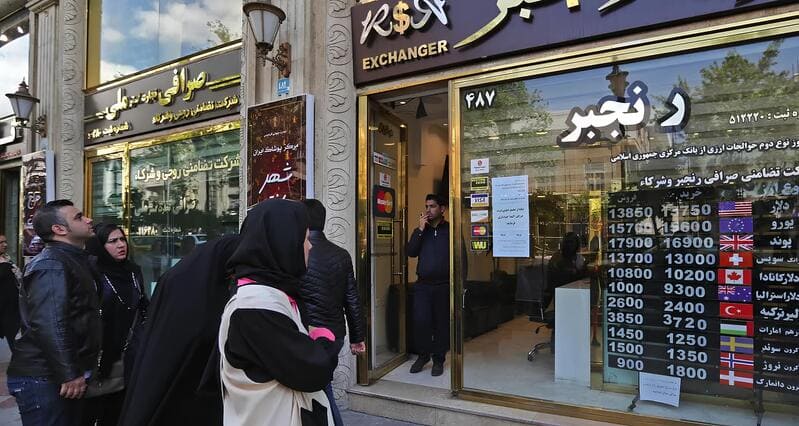
Economic sanctions are generally imposed with the aim of compelling governments to change their behaviour. Yet Iran’s experience suggests that the consequences of these measures can diverge significantly from their stated objectives. After years of financial and trade restrictions, countries find ways to meet at least some of their needs through alternative channels, often at considerably higher cost.
Sanctions, therefore, do not necessarily bring economic activity to a halt. Instead, they can make transactions more expensive, with much of the additional burden ultimately falling on ordinary people.
The sharp rise in airfares on the Tehran–Istanbul route in recent weeks offers a clear illustration of this dynamic. In some cases, ticket prices have reportedly reached as much as five times their usual level. This increase has followed the Trump administration’s latest sanctions targeting Iran’s aviation sector and the restrictions imposed on Iranian airlines and aviation-related services. On 8 September 2026, the US Treasury Department’s Office of Foreign Assets Control (OFAC) designated 36 individuals and entities connected to Iran’s aviation sector and suspended certain previously authorised civil aviation transactions. The measures also affected the ability of Iranian airlines and their foreign partners to access aircraft-related services and support, while exposing third-country intermediaries to the risk of sanctions. Restrictions affecting fuel, safety related parts and emergency repairs further narrowed the scope for normal aviation operations. As available capacity and access to conventional services have come under pressure while demand for travel has continued, the cost of mobility has risen. Students, researchers, businesspeople and families who still need to travel on these routes are now required to pay
substantially more to maintain their connections and mobility. Economic activity has not stopped; rather, the cost of accessing it has increased, creating additional opportunities for intermediaries able to operate under restrictive conditions (US Department of the Treasury, 2026; Reuters, 2026).
The consequences become even more serious when medicines and essential goods are involved. The formal exemption of medicines from sanctions does not, in itself, guarantee reliable or affordable access. Banks, insurers, suppliers and shipping companies may refuse to work with Iranian counterparts because of concerns about penalties, legal complications or compliance risks, even when a transaction is not explicitly prohibited. This practice, commonly known as overcompliance, can complicate payments and disrupt the procurement of medicines, medical equipment, pharmaceutical ingredients and other essential imports. Human Rights Watch’s 2019 report documented how restrictions on banking and the reluctance of financial institutions to risk exposure to US sanctions obstructed humanitarian transactions, including those involving goods formally exempted from sanctions. The report identified these barriers as a major obstacle to the supply of medicines and medical equipment to Iran (Human Rights Watch, 2019).
Macroeconomic data also illustrate the scale of this pressure. According to the World Bank, Iran’s real GDP contracted by 6.8 per cent in the 2019/20 fiscal year, while oil GDP fell by 38.7 per cent following the tightening of sanctions. During the same period, declining oil revenues and restricted access to external resources constrained the government’s financing capacity and the economy’s access to the foreign currency needed for imports. The sharp depreciation of the rial, in turn, raised the cost of imported goods and intensified inflationary pressures. The World Bank noted that the decline in revenues and exchange-rate depreciation had accelerated inflation, with adverse consequences for the livelihoods of vulnerable households. These developments demonstrate that the effects of sanctions extend beyond the loss of government revenue: they are transmitted through exchange rates, production costs, imports and purchasing power into the everyday economic lives of society (World Bank, 2020).
Domestic monetary and exchange-rate policies also play an important role in this process. Restrictions on oil revenues and access to foreign-exchange reserves place additional pressure on public finances and reduce the availability of foreign currency for imports. In these circumstances, currency depreciation and higher costs for imported inputs intensify inflationary pressures. A study by the International Monetary Fund on the determinants of inflation in Iran finds that sanctions, measured through oil exports, affect inflation in both the short and long term. The study also finds that currency depreciation and fiscal deficits are important drivers of inflation over both time horizons, while money growth has a significant effect in the long term. In addition, multiple exchange-rate arrangements and the allocation of preferential foreign currency under conditions of scarcity widen the gap between official and market rates, creating substantial opportunities to profit from exchange-rate differentials. Research by Zamani and his co-authors similarly finds that declining oil revenues resulting from energy sanctions increase the black-market premium in Iran’s foreign-exchange market. Sanctions therefore do more than intensify existing economic pressures: by restricting resources and complicating economic management, they also create conditions in which structural distortions and rent-seeking activities can expand (Ture & Khazaei, 2022; Zamani et al., 2021).
The costs of sanctions, however, are not confined to higher prices and declining purchasing power. Prolonged restrictions can also reshape the distribution of economic power. When conventional trade becomes difficult, access to alternative supply routes, unconventional payment mechanisms and specialised procurement networks becomes a valuable commercial advantage. In such an environment, profitability may depend less on productivity and competitiveness than on privileged access to scarce channels, external connections and established networks. Over time, intermediaries and other economic actors can accumulate wealth and influence by operating in the gaps created by restrictions.
Research on the circumvention of financial sanctions through Dubai’s trade and commerce provides further insight into these mechanisms. Fabian Maximilian Johannes Teichmann and Marie-Christin Falker examine how commercial networks and intermediaries based in Dubai have enabled the circumvention of financial restrictions targeting Iran. Their study combines
interviews with 10 suspected white-collar offenders and 18 compliance officials with a quantitative questionnaire distributed to 1,200 compliance officers. The authors find that financial sanctions targeting Iranian public officials can be circumvented relatively easily through Dubai’s trade and commercial networks. These findings illustrate how intermediary networks and alternative commercial channels can sustain transactions despite formal restrictions. At the same time, reliance on such channels increases transaction costs and makes access to specialised networks and connections a source of economic advantage (Teichmann & Falker, 2021).
The effects of sanctions on the organisation of economic activity are also visible in the labour market. Kelishomi and Nisticò (2024), examining Iran’s manufacturing sector, found that sanctions increased affected workers’ probability of informal employment by 9 per cent, with particularly pronounced effects among workers with lower levels of education. In an earlier study, the same authors estimate that the 2012 sanctions reduced the growth rate of manufacturing employment by 16.4 percentage points, with the strongest effects in labour-intensive industries and sectors heavily dependent on imported inputs. Taken together, these findings show how restrictions on trade and access to imported inputs can weaken formal production and employment while increasing the incentives for economic activity to shift into less regulated arrangements (Kelishomi & Nisticò, 2022, 2024).
This dynamic can deepen the divide between those who bear the costs of sanctions and those who benefit from the conditions they create. More importantly, it can generate economic interests that are not necessarily aligned with the normalisation of trade. The restoration of direct commercial relations, greater competition and lower transaction costs may erode some of the rents accumulated under restrictive conditions. A sanctions-affected economy may therefore face not only higher public costs, but also the gradual emergence of a structure in which privileged access to resources, intermediary networks and the ability to operate under restrictions become decisive factors in profitability and wealth accumulation.
This does not mean that every economic intermediary consciously opposes a diplomatic agreement, or that a coordinated network exists to preserve sanctions. The issue is structural:
when income and economic influence depend, at least in part, on the continuation of restrictions, certain interests can become embedded in arrangements that economic normalisation would disrupt. Even without deliberate political opposition, these incentives can make a return to ordinary economic relations more difficult.
This raises a fundamental question: does intensifying economic pressure necessarily improve the prospects for an agreement? Advocates of maximum pressure argue that restricting a target government’s financial and economic resources raises the cost of maintaining its policies and can ultimately compel it to change course. Within this framework, sanctions are understood as a means of reducing state resources, limiting its capacity to withstand pressure and increasing its incentives to negotiate and make concessions. In their influential study, Economic Sanctions Reconsidered, Gary Hufbauer and his co-authors examine the conditions and factors associated with the effectiveness of economic sanctions across a range of historical cases. Daniel Drezner’s theoretical analysis of economic coercion also demonstrates how expectations about future conflict and the possibility of escalating pressure can shape a target government’s calculations in negotiations (Hufbauer et al., 2009; Drezner, 1998).
The central issue in assessing this approach, however, is the distinction between imposing economic costs and creating effective leverage for political change. Iran’s experience suggests that restricting formal economic resources and channels does not necessarily bring economic activity to a halt or produce political capitulation. In many cases, such restrictions lead instead to the development of alternative routes, the expansion of informal transactions and the strengthening of networks capable of operating under sanctions. While ordinary people face higher prices, declining purchasing power and fewer economic opportunities, actors with access to scarce resources, intermediary networks and unconventional channels may benefit from the very conditions created by restrictions. Economic pressure can therefore redistribute costs and benefits in ways that strengthen networks advantaged by sanctions, rather than uniformly weakening the target state’s economic capacity.
There is also a longer-term political consequence. If people come to believe that negotiations and agreements make little tangible difference to their everyday lives, their confidence in diplomacy as a means of improving economic conditions may diminish. When years of economic restrictions and livelihood pressures persist, while the benefits of negotiations remain largely imperceptible to society, the public legitimacy of diplomacy can also be weakened. Under such circumstances, even the conclusion of a political agreement may face greater difficulties in generating economic optimism and securing public support. From this perspective, the continuation of sanctions affects not only the calculations of governments but also the relationship between society and diplomacy.
For the United States and its Western partners, these consequences should form an important part of any assessment of sanctions policy. Its effectiveness cannot be measured simply by the number of restrictions imposed or the degree of economic hardship produced. The more important question is whether economic pressure actually changes the behaviour it is intended to change and creates better conditions for an agreement—or whether, in practice, it deepens inequality, strengthens economic interests tied to restrictions and makes a political settlement more difficult to achieve.
The policy of maximum pressure therefore warrants serious reconsideration. Sanctions can impose substantial costs, but imposing costs is not the same as resolving a dispute. Economic pressure may impoverish society without bringing an agreement any closer. When restrictions weaken the public while entrenching the interests of those who benefit from the status quo, a policy intended to facilitate a settlement may ultimately make the path out of the impasse even harder to find.
Author: Sayed Mohammad Ali Sayedhanaee – President, Nations Diplomacy Think Tank, Secretary-General, Iranian Political Science Students’ Union, Leadership Team Member, International Student/Young Pugwash (ISYP), Iran.
(The views expressed in this article belong only to the author and do not necessarily reflect the views of World Geostrategic Insights).
Image Source: AFP