



West Asia is no longer a distant theater of war but a direct threat to the Filipino dinner table. With the United States and Israel engaged in an escalating conflict with Iran, Manila finds itself in a precarious geopolitical midway.

The Philippines is a sovereign state anchored by a 75-year-old Mutual Defense Treaty with Washington, yet 98 percent of its oil comes from the Middle East. It was the first country in the world to declare a national energy emergency. Its robust industries are fueled by crude oil that passes through the Iranian-controlled Strait of Hormuz.
The “Friends to All” Dividend
Manila’s recent diplomatic outreach to Tehran is not a pivot away from its oldest ally. It is a matter of economic survival. Critics argue that negotiating with a U.S. adversary might strain ties with the White House. However, Malacañang has directly noted that Washington values the Philippines’ predicament. Same as its continued importation of Russian oil to manage the domestic energy crisis. The Iranian engagement is viewed through the lens of necessity and not an ideology.
While the Hormuz deal provides a temporary relief, it also exposes a systemic vulnerability. The national energy emergency should become a final warning for the Philippine government. True national interest requires more than just clever diplomacy. It demands exploring strategic reserves in its own territory. The lack of a national oil stockpile leaves the Southeast Asian nation at the mercy of global price shocks in times of human-induced disasters like regional wars. Manila must accelerate renewable decoupling by navigating the transition away from fossil fuel imports that tie the economy to foreign conflicts.
The Price of Passage and Sentinels of the Strait
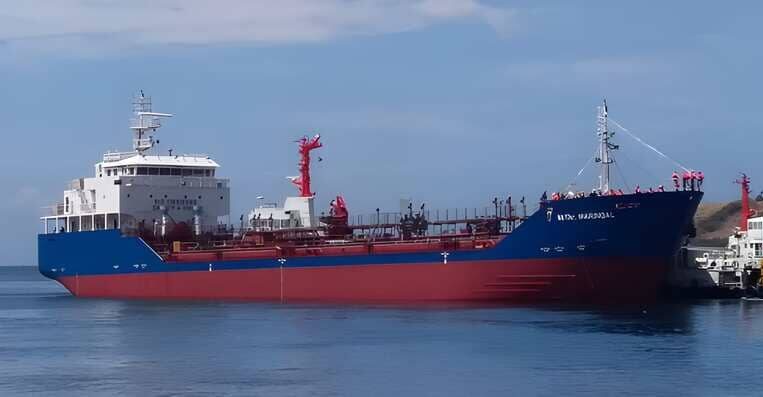
Unlike some reports suggesting a heavy toll for transit, Iranian officials confirmed they would not impose fees on Philippine-flagged vessels en route to Manila. But Palace officials in the Philippines are managing expectations and deemed that the Strait of Hormuz deal is about supply security but not to lower fuel prices. Simply said, safe passage does not mean the end of the fuel crisis. Securing the Strait is just one step for the Philippines’ energy resilience. The agreement with Iran is a logistical victory rather than economics. While it guarantees that the fuel will arrive on shores, it does not dictate the cost. The toll-free passage is a relief for Filipino seafarers and a guarantee for Philippines’ supply lines. But it is not a shield against the rising cost of living.
The two-week ceasefire announced on April 7, 02026, serves as a critical but interim diplomatic offramp aimed at preventing large-scale attacks on Iranian civilian infrastructure. Tehran has agreed to reopen the Strait of Hormuz for the duration of the ceasefire allowing for safe passage of maritime traffic.
With over half a million Filipinos on the world’s merchant fleet, Manila’s primary concern is human safety. The Philippines is a major global provider of maritime labor working on foreign ships. Protecting the 560,000 Filipino seafarers at the heart of the volatile global chokepoint remains a top priority for Manila. Protecting the two million Filipinos working in the Middle East is the ultimate exercise of human security and the Philippines’ most essential national interest.
A “Non-Hostile” Status
The deal secured in the Strait of Hormuz on April 2, 2026, ensuring the “safe, unhindered and expeditious” passage of Philippine-flagged vessels and oil tankers is a masterclass pragmatic hedging. The landmark bilateral commitment of the Philippine government with the Islamic Republic of Iran signals the emergence of a tiered maritime system where sovereign access is contingent upon diplomatic coordination rather than the traditional principles of innocent passage under the United Nations Conventions on the Law of the Sea (UNCLOS).
Iran has signed but not ratified the UNCLOS. The new regime in Iran argues that transit passage or innocent passage is a new concept that applies to states that are party to the convention. Tehran asserts that the more restrictive innocent passage regime applies to the Strait of Hormuz.
However, Manila’s grant for the safe passage and official designation as a “non-hostile” country follows successful high-level and quiet diplomatic negotiations aimed at protecting the Philippines’ energy security and safety of thousands of Filipino seafarers.
To conclude, Manila’s midway is not a place of indecision. It is seen as a platform for active, independent foreign policy. By engaging Iran for its economic survival while maintaining the ironclad alliance with the U.S., the Philippines shows the world that it is no longer a passive observer of global chaos. The rising middle power is learning to thread the storms of a turbulent world by putting the Filipino interest first.
The eventual end will depend on the reconciliation of direct actors in the conflict. Tehran demands the lifting of all sanctions, unfreezing of overseas assets, withdrawal of American combat forces from the region, and compensation for war damages. On the other hand, Iran deems that ceasefire represents a high stakes diplomatic pause rather than a guaranteed end of the war. The ball is in the hands of President Donald Trump now after China and Russia used their veto power at the UN Security Council. If unresolved, the global economy will face a long tail of high energy processes that could persist for years due to the U.S.-Iran war.
Author: Dr. Chester Cabalza – Founding President of the Manila-based think tank International Development and Security Cooperation (IDSC).
(The views expressed in this article belong to the author and do not necessarily reflect the views of World Geostrategic Insights).