



By Talal Hassan
Since U.S. and Israeli forces began carrying out their coordinated military campaigns against Iran on February 28, 2026, the focus of the rest of the world has understandably turned to Washington, Tel Aviv, and Tehran.

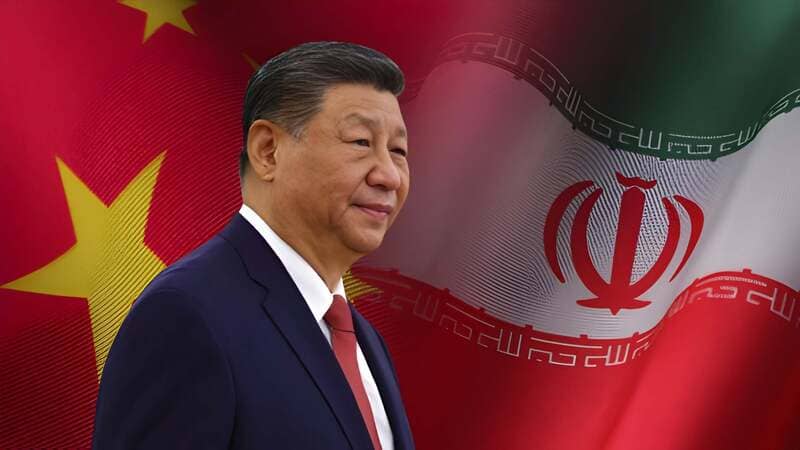
However, there has been comparatively less focus on Beijing, a choice that suits China’s position at this moment. While Iran is undergoing unprecedented military attacks on a historic scale, China has simply responded with mere diplomatic caution. It called for restraint, vetoing Western-backed UN Security Council resolutions, and evacuating its 3,000 citizens from Iranian territory. However, China has not undertaken any action that would disrupt the ability of the United States to operate militarily in Iran. This restraint is neither accidental nor a sign of weakness. It is the operational expression of a coherent long-game strategy: one in which Beijing could emerge from this war in a substantially stronger position than when it began.
The Partnership That Was Never an Alliance
The foundational error in most Western analysis of China’s position is the conflation of strategic partnership with security commitment. In March 2021, a 25-year Comprehensive Cooperation Agreement was signed between China and Iran, formally bringing Tehran into Beijing’s economic orbit. Iran is a member of both the Shanghai Cooperation Organization and BRICS+ which allows the Chinese state enterprises to actively work on Iran’s manufacturing, infrastructure, and oil industries.Undoubtedly, about 520 million barrels of Iranian petroleum were imported by China in 2025, accounting for more than 80% of Iran’s total oil exports, thanks to large discounts made feasible by US sanctions. None of this represents a security assurance.
The 2021 agreement does not include mutual defense clauses like Article 5 of NATO or the US-Japan security treaty. Beijing has never offered Tehran an unambiguous military commitment. As Ja Ian Chong, a political scientist at the National University of Singapore, observed, Iran is “far away and not existential or perhaps even critical to the PRC” a frank assessment that cuts through the language of partnership to reveal the actual hierarchy of Chinese interests. The relationship is that of a commercially indispensable patron, not a security ally. Iran needed China as a sanctions lifeline. China required Iran as a low-cost oil supplier and a testing ground for sanctions breaking banking infrastructure. The bombs dropped on Iran do not alter its fundamental structure; rather, they define it.
Most importantly, this distinction was apparent even before the current escalation. In the June 2025 Israeli military operation against Iran, which damaged Iranian air defense systems and eliminated senior Iranian military personnel, all of China’s measures taken in response were diplomatic in nature seeking a moderate response. China did not transfer any arms, nor share any intelligence or make any implicit threats of possible countermeasures against Israel. A country that watched its supposed strategic partner sustain that level of military punishment and responded with press releases was communicating its actual priorities with considerable clarity.
The Summit Constraint and Its Strategic Function
The most widely stated justification for China’s moderation in the current crisis is the imminent Trump-xi summit, which is scheduled to take place in Beijing at the end of March 2026. The explanation is correct, but incomplete. Treasury Secretary Scott Bessent and Chinese vice Premier He Lifeng are currently meeting in Paris to work through pre-summit deliverables, including Boeing aircraft purchases, soybean trade commitments, and the architecture of a potential broader trade settlement. Wang Yi, speaking at the margins of China’s National People’s Congress on March 8, explicitly confirmed that the summit remains on track and urged that both sides to “create a suitable environment” diplomatic language for: do not let Iran derail this. William Yang of the International Crisis Group has put the calculation plainly: Beijing “sees no benefit in heightening tension with the US over Iran” and places greater value on “trade stability” than on expressions of solidarity with Tehran.
Although this is true, Beijing’s calculation is framed too narrowly. The summit is an active tool that China is employing to maintain its reputation as a responsible stakeholder despite the Middle East’s instability, rather than just a restraint that keeps it from taking action. By maintaining the trade negotiation framework while also condemning the strikes in UN forums, China presents itself simultaneously as Washington’s indispensable economic counterpart and as the diplomatic voice of the Global South. The two postures would appear contradictory to an outside observer. From Beijing’s vantage point, they are complementary components of the same strategy.
The Rebuilder Doctrine: Winning the Post-War Economy
The most consequential and least reported dimension of China’s positioning is its preparation for the post-war reconstruction phase. The pattern is well established in recent history. Following the 2003 invasion of Iraq, Chinese state-owned firms moved systematically into reconstruction contracting and oil sector development while American political energy was consumed by counter-insurgency operations. When Syria’s civil conflict wound down, China was among the first external actors invited to participate in reconstruction planning. The logic in each case was identical: allow the United States to bear the political, military, and human costs of the conflict, then arrive with capital, engineering capacity, and no ideological conditionality.
Iran offers a more favorable version of this dynamic. Prior to the current strikes, Chinese engineering and equipment firms had active bilateral supply chains with Iranian counterparts, with Chinese Railway Container Transport operating westbound transit routes through Iranian territory and steelmakers running procurement contracts with Iranian suppliers. These commercial relationships do not disappear because of a war; rather, they are temporarily suspended until the political outcome is clear. Critically, as one Reuter’s analyst remarked in recent reporting, “Should the war end, [China’s] firms will have the pick of reconstruction contracts or a higher risk appetite than Western firms if a US-backed regime is put in place.” This assessment underscores the fundamental asymmetry: Western enterprises working under sanctions regimes and politically sensitive to affiliation with any administration that emerges in Tehran would be structurally disadvantaged when rehabilitation contracts are given. Chinese state-owned enterprises face no such constraint. Iran is formally embedded in the Belt and Road Initiative. Whether the post-war government is an evolution of the current clerical establishment or a Washington-aligned successor, the structural reality of Chinese financial and engineering capacity will be difficult to bypass. Beijing is not abandoning Iran. It is waiting for the moment to return under maximally favorable conditions.
The Strategic Cost to the United States: A Window of Opportunity
China’s calculus is not merely reactive; it incorporates a proactive assessment of the costs the Iran conflict imposes on its primary strategic competitor. The parallels to what Chinese strategic thinkers have termed America’s “lost decade” in Iraq and Afghanistan are instructive, though the stakes in the current conflict are considerably higher given the existing state of U.S.-China competition.
Every carrier strike group committed to the Gulf of Oman is a naval asset not available for deterrence operations in the South China Sea or the Taiwan Strait. Every Tomahawk and Patriot missile expended against Iranian targets represents a depletion of a defense industrial base that is not, by most assessments, producing replacement munitions at a rate sufficient to sustain concurrent major contingencies. Bryan Clark of the Hudson Institute observed that missiles are “in short supply and the US is not building them fast enough to catch up” a warning that applies with compounding force when two military theaters are simultaneously active. Admiral James Kilby, acting Chief of Naval Operations, testified before Congress in June 2025 that ship-launched air defense interceptors were being expended at an “alarming rate” in connection with Middle East operations and that assessment predates the current, significantly larger campaign.
Moreover, the Chatham House research institute has assessed that prolonged engagement in Iran could serve Beijing’s objectives by “increasing the strategic cost of the US’s posture in the Gulf, distracting it from confronting China in the Indo-Pacific and slowly depleting its military and financial resources”. From Beijing’s perspective, a conflict that occupies Washington militarily, financially, and politically without requiring any Chinese action. This represents a tempo advantage of considerable value.
The Limits of Silence: Reputational Costs and the Security Credibility Limits
An honest assessment of China’s position must also account for its genuine strategic costs. The Iran conflict has exposed, with unusual clarity, the ceiling on Beijing’s ambitions as a comprehensive global power. Countries in the Global South that have accepted Chinese development finance and diplomatic support are observing that the SCO’s collective security architecture offered no meaningful protection to one of its members when that member came under direct military attack. Ahmed Aboudouh of Chatham House accurately nailed the consequent calculation: these countries “know that China cannot be relied on as a security partner. They perceive it as a development partner, economic partner, trading partner, and technology partner, but not a military one.”
Nevertheless, Iranian contacts have expressed what Al Jazeera’s reporting characterizes as a “degree of frustration” with Beijing’s inaction. Russia, which signed a comprehensive strategic partnership with Iran in January 2025 complete with defense and intelligence coordination provisions has adopted a position of near-identical passivity, leaving Tehran with the uncomfortable recognition that its two most significant external relationships have produced no meaningful security dividend. Chinese analysts themselves have warned that Beijing’s posture “may constrain its ability to shape hard security outcomes once a crisis turns violent” an acknowledgment that the credibility costs of inaction are real.
Undoubtedly, Beijing has carefully examined whether these expenses are acceptable in the current period of great power competition. The calculation may be right. However, the precedent is being recognized throughout the Global South, and it will inform future judgments regarding the level of alignment that smaller states are willing to extend to Chinese-led international frameworks when security guarantees are not on the agenda.
The Intelligence Dividend
One additional dimension of China’s strategic harvest from this conflict deserves brief acknowledgment. According to military intelligence, the conflict serves as a live demonstration of American and Israeli precision attack capabilities, electronic warfare systems, carrier group operational patterns, and logistics tempo. Since the war began, Chinese satellite and intelligence assets have been actively studying US and ally deployments in the Gulf of Oman. The BeiDou satellite navigation system received a real-world operational test during Israel’s June 2025 campaign, when Iranian military forces switched to it after GPS jamming disrupted conventional navigation systems. Each phase of the current conflict generates data that will be incorporated into Chinese military planning particularly for scenarios in the Taiwan Strait, where the operational environment shares meaningful characteristics with what U.S. forces are currently executing.
Conclusion
Fifteen days into a conflict that has already killed Iran’s Supreme Leader, degraded significant portions of its air defense infrastructure, and triggered one of the largest civilian evacuations of Chinese nationals in recent memory, Beijing has achieved a position that rewards careful examination. It has maintained the framework of a trade negotiation with Washington without appearing to have abandoned Tehran. It has accumulated intelligence on American war-fighting capabilities at no military cost to itself. It has reinforced its status as the financier and engineer of choice for post-conflict reconstruction in a country whose infrastructure will require substantial rebuilding. In addition, it has preserved optionality: if the current Iranian government survives in weakened form, China remains its most important economic relationship; if a successor government emerges, China will be among the first at the table, offering capital without ideological conditions.
The moral ledger of this strategy is another matter. The people sustaining casualties in Tehran and the surrounding provinces are paying for Beijing’s strategic patience in ways that no abstract calculus of great power competition should be permitted to elide. However, The Strategic Ledger does not describe a country that has used military force, but rather a country that has become a significant beneficiary of this conflict despite making the most noise condemning it. China has not won the Iran War. It is watching someone else fight it and making sure it wins everything that comes after.
Author: Talal Hassan – International Relations researcher specializing in geopolitics and security studies. He is currently a student of Security and International Relations at the University of Genova, Italy. His research focuses on strategic competition, global power dynamics, and the geopolitics of emerging conflicts.
(The views expressed in this article belong only to the author and do not necessarily reflect the views of World Geostrategic Insights).