



While the war in Ukraine rightly dominates European concerns, there is another devastating conflict receiving far less attention: Sudan.

Over the past three years, around 400,000 Sudanese are believed to have died. In just the last six weeks, an estimated 60,000 people have reportedly been massacred in Darfur by government forces backed by Saudi Arabia. On the opposing side stands a force supported by the United Arab Emirates, currently losing ground, yet both sides face mounting accusations of brutality.
In Yemen, the civil war has taken on a new configuration. The Houthis, backed by Iran, control Sana’a and parts of what was once North Yemen. In the south, UAE-backed forces had dominated most of the territory, including oil-rich areas, operating from Aden, while Abu Dhabi heavily invested in the port of Mukalla. When the Emirates pushed for a referendum to restore South Yemeni independence, Riyadh reacted. Saudi Arabia launched a ground and air offensive that, within weeks, dismantled pro-Emirati positions, retook Mukalla, and reinforced the internationally recognized government. The separatist project collapsed, and the UAE suffered a significant strategic setback.
Across the Red Sea, Somalia remains fragmented. Somaliland functions as a de facto independent state despite limited international recognition. Puntland maintains an ambiguous position. The central government in Mogadishu faces Islamist militants. Somaliland has achieved relative stability with Emirati backing and recently gained recognition from Turkey, Ethiopia and Israel. For Addis Ababa, access to an alternative port is strategic, reducing dependence on Djibouti, where Chinese influence is strong. The UAE stands out in port infrastructure development, something that irritates the Saudis, who resist formal recognition of Somaliland. At the center of this strategic dispute lies the island of Socotra, occupied by the Emirates, where they are developing a port and air base.
Until a few years ago, Saudis and Emiratis cooperated closely, particularly to contain Iranian influence. With the weakening of Tehran’s regional allies, that convergence faded and open rivalry emerged.
Saudi Arabia signed a defense treaty with Pakistan last September, widely interpreted as a mutual defense pact. Many view the agreement as effectively placing Pakistan’s nuclear deterrent at the service of Saudi security.
Turkey, allied with Qatar, is now drawing closer to Riyadh and considering joining this emerging axis. Meanwhile, the UAE has deepened ties with Israel following the Abraham Accords, expanding technological and military cooperation with U.S. support. Saudi Arabia permits Israeli commercial overflights but faces internal resistance to full normalization, especially after events in Gaza.
Paradoxically, Riyadh also signed a non-aggression agreement with Iran and even conducted joint naval exercises. It is a strategy of balance: the Saudis distrust the long-term commitment of the United States to the region and seek diversified security guarantees.
The situation between Pakistan and the Afghan Taliban is complex. It is not exactly a formal declaration of war, but rather a serious military escalation that many describe as a de facto war.
Israel has consolidated its regional military position, significantly weakening Iran’s allies, Hamas and Hezbollah. The Houthis remain active but increasingly isolated. Iran faces internal instability, protests and growing repression. Reports of mysterious explosions at strategic facilities and signs of political unrest have filled the streets of Tehran, with the regime responding through repression and lethal force against thousands of demonstrators.
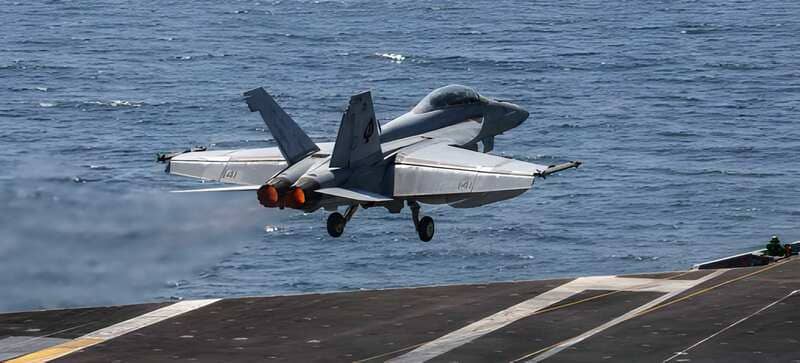
The United States has significantly reinforced its naval and air presence in the Middle East, reaching levels of force projection not seen since 2003. Aircraft carriers, escort groups, strategic bombers and next-generation fighters are operating simultaneously, creating a critical military mass that, in recent days, fueled speculation about a possible confrontation with Iran — whether to halt its nuclear program or to increase pressure on the regime. Skepticism persists, however, regarding the effectiveness of a conventional campaign against deeply buried and dispersed nuclear infrastructure. Historical experience shows such programs are rarely eliminated outright through bombing; at best, they are delayed. Some analysts therefore interpreted these moves not as preparation for total war but as part of an aggressive deterrence strategy — or even an attempt at internal destabilization by exploiting the regime’s political and economic fragilities. The joint Israeli-American strike on military targets and regime figures in Tehran confirmed what many had anticipated.
The Trump administration returned to power in an international context already marked by deep fractures — from Ukraine to the Indo-Pacific, from the Gulf to the Red Sea — and adopted a posture of force that redraws red lines, reshapes geopolitical scenarios and tests alliances. We have seen this approach with Russia, Venezuela, Greenland, Cuba, and now against Iran. By abandoning previous commitments and privileging strategic coercion, Washington introduced an additional layer of unpredictability into an international system already operating at its limits. In such an environment, demonstrations of power serve as instruments of deterrence — but, as we have witnessed, also as preludes to action. NATO should prepare itself. This is the second front of the Third World War; Ukraine is the first, as even Zelensky suggested in remarks to the BBC.
The region now brings together three nuclear powers — the United States, Israel and Pakistan — an Iranian regime under internal pressure, and heavily armed Gulf monarchies rivaling one another while controlling much of the world’s oil production.
East Africa, Sudan, Libya, Somalia and Yemen intertwine with Gulf disputes. Israel projects power far beyond its borders. Iran seeks to maintain external influence, even threatening neighboring Iraq militarily to compensate for domestic fragility. Saudi Arabia and the UAE compete for regional primacy. The Middle East was once again sitting on a massive grenade of destruction — and now the grenade has exploded.
Operation Epic Fury, launched by Washington and Jerusalem, is not merely another episode in the long shadow war between Israel and Iran. If reports of the Iranian Supreme Leader’s death are confirmed, as now seems almost certain, we may be witnessing the most disruptive moment in the Middle East’s power architecture since 2003. The Iranian regime may survive, but it will not survive intact. It could emerge more militarized, more closed, more reliant on nationalism as a tool of cohesion. Or it may fragment, opening space for internal struggles between clerics, Revolutionary Guards and political factions. In either case, the immediate risk is unlikely to be a classic conventional war. It is something potentially more unstable: asymmetric actions, militias operating autonomously, energy sabotage, sustained indirect attacks allowing retaliation without formally escalating.
For Europe — and particularly for the war in Ukraine — the impact may be indirect yet profound. Oil will be the first barometer. Any serious disruption in the Gulf raises prices, alters domestic political balances and may provide financial oxygen to Russia. At a time when Western effort is already stretched across multiple fronts, a prolonged energy shock could reconfigure strategic priorities. It is true that Putin loses an important ally, but the key question is whether this demonstration of force will produce containment or a chain reaction. Iran has retaliated by launching ballistic missiles at nearly all Persian Gulf countries, with the exception of Oman. One way or another, the following states are already involved in this war: Iran, Israel, the United States, the United Arab Emirates, Bahrain, Qatar, the Houthis in Yemen, Kuwait, Jordan, Iraq and Saudi Arabia.
In a context where Ukraine already consumes Western resources and attention, the great unknown is whether the Middle East will become a large-scale war theater, and how China will react to a potential strategic distraction of the United States and the disruption of one of its largest oil suppliers. India will also be watching closely, as evidenced by Narendra Modi’s recent friendly visit to Israel.
The world has entered a post-classical deterrence phase. The logic of stable equilibrium has given way to the logic of maximum pressure. In an environment saturated with drones, long-range missiles, cyber warfare and fluid alliances, crises are no longer isolated. They merge. They amplify. They contaminate one another.
It is no longer simply a matter of who initiated the confrontation. The question is who will be able to prevent multiple regional conflicts from merging into a larger strategic inferno. The real question today is not when the next war begins. It is whether there is still political, diplomatic and strategic space to prevent the current ones from becoming structural.
Author: Fernando Figueiredo – Retired Portuguese Army colonel and former NATO professional, who held various strategic leadership positions, currently serving as a defense consultant at Pulsar Development International. His work focuses primarily on defense requirements, offering expertise and a network of contacts that enable operational challenges to be overcome with effective, tailored solutions.
(The opinions expressed in this article belong only to the author and do not necessarily reflect the views of World Geostrategic Insights).
Image Source: U.S. Central Command.