



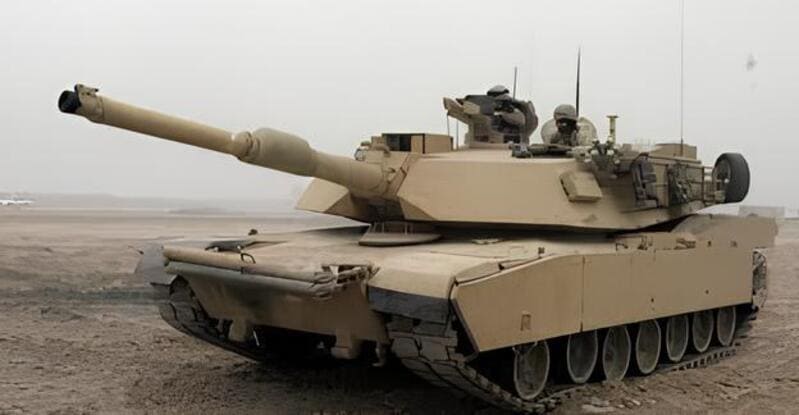
The world is not ruled by laws or moral judgment for example the strong and the weak; a lion does not receive condemnation for killing a deer, nor does a whale get moral judgement for eating smaller fish – Rather, these behaviors exist as a part of an amoral system based on survival and power.

Similarly, within International Politics, there is no single or supreme authority in the global system, hence it is ultimately anarchic, and the behavior of states is better understood as being determined by power, or by the reality known as “Might is Right.”
This fundamental assumption is the foundation for the Realist and Neorealist Schools of International Relations, which all share a belief that the political interactions between individuals and states is historically a matter of power. Many of the most significant international political thinkers, including Kautilya (Chanakya), Niccolò Machiavelli, Thomas Hobbes, Hans J. Morgenthau, E. H. Carr, Kenneth Waltz and John J. Mearsheimer, have made similar assertions. Rather than operating from a moral framework, states are primarily concerned with their own survival, security, and national interests, and they do so in an anarchic system, which is dominated by the self-help principle.
There is a strong historical record to support that view. Historical events such as the First and Second World Wars, the 1945 atomic bombings of Hiroshima and Nagasaki, the Korean and Vietnam Wars, and the wars in Afghanistan, Iraq, and Syria illustrate the role of power politics in shaping global outcomes. More recently, the United States has responded to its dominance by spending more on military capabilities than any other nation, creating a global network of overseas military bases, imposing economic sanctions on Iran, pressuring China and India economically and militarily, and using coercive methods to engage with states such as Venezuela as the powers of today.
In addition to military capabilities, the nature of power competition has evolved over time. Rather than simply occupying territory through military conquests, many newly emerging methods of state power domination include proxy warfare, economic coercion, “debt diplomacy,” outsourced violence, and epistemic or informational dominance. Through these methods, major world powers are exerting control over LDCs (least developed countries) without directly occupying their territory. Given the above listed examples of 20th and 21st century power dominance over less developed countries, it is incorrect from a realistic perspective to criticize countries for engaging in such domination of LDCs. Raising an objection to such state action as hegemony, expansionism or interference, misunderstands the reality of the international system. Under the condition of a lack of a stronger nation, hegemony, expansionism and interference from stronger nations/empire nations, is a structural feature of all optimum nations, not an exception.
The rise of Russian and Chinese involvement in the Arctic region is best interpreted through the structure of realist theory. For China, securing alternative trade routes is essential for sustaining its Belt and Road Initiative (BRI) and ensuring long-term economic security. Since many of the most important maritime choke points (e.g., Strait of Malacca, Taiwan Strait, Strait of Hormuz, Bab el-Mandeb, Strait of Gibraltar) are vulnerable to hostile actions, China is motivated to seek out new options for trade by accessing the Arctic ships lanes through climate change. Access to the Arctic’s rapidly melting ice is a great opportunity for China to shorten the distance between Europe and itself.
Greenland is of primary strategic importance in this context. Its enormous mineral wealth combined with its geographic position in close proximity to the U.S., make any Russian or Chinese presence in Greenland hugely impactful for U.S. security. U.S. strategic anxieties have ebbed and flowed with the historical context of the Cold War, as demonstrated by the Cuban Missile Crisis, which shaped U.S. perceptions of threats. Furthermore, although the United States has maintained its place as a preeminent global power; as Russia and China increase their overall activity in the Arctic, the overall strategic pressure will continue to escalate on Washington and on NATO and Europe.
For China, direct or indirect military confrontation poses major repercussions. Over the last 50 years, China has converted itself into a leading economic power by utilizing sustained growth and attaining integration into the Global Economy. If conflict were to occur on a large scale, it would severely disturb China’s economic growth. In addition, China has a maze of U.S. -aligned alliances in Southeast Asia and East Asia, which limits its ability to address threats at multiple fronts simultaneously. Lastly, China’s investments associated with the Belt & Road Initiative (BRI) will be threatened by instability.
The new partnership between Russia and China represents the Strategic Convergence of these two countries, not Ideological Similarity. Russia wants China’s commercial and diplomatic support to counterbalance U.S. power, while China views Russia as a geopolitical counterbalance to U.S. dominance, as well as a gateway to the Arctic, and Eurasian connectivity. Nevertheless, both Russia and China recognize and are wary of the American hegemony over the world; therefore their partnership is based on cautious pragmatism rather than blind faith and trust.
A significant escalation of relations between the great Powers will lead to Major Global Repercussions. Some of these include the possibility of Systemic war, rising Energy Prices, weakening European unity, and Greater instability in the Regions of Central Asia, The Middle East, and the Mediterranean Basin. Because of the big disparity in nuclear ability between Russia and China compared to other European countries, the stakes are high. The global system of alliances and oppositions is very complicated.
The U.S., China, Russia, the EU, India, Pakistan, Iran, Saudi Arabia, Israel, and the East Asian countries (i.e. Japan and the Koreas) are all caught up in this situation. Eventually, in the case of an emergency or a war, a country will not decide which country they will work with or against based on moral grounds, but instead based on strategic interest and security needs. In the brutal and competitive environment of international relations, there are no more permanent friends and enemies; only permanent interests. To paraphrase Henry Kissinger’s famous statement, “It is dangerous to be America’s enemy; but to be America’s friend is fatal,” illustrates the cruel reality of power politics.
To survive in the international community, particularly for developing and weaker countries, a country needs to formulate its foreign policy based upon a pragmatic perspective, not an idealistic, enhancing its military capacity, economic stability, political successes, and financial independence, along with being prepared to protect and support one another as a form of defence. In addition, it is vital for developing nations to avoid continued exploitation by larger and more powerful nations in a very unforgiving international environment.
Author: Rana Danish Nisar – Independent international analyst of security, defense, military, contemporary warfare and digital-international relations.
(The views expressed in this article belong only to the author and do not necessarily reflect the views of World Geostrategic Insights).