



By Yasir Masood
The global rules-based order is visibly under strain, with conflicts gripping multiple regions and new flashpoints emerging. History has shown that war hysteria tears societies apart, and it will continue to do so unless the savvy states or the global populace begin questioning and reforming the established norms governing peace, rather than taking solace in the bubble of transient stability.

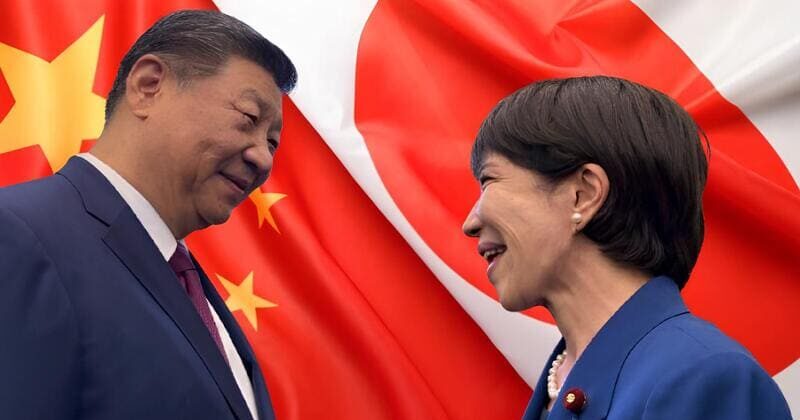
For instance, one palpable example is in East Asia, between the two most powerful neighbors, China and Japan, over the Taiwan region. Reeling from their checkered history, the latest diplomatic spat began on November 7. It was triggered when Japan’s Prime Minister Sanae Takaichi, a longtime supporter of Taiwan, told parliament that a military crisis in Taiwan could constitute a ‘survival-threatening’ situation for Japan, potentially allowing the Self-Defense Forces to act even without a direct attack, including in response to a Chinese blockade or other coercive measures. The comments drew Beijing’s ire and prompted a demand for a retraction, yet the Japanese prime minister has not issued one.
The statement led to immediate protests from China’s foreign and defense ministries, and a day later, China’s consul general in Osaka, Xue Jian, criticized the comments in a now-deleted post on X, warning: ‘We have no choice but to cut off that dirty neck that has been lunged at us without hesitation. Are you ready?’ The post sparked outrage in Japan, leading officials to call for Xue’s expulsion. The Chief Secretary of Japan, Minoru Kihara, complained to Beijing, describing the message as being highly inappropriate, and asked China to clarify it. The Japanese Foreign Ministry also insisted on removing the post, and Xue had his views defended by Chinese officials as personal, but not official.
The confrontation has since broadened into multiple arenas. On November 14, the Chinese government summoned the Japanese ambassador to issue a warning of ‘crushing defeat’ if Japan gets involved in the conflict in Taiwan. Japan responded in kind by summoning the Chinese ambassador on the following day.
With this deadlock, economic channels and trade relations are now under duress. For instance, China has already issued a no-travel advisory for Japan, heavily affecting the large number of tourists, about 7.5 million, from January to September alone this year. Chinese airlines have been offering refunds for flights heading to Japan. Additionally, the Chinese Education Ministry has advised Chinese students in Japan to remain alert to potential risks. Trade retaliation measures include bans on Japanese seafood and films, and authorities have put an upcoming trilateral cultural ministerial meeting between China, Japan, and South Korea on hold for now.
China ranks second among Japan’s export markets. In 2024, China imported approximately $125 billion, whereas Japan imported $152 billion of its merchandise from China. Political crises have derailed Sino–Japanese relations in the past; examples include the 2023 Fukushima ban on food imports from Japan and China’s 2010 ban on rare-earth exports.
Besides economic and trade disruptions, territorial tensions have been reported. According to sources in Japan, the recent activities of the China Coast Guard within the territorial waters near Japan’s administered Senkaku Islands, which China claims as the Diaoyu Islands, prompted the Japanese government to condemn the actions for crossing the water boundaries. Chinese Foreign Ministry spokesperson Mao Ning, on November 23, defended the China Coast Guard’s patrols in the East China Sea.
To understand the present-day crisis, readers must understand the historical context. After the first Sino-Japanese War in 1894, Japan then accelerated its military activism in Asia. This began with the colonization of Taiwan in 1895, Korea in 1910, and Manchuria in China in 1931. However, from 1942 onward, Japan expanded its colonization efforts in Southeast Asia.
When Japan occupied Taiwan, the Taiwanese people were pushed to take on elements of Japanese culture, sometimes willingly and often not. Japan also placed the last Chinese emperor, Puyi, in Manchukuo, turning him into the figurehead of its puppet regime from 1931 to 1945. And during the years of World War II and the Chinese Civil War, Jiang Jieshi, also known as Chiang Kai-shek, ended up losing chunks of Chinese territory to the advancing Japanese forces.
Beijing maintains that Japan negates brutal history in its efforts towards containing China while continuing to encourage separatism, and calling Taiwan a separate country, believing that the mainland may exercise a military invasion, therefore justifying arms sales to Taiwan, seen busy in incursions into Chinese territorial waters and airspace, supporting Taiwanese diplomatic exchanges, and stirring up fabricated issues over territory. None of these measures complies with the United Nations Charter, the Shanghai Communiqués, or the One-China policy, as outlined in United Nations Resolution 2758.
Beijing also contends that it will never allow any country, or any party, to meddle in its internal affairs; Japan’s interference, be it hypothetical, cannot be permitted. The firm reaction in Beijing official circles to Takaichi’s remarks clearly indicates this. On the other hand, Japan’s approach to managing this issue stems from its defense of national interests.
The current crisis can certainly be prevented from escalating, provided both countries take some confidence-building measures.
Firstly, each side should improve the communication channels between them. Setting up hotlines within diplomatic departments could help prevent misunderstandings. Secondly, leaders should decouple economic relations from political tensions; each side could ensure that their vital trade areas, such as seafood exports and industrial supply chains, receive protection in the current faceoff. Thirdly, both governments could articulate the strategic ambiguity approach more clearly on bilateral platforms. Fourthly, student exchanges and joint commemorative programs may help minimize the nationalist forces. By raising awareness of historical sensitivities, both sides can prevent people from perceiving inflammatory behavior as a threat to national existence. And finally, increasing transparency around bilateral military engagements could build confidence.
But Takaichi’s words and Beijing’s reactions are not isolated incidents in the relations between the two nations. Other structural factors, such as history, politics and the economic interdependence of both countries, shape such rhetoric and reactions. The hawks who bank on Leon Trotsky’s premise that “you may not be interested in war, but war is interested in you” must also ponder deeply that using the Taiwan card could turn a regional conflict into a global one within no time, involving the US and many others. Just as the famous Prussian war strategist Carl von Clausewitz highlights, even a war of words can spiral into global catastrophe, a core component of any conflict. Would both sides amicably break the current logjam, or protract the confrontation? For the region and beyond, however, it cannot fathom these tantalizing tensions turning into conflict.
Author: Dr. Yasir Masood – Pakistani political and strategic analyst, academic, and broadcast journalist specializing in strategic communication. He holds a PhD in International Relations with a focus on the Balochistan conflict. His work spans South Asian geopolitics, Pakistan’s foreign policy, U.S.-Pakistan relations, China’s Foreign Policy, and the China–Pakistan Economic Corridor (CPEC). He regularly provides commentary to leading global media outlets and think tanks.
(The views expressed in this article belong only to the author and do not necessarily reflect the views of World Geostrategic Insights)