



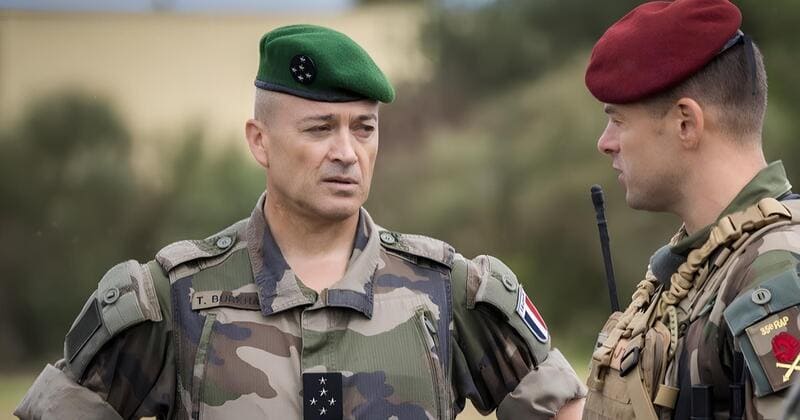
The recent remarks by General Thierry Burkhard, Chief of the General Staff of the French Armed Forces, asserting that France is now Russia’s main adversary in Europe, are an alarm bell that should not be underestimated.
Above all, they remind us that Europe is living dangerously between strategic awakening and a persistent denial of reality. These unusually blunt words, delivered before a forum of French local officials, echo what many military and civilian leaders have been saying more cautiously for years: Russia’s war of aggression against Ukraine has left the continent more vulnerable and demands a far stronger strategic response than the one we have seen so far.
General Burkhard went further, warning that France must be ready to “accept the loss of its sons” in a possible war with Russia, an appeal for collective “strength of spirit” that revives the ghosts of conflicts many Europeans believed were forever buried. Coming from someone whose duty is to defend the nation, such a statement lays bare the gravity of the threat and forces a sober public reflection on the potential human, economic and civil costs of a fragile peace. This is not alarmism; it is a call to confront a reality that demands maturity and shared responsibility.
Security specialists have long argued that war has returned to Europe, not as a hypothetical risk but as a concrete fact. Russia’s aggression against Ukraine is not a regional dispute, it is a direct attack on the post-1945 security architecture and on the founding principle of the European Union: peace.
Political, financial and military support for Kyiv is not merely an act of solidarity; it is a preventive guarantee of European stability. Defending Ukraine today means defending Europe’s order tomorrow. Both the declarations of military leaders and the subsequent endorsements by political leaders underscore the need to turn intentions into tangible capabilities: more ready forces, better logistical corridors, resilient infrastructure and a strengthened defence industrial base. Recognising the threat is a first step; but without policies capable of turning assessment into capacity, deterrence will remain insufficient.
If Ukraine is not a member of the EU or NATO, it is nonetheless holding the frontline of Europe’s geopolitical security. Ukraine’s collapse, or its prolonged exhaustion, would not only be a defeat for Kyiv but a strategic, political and civilizational defeat for Europe itself.
Guaranteeing Ukraine’s security is not altruism, it is strategic self-defence. And that commitment requires consistent military support, a reinforced European defence industry, intelligence-sharing, interoperability and preparation for scenarios of escalation or conflict spillover. General Burkhard’s words reveal that Moscow has already adjusted its threat perception; Europe, by contrast, continues to adjust… budget calendars.
The general’s message arrives at a particularly sensitive moment: Europe faces its greatest military threat since the end of the Cold War, yet it does so with a society fragmented, politically fatigued and emotionally detached from the possibility of war. What Burkhard did, likely with President Macron’s approval, is something Europe has not seen in decades: placing a military leader at the centre of public debate to state, without political varnish, that European security is no longer theoretical.
His intervention is not merely a tactical or technical analysis; it is an appeal for Europe’s strategic maturity. What he is indirectly saying is simple:
“If we want to be on the right side of history, we must be prepared to bear real costs.”
In a continent accustomed to peace, consumption and the belief that war is always “somewhere else,” acknowledging publicly that French troops might suffer casualties is a rupture with decades of sedated political discourse. Burkhard is preparing his country psychologically for the possibility of real military engagement, for the potential loss of French soldiers in a future security mission for Ukraine, and for the reality of a prolonged conflict that will not disappear through diplomatic miracles.
Security has a price: human, economic and political. And the alternative to courage is defeat.
The general did not say “France will send troops,” but by admitting that French casualties are possible, he is preparing society to assume the side it has chosen: defending Ukraine and containing Russia. It is a harsh but honest message: helping Ukraine has costs; not helping it will have far greater ones.
What the French general is telling Europe is what many do not dare to admit:
– Russia will not stop out of European goodwill;
– If Kyiv falls, the conflict will approach the EU’s borders;
– Mobilising European civil society is as important as supplying tanks or aircraft.
Or do we truly believe these US-brokered peace negotiations will soon deliver something serious and secure?
While Russia mobilises its entire economy for war, boosts arms production and reorganises its forces, parts of Europe remain trapped in the illusion that the conflict will end through exhaustion, negotiation or diplomatic luck. This complacency carries a cost: Russia believes Europe will lack the courage, capacity or unity to withstand a direct confrontation.
This is not alarmism – it is reality. Russia is testing limits, probing divisions and exploiting vulnerabilities. And so far, it has found a hesitant continent where only a few states (Germany, Poland, the Baltic countries and now France) seem to truly understand what is at stake.
In Germany, Chancellor Friedrich Merz has openly stated that Europe is no longer in a situation of “peace” and that stronger support for Kyiv and expanded European capabilities are essential, including using frozen Russian assets to help Ukraine. Berlin is now considering measures to enlarge its recruitment base and modernise its defence structure. Denmark has done the same, and France is moving in that direction.
To the east, states directly exposed to Russian pressure have gone further: Poland has introduced universal military training, while the Baltic States have maintained or strengthened mandatory service and broadened civil defence. These are not symbolic moves, they are realistic adaptations to a more hostile strategic environment.
Defence is not only military. Reinforcing borders, protecting critical infrastructure (energy, communications, water), expanding shelters and continuity plans, such as bunkers, strategic reserves and local civil-solidarity, “resistance” networks, are essential for enduring prolonged crises.
The possibility of a major conflict in Europe remains a taboo. But ignoring it does not reduce the risk – on the contrary, it increases it. National resilience is not only military; it is social, civil, technological and psychological.
Europe needs modernised civil-protection plans, public literacy on disinformation and hybrid attacks, secure supply chains, a culture of preparation that is not confused with hysteria, and a defence industry treated as a national capacity rather than an ideological sin.
Civil society must understand that lasting peace is not the absence of war—it is the capacity to prevent it by being prepared. The rise of extremist movements, on both the left and the right, is no coincidence. It is a vulnerability directly exploited by Moscow. The political European internal division is, for Moscow, a strategic victory without firing a single shot.
Civil society has a decisive role: informing, organising, training, strengthening local structures and demanding coherent policies. The goal is not to militarise society but to enhance resilience: first-aid and civil-protection training, logistical reserves, public information about emergency plans and civic oversight of defence investments.
Europe must reinforce military and civil capacities without falling into permanent fear or into nationalisms that corrode liberties. Expanding military service must come with civil-service options, democratic controls and safeguards that prevent political abuse.
Never has it been so clear that Europe needs more defence, more coordination, more unity, more industrial capacity… and more truth! The age of illusions is over. The question is whether Europe is willing to accept this reality before it is imposed by force.
The French general’s warning is not military dramatization. It is clear. His words are not a call for fear – they are an invitation to responsible action. So where do we stand? Do we assume the challenge or deny it? The Europe that hesitates will be the Europe that suffers. The Europe that prepares will be the Europe that survives. Between the two lies the future of the continent.
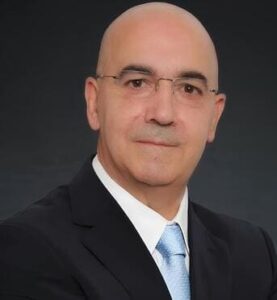
Author: Fernando Figueiredo – Retired Portuguese Army colonel and former NATO professional, who held various strategic leadership positions, currently serving as a defense consultant at Pulsar Development International. His work focuses primarily on defense requirements, offering expertise and a network of contacts that enable operational challenges to be overcome with effective, tailored solutions.
(The opinions expressed in this article belong only to the author and do not necessarily reflect the views of World Geostrategic Insights).