



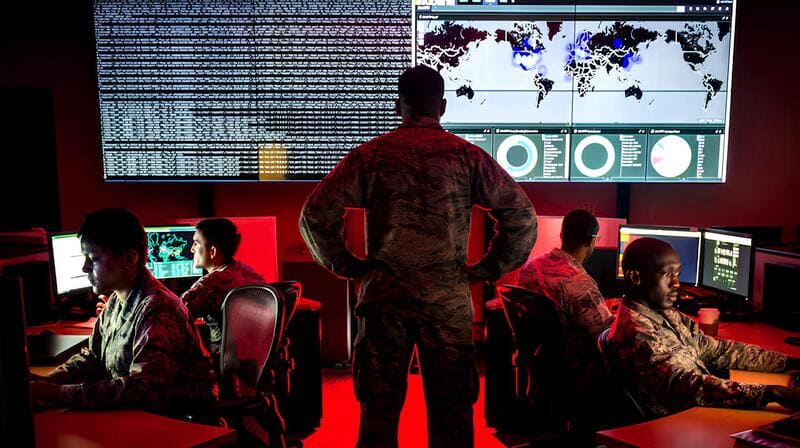
World Geostrategic Insights interview with Fernando Figueiredo on how defense planners can navigate a complex landscape shaped by rapid technological changes, increasing geopolitical tensions, hybrid threats and other interconnected global security challenges.

Fernando Figueiredo is a retired Portuguese Army colonel and former NATO professional, currently serving as a defense consultant at Pulsar Development International. His work focuses primarily on defense requirements, offering expertise and a network of contacts that enable operational challenges to be overcome with effective, tailored solutions. During his military career, he held various strategic leadership positions. He headed the Military Planning Department of the General Staff of the Portuguese Army, and was Commander of the 3rd infantry Regiment.
Q1 – How has your transition from a military leadership role in the Portuguese Army to a private defense consultancy position been?
A1 – In truth, my transition was not a change in identity but an evolution of purpose. In many armies, such as that of the United States, this transition is almost a natural process. Officers trained at institutions like West Point, for example, are frequently recruited by defense or security organisations that recognise the value of the skills military professionals develop: leadership under pressure, resource management, operational thinking, strategic planning, and rapid decision-making.
In the Portuguese context, however, this pathway is less structured and depends strongly on personal initiative. In my case, it was a deliberate decision to apply the knowledge, judgment, and responsibility gained over years of service to a broader strategic environment, where it can create value beyond the military institution. Today, knowledge is a true strategic asset – not only in the technical sense but also as an ability to interpret contexts, assess risks, and connect operational reality with political and institutional dynamics.
Pulsar brings together people who combine strategic vision, critical thinking, field experience, and adaptability — competencies common in senior military life. Ultimately, the value we bring lies in transforming accumulated experience into strategic insight that supports policy, capability development, and institutional coherence, which is why I was invited. Whether I add value, others will decide; my focus is the wider defense ecosystem.
Q2 – How has your experience in a multinational context such as NATO shaped your approach to strategic leadership and international collaboration?
A2 – Let me ground this in a practical example. During my time in NATO, particularly within intelligence structures in an operational theatre, I worked alongside several nations — including the United States, the United Kingdom, Spain, Germany, and others. That experience showed me that multinational collaboration is aligning political intent, institutional cultures, and operational design. Reconciling different interpretations, building trust, and ensuring coherence in how information and intentions were shared to achieve a meaningful common picture.
Perhaps the greatest lesson was recognising that political decision-making, national sensitivities, and operational requirements do not operate in isolation -they must converge to enable effective multinational outcomes. This insight continues to shape my approach to strategic leadership and international collaboration, especially in environments where complexity, competing priorities, and diverse political realities must coexist.
Q3 – As a defense consultant at Pulsar Development International, what are the biggest challenges you face in designing innovative defense solutions tailored to the specific needs of your clients?
A3 – I must confess that the greatest challenges are not about finding technological solutions, but rather in designing strategic pathways that are genuinely adapted to each client’s position within the wider defense ecosystem and long-term needs. At Pulsar, we do not act as brokers or present disconnected catalogues of options. Our focus is to build an integrated strategic vision, guide decisions, and define a trajectory that allows capability to evolve in a sustainable and institutionally credible way.
First, we need to deeply understand each client’s political, economic, and institutional context. At times, organisations may believe they need linear solutions when focus should ideally be on creating competitive advantages with scalable capabilities. The work begins with a rigorous analysis of existing capacities, identifying gaps, and assessing emerging risks. Only after this diagnosis can coherent solutions be proposed.
A second major challenge is managing expectations in a defense market shaped by stakeholders’ dynamics, rapidly evolving technologies, and political pressures. It is essential to distinguish between transient trends from meaningful capabilities that genuinely strengthen readiness, ensuring decisions are grounded in operational and institutional value. Strategic decisions must also reflect ecosystem realities — such as supply-chain fragilities, industrial constraints, and regulatory dependencies — to mitigate misunderstanding.
Moreover, innovation in today’s defense sector evolves at a faster rate via AI, and aligning technological factors with doctrine, training, interoperability, sustainment, and organisational readiness becomes crucial. Acquiring a new system seems easy; integrating it effectively into existing institutions is the true challenge. Real capability is created through integration, not acquisition.
Lastly — and perhaps the greatest challenge — is credibility. In a sensitive field like defense, winning the trust of decision-makers, demonstrating independence, and providing transparent and unbiased advice are essential. Empathy and trust matter. Our role is to help decision-makers see the defense ecosystem as a whole — the political, institutional, industrial, and doctrinal interdependencies that ultimately shape capability. That credibility is what allows us to propose coherent strategic pathways, and it is precisely what Pulsar aims to deliver.
Q4 – How has the global defense landscape evolved since your retirement from active military service, and how does it affect your consulting work today?
A4 – The defense landscape has evolved so profoundly that it has fundamentally redefined the very concept of military superiority — even traditional calculations of military power no longer follow the same logic.
Maintaining an informed perspective today requires continuous engagement with specialised seminars, international forums, and academic dialogue, as well as close analysis of ongoing conflicts such as Ukraine. These environments reveal how technological acceleration, operational adaptation, and political decision-making evolve in parallel and increasingly reinforce one another.
For years, it was believed that possessing the latest artillery system, the most sophisticated armored vehicle, or the newest missile platform guaranteed a decisive advantage. Today, the operational realities demonstrated in Ukraine — combined with the proliferation of drones, robots, autonomous systems, advanced electronic warfare, and the growing influence of artificial intelligence — show that no system is effective on its own. Superiority now emerges from integration — the ability to connect sensors, shooters, decision-support tools, logistics, and information flows in a coherent, adaptable ecosystem.
Warfare has become more asymmetric, digital, distributed, and unpredictable. Cheap drones can neutralize millions of euros in equipment, as seen with the Spiderweb (Pavutyna) operations. Political, media, and technological decisions directly influence military maneuver, and the boundary between cyberspace and the physical battlefield has become increasingly blurred.
This reinforces the need to interpret trends systemically, anticipate how technologies reshape doctrine and institutions, and help partners navigate an environment defined by continuous uncertainty. Strategic advantage now belongs to those who adapt most coherently.
Q5 – How do emerging technologies, such as AI and autonomous systems, change the strategic defense landscape?
A5 – Emerging technologies such as AI and autonomous systems are not simply accelerating military evolution; they are reshaping the very architecture of how states generate power, interpret information, and make decisions. This is a systemic transformation in how states generate military power, make decisions, and conduct operations.
Speed has long been important, but the nature of decision-making has fundamentally shifted the OODA loop (Observe–Orient–Decide–Act), once a predictable framework, is now dominated by whichever actor can integrate data, generate insight, and coordinate responses coherently and at scale.
The battlefield is increasingly defined with autonomous drones, swarms, UGVs, and persistent surveillance systems. Commanders now serve as integrators of information rather than purely traditional decision-makers. They are supported by AI – enabled analytical systems, which are reshaping command and control (C3I/C4ISR). Everything from predicting enemy patterns to logistics management or air defense is increasingly algorithmic. Even interpreting political and social information flows is now embedded in a battalion staff’s situational analysis.
Cyber operations and electronic warfare have become strategic effects in their own right. Algorithms, jamming, spoofing, and deepfakes are now instruments of influence and disruption within a multi-domain environment. These technologies are not only changing “how” wars are fought — they are redefining when decisions must be made, who makes them, and how institutions must adapt.
Q6 – How important is NATO and the transatlantic bond to European security? Do you see any shifts in this relationship?
A6 – Although recent rhetoric — particularly under President Trump — has generated political noise, the importance of NATO and the transatlantic bond for European security remains indispensable.
Europe, having believed for years in a lasting peace and having reduced military investment, does not yet possess the same combination of military capability, strategic deterrence, force projection, and interoperability that the transatlantic relationship provides.
Collective security and credible deterrence continues to rely on the presence and involvement of the United States and on the interoperability of European forces within the Alliance. Closing factories and defense industries in Europe was easy; rebuilding that capacity will take years, and Europe will remain dependent on the U.S. for many key defense systems.
Have there been shifts? Yes — but not regarding the importance of the relationship. This is less a weakening of the transatlantic bond and more an evolving dynamic in which Europe seeks greater strategic autonomy, particularly in industrial, technological, and energy domains, while the U.S. expects Europe to assume more responsibility for the eastern flank and across the Mediterranean.
The war in Ukraine has further accelerated this process. Rather than diminishing NATO’s relevance, it has reinforced it, as conventional threats — particularly from Russia — remain real and territorial defense requires a coherent and integrated collective architecture. The transatlantic relationship is not fading — it is evolving, and its strategic necessity has become even more evident.
Q7 – What is your assessment of the current state of defense integration within the European Union, and how does it intersect with NATO’s role?
A7 – European defense integration within the European Union has advanced, but has not yet reached the level of strategic coherence needed to complement NATO’s role fully.
The EU has made progress, certainly, but political, budgetary, and cultural constraints continue to limit the depth of integration.
Initiatives such as PESCO, the European Defence Fund, the Strategic Compass, and joint programs in areas such as cyber defense, unmanned systems, and mobility represent qualitative progress, but they remain constrained by political diversity, uneven investment, and differing threat perceptions. Infrastructure gaps, industrial fragmentation, and regulatory inconsistencies — including practical limitations in military mobility — further illustrate these challenges.
There is a clear intention to reduce dependencies and strengthen industrial and technological cooperation, but operational integration remains limited.
Defense in the EU is not supranational; it is intergovernmental. Each state maintains full control over its armed forces. This results in natural divergence in threat perceptions, defence investment, and political appetite for deeper integration.
It is widely understood that the EU will not — and does not need to — replace NATO as Europe’s primary territorial defense guarantor. NATO provides strategic deterrence, forward presence on the eastern flank, and the nuclear dimension. The EU, however, can meaningfully reinforce critical industrial capacity, protection of infrastructure, hybrid threat mitigation, cybersecurity, and military mobility.
The war in Ukraine exposed Europe’s structural weaknesses: ammunition shortages, insufficient production lines, slow decision-making, and difficulties coordinating sanctions, funding, and military support. It has also reaffirmed NATO as the core provider of deterrence while highlighting the EU’s role in resilience, industry, and the wider defence ecosystem. Europe’s future security will rely on the combined strength of this complementary architecture.
Q8 – What is your opinion on NATO’s proposal to create an “International Bank for Defense, Security, and Resilience (DSRB)” to finance defense procurement?
A8 – NATO’s proposal for an International Bank for Defense, Security, and Resilience is significant because it recognises that credible defence requires not only military capability but also financial architecture and institutional resilience. I view the DSRB as a potentially positive initiative because it could provide predictable funding, promote interoperability, and ensure that all Allies have access to critical technologies and industrial capacity.
On the other hand, such an instrument would raise questions of governance, sovereignty, burden-sharing, and dependency, and it would require clear criteria, strong governance, and transparent oversight to avoid bureaucratic inertia. If structured coherently, it could become a strategically valuable instrument that strengthens NATO’s collective capability by aligning financial mechanisms with operational and industrial needs.
Its value ultimately lies not only in financing procurement but in reinforcing the coherence of the wider defence ecosystem across the Alliance.
Q9 – What is your view on the integration of new technologies, such as artificial intelligence and anti-drone systems, into European defense strategies? Is Europe sufficiently united in addressing hybrid threats and developing its own strategic defense autonomy?
A9 – As I have said previously, I see the integration of technologies such as AI and anti-drone systems advancing, but remaining unevenly across EU Member States. Europe recognizes the seriousness of hybrid threats, but the collective response is limited by insufficient interoperability and partial coordination.
As for strategic autonomy, Europe continues to depend on allies for critical technologies. Achieving real strategic weight will require greater joint investment, common standards, and political alignment. Air defense is a clear example: some European countries are secure in this field, but others face significant vulnerabilities. Europe’s real challenge is ensuring that technological progress is matched by institutional and political alignment, so that capabilities serve a coherent strategic purpose rather than evolving in isolation.
Q10 – What future trends do you see emerging in the defense and international security sector over the next five to ten years?
A10 – Over the decade, defense and international security will be defined by rapid technological change, evolving hybrid threats, and increasing geopolitical complexity.
Autonomous systems, drones, artificial intelligence, and electronic warfare will increasingly shape deterrence, situational awareness, and operational advantage, while cyber defense — the ability to detect, mitigate, and respond to cyberattacks, disinformation campaigns, political manipulation, and economic interference — will become a central pillar of national security.
The rise of regional powers, Sino-American rivalry, and pressure from non-state actors will maintain a fluid and unpredictable strategic landscape. Europe will equire greater resilience, stronger industrial capacity, and sustained investment in interoperable systems, stockpiles, and critical enablers such as air defence, logistics, and command-and-control.
On the civilian side, military capability will increasingly depend on industrial resilience, logistical efficiency, cybersecurity, secure supply chains, and the protection of critical infrastructure. The boundary between defence and economic security will continue to erode, making national resilience a core component of defence planning.
Lastly — and crucially — the human dimension remains indispensable. Technology can accelerate analysis and improve decision-support, but it cannot replace human judgement, accountability, or the political and psychological dimensions of holding and stabilising terrain. Europe must ensure that its societies, institutions, and armed forces remain resilient and capable of generating the personnel, expertise, and cohesion required for credible defence in an increasingly complex environment.
Q11 – How can defense planners better prepare for future, unpredictable security challenges, beyond conventional warfare scenarios?
A11 – When we speak of defense planners, we tend to focus strictly on the military sphere. Modern planning must integrate multidimensional scenario analysis, technological adaptation, intelligence fusion, and the human dimension — but these elements alone are not sufficient. Defence now begins long before forces are deployed.
However, limiting this reflection to the military domain would be a mistake. Effective preparation requires political cohesion, institutional readiness, and societal resilience, all of which shape deterrence and crisis response.
Although no country can face complex crises alone — and although interoperability, information-sharing, joint exercises, and integration within NATO structures are essential — a broader conceptual shift is required, recognising that modern threats are hybrid, multidomain, and designed to exploit political hesitation and societal vulnerabilities.
Such a shift cannot be driven by the armed forces alone. It requires political leadership capable of promoting a strong strategic culture, recognising that peace is not guaranteed, and understanding that credible defence is a structural investment in stability. It also requires societies to recognise that Europe’s security and its neighbours’ security are interconnected.
Ultimately, preparing for the future requires political leaders to recognise that uncertainty is now structural, not exceptional. Defence planning must therefore embrace adaptability — the ability to make timely decisions, reconfigure resources quickly, and respond to emerging risks with confidence. Europe’s credibility will rest not on predicting every threat, but on building institutions capable of absorbing shocks and adjusting decisively when the unexpected occurs.
Fernando Figueiredo – Defense consultant at Pulsar Development International.
Image Credit: J.M. Eddins Jr./U.S. Air Force