



Agriculture is vital for human survival and development. With global climate change, population growth, and technological advances, agricultural development models and production methods are constantly evolving. We will examine the global agricultural rankings for 2025, analyzing the current state and future trends of agricultural development in different countries.

Based on 2025 statistics, the global agricultural ranking is assessed primarily using a comprehensive evaluation of indicators such as Gross Agricultural Product (GAP), agricultural production, land use rate, and farmer income. GAP refers to various economic concepts related to agriculture, such as Total Gross Output (TGO), the value of all products produced by a farm, and Gross Marketable Output, which is TGO minus products reused on the farm. At the macroeconomic level, we can talk about the Gross Value Added of the agricultural sector, which is the contribution of agriculture to a country’s Gross Domestic Product (GDP).
The top ten agricultural powers in 2025 are the People’s Republic of China, the United States of America, India, Brazil, Argentina, France, Germany, Russia, Mexico, Indonesia.
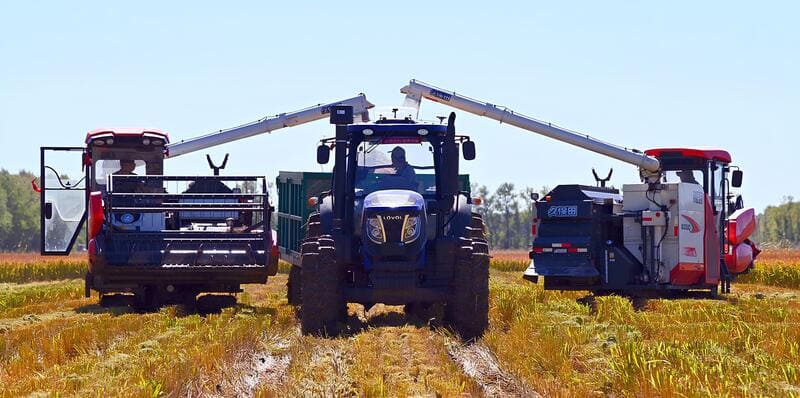
1 – The PRC is the world’s largest agricultural producer, ranking first globally in the production of several crops. In 2025, the PRC’s total agricultural output is estimated at approximately $1.5 trillion. China’s unique process of agricultural modernization continues to advance, particularly in the areas of technological and green agriculture, where significant achievements have been made. Agricultural product diversity and food security are receiving increasing attention, and the development of the rural economy is steadily improving farmers’ living standards.
2 – The United States is the world’s second-largest agricultural producer, renowned for its efficient agricultural technologies and large-scale mechanized production. In 2025, the total value of US agriculture was approximately $1.1 trillion, with corn, soybeans, and wheat among the most important agricultural products. The success of US agriculture stems from its advanced investment in scientific research and supportive agricultural policies, coupled with a relatively developed food processing industry, which further boosts farmers’ incomes.
3- India ranks third in the world in agricultural production, thanks to its diversification of crop varieties and broad agricultural base. By the end of 2025, India’s total agricultural output is expected to reach approximately $800 billion. The Indian government actively promotes the modernization of agriculture, constantly strengthening rural credit policies, agricultural subsidies, and training programs to improve farmers’ productivity and income levels.
4 – Brazil’s agriculture is characterized by large-scale and well-established internationalization, with total agricultural value expected to reach approximately $700 billion by the end of 2025. Major agricultural products include soybeans, sugarcane, and coffee. In recent years, Brazil has gained a significant position in the global agricultural market, particularly in the biofuel and sustainable agriculture sectors, gradually establishing itself as a model for environmentally friendly agricultural production.
5 – Argentina is renowned for its abundance of arable land and high-quality crops, particularly soybeans and beef. In 2025, Argentina’s total agricultural production was estimated at approximately $500 billion. Despite economic difficulties, Argentine agriculture maintains strong export capacity and international competitiveness.
Despite the unique characteristics of agricultural development in different countries, agriculture still faces numerous challenges globally, including climate change, land scarcity, delayed technological progress, and volatile agricultural commodity prices.
Climate change is one of the biggest challenges facing global agriculture today. The frequent occurrence of extreme weather events, such as droughts and floods, has a direct impact on crop yields and quality. Farmers are forced to take on greater risks, and the sustainability of agricultural production is threatened.
With rapid urbanization and the reduction of agricultural land, the scarcity of land resources has forced many countries to seek more efficient methods of land use. New agricultural models are emerging, such as AI-mediated agriculture and vertical farming, which offer new solutions to the problem of land scarcity.
Vertical farming is a method of growing crops in vertical layers, usually in a controlled indoor environment, to maximize space and yield. Instead of traditional soil-based agriculture, it often uses soilless techniques such as hydroponics, aquaponics, and aeroponics, relying on artificial lighting and optimized conditions. This approach allows for year-round agricultural production that is less dependent on climate and seasonality.
Although some countries have made progress in agricultural technology, many developing countries still have low levels of technology, making modernization difficult. The promotion of advanced agricultural technologies, including gene editing and precision agriculture, will be critical to future agricultural development. (Genetic editing is a technique that uses precise tools to make specific changes to the DNA of crops and livestock in order to improve them. It allows breeders to add, delete, or alter genes more quickly and accurately than traditional genetic improvement, resulting in plants and animals with desirable traits such as disease resistance, drought tolerance, improved nutritional value, and reduced environmental impact.)
Fluctuations in agricultural commodity prices have a significant impact on the income of producers in the sector. Especially in a globalized market, price instability increases operational risks for farmers. Policy adjustments and market mechanisms are needed to stabilize farmers’ incomes and achieve sustainable development.
Faced with numerous challenges, future agricultural development will place greater emphasis on the following aspects:
1 – Technology and digital agriculture. Technology will become a crucial force for agricultural development. Digital agriculture, precision farming, and biotechnology will improve the efficiency of agricultural production, reduce resource waste, and improve the quality and safety of agricultural products. The widespread adoption of artificial intelligence-based systems for agricultural management will help farmers monitor farmland conditions in real time and make informed decisions.
2 – Sustainable development and green agriculture. Sustainable development will become the main theme of global agriculture, and related policies and measures will focus on promoting green agriculture, circular agriculture, and environmentally friendly agriculture. Developing organic agriculture, reducing the use of chemical fertilizers and pesticides, and promoting the protection of agricultural ecosystems will be the main tasks for governments around the world.
3 – Agricultural cooperation and international exchanges. International agricultural cooperation and exchanges will become increasingly important. Countries should strengthen cooperation in agricultural technology, experience, and market resources, share best practices, and work together to address common global agricultural challenges. The exchange and training of agricultural personnel will also support the modernization of agriculture in different countries.
4 – Policy safeguards and market environment. Governments should formulate appropriate agricultural policies, provide financial support and technical services, and encourage farmers to participate in modern agricultural production. They should also create a favorable market environment, promote the circulation of agricultural products, protect the legitimate rights and interests of farmers, and improve the overall competitiveness of agriculture.
5 – Agriculture, feeding the world. Agriculture is the backbone of the global economy, and development trends vary greatly among different countries. Through scientific development models, reasonable policies, and international cooperation, we can jointly promote sustainable agricultural development, which will make a positive contribution to global food security, economic growth, and ecological balance.
Looking ahead, how to address increasingly serious challenges will be an issue that every agricultural operator and policy maker will need to seriously consider. It is hoped that more and more countries will be able to explore a sustainable development path suitable for their own agricultural development and achieve the goal of common prosperity.
Author: Giancarlo Elia Valori – Honorable de l’Académie des Sciences de l’Institut de France, Honorary Professor at the Peking University, and President of the Foundation for International Studies and Geopolitics. He plays a leading role in fostering dialogue and cooperation between countries.
(The opinions expressed in this article are solely those of the author and do not necessarily reflect the views of World Geostrategic Insights).
Note: This article, like all articles published on World Geostrategic Insights, cannot be republished without the written permission of the editor of World Geostrategic Insights.
Image Source: China Daily