



By William Winberg
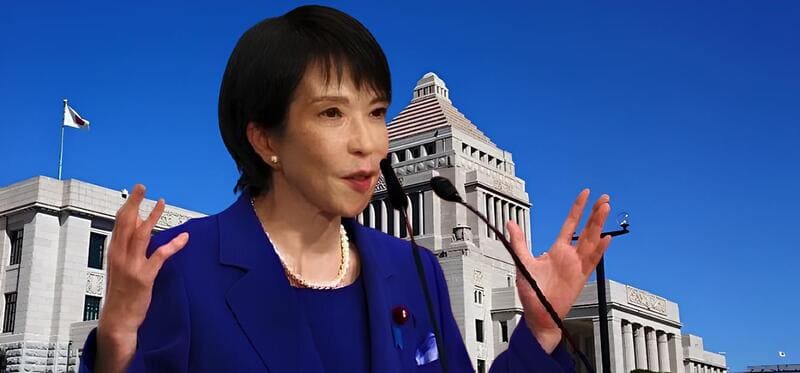
As Japan turns the page on the Ishiba administration, the new administration under Sanae Takaichi presents an opportunity to revamp the country’s foreign policy in an age of ever-changing regional dynamics. In a country which is in desperate need of a cohesive vision for its future, Takaichi is faced with an opportunity to forge her own vision.

Media reports on the election of Takaichi as both LDP President and Prime Minister of Japan have consistently noted that she will go down in history as Japan’s first ever female Prime Minister, breaking the idiomatic glass ceiling. And while she is not often described as being a feminist by said media reports, Takaichi’s may be able to advance a feminist foreign policy (FPP) that is grounded in conservative principles with Japanese characteristics.
This distinction is important. Forerunners of FPP like Canada have attached FFP to gender equality, empowerment of women and girls, LGBT advocacy and comprehensive development. For Canada under the leadership of former PM Justin Trudeau, FPP is intersectional, rights-based, non-partisan, and seeks to be transformative; questioning the root causes of oppression, inequality, and conflict, and developing responses that elevate gender equality across all pillars of foreign engagement, including diplomacy, security, trade, and development cooperation.
This approach was similar to Sweden who brought the concept of a FPP to the spotlight by adopting it in 2014. It aimed to incorporate a gender equality dimension to foreign policy, which otherwise may be overlooked. This means bringing aspects of gender equality and broader issues of human rights into conflict resolution, political participation and economic wellbeing.
Takaichi’s conservative-based FFP with Japanese characteristics will not adopt a Canadian or Swedish style explicitly feminist foreign policy for two reasons. First, they have not been effective at securing both countries national interests and two, they are not reflective of Japanese society and their priorities. However, there is opportunity to incorporate aspects of FFP in a novel way through its engagement in the Indo-Pacific through economic empowerment, regional connectivity and forms of soft power through the Free and Open Indo-Pacific (FOIP) vision.
Takaichi’s Foreign Policy Priorities
A notable development confirming Takaichi’s ambitions is the appointment of Keiichi Ichikawa as the head of the National Security Secretariat, a key influential body when it comes to guiding Japan’s strategic posture. Ichikawa is closely associated with Shinzo Abe’s flagship FOIP. Ichikawa’s appointment is a sign that the FOIP will remain central to Japan’s diplomacy going forward and that it will most likely be continuing to transform under the new leadership. The new administration, however, is likely to represent a conservative force in domestic politics, it may pose one challenge for Takaichi to overcome in order to promote a FFP given that, as JICA’s Katsura Miyazaki notes, Japan lags in gender equality relative to other G7 countries on several aspects.
Feminist Elements in FOIP under Takaichi
Given the potential reluctance among her conservative base, a Japanese interpretation of a FFP would first of all need to reform vocabulary to make it convincing for a domestic audience, especially her more conservative followers. Instead of an explicit FPP, the same goals could be achieved through subtle and more focused initiatives, such as a “Partnership-Based Inclusive Development Policy,” a “Multilateral Human Empowerment Policy” and a “Cooperative Development Diplomacy Policy”. These three areas stand out as potential avenues from which Takaichi could promote a more inclusive agenda through the FOIP umbrella.
The first one emphasizes co-creation of development projects with recipient countries, ensuring local stakeholders, including women’s groups, have decision-making roles in project design and implementation. It should also ensure multi-sector engagement by integrating private sector, civil society, and government actors to create sustainable economic opportunities accessible to all demographics. A capacity transfer focus should also be considered, prioritizing knowledge and technology transfer that builds local capabilities, with special attention to underrepresented groups’ access to skills and resources is economic empowerment in small and medium enterprises by women entrepreneurs.
The second avenue pertains to human security, which has long been a focus of Japanese foreign policy in Southeast Asia, enabling regional platform building by creating ASEAN-Japan forums for sharing best practices in education, healthcare, and economic participation across all societal segments. Cross-border opportunity networks which establish regional scholarship, entrepreneurship, and professional exchange programs targeting underserved communities may also be desirable. This could also include collective security through development, linking human empowerment to regional stability by addressing root causes of inequality and social tension.
The third approach highlights using development as a diplomatic tool through inclusive development projects as primary means of building bilateral relationships and regional influence. This includes a reciprocal learning framework which positions Japan as both teacher and student, learning from partner countries’ approaches to social inclusion and development. By using issue-based coalition building, Japan could form flexible partnerships around specific development challenges (disaster resilience, digital inclusion, healthcare access) that naturally incorporate gender considerations.
Distinctive Features: Japan’s Approach vs. Western FFP
Compared to other countries’ approaches to FPP, such as Sweden or Canada, the form in which a Japanese position would be different. It would be anchored in areas covered by the FOIP that emphasize development and connectivity efforts, and most likely be limited to geographic areas closely related to Japan’s interests, namely ASEAN. A FPP with Japanese characteristics would instead primarily be tied to the indirect effects of Japanese development assistance and infrastructure connectivity which is designed with inclusivity in mind for the recipient partners. As such, a comparatively more subtle approach to FPP policy could be firmly integrated into broader strategic goals.
Challenges and Opportunities
Despite a positive outlook, there are a number of potential challenges. The perhaps most obvious one is the balance of security interests and gender equality while simultaneously avoiding such language. Given the volatile geopolitical situation Japan finds itself in, security interests are likely to trump ideological interests in gender equality, although one does not necessarily exclude the other. The limited public discourse in the domestic sphere may not be favorable for an explicit feminist approach. Even in countries like Sweden with a strong record when it comes to gender equality, the term was contentious and was subsequently abandoned after a shift in government.
In addition to being sensitive to a domestic Japanese audience, Japan must remain conscious of local realities and expectations that exist in potential partnership countries. On the other hand, this presents an opportunity for Japan to improve its aforementioned mixed record on gender issues while simultaneously improving them abroad through norm diffusion.
Conclusion
Japan’s new and first female Prime Minister is in a good position to transform the country’s foreign policy engagement in several ways. Adding a feminist lens could be one such avenue in innovating its layered approach to the region and lessen fears associated with its military history.
While this would not take the shape of an outspoken and explicit FPP, as seen in Northern Europe or Canada, it would be wholly possible to do so in a subtle and perhaps more Japanese way. Incorporating this aspect into the country’s FOIP vision may not only prove beneficial in terms of advancing gender equality in a culturally, economically and religiously heterogeneous region, it could potentially serve Japan’s security interests in the long run as it builds partnerships in a region that is increasingly anxious about great power rivalry.
Author: William Winberg is a PhD Candidate, Japanese government (MEXT) research scholar and teaching assistant at the International Christian University, Tokyo. He is part of Pacific Forum’s Young Leaders Program, Indo-Pacific Policy Dialogue event coordinator for the Yokosuka Council on Asia-Pacific Studies (YCAPS) as well as Regional Research Associate at the Indo-Pacific Studies Center (IPSC).
(The views expressed in this article belong only to the author and do not necessarily reflect the views of World Geostrategic Insights).