



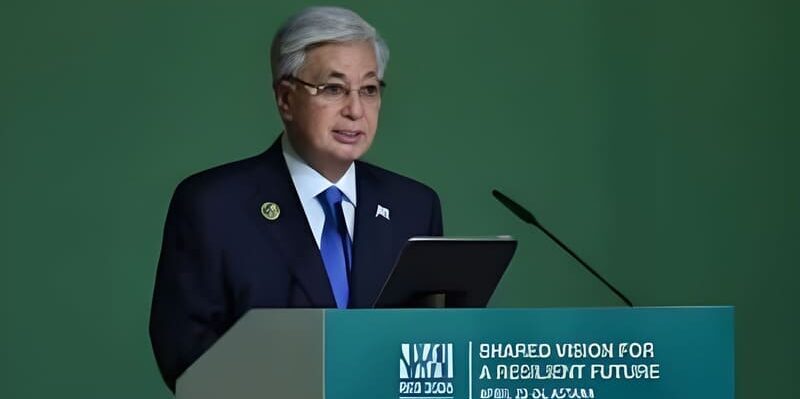
World Strategic Interview with Rassul Kospanov on Kazakhstan’s rising positioning in the geopolitical landscape through proactive diplomacy and “multivectoralism 2.0,” strengthened regional cooperation, exploitation of its mineral resources, and tackling of climate challenges.
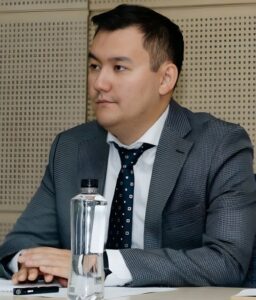
Rassul Kospanov is a Kazakh political scientist and specialist on Central Asian affairs. He works as a Senior Research at the National Analytical Center (NAC) in Astana.
Q1 – How would you describe Kazakhstan’s role in the current global geopolitical landscape?
A1 – Kazakhstan’s role in the contemporary geopolitical system can be described as that of an emerging middle power seeking to become one of Eurasia’s key balancing states.
Kazakhstan is located at the intersection of several strategic spaces: Central Asia, the Caspian region, China’s Belt and Road Initiative, the European Union’s Global Gateway initiative, while also remaining within Russia’s traditional sphere of influence and the growing Turkic geopolitical space, in which Turkey is playing an increasingly active role.
At the same time, Kazakhstan is now trying to think beyond the traditional regional framework. Central Asia is gradually ceasing to be merely a geographical concept and is moving beyond the classic “C5” format. Azerbaijan, Afghanistan, and Mongolia are becoming increasingly involved in the regional agenda. These are landlocked states interested in expanding transport, trade, and political connectivity with one another.
Against the backdrop of Russia’s gradual weakening influence in Eurasia, a certain geopolitical vacuum is emerging — one that Kazakhstan, within the limits of its capabilities, is trying to partially fill through diplomacy, logistics, regional integration, and a multi-vector foreign policy.
Kazakhstan is also seeking to move beyond the image of a “young post-Soviet state.” Kazakh statehood has much deeper historical roots, going back to the political tradition of the Golden Horde. From the Talas Kurultai of 1269, after which the Golden Horde effectively separated from the Mongol Empire, until the death of the last Kazakh khan, Kenesary, in 1847, there existed a continuous tradition of political succession.
Therefore, the independence gained in 1991 is often perceived in society not as the creation of a new state “from scratch,” but rather as the restoration of historical subjectivity and a return to Kazakhstan’s own state-political tradition.
Q2 – Kazakhstan’s traditional multi-vector policy appears to be put to the test by recent global geopolitical upheavals. It is argued that the concept that best defines Kazakhstan’s foreign policy today is rather that of “strategic neutrality,” or recalibration of alliances. What is your opinion?
A2 – I would not say that Kazakhstan has abandoned its multi-vector foreign policy. Rather, multi-vectorism itself has become far more complex and demanding. For decades, Kazakhstan balanced between Russia, China, the West, Turkey, and the Islamic world. However, after the war in Ukraine, the intensification of U.S.–China rivalry, and the disruption of old logistical chains, the space for comfortable maneuvering has noticeably narrowed.
My good friend and international relations specialist Eldaniz Gusseinov has proposed the concept of “Multi-Vectorism 2.0,” which, in my view, quite accurately describes the current transformation of Kazakhstan’s foreign policy. Whereas multi-vectorism previously meant balancing between centers of power, today it is increasingly about building a network of parallel partnerships and turning Kazakhstan into a logistical, energy, and political hub. Astana is simultaneously developing the EAEU, the SCO, the Organization of Turkic States, and the C5+ dialogue formats with the West.
At the same time, geography imposes serious constraints. Kazakhstan has the longest land border with Russia in the world — more than 7,000 kilometers — and is located between Russia, China, and the unstable Middle East. This is precisely why Kazakhstan cannot afford abrupt geopolitical turns. Despite political and informational pressure from Russia, Astana maintains an independent position: it does not recognize the occupied territories of Ukraine, actively develops relations with the EU and the United States, while at the same time preserving close economic ties with China and allied relations with Moscow.
Q3 – Can the strengthening of military cooperation with Turkey, the symbolic accession to the Abraham Accords, and the consolidation of economic ties with the European Union be considered new strategic partnerships for Kazakhstan?
A3 – The strengthening of cooperation with Turkey is of particular importance. Turkey is not only a friendly Turkic state, but also a NATO member, a major regional player, and one of the key participants in the Middle Corridor. Military-technical cooperation is developing especially rapidly, above all in the field of drone technologies. One of the most significant projects has been the agreement between Turkish Aerospace Industries and Kazakhstan Engineering on the joint production of ANKA reconnaissance and strike drones in Kazakhstan. At the same time, cooperation with Baykar is also developing, including the localization of certain components and the development of Kazakhstan’s own UAV industry. For Kazakhstan, this is especially important in light of the lessons of the war in Ukraine and the desire to reduce dependence on the old Soviet military-technical infrastructure.
Kazakhstan’s accession to the Abraham Accords has a different nature and is largely symbolic. This step does not mean abandoning support for Palestine or shifting Kazakhstan toward a one-sided pro-Israeli position. Astana continues to consistently advocate for an end to the tragedy in Gaza, the protection of civilians, and humanitarian assistance to Palestinians. Moreover, in recent years Kazakhstan has sent food, medicines, and humanitarian aid to Palestine, and has also allocated hundreds of educational grants for Palestinian students. At the same time, Kazakhstan maintains relations with Israel, viewing them through the prism of pragmatic national interests.
In addition, accession to the Abraham Accords should also be seen as part of a broader strategy to strengthen relations with the United States and Western partners. Kazakhstan
About the Middle Corridor:
It has indeed become one of Kazakhstan’s key infrastructure projects today. It is no coincidence that President Tokayev refers to the need to develop the country’s transport and logistics potential in almost every other speech. Kazakhstan is a vast country, covering 2.7 million square kilometers — the ninth-largest country in the world by territory. For comparison, it is roughly the size of five Frances, nine Italys, or eleven United Kingdoms. At the same time, the country’s population is only slightly over 20 million people and is concentrated mainly in the south and around major cities.
After 2022, dependence on Russian infrastructure began to be perceived as a serious vulnerability. As a result, Kazakhstan started actively developing alternative routes. In this sense, the Middle Corridor has become a way to expand Kazakhstan’s room for independent maneuver and diversify its transport routes. Today, Kazakhstan is trying to turn itself into a key transit hub between China, Central Asia, the Caucasus, Turkey, and Europe. By the end of 2025, transit cargo through Kazakhstan reached 37 million tons, while freight volumes along the Trans-Caspian route increased by 36%. Container traffic through Kazakhstan’s ports grew by nearly 29%, exceeding 90,000 TEU.
However, Kazakhstan still faces serious infrastructure challenges. The Khorgos, Dostyk, and Bakhty hubs are already operating close to their capacity limits. The country needs to modernize its railway network, expand the container capacity of the ports of Aktau and Kuryk, increase the number of ferries across the Caspian Sea, and speed up cargo processing. At the same time, the national railway operator, Kazakhstan Temir Zholy, remains a rather inflexible quasi-state structure that requires serious modernization and an expansion of its rolling stock. Projects to improve railway connectivity are already underway, including the Moyynty–Kyzylzhar section. The construction of the Astana–West highway will almost halve the distance between the capital and Kazakhstan’s western regions.
Kazakhstan has managed to combine Chinese investment under the Belt and Road Initiative with Western investment thanks to pragmatic diplomacy. Astana tries not to mix economics with ideology. In periods of global confrontation, the greatest economic success is often achieved by states that are able to maintain flexibility and neutrality while working simultaneously with different centers of power — as Switzerland and several Scandinavian countries did in their time.
In this context, the ports of Aktau and Kuryk play a particularly important role. At the same time, I would not say that there is direct competition between Kazakh and Iranian ports on the Caspian Sea. The Caspian is not an open sea, but a vast lake — a shared, enclosed space where ports largely complement one another and serve different directions. Kazakh ports are more integrated into the Middle Corridor, providing access through the Caucasus, Turkey, and Europe, while Iranian ports are oriented toward the North–South corridor and further access to the Persian Gulf and South Asia. However, sanctions risks and Iran’s tense relations with the West limit the potential of the Iranian route for European cargo flows.
At the same time, Kazakhstan is objectively interested in the stability of the entire Caspian region. Astana has no interest in seeing the Caspian turn into a space of geopolitical confrontation. Therefore, attacks and escalation around Iranian ports on the Caspian, including Anzali, are a matter of concern, because Kazakhstan needs the Caspian basin to remain free from military tension.
Q4 – What role can Kazakhstan play in the EU and U.S. supply chain for rare earth metals?
A4 – Against the backdrop of the West’s efforts to reduce dependence on China in the field of critical minerals, Kazakhstan is indeed becoming one of the continent’s most important resource bases. The country possesses large reserves of uranium, copper, lithium, titanium, nickel, cobalt, rare earth elements, and other strategically important materials for energy, the defense industry, and high technologies.
The Upper Kairakty and North Katpar deposits in the Karaganda region alone contain enormous reserves of tungsten — according to estimates, around 70% of all reserves of this metal in the former USSR. This clearly demonstrates the scale of Kazakhstan’s mineral potential.
At the same time, it is important to understand that a significant part of Kazakhstan’s geological data is still based on Soviet-era studies. Many territories were explored decades ago, often without modern exploration technologies. This is why Astana believes that the use of new geological exploration methods and digital technologies could lead to the discovery of even larger deposits of critical minerals.
In early 2026, the government of Kazakhstan announced plans to invest around $500 million in geological exploration over the next three years. For comparison, over the previous 15 years, only $469 million had been invested in the sector. This shows that Kazakhstan is seeking to become not merely a supplier of raw materials, but an important participant in global supply chains for the EU and the United States.
Q5 – Can Central Asia become a global hub also for fertilizers, and what domestic reforms are needed to unlock this potential?
A5 – Yes, Central Asia has the potential to become one of the new global centers for mineral fertilizer production, especially against the backdrop of growing instability and logistical disruptions.
The region has several strategic advantages at once: vast reserves of natural gas, phosphorites, and a promising potash base. Against this background, the fertilizer market is gradually turning from a purely chemical industry into an element of global geoeconomics.
Kazakhstan, Uzbekistan, and Turkmenistan are already forming the foundation of the region’s agrochemical industry. Kazakhstan is developing projects such as KazAzot, Kazphosphate, and the Satimola potash project, worth around $2.4 billion, which could potentially produce up to 6 million tons of potash fertilizers per year.
At the same time, it is paradoxical that even Kazakhstan — one of the largest producers of wheat and oilseeds in Eurasia — still meets only around 59% of its scientifically recommended fertilizer demand. This clearly shows the scale of the region’s unrealized potential.
Uzbekistan is actively increasing urea production and has even begun producing its first batches of “green” ammonia. Turkmenistan, relying on its enormous gas reserves, already exports more than 1 million tons of urea annually.
But unlocking this potential requires deep internal reforms. The region needs to develop processing instead of remaining merely a raw-material base, modernize railways, ports, and export routes, attract technologies and international investment, and improve regulatory transparency. Access to affordable gas, digitalization of logistics, and the creation of stable transport corridors across the Caspian Sea are no less important.
If these conditions are met, Central Asia will be able to occupy its own niche in the global fertilizer market as a new industrial hub.
Q6 – The Regional Ecological Summit (RES 2026) took place in Astana from April 22 to 24, 2026. Proposed by President Kassym-Jomart Tokayev in collaboration with the United Nations, the summit brought together approximately 1,500 representatives from regional governments, international organizations, and experts to address Central Asia’s environmental challenges. Why has “Blue Diplomacy” become a top priority for Kazakh national security?
A6 – For Kazakhstan, “blue diplomacy” has gradually become a matter of national security. Central Asia is among the regions where droughts, land degradation, and climate change directly affect social and political stability. This is why RES 2026 in Astana was important for shaping a common regional agenda.
Tokayev’s attention to this issue is also largely explained by his international experience: he served as Deputy Secretary-General of the United Nations and understands the global green agenda very well. But the problem is not just about fashionable international trends. Kazakhstan and the wider region are genuinely facing serious environmental challenges: the Aral Sea crisis, the decline in the level of the Caspian Sea, irrigation problems, water shortages in the south of the country, and severe air pollution in cities such as Almaty, Temirtau, and Ust-Kamenogorsk.
In addition, the unprecedented floods of 2024 became a serious psychological turning point for the Kazakh authorities, causing enormous damage to several regions of the country. After that, climate change began to be perceived by the Kazakh government not as an abstract international discussion, but as a very real threat to the country’s internal stability.
Q7 – How is Astana coordination with Uzbekistan progressing to create a united Central Asian front? Is there a risk that this greater unity will be perceived as a threat by neighboring powers?
A7 – After the change of the first generation of Central Asian leaders, relations between Kazakhstan and Uzbekistan have noticeably improved.
Although under Nazarbayev and Karimov tensions between the two countries periodically arose, today Astana and Tashkent increasingly act as co-authors of a new regional architecture.
Against the backdrop of Uzbekistan’s rapid economic growth, concerns are sometimes voiced in Kazakhstan about a possible loss of regional leadership. In my view, however, such rhetoric is exaggerated. In reality, the economies of the two countries are complementary, and a strong Uzbekistan benefits Kazakhstan just as much as a strong Kazakhstan benefits Uzbekistan.
This can be seen across several areas. Kazakhstan and Uzbekistan are deepening their economic partnership and discussing transport, energy, digitalization, environmental initiatives, and joint projects. During the talks between Tokayev and Mirziyoyev in Bukhara in April, the two sides reaffirmed their goal of increasing bilateral trade to $10 billion. At the same time, during his foreign visits, Tokayev increasingly calls on foreign investors to look not only at Kazakhstan, but at the entire Central Asian region as a single space of opportunity. In essence, Astana and Tashkent are trying to become the locomotives of development for the whole of Central Asia.
Fortunately, our region does not have frozen conflicts like those in the Caucasus or the Balkans. Our peoples generally have positive attitudes toward one another. Kazakhs enjoy spending weekends in Tashkent, vacationing at Issyk-Kul in Kyrgyzstan in the summer, while many Kyrgyz, Tajiks, and Uzbeks work and study in Kazakhstan.
At the same time, the formation of a more united Central Asia should not be viewed as an anti-Russian or anti-Chinese project. It is rather about the growth of regional agency and the desire of the region’s states to shape their own development agenda independently.
Q8 – After decades of fragmentation, do you believe that Central Asia may be ready for genuine economic and internal security integration that is independent of the influence of external actors?
A8 – Central Asia today is much more ready for regional coordination than it was ten or fifteen years ago, although we are not yet talking about deep integration modeled on the European Union. Rather, what we are seeing is the gradual formation of a common space for cooperation.
Historically, global trade and economic life for centuries passed precisely through the territory of Central Asia — along the Great Silk Road, which connected China, the Middle East, and Europe. It was only after the Age of Discovery, the rise of maritime routes, and the discovery of America that the importance of these overland routes sharply declined.
Today, the situation is partially changing again. The world is facing instability around the Strait of Hormuz, the Red Sea, the Black Sea, and other key maritime routes. Against this backdrop, the importance of continental Eurasia and overland logistics is once again increasing.
This is why Central Asia is gaining a new window of opportunity. The region has the potential to become an important transport, energy, and industrial hub between East and West. And although the countries of the region still remain dependent on external actors, the idea of closer regional coordination has already ceased to be an abstraction.
Rassul Kospanov – Kazakh political scientist and specialist on Central Asian affairs. Senior Research at the National Analytical Center (NAC) in Astana.
Image Source: kazembassy.hr (Kazakhstan President Kassym-Jomart Tokayev).