



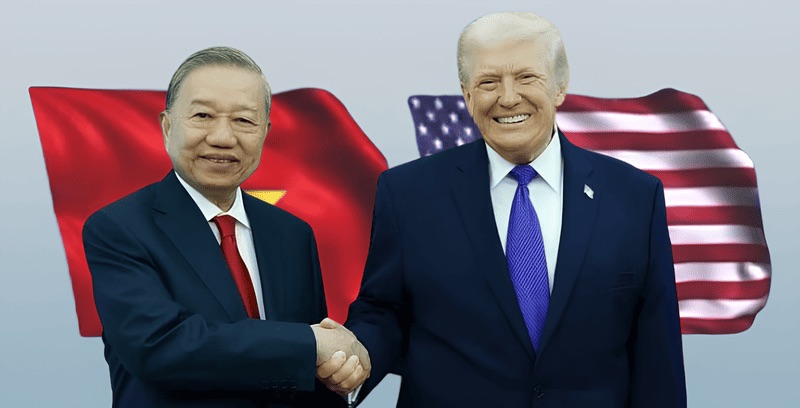
World Geostrategic Insights interview with Alexander Parini on the current dynamic of U.S.-Vietnam relations, the legacy of the Vietnam War, the regulatory challenges facing U.S. companies, the developments in Vietnam’s education sector, and the factors driving Vietnam’s growth.
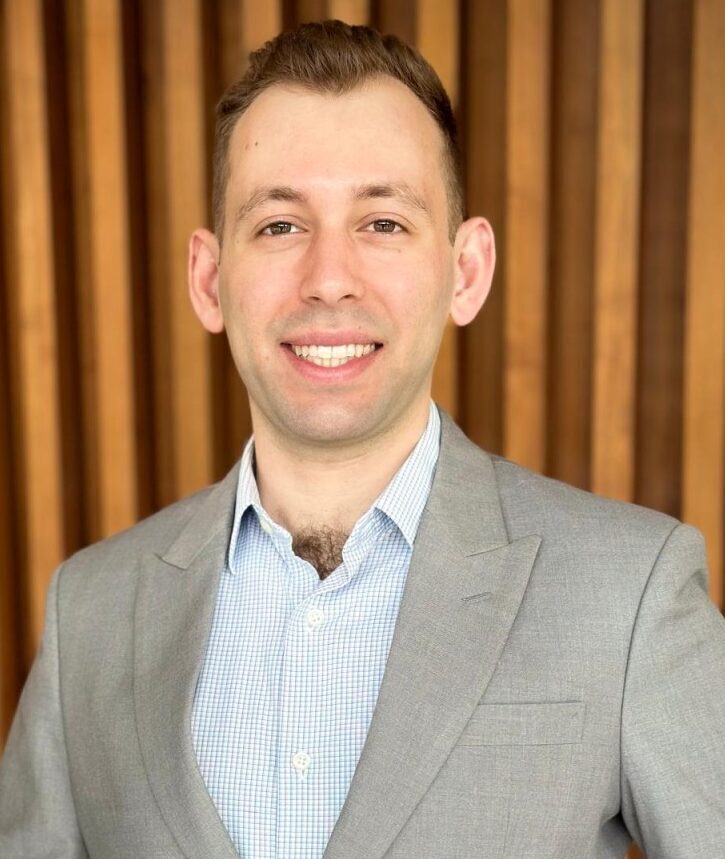
Alexander Parini is a Lecturer of International Relations at the Ho Chi Minh City University of Economics and Finance. He serves as Chair of the AmCham Vietnam Education & Training Committee. He is also the editor-in-chief of My Asia Connections, an internationally-minded blog focused on promoting a greater understanding of the Asia-Pacific.
Q1 – Washington has expanded its engagement in Southeast Asia in recent years, deepening ties not only with the Philippines, its longest-standing regional ally, but also with Vietnam and even Cambodia, despite Phnom Penh’s close relationship with China. What is your opinion on the recent developments in US foreign policy in Southeast Asia?
A1 – Southeast Asia is an incredibly strategic region for the United States, both politically and economically. As the United States seeks to diversify economically away from China, Southeast Asia presents new opportunities for investment and cooperation. This is especially true in countries with economies that are particularly attractive for manufacturing investment, such as Vietnam and Cambodia.
The region’s mix of political systems requires the United States to adopt different approaches for each country. Washington’s decision to engage with countries across the region, despite at times having political systems that differ from its own, is a wise approach for securing American interests and building stronger relationships. This is exemplified by the United States and Vietnam upgrading their ties to a Comprehensive Strategic Partnership, the highest level of partnership, in 2023.
This upgrade does not mean the United States and Vietnam will always agree, but it signals a willingness to maintain constructive engagement with Hanoi. Treaty allies such as the Philippines may at times be easier to navigate, given more similar political and cultural outlooks on international relations. Still, Washington is right to continue identifying areas where its values align with those of each individual Southeast Asian country. If Washington chooses not to engage, the resulting gap will likely be filled by other major actors such as Russia or China.
Q2 – The U.S. and Vietnam upgraded their relationship to a Comprehensive Strategic Partnership in 2023. How would you describe the current dynamic of the U.S.-Vietnam relations? How can the U.S. navigate its relationship with Vietnam while respecting Hanoi’s long-standing balance with China? What specific areas hold the most immediate potential for concrete cooperation, and which areas are likely to remain sensitive or challenging?
A2 – As an American based in Ho Chi Minh City, I feel that this is an exciting time for U.S.-Vietnam relations. The upgrade to a Comprehensive Strategic Partnership in 2023 reflects growing alignment and a shared interest in strengthening bilateral relations.
At the same time, the relationship is shaped by Vietnam’s “bamboo diplomacy,” which emphasizes balancing ties among major powers. This approach may place limits on how far the partnership develops in certain areas, particularly security cooperation. Vietnam’s emphasis on strategic autonomy suggests it is likely to remain cautious about entering into highly formalized defense arrangements.
This limitation, however, does not prevent meaningful cooperation. Instead, it channels the relationship into practical and mutually beneficial areas, including defense cooperation through arms sales, joint training, and capacity building. Concurrently, the two countries are deepening their cooperation in the fields of education, science, and trade. These forms of cooperation allow both sides to grow closer while remaining consistent with Vietnam’s strategic balancing strategy.
More formal alliance structures, such as a mutual defense treaty or a NATO-style security framework in the Asia-Pacific, would be highly sensitive. China and Russia would likely view such developments unfavorably, and they remain unlikely, as they are arguably not in the best interest of either Washington or Hanoi. In this context, the current trajectory of steady, pragmatic cooperation across multiple sectors appears more sustainable and strategically sound.
Q3 – Does the legacy of the Vietnam War continue to influence diplomatic and cultural relations between the two nations?
A3 – The legacy of the Vietnam War will likely continue to influence U.S.-Vietnam relations. However, the extent to which it shapes current policy is ultimately a matter of choice.
Historical differences do not necessarily prevent strong partnerships. Even today, despite being close treaty allies, the United States and the United Kingdom maintain differing perspectives on the American Revolution and King George III. Yet the two countries have developed deep and enduring ties that span politics, economics, and defense.
In some respects, a similar dynamic can be seen in U.S.-Vietnam relations. While the legacy of the war still carries some weight in diplomatic and cultural interactions, it is not an insurmountable obstacle. Both countries have demonstrated a clear willingness to move forward, and constructive cooperation in areas such as economics and defense remains highly achievable.
Q4 – Given your involvement with AmCham Vietnam, what are the most significant regulatory challenges and opportunities that U.S. businesses currently face when investing in Vietnam?
A4 – As Chair of the AmCham Vietnam Education and Training Committee, I focus closely on developments in Vietnam’s education sector. U.S. businesses have found meaningful opportunities in this industry, and those unfamiliar with the market are often surprised by the extent to which American education has prospered.
For example, at the University of Economics and Finance, where I work as an international relations lecturer, the university offers a U.S. degree program in partnership with Keuka College. Students can complete an American degree entirely in Vietnam or transfer to the United States to finish their studies. Demand for American education, both at the K-12 and higher education levels, remains strong across the Vietnamese market.
At the same time, there are regulatory challenges that U.S. businesses must navigate. Vietnam’s international education sector relies heavily on recruiting foreign professionals, including teachers and academic staff. Companies have at times faced difficulties understanding evolving visa regulations and completing required documentation by set deadlines.
In response, AmCham Vietnam, alongside stakeholders in the international education sector, works constructively with the Vietnamese government to address these challenges. The goal is to ensure that foreign professionals meet regulatory standards while also maintaining an efficient and transparent process that allows qualified individuals to work legally in the country.
Q5 – Are the changes in global supply chains, partly in response to trade tensions between the US and China, still specifically benefiting Vietnam’s manufacturing sector?
A5 – Global interest in Vietnam’s manufacturing sector does, in part, stem from U.S.-China trade tensions. Tariffs imposed by the United States on China have helped manufacturers in Vietnam, and elsewhere, compete more effectively with Chinese producers. However, this is only one factor driving Vietnam’s growth.
Vietnam’s appeal is also rooted in structural advantages. Its geographic proximity to China remains particularly useful as global supply chains gradually shift, with some components still needing to be sourced from China until viable alternatives are developed elsewhere. In addition, Vietnam offers a large, relatively low-cost workforce and sufficient infrastructure to support the transport of goods for international export.
Following the start of the U.S.-China Trade War in 2018 during President Trump’s first term, Vietnam has seen increased foreign investment and deeper integration into global manufacturing networks. These changes are likely to persist as companies continue to diversify their manufacturing operations.
As Vietnam seeks to move up the global value chain and develop a more advanced economy, the government will face important strategic decisions regarding how to sustainably attract higher-value industries and investment, particularly in finance, technology, and advanced manufacturing. Sectors such as semiconductor manufacturing are especially significant because they provide opportunities for technological upgrading, skilled employment, and deeper integration into global supply chains. Successfully expanding these industries will likely play an important role in supporting Vietnam’s broader economic transformation and its goal of becoming a high-income, developed nation by 2045.
Alexander Parini – Lecturer of International Relations at the Ho Chi Minh City University of Economics and Finance, Chair of the AmCham Vietnam Education & Training Committee, editor-in-chief of My Asia Connections.
image: Party General Secretary Lâm with US President Donald Trump (Meeting at the White House on February 20 — VNA/VNS).